
Choosing the best glue for engineered hardwood on concrete starts with your flooring maker’s installation instructions. The products below are general construction adhesives, and none is specifically identified as an engineered-hardwood flooring adhesive. Loctite PL Premium is described as suitable for subfloor installations, but that alone does not confirm it is approved for your flooring. Before you buy, check that the adhesive is compatible with your floor, concrete slab, and installation method.
Table of Contents
Quick Comparison
| Product | Type | Best fit | Important note |
|---|---|---|---|
| Loctite PL Premium, 10 fl oz | Polyurethane construction adhesive | Projects where the flooring maker approves this adhesive type | Described as suitable for subfloor installations; verify engineered-floor compatibility. |
| Bellisinno Heavy Duty Construction Adhesive | General-purpose construction adhesive | Small repairs and other listed bonding jobs | Not identified as an engineered-hardwood flooring adhesive. |
| SILIMAX Industrial Adhesive | Multi-material construction adhesive | Projects involving several types of materials | Its broad claims do not establish suitability for a full flooring installation. |
| HORSEFISH TOOL Heavy Duty Construction Adhesive | Construction adhesive for multiple surfaces | Bonding tasks where its stated application method fits | Check the flooring maker’s requirements before using on hardwood flooring. |
| Loctite PL Premium, versatile construction glue | Polyurethane construction adhesive | Projects where a construction adhesive is approved | Similar listed uses to the other Loctite option; confirm flooring compatibility. |
Our Picks: Best Glue For Engineered Hardwood On Concrete reviews
Loctite PL Premium: The Most Relevant Listed Option for Subfloor Work

Loctite PL Premium is a one-component polyurethane construction adhesive in a 10 fl oz cartridge. Its listed uses include wood, OSB, concrete, masonry, and subfloor installations, which makes it the closest match in this group for someone researching a concrete-and-wood project.
The product information says it sets in about 30 minutes and fully cures in 24 hours. It is also described as waterproof, paintable, and suitable for interior and exterior projects. Those features may be useful for general construction work, but they do not replace confirmation from your engineered-hardwood manufacturer. Flooring adhesives are selected for the specific floor and installation system, so don’t assume a general construction adhesive will work for a full floor.
Compared with the other options here, Loctite provides a clearer stated connection to subfloor work. Its cartridge format is suited to applying adhesive in a controlled line, rather than being presented as a flooring-specific spreadable adhesive. Check the product label and your flooring instructions for application method and compatibility before starting.
Pros:
- Listed for bonding to wood, OSB, and concrete.
- Described as suitable for subfloor installations.
- Waterproof and paintable, according to the product information.
- States a 24-hour full cure time.
Cons:
- Not specifically identified as an engineered-hardwood flooring adhesive.
- The cartridge format may not suit a floor installation that calls for a different application method.
Verdict: Consider this Loctite option only if your floor manufacturer approves it for your exact engineered-hardwood installation.
Bellisinno Heavy Duty Adhesive: A Simple Tube for Small Bonding Jobs
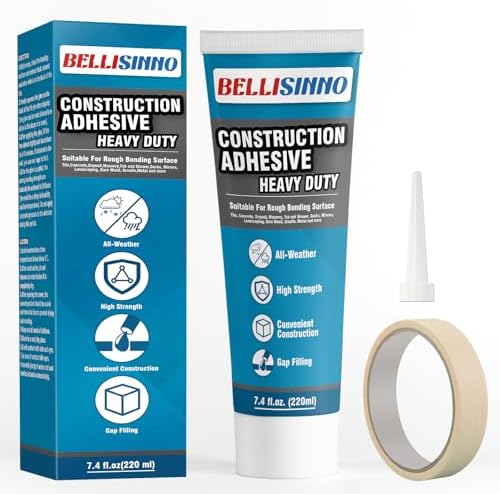
Bellisinno’s 7.4-ounce adhesive is presented as a general construction glue for materials such as concrete, tile, wood, masonry, and stone. The maker highlights a controlled tip and says it can be used without a caulking gun. That setup may be convenient for smaller repair or bonding tasks.
The product description focuses heavily on tile repairs and bonding across rough surfaces. It does not name engineered hardwood or give a flooring installation method for an entire room. That makes it a less direct choice than the Loctite products for this particular search. A small container and no-gun application can be handy, but they are not a substitute for an adhesive approved for the flooring system.
For a full glue-down installation, first confirm that the product is designed for wood flooring over concrete and that its application instructions match your floor. If you are looking for a general-purpose repair adhesive for a job listed by the manufacturer, this tube may be easier to handle than a larger cartridge.
Pros:
- Listed for concrete, wood, tile, and masonry.
- Designed with a controlled tip and no caulking gun required.
- Compact size may be practical for smaller jobs.
Cons:
- Not identified as an engineered-hardwood flooring adhesive.
- The product description emphasizes tile repairs rather than full wood-floor installation.
Verdict: This is better suited to small, approved bonding jobs than to installing an engineered-hardwood floor across a concrete slab.
SILIMAX Industrial Adhesive: Broad Material Claims for Mixed Projects

SILIMAX is described as a multi-material construction adhesive for uses that include wood, concrete, tile, stone, metal, and masonry. Its product description also mentions indoor and outdoor applications and a paintable formula. The wide range of listed materials may appeal if one project involves several different surfaces.
For engineered hardwood on concrete, though, broad material compatibility is not the same as approval for a flooring installation. The description does not specify engineered hardwood, a floor-spreading method, or use as a complete wood-floor adhesive. Its many stated applications make it versatile in concept, but shoppers should look for clear flooring-specific instructions before relying on it under an entire floor.
Compared with Loctite PL Premium, SILIMAX’s description is broader but provides less direct information about subfloor installations. Consider it for a project only when the intended materials and method are covered by the manufacturer’s instructions and your flooring maker allows it.
Pros:
- Lists wood, concrete, tile, stone, and masonry among compatible materials.
- Described for indoor and outdoor use.
- Broad range of stated applications may suit mixed-material projects.
Cons:
- Does not specifically identify engineered-hardwood flooring as an intended use.
- The broad application claims do not explain how to install a full floor with it.
Verdict: Choose SILIMAX for an engineered-hardwood project only if the floor manufacturer confirms this adhesive and its application method are suitable.
HORSEFISH TOOL Construction Adhesive: Convenient for Its Stated Bonding Tasks

HORSEFISH TOOL’s 10.5-ounce construction adhesive is described for bonding materials including tile, concrete, stone, wood, granite, and drywall. Its maker says the adhesive has instant grab and non-sag performance, and that it can be applied without a caulking gun. The instructions call for cleaning the surface, applying a grid pattern, pressing the materials together, and allowing 24–48 hours for full curing.
Those directions are presented for general bonding, not specifically for installing engineered hardwood over a slab. A grid pattern and a press-and-hold process may not match the method required by your flooring maker. The described temperature range is 40°F to 104°F, so check that your job conditions fall within the product’s stated range as well as the floor manufacturer’s requirements.
This adhesive may be convenient for applications that match its instructions, especially when a no-gun tube is useful. For full flooring work, however, the lack of explicit engineered-hardwood compatibility is an important limitation.
Pros:
- Lists wood, concrete, stone, and tile as compatible materials.
- Described as non-sag with instant grab.
- Can be applied without a caulking gun, according to the product information.
- Provides a stated full-cure window of 24–48 hours.
Cons:
- Not specifically identified for engineered-hardwood flooring.
- Its grid-pattern instructions may not match a flooring manufacturer’s required method.
Verdict: This is a practical option for compatible general bonding tasks, but don’t use it for a hardwood floor unless the flooring instructions approve it.
Loctite PL Premium Versatile Construction Glue: Another Wood-and-Concrete Option

This Loctite PL Premium listing describes a polyurethane construction adhesive for wood, concrete, metal, and other common building materials. It shares the same stated general uses as the other Loctite PL Premium option in this list, including subfloor installations, and is described as waterproof and paintable.
The product information says it sets in 30 minutes and fully cures in 24 hours. Those timing details can help with project planning, but they do not confirm that the adhesive is suitable for a particular engineered floor. Follow the flooring manufacturer’s instructions for adhesive type, concrete preparation, and application rather than relying on a general construction-glue label.
This listing is worth comparing with the other Loctite option if you want a polyurethane construction adhesive for a compatible project. The supplied descriptions do not establish a difference in flooring performance between the two Loctite listings, so the key decision is whether either product is approved for your floor—not which one sounds more versatile.
Pros:
- Listed for wood and concrete, along with other construction materials.
- Described as suitable for subfloor installations.
- Waterproof and paintable, according to the product information.
- States a 24-hour full cure time.
Cons:
- Not specifically identified as an engineered-hardwood flooring adhesive.
- The listing does not establish a flooring-specific application method.
Verdict: This is a reasonable construction-adhesive candidate only when your engineered-floor instructions expressly allow it.
How to Choose Glue for Engineered Hardwood on Concrete
Start with the Flooring Manufacturer’s Instructions
Check the flooring brand’s installation guide before choosing an adhesive. It may specify an adhesive type, application method, and approved concrete conditions. A general construction glue that bonds wood to concrete is not automatically suitable for an engineered-hardwood floor. If the guide names a flooring adhesive, use that information as your starting point and confirm any substitute with the manufacturer.
Confirm the Adhesive Is Intended for Flooring
Look for clear labeling and instructions for the exact job you are doing: glue-down installation of engineered hardwood over concrete. Terms such as “wood,” “concrete,” or “subfloor” describe broad uses, but do not always mean a product is designed to hold a finished floor. If the product description does not spell out the application, ask the adhesive maker before purchasing.
Check the Concrete Preparation Requirements
Concrete needs to meet the requirements of both the flooring and adhesive manufacturers. Read their guidance on surface cleanliness and any other preparation steps before applying glue. Do not assume that an adhesive’s ability to bond to concrete means it is suitable for every slab or installation condition.
Match the Application Method to the Job
The products in this list are sold in cartridges or tubes, and some describe bead, grid, or controlled-tip application. A full flooring installation may call for a different method. Follow the instructions for your specific floor rather than choosing a product solely because its package is easy to use.
Plan Around Set and Cure Times
Set time and full cure time are not the same. The Loctite listings state a 30-minute set time and 24-hour full cure, while HORSEFISH TOOL states a 24–48-hour full-cure window. Treat these as product claims, and confirm the instructions for your project. Keep the floor and work area undisturbed as directed during installation and curing.
Compare Practical Use and Limitations
Consider the size of your project, the container format, and the manufacturer’s application directions. A small tube may be handy for a limited repair, while a cartridge may be more convenient for some construction tasks. For a full floor, the most important factor is not container size or a broad list of bonded materials—it is confirmed compatibility with the flooring system.
Frequently Asked Questions
Can I use construction adhesive to install engineered hardwood on concrete?
Only if the engineered-hardwood manufacturer and adhesive maker confirm that the specific product is suitable for that installation. The products in this list are described as general construction adhesives, not specifically as engineered-hardwood flooring adhesives.
Which product in this list is the closest match for a wood-and-concrete project?
Loctite PL Premium has the clearest stated connection to subfloor installations and lists both wood and concrete among compatible materials. That does not confirm it is approved for your engineered-hardwood floor, so check the flooring instructions first.
Does “waterproof” mean an adhesive is right for a concrete floor?
No. Waterproofing is one product claim, but it does not confirm compatibility with a particular floor, concrete slab, or glue-down method. Use the flooring manufacturer’s specifications to choose the adhesive.
Do these adhesives require a caulking gun?
Loctite PL Premium is supplied as a cartridge. Bellisinno and HORSEFISH TOOL describe application without a caulking gun. Follow the instructions on the specific product you choose.
How long should I wait before walking on the floor?
The product details provide cure times for some adhesives, but they do not give a walking time for an engineered-hardwood installation. Follow the instructions from both the flooring and adhesive manufacturers for when the floor can be used.
Can I use one of these products to repair a loose hardwood board?
Possibly, but first check the flooring maker’s repair guidance and confirm that the adhesive is approved for the board and concrete. A product intended for general construction or tile repair may not be the right fix for a finished floor.
Final Recommendation
Of these five options, Loctite PL Premium has the most relevant stated use because it lists subfloor installations and bonding to wood and concrete. Still, no product here is explicitly identified as an engineered-hardwood flooring adhesive. For the most reliable choice, follow your flooring manufacturer’s glue-down instructions and use a product it approves; treat any general construction adhesive as an option only after compatibility is confirmed.
