
A 220-volt window air conditioner can cool a large room more effectively than many standard 120-volt models, but the right choice depends on your room size, electrical setup, and need for supplemental heat. The four options below are rated for 208/230-volt or 230-volt power and range from an 18,000-BTU heat-and-cool unit to larger models designed for spaces up to 1,560 square feet. Before buying, confirm that your window and circuit match the unit’s requirements.
Table of Contents
Quick Comparison
| Product | Cooling Capacity | Listed Coverage | Notable Features |
|---|---|---|---|
| LG 18,000 BTU Window AC with Heat | 18,000 BTU | Up to 1,000 sq. ft. | Supplemental heat, remote, auto restart |
| LG 24,500 BTU Smart Window AC | 24,500 BTU | Up to 1,560 sq. ft. | ThinQ app control, Alexa and Google compatibility |
| Keystone 23,200 BTU AC with Supplemental Heat | 23,200 BTU | Up to 1,500 sq. ft. | 16,000-BTU supplemental heat, smart remote |
| Durastar 25,000 BTU Window AC with Heat | 25,000 BTU | Up to 1,500 sq. ft. cooling | 16,000-BTU supplemental heat, 30-amp circuit requirement |
Our Picks: Best 220 Volt Window Air Conditioner reviews
LG 18,000 BTU Window AC: Best for Cooling and Supplemental Heat
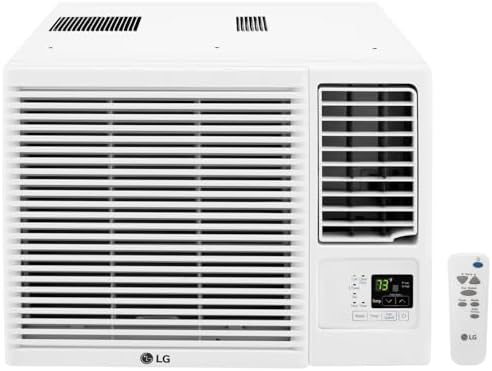
This LG combines 18,000 BTU of cooling with supplemental heat, making it a flexible choice for a bedroom, living room, or basement. Its listed cooling coverage is up to 1,000 square feet. The heat function is useful for adding warmth on cooler days, but it is best viewed as a supplement rather than a replacement for a home’s main heating system.
The unit has two speeds for cooling, heating, and fan operation, plus a digital control panel and remote. A 24-hour timer, washable filter, filter reminder, and four-way air deflection add practical control. Auto restart is also included, so the unit is designed to resume its previous operation after power returns.
Check the electrical connection carefully before choosing this model. It requires a special 230/208-volt LCDI plug with a NEMA 6-20 configuration. That makes it a poor fit for a standard 120-volt outlet. Its 1,000-square-foot coverage is also lower than the larger LG, Keystone, and Durastar options here.
Pros:
- Provides both cooling and supplemental heat.
- Includes a remote, timer, and auto-restart feature.
- Washable filter and filter reminder support routine upkeep.
- Four-way air deflection offers flexibility in directing airflow.
Cons:
- Requires a compatible NEMA 6-20, 208/230-volt connection.
- Has less listed cooling coverage than the larger models in this guide.
Verdict: Choose this LG if you want a 208/230-volt window unit with supplemental heat for a space around its stated 1,000-square-foot capacity and have the required outlet.
LG 24,500 BTU Smart Window AC: Best for App-Based Control

With 24,500 BTU of cooling and listed coverage up to 1,560 square feet, this LG is the largest-capacity cooling choice in the lineup by its stated room coverage. It is designed for large rooms or multiple smaller rooms on the same floor, provided the layout allows air to circulate.
Its main distinction is LG ThinQ connectivity. You can use the app to start or stop cooling, change modes, and adjust the temperature while away. The unit is also compatible with Amazon Alexa and Google Assistant. A remote is included for direct control, along with a 24-hour timer, filter reminder, and auto restart.
The unit offers three cooling and fan speeds, as well as dehumidification rated up to 1.8 pints per hour. LG lists sound levels as low as 50 dB in low mode. That figure applies to the low setting, so it should not be taken as a guarantee of the sound level at higher speeds. Unlike the LG 18,000-BTU model, this one does not list supplemental heat.
Pros:
- Highest listed room coverage among these four models.
- ThinQ app control with Alexa and Google Assistant compatibility.
- Three cooling and fan speeds, plus dehumidification.
- Includes a remote, timer, and auto restart.
Cons:
- Does not list a heating mode.
- Requires a compatible 208/230-volt electrical setup.
Verdict: This LG is a strong fit if you want high cooling capacity and smart-home control, and you do not need supplemental heat.
Keystone 23,200 BTU Window AC: Best for Flexible Room Comfort

Keystone’s 23,200-BTU window unit is rated to cool spaces up to 1,500 square feet and adds 16,000 BTU of supplemental heat. It also provides dehumidification and fan circulation, giving you several operating modes for changing conditions in a large room.
The included remote has an LCD screen and measures the temperature where you are, then sends that information to the unit every three minutes. This can help the air conditioner respond to the conditions near the person using the remote rather than only the temperature at the unit. Energy Saver and Sleep modes are included as options for managing operation.
Keystone specifies that its supplemental heating mode is intended for outdoor temperatures between 23 and 76 degrees and is not meant to serve as a primary heat source. The product information also lists a minimum window height of 19.5 inches, so measure your window before purchasing. The supplied details do not specify a plug configuration, so check the product information and your electrical setup before installation.
Pros:
- Offers cooling, supplemental heat, dehumidification, and fan circulation.
- Listed to cool spaces up to 1,500 square feet.
- Remote senses the temperature near the user.
- Includes Energy Saver and Sleep modes.
Cons:
- Supplemental heat is not designed to replace primary heating.
- Requires at least 19.5 inches of window height.
Verdict: Consider the Keystone if you want a large-capacity unit with several operating modes and your window meets its minimum height requirement.
Durastar 25,000 BTU Window AC: Best for Large-Area Cooling
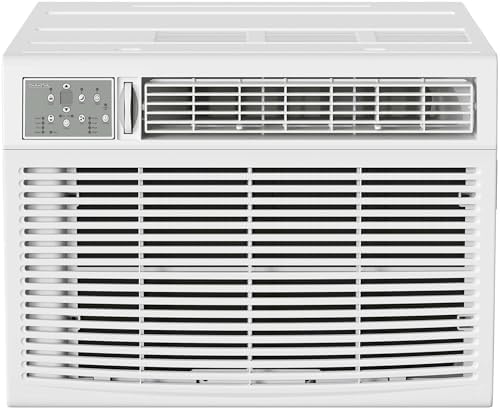
Durastar lists 25,000 BTU of cooling and coverage up to 1,500 square feet. The unit also provides 16,000 BTU of supplemental heat, with a stated heating coverage of 700 square feet. That difference matters: its listed cooling area is much larger than its listed heating area.
It has three fan speeds, four operating modes, four-way directional louvers, and a 24-hour timer. Its listed moisture removal is 137 pints per day, making dehumidification a notable part of its feature set. The unit is rated at 208/230 volts and has an important electrical requirement: it calls for a 30-amp, 230-volt breaker and uses an LCDI 6-30P plug.
That circuit requirement makes this model less flexible than simply choosing a unit based on cooling capacity. Confirm the breaker, outlet, and wiring with a qualified professional if you are unsure whether your setup is compatible. Its heating coverage is also limited to a smaller area than its cooling coverage, so it may not be the best choice if you expect it to warm a large room.
Pros:
- Provides 25,000 BTU of cooling for up to 1,500 square feet.
- Includes 16,000 BTU of supplemental heat.
- Offers four operating modes, a timer, and adjustable airflow direction.
- Lists substantial moisture removal capacity.
Cons:
- Requires a 30-amp, 230-volt breaker and an LCDI 6-30P plug.
- Listed heating coverage is 700 square feet, below its cooling coverage.
Verdict: The Durastar is worth considering for a large space if your electrical circuit matches its specific 30-amp requirement and you understand that its heating coverage is more limited.
How to Choose a 220-Volt Window Air Conditioner
Match the Unit to Your Room Size
Start with the room area and compare it with the unit’s stated coverage. These models list cooling coverage from 1,000 to 1,560 square feet. Treat those figures as a starting point, not a promise that the unit will perform the same in every home. Room layout and how well air can move between connected spaces also matter. Avoid choosing the largest model automatically if a smaller unit better matches the area you need to cool.
Check Your Voltage, Outlet, Plug, and Breaker
“220 volt” is a common way to describe this product category, but the listed units specify 208/230 volts or 230 volts. They are not standard 120-volt window units. The LG 18,000-BTU model specifies a NEMA 6-20 plug, while the Durastar specifies an LCDI 6-30P plug and a 30-amp, 230-volt breaker. Do not assume that a similar-looking outlet is compatible. Check the appliance label and your home’s circuit, and ask a qualified electrician if you are uncertain.
Decide Whether You Need Supplemental Heat
The LG 18,000-BTU, Keystone, and Durastar models include heating functions; the 24,500-BTU LG focuses on cooling. The heating listed for these combination units is supplemental, not a substitute for your main heating system. Coverage can also differ between heating and cooling: Durastar lists 700 square feet of heating coverage compared with 1,500 square feet for cooling.
Consider Smart Controls and Remote Features
If you want to adjust settings while away, the LG 24,500-BTU model offers ThinQ app control and compatibility with Amazon Alexa and Google Assistant. The other listed models include conventional remotes, with the Keystone remote also sensing the temperature where it is placed. Think about whether you prefer app access, a remote, or simple controls on the unit itself.
Review Window Fit and Installation Needs
Measure your window before ordering, and confirm the installation instructions for the exact model. The Keystone listing specifies a minimum window height of 19.5 inches. The other supplied product details do not give window measurements, so check their product specifications before committing. A unit’s room coverage does not tell you whether it will fit your window.
Look at Operating Modes and Upkeep
Compare the features you will use regularly, such as fan speeds, timers, dehumidification, adjustable airflow, washable filters, and filter reminders. The LG 18,000-BTU model lists a removable, washable filter and a filter reminder; the 24,500-BTU LG lists dehumidification up to 1.8 pints per hour. Keystone and Durastar also include dehumidification, but their supplied specifications describe those features differently. Check the complete product details for the specific model you plan to buy.
Frequently Asked Questions
Are 220-volt and 230-volt window air conditioners the same?
The products in this guide are specified for 208/230-volt or 230-volt power, even though shoppers often use “220 volt” as a general search term. Always follow the voltage, plug, and circuit requirements printed for the exact unit rather than relying on the shorthand.
Can I plug one of these units into a standard household outlet?
No. These models require a higher-voltage electrical connection, and some also specify a particular plug and breaker. For example, the LG 18,000-BTU unit calls for a NEMA 6-20 connection, while the Durastar specifies a 30-amp, 230-volt breaker and an LCDI 6-30P plug.
Which model has the greatest listed cooling coverage?
The LG 24,500-BTU smart window air conditioner has the largest stated cooling coverage in this group, at up to 1,560 square feet. The Keystone and Durastar list up to 1,500 square feet, while the LG 18,000-BTU model lists up to 1,000 square feet.
Which of these air conditioners also provides heat?
The LG 18,000-BTU, Keystone, and Durastar models list supplemental heating. The LG 24,500-BTU smart model is described as a cooling unit. Supplemental heat should not be treated as a replacement for a primary heating system.
Which option offers smart-home control?
The LG 24,500-BTU model lists LG ThinQ app control and compatibility with Amazon Alexa and Google Assistant. The other supplied product details describe remote controls but do not list the same smart-home features.
Will a model’s stated coverage guarantee comfortable temperatures throughout my home?
No. The coverage figures are product specifications, and how well a unit cools connected spaces depends on the layout and airflow. Compare the stated area with the space you need to cool, and consider whether the room arrangement allows air to circulate.
Conclusion
For cooling a very large area with app-based controls, the LG 24,500-BTU smart window air conditioner stands out with its listed coverage of up to 1,560 square feet. If you want supplemental heat, the LG 18,000-BTU model suits a smaller area, while Keystone and Durastar offer higher cooling capacities with heat. Before choosing any of them, make electrical compatibility and window fit your first checks—not afterthoughts.
