
Pressure-treated wood is often sold damp, and its preservative treatment can make bonding less predictable than bonding dry, untreated lumber. For a reliable adhesive joint, start with wood that is dry enough for the adhesive maker’s instructions, prepare clean mating surfaces, and use fasteners when the project needs structural strength. Among these options, Titebond III stands out for waterproof wood-to-wood work, while a polyurethane marine adhesive may suit joints exposed to harsher wet conditions.
Table of Contents
Quick Comparison
| Product | Best suited for | Key feature | Important limitation |
|---|---|---|---|
| Titebond III Ultimate Wood Glue | Outdoor wood-to-wood projects | ANSI/HPVA Type I waterproof performance | Use on suitable, prepared wood; not a replacement for structural fasteners |
| Marine Sealant Polyurethane Wood Adhesive | Wet or marine-adjacent repairs | Waterproof formula that expands | Expansion can make neat, flush glue lines harder to manage |
| Boncart Super Strong Wood Glue | General indoor and outdoor woodworking | Waterproof claim and clear-drying formula | Confirm the label’s suitability for your specific treated lumber and conditions |
| DAP Weldwood Professional Wood Glue, 8 oz | Small wood repairs and shop projects | Water-resistant PVA wood glue | Water-resistant does not mean waterproof; listed as unavailable in the supplied product data |
| DAP Weldwood Professional Wood Glue, 1 gal | Repeated woodworking or larger projects | Bulk size of the same water-resistant PVA formula | Not waterproof; listed as unavailable in the supplied product data |
Our Picks: Best Adhesive For Pressure Treated Wood reviews
1. Titebond III Ultimate Wood Glue: Best for Waterproof Wood Joints

Titebond III is a wood glue designed for interior and exterior woodworking. Its main advantage for outdoor projects is its stated ANSI/HPVA Type I water-resistance performance. That makes it a strong candidate for prepared, dry pressure-treated wood in furniture, trim, and other wood-to-wood assemblies that may get wet.
The product offers a longer assembly window than a quick-grab adhesive, which can help when you need to line up several pieces before clamping. It also has a stated application threshold of 45°F, so it may work in cooler conditions than some wood glues. Clean up wet glue with water, and follow the product label for application and cure instructions.
The key caution is the lumber itself. Pressure-treated boards can retain moisture, and a glue joint made on wet or poorly prepared wood may not perform as intended. This is not a substitute for screws, bolts, or other suitable fasteners where a project carries a load or must meet building requirements. Compared with the polyurethane marine adhesive below, Titebond III is the more straightforward choice for ordinary wood-to-wood glue-ups, rather than mixed-material or submerged applications.
Pros:
- Passes ANSI/HPVA Type I water-resistance standards, according to the product description.
- Designed for interior and exterior woodworking.
- Longer assembly time can help with more involved glue-ups.
- Water cleanup while wet and a stated 45°F application threshold.
Cons:
- Wet pressure-treated lumber can make a dependable glue joint harder to achieve.
- Not a replacement for mechanical fasteners in structural work.
Verdict: Choose Titebond III for a waterproof wood-to-wood joint when your pressure-treated lumber is properly prepared and dry enough for the label directions.
2. Marine Sealant Polyurethane Adhesive: Best for Very Wet Conditions

This single-component polyurethane adhesive is presented for marine repairs and other demanding outdoor uses. Its product description claims waterproof, UV-resistant performance and bonding to wood, fiberglass, steel, metal, and other materials. That wider material range can be useful when a treated-wood project joins wood to a non-wood surface.
The title says the adhesive expands, so plan for that behavior rather than expecting a thin, invisible glue line. Apply it carefully and follow the label’s directions for joint fit, cleanup, and curing. The product is described for damp or humid environments, but that does not mean you should skip surface preparation or assume that every wet board is ready to bond.
Compared with Titebond III, this adhesive is the more specialized option for marine or mixed-material work. Its expansion may be less convenient for precise furniture joints or visible trim. The description also names boats, docks, RVs, and marine equipment, but you should check the instructions for your exact substrate and exposure before using it in a critical repair.
Pros:
- Described as waterproof and suitable for wet or submerged conditions.
- Claims UV resistance for outdoor exposure.
- Designed to bond wood and several other materials.
- Single-component, ready-to-use formula.
Cons:
- Expansion may be difficult to control in neat, visible joints.
- Its marine focus may be more than needed for routine wood-to-wood projects.
Verdict: Consider this polyurethane adhesive for treated-wood repairs with serious moisture exposure or mixed materials, but follow the label closely and account for expansion.
3. Boncart Waterproof Wood Glue: Best for General DIY Projects

Boncart’s wood glue is marketed for woodworking, furniture assembly, crafts, and repairs. The product description says it works on hardwoods, softwoods, and natural wood composites, and claims waterproof performance for indoor and outdoor use. It also says the glue dries clear, which may be useful when a glue line will remain visible.
The supplied details state a clamping time of 20 to 30 minutes and a full cure time of 24 hours. The package is described as including a precision nozzle and brushes for applying glue across a joint. Those features may make it convenient for small projects, though you should still use the label’s instructions for the amount to apply and the conditions needed for a sound bond.
For pressure-treated wood, the waterproof claim is a useful starting point, not a guarantee that it will bond well to damp or unprepared lumber. Titebond III has a clearly stated Type I water-resistance standard in its product description, while Boncart’s description does not name a comparable standard. Choose Boncart for general DIY work if its instructions fit your material and exposure, and use mechanical fasteners when the project calls for them.
Pros:
- Described as waterproof and suitable for indoor and outdoor use.
- Clear-drying formula may help reduce visible glue lines.
- Listed clamping time is 20 to 30 minutes, with a 24-hour full cure.
- Includes a precision nozzle and brushes, according to the description.
Cons:
- The product description does not name a water-resistance testing standard.
- Pressure-treated wood still needs suitable preparation and label-approved conditions.
Verdict: Boncart is a practical general-purpose option for DIY wood projects when its instructions match your treated lumber and the joint is not being relied on as a structural connection.
4. DAP Weldwood Professional Wood Glue, 8 oz: Best for Small Repairs
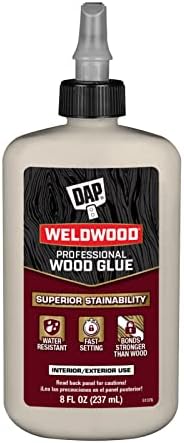
This yellow PVA wood glue is intended for woodworking and repairs, including furniture, cabinets, crafts, and edge-bonding. Its description says the cured glue can be sanded, stained, and painted, and that it resists water, heat, oil, grease, and paint solvents. It is also described as resistant to shock and sharp impact once thoroughly set.
The important distinction is that the product is described as water-resistant, not waterproof. That makes it a less cautious choice than Titebond III or the polyurethane marine adhesive for joints exposed to repeated rain or prolonged wet conditions. For a small, sheltered project made from properly prepared lumber, its wood-glue format may be suitable if the label allows the intended use.
The 8-ounce size is more manageable for occasional repairs than a gallon container. However, the supplied product data marks this item unavailable, so check whether it can be obtained before planning around it. If you need an adhesive for an exposed outdoor joint, choose a product with more clearly stated waterproof performance instead.
Pros:
- Designed for common woodworking jobs such as furniture and cabinet work.
- Described as sandable, stainable, and paintable once cured.
- Resists water, heat, oil, grease, and paint solvents, according to the product description.
- Smaller package suits occasional repairs better than a bulk container.
Cons:
- Water-resistant rather than described as waterproof.
- Listed as unavailable in the supplied product data.
Verdict: Choose this DAP glue only for suitable, sheltered woodworking where water resistance is enough and the product is available.
5. DAP Weldwood Professional Wood Glue, 1 gal: Best for Larger Shop Use

This gallon-size version uses the same described PVA formula as the smaller DAP option. It is intended for woodworking, furniture manufacturing, cabinetry, repairs, and edge-bonding. The description lists water resistance and resistance to heat, oil, grease, and paint solvents, along with the ability to sand, stain, and paint the glue after it cures.
The larger container makes more sense for repeated shop work than a one-time repair. But the package size does not change the adhesive’s stated limits: it is described as water-resistant, not waterproof. For pressure-treated wood that will be exposed to weather, Titebond III provides a more specific waterproof claim, while the polyurethane option is described for marine and very wet settings.
As with the 8-ounce version, the supplied product data marks this gallon item unavailable. If it becomes available, check the label for the application and exposure conditions you have in mind. A large quantity is not a benefit if the glue is unsuitable for damp lumber or the outdoor conditions of your project.
Pros:
- Bulk format may suit recurring woodworking or larger production tasks.
- Described for furniture, cabinetry, repairs, and edge-bonding.
- Can be sanded, stained, and painted once cured, according to the description.
- Resists water, heat, oil, grease, and paint solvents, according to the product description.
Cons:
- Water-resistant rather than described as waterproof.
- Listed as unavailable in the supplied product data, and the large size may be excessive for occasional use.
Verdict: Consider the gallon size for frequent woodworking only if you can obtain it and water resistance is suitable for the project; it is not the first choice for exposed outdoor joints.
How to Choose Adhesive for Pressure-Treated Wood
Check the lumber’s moisture condition
Pressure-treated boards may contain a lot of moisture when purchased. Adhesive performance depends on the product and the condition of the wood, so do not assume that a glue labeled waterproof can bond well to any wet board. Follow the adhesive maker’s directions for moisture and application conditions. If the wood is too wet, allow it to dry as directed before making the joint.
Match water resistance to the project
Think about how often the joint will get wet and whether it will be exposed to weather, standing water, or a sheltered outdoor setting. Titebond III is described as passing an ANSI/HPVA Type I water-resistance standard. The polyurethane marine adhesive is described for waterproof use in wet or submerged conditions. The DAP Weldwood products are described as water-resistant, which is a different claim from waterproof.
Consider the materials being joined
For two pieces of wood, a wood glue may be the most direct fit. If the joint also includes fiberglass, steel, or another material, the marine polyurethane product is specifically described as bonding to several non-wood surfaces. Always check the product label for your exact materials and conditions rather than relying on a broad “multi-surface” claim.
Plan for the adhesive’s working behavior
Longer assembly time can help you align a complex wood joint, while a quick-set formula may suit a small repair. Boncart lists a 20-to-30-minute clamping period and a 24-hour full cure. The marine polyurethane adhesive is described as expanding, so account for squeeze-out and the appearance of the finished joint. Use the label’s instructions for clamping, cleanup, and cure time.
Use fasteners for structural or safety-critical work
Adhesive should not replace appropriately designed screws, bolts, brackets, or other fasteners when a connection supports a load or affects safety. This is especially important for decks, stairs, railings, and other building components. Follow local building rules and the instructions for the treated lumber and fasteners. For critical construction, consult a qualified professional.
Prepare the joint and follow the label
Clean, well-fitted surfaces help create a better bonding surface. Remove dirt and loose material, and avoid applying glue over finishes or contaminants unless the instructions say it is suitable. Check the label for application temperature, surface condition, clamping, and curing requirements. Do not put a new joint into service before the stated cure time.
FAQs About Adhesive for Pressure-Treated Wood
What is the best adhesive for pressure-treated wood?
For prepared wood-to-wood joints that need waterproof performance, Titebond III is a strong option in this selection because its description names ANSI/HPVA Type I water resistance. For marine or very wet applications, consider the polyurethane adhesive, while checking its directions for your materials and exposure.
Can I glue pressure-treated wood while it is wet?
Do not assume that you can. Moisture can interfere with bonding, and the acceptable conditions depend on the adhesive. Follow the product label and let the lumber dry as directed if needed.
Is waterproof glue enough for a deck or fence?
Not by itself. Glue should not replace suitable fasteners or construction methods in a structural or safety-critical project. Use products and fasteners approved for the application and follow building requirements.
Is water-resistant glue the same as waterproof glue?
No. Water-resistant describes some ability to handle moisture, while waterproof is a stronger claim. The DAP Weldwood product descriptions say water-resistant; Titebond III and the marine polyurethane adhesive are described as waterproof.
Should I choose polyurethane or wood glue?
A wood glue such as Titebond III is a direct choice for prepared wood-to-wood joints. The marine polyurethane option may fit wet conditions or joints involving other materials, but its expansion can be harder to manage in a neat visible seam.
How long should I clamp pressure-treated wood after gluing?
Use the adhesive label rather than a general rule. The Boncart description lists 20 to 30 minutes of clamping and a 24-hour full cure, but requirements vary by product, joint, and conditions.
Final Recommendation
For most prepared, dry pressure-treated wood-to-wood projects in this group, Titebond III is the clearest starting point because it combines an explicit Type I water-resistance claim with woodworking-focused features. Choose the polyurethane marine adhesive when the project involves harsher wet exposure or mixed materials and its expansion suits the joint. In every case, follow the label, prepare the lumber correctly, and use proper mechanical fasteners for structural work.
