
Childproofing a door is not one-size-fits-all: a lock that works on a lever handle may not fit a sliding door, and some designs require drilling or a clear, flat surface. The best choice depends on your door type, how easily adults need to pass through, and whether you want a lock a child can’t reach. These five options include handle-mounted locks, a top-of-door lock, and a door reinforcement lock, with important fit and use differences to consider.
| Product | Lock style | Best for | Key fit or installation note |
|---|---|---|---|
| Wappa Baby Door Lever Lock, 2 Pack | Adhesive lever lock | Flat-panel doors with lever handles | Needs a clean, flat area beside the lever |
| Safety 1st OutSmart Door Lever Lock | Lever lock with decoy button | Most lever handles | Designed to disguise its working buttons |
| WILZEIMY Snap-On Lever Locks, 2 Pack | Adhesive dual-lock lever lock | Families looking for a two-button release | Needs a clean surface for adhesive |
| AceMining Door Reinforcement Lock | Screw-mounted reinforcement lock | Extra security on a compatible inward-opening door | Requires drilling; check the door and frame limitations |
| GlideLok Child Safety Door Top Lock, 2 Pack | Metal top-of-door lock | Keeping a lock out of a child’s reach | Measure door thickness; installation requires a screw |
Table of Contents
Our Picks: Best Child Safety Locks For Doors reviews
Wappa Baby Door Lever Lock: A Two-Pack for Flat-Panel Doors
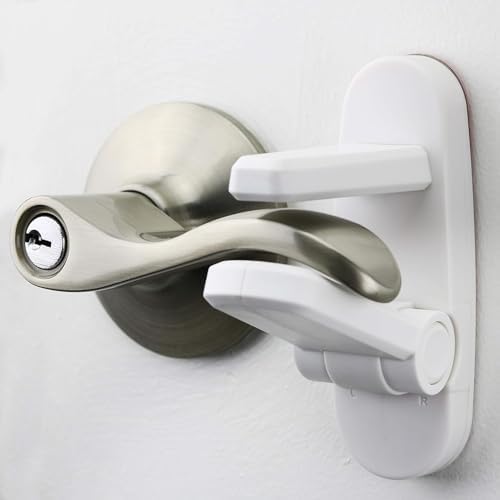
This adhesive lock is designed for lever handles and comes as a two-pack. Its main appeal is straightforward: it sits next to the lever to prevent a child from using the handle to open the door. The body is made from ABS, and the product dimensions are 3.25 inches long, 1.5 inches wide, and 4.5 inches high.
Fit is the key consideration. The manufacturer calls for a flat surface at least 4.5 inches high and 1.5 inches wide beside the lever. It also warns that textured or uneven doors can leave gaps that interfere with adhesion. Check the actual door before choosing this lock, rather than assuming that a flat-looking door has enough usable space.
Once activated, the lock secures the door from both sides, so an adult needs access to the lock to deactivate it. That may be useful where you want the door secured, but it is important to consider who may need to open it and how quickly. Compared with the GlideLok, this option is more dependent on a suitable door surface; compared with the Safety 1st, it comes in a two-pack.
Pros:
- Two locks are included.
- Designed specifically for lever handles.
- Uses adhesive rather than screws or drilling.
Cons:
- Requires a specific amount of flat surface beside the lever.
- Textured or uneven surfaces may prevent proper adhesion.
Verdict: Choose the Wappa Baby two-pack if you have compatible lever handles and enough smooth, flat space for installation.
Safety 1st OutSmart: A Lever Lock with a Decoy Button

The OutSmart is a single lever-handle lock with a design meant to make the working controls less obvious. Its prominent decoy button can be pushed without opening the lock, while the functional buttons are hidden in the hinge. The idea is to make the handle lock harder for a child to figure out by sight alone.
Safety 1st says the design fits most lever handles and is easy to install. “Most” is not the same as all, so compare the lock’s shape and placement with your handle before relying on it. This model may be a simpler option than a top-of-door lock when you need to secure a lever but want to avoid drilling into the doorframe.
It is sold as a one-count product, unlike the two-pack options from Wappa Baby, WILZEIMY, and GlideLok. Its distinguishing feature is the decoy button, rather than a specified dual-button release or an out-of-reach position. As with any child safety device, check that adults in the household can operate it and that it continues to work as intended.
Pros:
- Decoy button is designed to distract from the functional controls.
- Functional buttons are tucked into the hinge.
- Designed to fit most lever handles.
Cons:
- Only one lock is included.
- Fit may vary with the shape and size of your lever handle.
Verdict: The OutSmart is a good option to consider if you want a single lever lock with less obvious controls and your handle is compatible.
WILZEIMY Snap-On Locks: A Two-Button Release in a Two-Pack

WILZEIMY’s two-pack is designed for lever handles and uses a dual-lock system. To operate it, an adult presses both sides of the lock button at the same time. The listing also describes a button near the pivot that helps keep the lock arm from swinging, with the stated aim of preventing a child from locking someone out.
The lock is made from ABS and TPE and installs with adhesive, so it does not require drilling. Each unit measures 2.83 inches long, 3.74 inches high, and 1.38 inches wide. The door surface still matters: clean it and make sure the lock can sit securely in the intended position before installation.
The listing says the lock can open to 180 degrees and can be positioned upward or downward. It also describes use on some windows and faucets, but you should check fit and intended use carefully for any surface beyond a compatible door handle. Compared with the Wappa Baby lock, its main stated difference is the two-button operation; both depend on adhesive and a suitable surface.
Pros:
- Two locks are included.
- Dual-button operation is designed to require a coordinated adult action.
- Adhesive installation does not require tools or drilling.
- The lock arm can be positioned upward or downward.
Cons:
- Adhesive installation requires a clean, suitable surface.
- Adults may need to practice the two-button release before using it routinely.
Verdict: Consider the WILZEIMY set if you want two adhesive lever locks and prefer a two-button release, after confirming the fit on your doors.
AceMining Door Reinforcement Lock: A Screw-Mounted Extra Barrier

This is a metal reinforcement lock for a door and frame, rather than a small childproofing device attached beside a handle. It uses screws for installation and is intended to add a physical barrier to a compatible door. The manufacturer states that the alloy lock can withstand up to 800 pounds of force; treat that as a product claim, not a guarantee of security for every door or installation.
Installation requires drilling and the included screws. The listing describes using an electric drill and a 1/8-inch drill bit, and recommends checking the product images to confirm the lock suits your door. Its limitations are important: it is not suitable for French double doors, garage doors, outward-opening doors, doors with gaps under 0.07 inches, or doors with misaligned frames.
The lock is described as quick to open from inside, which matters when choosing any added barrier for a household. Still, this is not the most direct choice if your only goal is to stop a toddler from turning a lever. It may suit someone who also wants added door reinforcement, but take care to ensure adults can release it promptly in an emergency.
Pros:
- Metal construction and screw-mounted installation.
- Designed to add reinforcement at the door and frame.
- The listing describes an inside release for quick opening.
Cons:
- Requires drilling and is not a no-tools installation.
- Does not fit several door types and configurations.
Verdict: Choose this lock only if you want a door reinforcement device, have a compatible door, and can install and operate it safely; for a toddler-focused handle lock, consider one of the other picks.
GlideLok Top Lock: A Metal Design That Sits Above Reach

The GlideLok rests over the top of a hinged door, placing the lock above a child’s reach. Its painted-metal construction sets it apart from the adhesive lever locks in this guide. The two-pack can be operated from either side of the door, according to the listing, and can be left unlocked when you do not need to restrict access.
Measure door thickness before buying. The lock fits most hinged doors up to 1⅜ inches thick, or up to 1 13/16 inches when its spacer bar is removed. It does not fit sliding doors on tracks, storm doors, patio screen doors, metal door frames, or double doors that swing in both directions.
Installation requires drilling one included screw into the doorframe, and you need to be able to reach the top of the door to operate the lock. This can be a useful alternative to handle-mounted locks when a child can reach or manipulate a lever. Unlike an adhesive option, however, it requires a screw and a suitable frame. Plan how adults will access it before using it on a door that may need to open quickly.
Pros:
- Two locks are included.
- Top-of-door placement keeps the lock out of a child’s reach.
- Metal construction, according to the product description.
- Can be operated from either side and left unlocked when not needed.
Cons:
- Requires a screw in the doorframe.
- Does not fit several sliding, screen, storm, or specialty door types.
- You must be able to reach the top of the door to operate it.
Verdict: The GlideLok is a strong option for compatible hinged doors when you want a lock positioned above a child’s reach and are comfortable drilling into the frame.
How to Choose a Child Safety Lock for a Door
Start with the door and handle type
Check whether the door is hinged or sliding, and whether it has a lever, knob, or unusual handle. The Wappa Baby, Safety 1st, and WILZEIMY options are made for lever handles. GlideLok is for compatible hinged doors and does not fit sliding doors on tracks. A reinforcement lock also has specific door and frame restrictions. Compare the product’s fit notes with your actual door before ordering.
Measure the available space
For a handle-mounted lock, make sure there is enough room beside the lever and that the surface is suitable for the device. Wappa Baby specifies at least 4.5 inches of flat height and 1.5 inches of flat width; its listing warns against textured doors. WILZEIMY also uses adhesive, so check that the lock can sit on a clean, appropriate surface. For GlideLok, measure the door thickness and confirm you can reach the top.
Decide between adhesive and screw installation
Adhesive locks avoid drilling, but their placement depends on a clean, flat surface and proper fit. The GlideLok requires a screw in the doorframe, while the AceMining reinforcement lock uses multiple screws and drilling. Consider whether you can make the installation, whether you are comfortable altering the door or frame, and whether the mounting location will remain secure in everyday use.
Think about adult access and emergency use
A lock should be manageable for the adults who use the door, not just difficult for a child. The Wappa Baby lock secures the door from both sides once activated, and its description notes that a caregiver needs access to deactivate it. GlideLok can be operated from either side but requires reaching the top of the door. Before using any lock, consider who may need to pass through and how quickly it can be opened.
Match the lock to the childproofing goal
A lever lock is a direct option for stopping a child from operating a lever. A top-of-door lock puts the release higher up, while a reinforcement lock is intended to add security at the door and frame. These devices are not interchangeable, and a reinforcement lock may be more involved than needed for basic childproofing. Choose the design that addresses the specific door and access concern in your home.
Check the lock regularly
After installation, confirm that the door opens and closes as expected and that the lock engages and releases properly. Recheck adhesive-mounted devices and screw-mounted hardware as part of your routine home safety checks. No door lock replaces supervision, and a child safety device should not create a barrier that prevents adults from responding quickly.
Frequently Asked Questions
What type of door lock is best for toddlers?
The right type depends on the door. Lever locks suit compatible lever handles, while a top-of-door design may be useful when you want the lock positioned out of reach. Check fit, installation needs, and adult access before choosing.
Do adhesive child safety locks work on textured doors?
Not necessarily. The Wappa Baby listing specifically warns that uneven or textured surfaces can prevent the adhesive from making full contact. For any adhesive lock, follow the product’s surface and installation instructions.
Can these locks be used on sliding doors?
Do not assume so. The GlideLok specifically does not fit sliding doors on tracks, including pocket, bifold, and sliding glass doors. The other products in this guide are described mainly for lever handles or compatible hinged doors, so check their fit instructions for your door.
Which option does not require drilling?
The Wappa Baby, Safety 1st, and WILZEIMY locks are described as adhesive or easy-install lever locks. GlideLok requires a screw in the doorframe, and the AceMining reinforcement lock requires drilling and screws. Verify the installation directions for the specific product before starting.
Can a child safety lock trap an adult on the other side?
Some locks can affect access from both sides. Wappa Baby notes that a caregiver needs access to deactivate its lock once activated. GlideLok is designed to operate from both sides. Read the operating instructions and practice the release before relying on any device.
Is a door reinforcement lock the same as a childproof lever lock?
No. The AceMining product is a screw-mounted reinforcement lock for a compatible door and frame. Lever locks attach near the handle and are designed to prevent a child from operating it. Choose based on the problem you are trying to solve and make sure adults can use the device safely.
Final Recommendation
For most households with compatible lever handles, the Wappa Baby or WILZEIMY two-pack offers a straightforward way to secure more than one door without drilling, provided the surface suits adhesive installation. Choose the Safety 1st OutSmart if you prefer a single lever lock with a decoy button. The GlideLok is worth considering when you want an out-of-reach lock on a compatible hinged door and can install its frame screw. The AceMining lock is best treated as a door reinforcement option, not a direct substitute for a toddler-focused handle lock. Whichever you choose, verify the fit and make sure adults can open it when needed.
