
Choosing the best caulk for exterior window trim means balancing weather protection, flexibility, paintability, and the materials you need to seal. A paintable acrylic or siliconized caulk can suit trim you plan to finish, while a flexible exterior sealant may be a better match for joints that experience movement. Below, we compare five options and explain what to consider before applying caulk around your windows.
Table of Contents
Quick Comparison
| Product | Best fit | Notable feature |
|---|---|---|
| Kraken Bond Premium All Purpose Acrylic Latex Caulk | General-purpose interior and exterior sealing | Paintable, siliconized formula; 24-cartridge pack |
| Stanley S501 Acrylic Latex Caulk | Paintable window and trim joints | Soap-and-water cleanup |
| Liquid Nails Multi-Purpose Construction Caulk & Sealant | Projects needing a paint-ready finish soon | Listed as paintable within one hour |
| DAP DYNAFLEX Ultra Exterior Sealant | Exterior joints with temperature and surface movement | Flexible, paintable exterior formula |
| Titebond WeatherMaster Sealant | Exterior joints where movement is a concern | Polymer sealant with stated ±50% joint movement capability |
Our Picks: Best Caulk For Exterior Window Trim reviews
Kraken Bond Premium All Purpose Acrylic Latex Caulk: Best for Broad-Use Projects
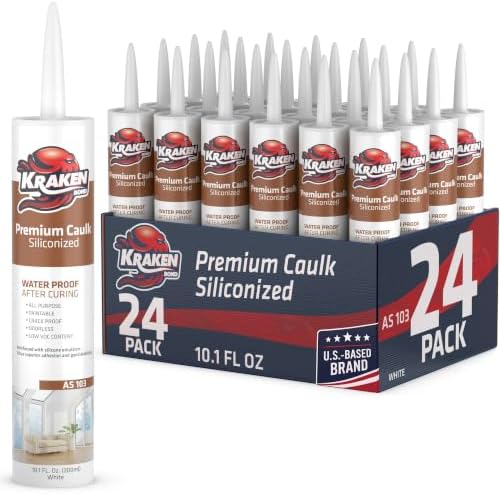
Kraken Bond is a paintable, siliconized acrylic latex caulk intended for indoor and outdoor sealing. Its listed uses include windows, doors, siding, and trim, making it a versatile option if your project involves several types of gaps rather than window trim alone.
The product description emphasizes adhesion to materials such as wood, aluminum, brick, glass, and painted surfaces. It also describes the cured seal as waterproof and the formula as flexible enough to handle minor joint movement. Those features are relevant around exterior trim, where a seal needs to bridge a gap while still leaving a finish you can paint.
The main trade-off is the pack size: the listing is for 24 cartridges. That can make sense for a large renovation or repeated maintenance work, but it may be more than you need for a small repair. As with other acrylic-based caulks, check the product label for application and curing instructions before exposing a fresh bead to weather.
Pros:
- Designed for interior and exterior use around windows, doors, and trim
- Paintable finish and low-odor formula, according to the product description
- Listed adhesion across a broad range of common building materials
- Large multi-cartridge pack for bigger projects
Cons:
- A 24-cartridge pack may be excessive for a single window repair
- Not the most targeted option if you only need a dedicated exterior sealant
Verdict: Choose Kraken Bond if you need a paintable, general-purpose caulk for multiple trim and home-sealing jobs and can use the larger pack.
Stanley S501 Acrylic Latex Caulk: Best for Paintable Window Trim

Stanley S501 is a white, siliconized acrylic latex caulk listed for window and door frames, siding, vents, soffits, and other home joints. It is designed for interior and exterior use, and its paintable finish suits trim jobs where you want the sealed seam to blend into the surrounding paint.
The product description highlights adhesion, flexibility, and a non-shrinking, non-cracking structure. It also notes that the caulk can be tooled and cleaned up with soap and water. Those details may be useful for a DIY project, especially if you want a water-based formula that is straightforward to work with.
Stanley’s listed pack contains 12 cartridges, so it is better suited to several windows or a larger maintenance project than a one-off gap. The description does not give a specific cure time or a joint-movement rating, so follow the package directions and do not assume it is interchangeable with a sealant that states a movement capacity.
Pros:
- Listed for exterior window and door frames as well as siding and trim
- Paintable with different kinds of paint, according to the description
- Soap-and-water cleanup
- 12-cartridge pack for larger jobs
Cons:
- The 12-pack may be more than needed for a small repair
- No specific cure time or movement rating is provided in the supplied details
Verdict: Stanley S501 is a practical option when you want a paintable, water-cleanup caulk for several exterior window or trim joints.
Liquid Nails Multi-Purpose Construction Caulk: Best for a Faster Paint Finish

Liquid Nails Multi-Purpose Construction Caulk & Sealant is intended for sealing gaps around windows, doors, baseboards, siding, and trim, both indoors and out. It is a broad-use product for homeowners who want one cartridge type for several repair areas.
Its standout detail is the stated paint-ready time: the description says it can be painted with oil or latex paint within one hour. It also describes the formula as easy to tool with good sag control and gives an approximate coverage of 30 linear feet using a quarter-inch bead. Actual coverage depends on the size and shape of the gap and how consistently you apply the bead.
The product is listed for a range of surfaces, including wood, masonry, glass, metal, vinyl, stucco, and concrete. That versatility is useful when exterior trim meets more than one material. Still, a fast paint-ready window is not the same as permission to expose a new bead to rain; check the package for full curing and weather guidance.
Pros:
- Designed for windows, doors, siding, and trim indoors and outdoors
- Listed as paintable with oil or latex paint within one hour
- Described as easy to tool with good sag control
- Approximate coverage information is provided for planning
Cons:
- Coverage will vary with bead size and the gaps being filled
- Paint-ready timing does not replace the product’s full weather and cure instructions
Verdict: Consider Liquid Nails if a short stated wait before painting is useful and you need a multi-surface caulk for several indoor or outdoor repairs.
DAP DYNAFLEX Ultra Exterior Sealant: Best for Flexible Exterior Joints

DAP DYNAFLEX Ultra is an exterior sealant designed for gaps around windows, doors, siding, and trim. Its product description focuses on flexibility and resistance to cracking and shrinking as temperatures and surfaces change. That makes it worth considering for exterior joints where movement is a concern.
The sealant is paintable and is listed for materials such as wood, vinyl, aluminum, brick, masonry, stucco, and fiber cement. The supplied option is medium beige, which may suit some trim colors but could require paint for a closer match. It comes in a standard 10.1-ounce cartridge for use with a caulk gun.
The supplied product data marks this option unavailable, so check the listing before planning a project around it. If it is not available or the color does not suit your trim, Titebond WeatherMaster is another exterior-focused choice in this comparison, while the acrylic latex options offer paintable alternatives.
Pros:
- Designed specifically for exterior gaps around windows and trim
- Flexible formula described as resisting cracking and shrinking
- Paintable and listed for several common exterior materials
- Standard cartridge format for a caulk gun
Cons:
- The listed color is medium beige, not white
- The supplied product data marks it unavailable
Verdict: DYNAFLEX Ultra is a strong match on paper for flexible, paintable exterior joints, provided it is available and its color works for your project.
Titebond WeatherMaster Sealant: Best for Joints That Move

Titebond WeatherMaster is a polymer sealant intended for exterior trim, windows, doors, shutters, siding, gutters, and vents. The supplied description states that it can handle joint movement of plus or minus 50%, making movement capability its clearest point of difference in this group.
It is listed for PVC, glass, fiberglass, masonry, wood, and other common building materials. The description also says it can be applied in extreme weather conditions, but you should still follow the cartridge label for the specific application conditions and surface preparation required.
This option is gray and is not described as paintable in the supplied product details. That matters if your window trim needs a painted finish: confirm paint compatibility with the manufacturer before choosing it for a visible seam. Compared with the acrylic latex choices, it is the more specialized pick when movement is the main concern.
Pros:
- Designed for exterior windows, doors, and trim
- Stated joint movement capability of ±50%
- Listed for a range of common building materials
- Product description notes application in extreme weather conditions
Cons:
- Gray may not blend with white or light-colored trim
- Paintability is not stated in the supplied product details
Verdict: Choose Titebond WeatherMaster when joint movement is a priority and its gray color and finish requirements suit your window trim.
How to Choose Caulk for Exterior Window Trim
Match the formula to the joint
Start by considering how much the joint may move and what materials meet at the seam. Acrylic latex and siliconized acrylic options in this guide are paintable choices for trim work. For joints where movement is a key concern, compare exterior sealants with a stated flexibility or movement capability, such as Titebond WeatherMaster.
Check that it is rated for exterior use
Exterior trim faces moisture and changing temperatures, so choose a product whose label specifically allows the intended outdoor use. Some products here are described for both indoor and outdoor applications, while DAP DYNAFLEX Ultra and Titebond WeatherMaster are positioned as exterior sealants. Follow the label’s instructions for application conditions and curing before exposing the bead to weather.
Consider whether you will paint the bead
If the seam needs to match painted trim, choose a product clearly described as paintable and check the stated wait before applying paint. Liquid Nails lists a one-hour paint-ready time, while Kraken Bond, Stanley S501, and DAP DYNAFLEX Ultra are also described as paintable. Do not assume a sealant is paintable if its product details do not say so.
Check color and finish before buying
Caulk color can be visible where the bead meets the trim, especially if you do not plan to paint it. The options in this comparison include white, medium beige, and gray. If color match matters, compare the product color with your window trim and siding, or plan to paint only if the product is confirmed as paintable.
Confirm compatibility with both surfaces
A window joint may bring together trim, siding, glass, masonry, or metal. Review the product’s listed compatible materials and make sure it covers both sides of the joint. When the exact surface is not listed, check the manufacturer’s instructions rather than assuming the caulk will bond as intended.
Buy the quantity that fits your project
One cartridge may be enough for a small gap, while several windows or a larger exterior repair can require more. Kraken Bond is listed as a 24-cartridge pack and Stanley S501 as a 12-cartridge pack, so those options are better suited to larger projects. Liquid Nails provides an approximate coverage figure for a quarter-inch bead, but your actual coverage will depend on the joint dimensions.
Prepare the joint and follow the label
Remove loose or failing material and prepare the surfaces as directed on the product label. Apply a steady bead, tool it as instructed, and respect the stated curing and weather limits. Even a caulk described as waterproof after curing should not be treated as fully cured immediately after application.
Frequently Asked Questions
What type of caulk is best for exterior window trim?
The best choice depends on the joint, surface materials, and finish you want. A paintable acrylic or siliconized acrylic caulk can suit trim you plan to paint. For a joint where movement is a major concern, compare exterior sealants with a stated movement capability.
Can I use acrylic latex caulk outside?
Some acrylic latex products are specifically described for both interior and exterior use, including Kraken Bond and Stanley S501 in this comparison. Check the package to confirm that the exact product is rated for outdoor use and follow its application and curing instructions.
Should exterior window caulk be paintable?
Paintable caulk is useful when you want the seam to match painted window trim. If you do not plan to paint, color may matter more. Confirm paint compatibility on the product label, especially for sealants that are not described as paintable.
How do I choose between a paintable caulk and a flexible sealant?
Consider the finish and the joint’s movement needs. Paintable caulk is a practical fit when a painted finish is important. If the joint may move, look for a product description that addresses flexibility or gives a movement rating. A sealant’s paintability should be confirmed separately.
Can I apply exterior caulk when rain is expected?
Do not rely on a general description alone to decide. Check the product label for application conditions and how long the bead needs protection while it cures. If the forecast could affect those conditions, wait for a suitable window to apply it.
How much caulk do I need for window trim?
It depends on the total length of the joints and the width and depth of each gap. Liquid Nails lists approximate coverage of about 30 linear feet with a quarter-inch bead, but actual coverage can differ. Measure the gaps and allow for variation in bead size.
Final Recommendation
For a paintable, general-purpose option, Kraken Bond and Stanley S501 cover common exterior trim uses, with pack size being an important difference. Liquid Nails is worth considering when its stated one-hour paint-ready time fits your project. If flexibility is the priority, compare DAP DYNAFLEX Ultra and Titebond WeatherMaster, while checking availability, color, and paint compatibility. Whichever you choose, match the caulk to the joint materials and follow the label’s preparation and curing directions.
