
Clean metal edges are easier to handle, assemble, and finish. The right deburring tool can remove sharp burrs in a controlled pass, but the best choice depends on your sheet thickness, blade type, and whether you need to smooth one edge or both sides at once. These five picks focus on double-sided sheet-metal tools, with differences in blade details, construction, and availability to consider before you buy.
Table of Contents
Quick Comparison
| Product | Key feature | Best for | Availability |
|---|---|---|---|
| Noga DB1000 Sheet Metal Deburring Tool | HSS blades; works on both sides at once | General-purpose sheet-metal work | Listed as available |
| Eliphs DB1000 Double Edge Cutting Deburring Tool | Rotatable, reversible round blades | Double-edge deburring when available | Listed as unavailable |
| Letturn DB1000 Deburring Tool | Alloy steel construction; 0–12 mm range | Regular sheet-metal edge work | Listed as available |
| Wrenmor Double Burr Remover DB1000 | Two rotating cutters and safety handle | Edge finishing and chamfering | Listed as available |
| Wrenmor DB1000 Double Sided Sheet Metal Tool | Includes two BN8010 HSS blades | Ready-to-use double-sided deburring | Listed as available |
Our Picks: Best Deburring Tools For Metal Edges reviews
1. Noga DB1000: A Versatile Pick with HSS Blades
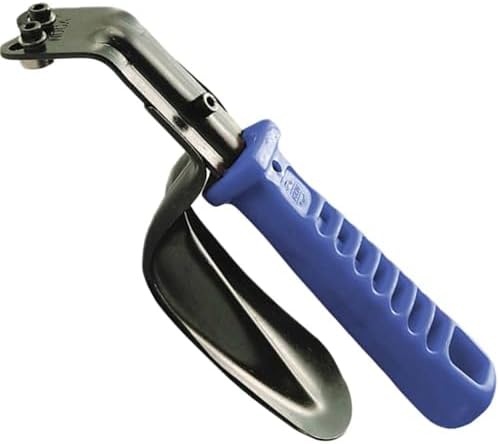
The Noga DB1000 is a double-sided sheet-metal deburring tool designed to cut burrs from both sides of an edge at once. Its supplied N80 high-speed steel blades have a stated working range of 0–12 mm, and the listing says they can be used on ferrous and nonferrous materials.
The round blades can be rotated and reversed to expose a fresh cutting area. A handguard is included with the DB handle, adding a barrier between your hand and the workpiece. For corners, the product instructions specify using one blade rather than both, which is worth keeping in mind if your parts have tight or varied shapes.
Compared with the other picks, this model has the clearest blade and application details in its listing. It is a sensible choice if you want a named HSS blade type and expect to work on both sides of sheet edges. Like other double-edge tools, it is specialized: it is not a general replacement for a file, scraper, or tool designed for a different edge profile.
Pros:
- Removes burrs from both sides of sheet metal in one pass
- Includes N80 HSS blades with a stated 0–12 mm range
- Blades can be rotated and reversed
- Includes a handle with a safety guard
Cons:
- The listing recommends using one blade for corners
- Double-sided cutting may be less suited to irregular or hard-to-reach edges
Verdict: Choose the Noga DB1000 if you want a clearly specified, HSS-blade double-edge tool for routine sheet-metal work.
2. Eliphs DB1000: A Simple Double-Edge Design

The Eliphs DB1000 is described as a double-edge tool that removes burrs from both sides of sheet metal at the same time. Its listing highlights round blades that can be rotated and reversed, along with a DB handle and safety guard.
The description also says two round-hole blades can be used for faster straight-edge chamfering. That makes the design most relevant to repeated work along straight sheet edges, rather than jobs that call for several different cutting shapes or a highly detailed blade specification. The supplied product information does not state the blade material or a working thickness range, so check those details before relying on it for a particular metal or sheet size.
This option is listed as unavailable in the supplied product data. If it appears for sale, confirm the current listing and blade details before making it your first choice. The Noga and Wrenmor listings provide more specific information about blade materials or included cutters.
Pros:
- Designed to deburr both sides of sheet metal at once
- Round blades can be rotated and reversed
- Includes a handle with a safety guard, according to the listing
Cons:
- Listed as unavailable in the supplied product data
- The product description does not specify blade material or working range
Verdict: Consider the Eliphs DB1000 only if it becomes available and its listing confirms the blade and size details you need.
3. Letturn DB1000: An Alloy Steel Option for 0–12 mm Edges

The Letturn DB1000 is a double-sided tool intended to chamfer and deburr sheet-metal edges. Its product description gives a 0–12 mm working range and identifies alloy steel construction. The circular cutting head is described as rotatable and replaceable.
A safety handle is included, and the tool is positioned for sheet-metal trimming, edge finishing, and maintenance tasks. The listing does not identify a specific blade grade or provide much detail about replacement cutters, so check compatibility and replacement-part availability if you expect heavy or frequent use.
Compared with the Noga pick, the Letturn listing gives a similar stated thickness range but less detail about the cutting blade itself. It may suit buyers who want the double-sided format and a stated range, while the Noga is the more clearly specified option for blade type.
Pros:
- Stated 0–12 mm working range
- Designed to work both sides of a sheet edge at once
- Rotatable and replaceable circular cutting head
- Alloy steel construction and safety handle are specified
Cons:
- The listing does not state a specific blade grade
- Replacement-blade details are limited in the supplied description
Verdict: The Letturn DB1000 is worth considering if its stated 0–12 mm range fits your work and you do not need a specifically identified blade grade.
4. Wrenmor Double Burr Remover: A Chamfering-Focused Pick

This Wrenmor DB1000 is described as a double-sided burr remover for sheet metal, with a stated 0–12 mm range. Its two circular cutters are designed to deburr both sides in one pass, and the listing also highlights straight-edge chamfering and edge finishing.
The description specifies a DB handle with a built-in safety guard and says the cutters can rotate and reverse. It also describes alloy steel construction and mentions use on mild steel, stainless steel, and aluminum. These are useful details to compare against your project, but broad durability claims in the listing should not be treated as a guarantee of service life.
Compared with the Letturn tool, this Wrenmor listing offers more detail about intended materials and edge-finishing tasks. However, it does not name a blade grade in the supplied description. If blade material matters to you, the Noga or the other Wrenmor model, which specifies HSS blades, gives clearer information.
Pros:
- Stated 0–12 mm range and double-sided cutting design
- Rotating, reversible cutters
- Safety guard is built into the handle
- Listing identifies mild steel, stainless steel, and aluminum as intended materials
Cons:
- The supplied description does not identify the blade grade
- Long-term wear claims are not a substitute for a stated service-life guarantee
Verdict: Pick this Wrenmor if its stated range and material list match your work, and you value a tool described for both deburring and chamfering.
5. Wrenmor DB1000 with Two Included BN8010 HSS Blades

This Wrenmor DB1000 is designed to smooth the top and bottom edges of sheet metal in one pass. Its listing specifies two BN8010 HSS blades and a 0–12 mm thickness range, making the included cutters a key point of difference from models whose descriptions do not name the blade material.
The round cutters can be rotated and reversed, and the handle has an integrated safety guard. The listing describes the tool as suitable for straight-edge chamfering on materials such as galvanized, stainless, and mild steel. It also notes that shoppers should use the manufacturer’s sizing information to check blade fit rather than relying on Amazon’s sizing chart.
This is a strong option if you want the blade type and included quantity spelled out before purchase. The main caution is to verify that BN8010 blades are the right fit for your needs and that the tool’s working range matches your material. The listing’s chamfering claims also make it especially relevant to straight edges; for complex profiles, consider whether a double-cutter setup will provide enough control.
Pros:
- Includes two BN8010 HSS blades
- Stated 0–12 mm range
- Rotating, reversible cutter design
- Includes a handle with an integrated safety guard
Cons:
- Blade fit should be checked against the manufacturer’s sizing information
- The double-sided design is most clearly suited to sheet edges and straight chamfering
Verdict: Choose this Wrenmor if you want a double-sided tool with two included, specifically identified HSS blades and your sheet thickness falls within its stated range.
How to Choose a Deburring Tool for Metal Edges
Match the tool’s working range to your sheet thickness
Check the tool’s stated range before buying, then compare it with the metal you plan to deburr. Several picks here list a 0–12 mm range, but not every product description provides one. If your material is near the stated limit, confirm the manufacturer’s sizing guidance rather than assuming the tool will fit.
Decide whether you need to cut one side or both
Double-sided tools are designed to remove burrs from the top and bottom of a sheet edge in one pass. That can be useful when you have many straight edges to finish. A single-blade setup may offer more control around corners or irregular shapes; the Noga listing specifically advises using one blade for corners.
Check blade material and replacement details
Blade material affects what you know about the cutting edge and how it is intended to be used. The Noga description identifies N80 HSS blades, and one Wrenmor listing specifies two BN8010 HSS blades. Other listings provide less detail. Before buying, confirm the blade type, replacement availability, and fit if you expect to use the tool often.
Consider the materials you plan to work on
Look for a product description that names the metals you use. The Noga listing describes general-purpose use on ferrous and nonferrous materials, while one Wrenmor listing names mild steel, stainless steel, and aluminum. Treat product descriptions as a starting point and check manufacturer guidance for your specific material and edge condition.
Think about edge shape and access
A double-cutter tool is built around sheet edges and is most straightforward on accessible, relatively straight runs. Corners, tight spaces, cutouts, and unusual profiles can call for a different approach or a single cutter. Choose based on the shape of your parts, not only the tool’s headline range.
Look for practical safety and handling features
A safety guard can help shield your hand from the workpiece and cutter, but it does not replace careful handling. Check that the handle shape and guard placement work for your grip, and follow the product instructions. Keep your hand clear of the cutting path and secure the workpiece before deburring.
Frequently Asked Questions
What does a double-sided metal deburring tool do?
It uses cutters positioned to remove burrs from both sides of a sheet-metal edge in a pass. The products here are designed around this type of edge finishing, though details such as blade material and working range vary.
Can these tools work on metal thicker than 12 mm?
The product descriptions that specify a range list 0–12 mm. Do not assume a tool will work beyond its stated range. Check the manufacturer’s specifications for the exact model before using it on thicker material.
Are these tools suitable for aluminum and steel?
Some listings name those materials, but the details differ by product. Noga describes general-purpose use on ferrous and nonferrous materials, and one Wrenmor listing names mild steel, stainless steel, and aluminum. Confirm the guidance for your selected tool and material.
What is the benefit of a rotatable or reversible blade?
Rotating or reversing a round cutter can expose another cutting area, as described in several product listings. Check how the blade is adjusted and replaced for the specific model you choose.
Can a double-sided tool deburr corners?
It depends on the tool and the corner shape. The Noga description says to use one blade for corners. For tight or irregular areas, check the manufacturer’s directions and consider whether a single-cutter tool would offer better control.
Which option provides the clearest blade information?
The Noga DB1000 listing names N80 HSS blades, while the second Wrenmor listing specifies two BN8010 HSS blades. The other supplied descriptions do not provide the same level of blade-grade detail.
What should I check before ordering replacement blades?
Confirm the cutter style and model compatibility using the manufacturer’s sizing information. The second Wrenmor listing specifically advises checking its manufacturer sizing chart rather than relying on Amazon’s sizing chart.
Final Recommendation
For a well-specified general-purpose choice, the Noga DB1000 stands out for its N80 HSS blades, stated 0–12 mm range, and safety guard. If you prefer a listing that specifies two included BN8010 HSS blades, consider the second Wrenmor option and verify blade fit before ordering. The Eliphs model is listed as unavailable in the supplied product data, so confirm its status and specifications before choosing it.
