
A non-condensing tankless water heater can be a practical way to get hot water on demand without keeping a storage tank full. The right choice depends on your fuel supply, installation location, incoming water temperature, and how many hot-water fixtures you expect to use at once. The five options below include indoor and outdoor models, natural gas and propane units, and different flow-rate claims. Check each model’s installation manual and sizing guidance before you buy, especially where the listing details conflict.
Table of Contents
Quick Comparison
| Product | Fuel and installation | Listed flow rate | Standout detail |
|---|---|---|---|
| Rheem RTG Series 7.0 GPM Indoor | Natural gas, indoor | 7.0 GPM at a 35°F rise | Leak detection and prevention |
| Rheem RTG Series 7.0 GPM Outdoor | Propane, outdoor | 7.0 GPM at a 35°F rise | Outdoor installation eliminates venting through the home |
| Rinnai RE160eP | Propane, outdoor | Up to 6.1 GPM | Compact design and service reminders |
| Westinghouse Propane Tankless Heater | Propane; installation details need confirmation | Up to 7.9 GPM | App and voice controls listed |
| Rheem RTG-84XLN-1 | Natural gas, outdoor | 8.4 GPM | Water-saving technology and hot-start programming |
Our Picks: Best Non Condensing Tankless Water Heater reviews
1. Rheem RTG Series 7.0 GPM Indoor Natural Gas: Best for Whole-Home Indoor Use

This indoor Rheem is a non-condensing natural gas model rated for 160,000 BTU per hour. Its listed output is 7.0 GPM at a 35°F temperature rise, and the product information says it is designed to serve two to three simultaneous showers. Actual flow at your home will depend on incoming water temperature and how much heat the water needs.
The wall-mounted design saves floor space, while the digital control panel allows temperature adjustments in 1°F increments. The listing also specifies freeze protection, flame-failure protection, and LeakGuard leak detection and prevention. Because this is an indoor unit, plan for the required venting and have an installer confirm that your home’s gas line and vent route suit the heater.
This is the clearest fit in the group if you want an indoor, natural-gas, non-condensing unit with leak-protection features. Its main limitation is that its capacity is not a guarantee of several fixtures running at full flow in every climate. The listing also gives a performance figure at a specific temperature rise, so use your local water conditions when sizing.
Pros:
- Explicitly identified as a non-condensing natural gas heater
- Listed at 7.0 GPM at a 35°F temperature rise
- Leak detection, freeze protection, and flame-failure protection are specified
- Digital control allows 1°F temperature adjustments
Cons:
- Requires an appropriate indoor venting setup
- Availability and installation details should be confirmed before purchase
Verdict: Choose this Rheem if you need an indoor natural gas model and can meet its venting and installation requirements.
2. Rheem RTG Series 7.0 GPM Outdoor Propane: Best for Outdoor Propane Installation

This Rheem is the propane counterpart to the indoor natural gas model above. The listing identifies it as an outdoor, non-condensing unit rated at 160,000 BTU per hour and 7.0 GPM at a 35°F rise. It is designed for whole-home use, with the stated capacity intended for two to three simultaneous showers under the conditions described by the manufacturer.
Outdoor placement can avoid routing a vent through the home, but it does not remove the need for correct installation. The product information describes a metal cabinet, wall mounting, freeze protection, flame-failure protection, and a digital temperature control. One detail needs extra checking: the listing’s closing text refers to an “indoor” heater even though the product title and main description identify an outdoor model. Confirm the exact configuration and installation instructions with the seller or manufacturer before ordering.
This model makes sense if your home uses propane and an outdoor installation is suitable. Compared with the indoor Rheem, it shifts the installation location outside while keeping the same listed flow and heat output. It is not the right match for a natural-gas connection, and the product’s conflicting installation wording deserves attention.
Pros:
- Non-condensing propane model for outdoor installation
- Listed at 7.0 GPM at a 35°F temperature rise
- Outdoor placement avoids venting through the home
- Includes stated freeze and flame-failure protection
Cons:
- Not compatible with a natural-gas-only setup
- Product details contain conflicting indoor and outdoor wording
Verdict: Consider this Rheem for an outdoor propane setup, but verify the installation type and requirements before purchase.
3. Rinnai RE160eP Non-Condensing Propane: Best Compact Outdoor Option

The Rinnai RE160eP is an outdoor, non-condensing propane heater with a listed maximum flow of 6.1 GPM. Its product description calls out a compact, suitcase-sized design and an internal layout intended to support installation and service access. An LED screen provides service reminders and error codes.
At its stated maximum, this model has less listed flow than the two 7.0 GPM Rheem options and the 8.4 GPM Rheem below. That difference may matter if several high-flow fixtures run together. The description says it can supply up to five fixtures at once, but the number of fixtures alone does not show how much hot water they can draw simultaneously. Check the sizing guidance for your specific household.
The product information recommends professional installation. It also lists a residential warranty with different coverage periods for the heat exchanger, parts, and labor, with registration required within 90 days for the stated labor coverage. Optional Wi-Fi control requires a separate Controlr module, so it is not built in as a standard feature.
Pros:
- Explicitly identified as a non-condensing propane heater
- Compact outdoor design
- LED screen displays service reminders and error codes
- Warranty coverage is specified for the heat exchanger, parts, and labor
Cons:
- Lower listed maximum flow than the higher-capacity options here
- Wi-Fi control requires a separate module
Verdict: Pick the Rinnai if you want a compact outdoor propane unit and its 6.1 GPM maximum fits your household’s expected demand.
4. Westinghouse Propane Tankless Heater: Highest Listed Flow, but Confirm the Details

The Westinghouse listing gives this propane heater a maximum output of 7.9 GPM and 180,000 BTU, the highest figures among the five products compared here. It also specifies app and voice controls, 1°F temperature stability, freeze protection, a variable-speed combustion fan, and a copper heat exchanger.
There is a significant specification problem to resolve: the title calls it an indoor heater, but the description says it is designed for outdoor installation and later refers to indoor performance. The supplied information also does not clearly identify it as a non-condensing model. Do not assume its installation location or heater type based on the title alone. Confirm both points in the manufacturer’s documentation before deciding whether it belongs in your setup.
If the listed controls and capacity match the exact model and installation you need, this could be an appealing feature-rich propane option. But compared with the Rheem and Rinnai models above, it requires more fact-checking before purchase. The description also says the unit needs 120V AC power and advises draining it in very cold conditions or during long periods of non-use.
Pros:
- Highest listed flow rate and BTU output in this comparison
- App and voice controls are listed as included
- Temperature stability is specified within ±1°F
- Copper heat exchanger and freeze protection are listed
Cons:
- Listing conflicts about indoor versus outdoor installation
- Non-condensing status is not clear in the supplied description
Verdict: Treat this as a conditional option: verify the exact model’s installation location and non-condensing design before buying.
5. Rheem RTG-84XLN-1 8.4 GPM: Best for a Higher Listed Natural Gas Flow
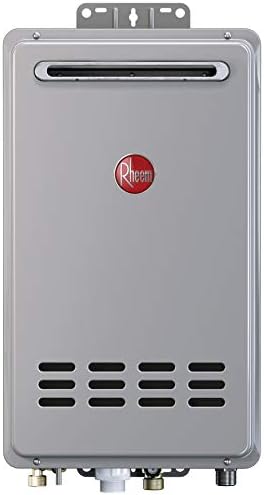
This outdoor Rheem natural gas model is listed at 8.4 GPM and 157,000 BTU. The product information describes it as a mid-efficiency heater and highlights water-saving technology that may conserve up to 1,100 gallons per year. It also has Hot Start programming, which is designed to reduce a cold-water burst by keeping the unit in a ready-fire state.
Its listed flow is higher than the other options in this comparison, but the product details do not provide the temperature-rise condition for that 8.4 GPM figure. It also does not explicitly state “non-condensing” in the supplied description. If non-condensing construction is a firm requirement, confirm the model’s heat-exchanger type and installation instructions before buying rather than relying only on the “mid-efficiency” label.
The outdoor design includes freeze protection described as covering temperatures down to -30°F. That specification does not replace the need to follow the manufacturer’s installation and protection instructions for your location. This model may suit a natural-gas home that wants a higher stated flow rate, but it has fewer control and safety details listed than the newer Rheem RTG option in this comparison.
Pros:
- Highest listed flow rate among the five options
- Outdoor natural gas design
- Hot Start programming is designed to limit cold-water bursts
- Water-saving technology is specified in the product description
Cons:
- Non-condensing status is not explicit in the supplied details
- The temperature rise for the listed 8.4 GPM figure is not provided
Verdict: Consider this Rheem for outdoor natural gas service when its actual sizing data fits, but verify its non-condensing status first.
How to Choose a Non-Condensing Tankless Water Heater
Match the Fuel to Your Home
Start by confirming whether your home is set up for natural gas or propane. These fuels are not interchangeable without the correct appliance configuration, so choose a model made for your fuel supply. Also have a qualified installer confirm that your gas line can support the heater’s input requirements.
Size for Temperature Rise and Hot-Water Demand
A heater’s GPM rating only tells part of the story. The amount of hot water it can deliver depends on the temperature rise required to bring incoming water to your chosen setting. Colder incoming water requires a larger rise, which can reduce the flow available. Estimate which fixtures might run at the same time, then compare that demand with the manufacturer’s flow charts for your local water temperature.
Choose Indoor or Outdoor Installation Carefully
Indoor models require a suitable venting plan, while outdoor models need an approved location and protection appropriate to the climate. Installation rules can vary by model and location, so use the product manual and local code requirements. If a product listing gives conflicting indoor and outdoor information, pause and confirm the exact model before ordering.
Verify That the Unit Is Actually Non-Condensing
Do not assume every gas tankless heater in a mid-efficiency category is non-condensing. Check the product’s technical documents for the heater type and required venting. A non-condensing model may have different installation needs from a condensing unit, so make sure the vent materials, route, and clearances are approved for the specific heater.
Check Electrical Needs and Cold-Weather Protection
Gas tankless heaters may still need electricity for controls and other components. Confirm the required power source and whether an outlet is available near the installation site. If the unit will be exposed to freezing conditions, check its stated freeze protection and follow the manufacturer’s instructions for draining or protecting the system during outages or extended periods of non-use.
Review Warranty and Installation Requirements
Compare the warranty coverage for the heat exchanger, parts, and labor, and note any registration requirements. Professional installation is recommended or required for several models in this group. Ask a qualified installer to review the fuel connection, venting or outdoor location, water connections, and service access before you choose a unit.
Frequently Asked Questions
What does non-condensing mean for a tankless water heater?
It describes a type of gas water heater that does not use a secondary heat exchanger to capture additional heat from exhaust gases. Because installation details differ by model, check the manufacturer’s documentation for the required venting and clearances.
Can a 7.0 GPM heater supply several showers at once?
It may, depending on the required temperature rise and the flow rate of each shower. The Rheem models in this comparison list 7.0 GPM at a 35°F rise, but your actual available flow can differ with incoming water temperature and household demand.
Should I choose an indoor or outdoor tankless heater?
Choose based on your home’s layout, local climate, and the installation requirements for the specific model. Indoor units need an approved venting plan. Outdoor units avoid venting through the home but still need a suitable location and any required cold-weather protection.
Can I use a propane heater with natural gas?
Do not assume that you can. Choose a model designed for your home’s fuel type, and have a qualified professional verify the appliance and gas connection before installation.
Does a higher GPM rating always mean a better heater?
No. A higher figure can be useful, but it must be considered alongside temperature rise, fuel supply, installation limits, and the hot-water demand in your home. Compare the manufacturer’s performance data at conditions close to yours.
Do these heaters need electricity?
Some gas tankless models need an electrical connection for their controls and operating components. The Westinghouse listing specifically calls for 120V AC power. Check the installation instructions for the exact model you are considering.
Final Recommendation
For the clearest match to the non-condensing category, the Rheem RTG Series 7.0 GPM models are the strongest starting points: choose the indoor natural gas version if you have a suitable venting route, or the outdoor propane version if your home uses propane and the installation details check out. The Rinnai RE160eP is a compact outdoor propane alternative with a lower listed maximum flow. Treat the Westinghouse and Rheem RTG-84XLN-1 as options to verify carefully because the supplied information does not clearly confirm all the installation or non-condensing details. Before purchasing any of them, have a qualified installer check sizing, fuel, venting, and local requirements.
