
The best roller for oil-based paint depends on the surface and the finish you want. For smooth doors, cabinets, and furniture, a high-density foam mini roller can help lay down a neat coat. For larger areas, a wider roller is faster—but its cover must be compatible with oil-based coatings. These five options include two kits that specifically list oil-based paint compatibility, plus broader kits and one powered roller that is intended for latex paint instead.
Table of Contents
Quick Comparison
| Product | Best for | Oil-based paint fit | Key feature |
|---|---|---|---|
| Mister Rui 4-Inch Foam Paint Roller Kit | Small, smooth surfaces | Lists oil-based paint compatibility | Foam covers, frame, tray, and liner |
| Rhibak 27-Piece Paint Roller Kit | Mixed-size projects | Lists oil-based paint compatibility | Four- and nine-inch rollers, brushes, and extension pole |
| Mister Rui 4-Inch Foam Roller Set | Touch-ups and detail work | Lists oil-based paint compatibility | Five foam covers and a basic tray setup |
| Bates Paint Roller Kit with Extension Pole | Walls and higher areas | Cover compatibility is not specified | Four- and nine-inch frames with an extension pole |
| Wagner SMART Paint Roller | Latex paint on walls and ceilings | Not listed for oil-based paint | Paint-holding handle and trigger feed |
Our Picks: Best Roller For Oil Based Paint reviews
1. Mister Rui 4-Inch Foam Paint Roller Kit: Best Overall for Smooth, Small Surfaces

This compact kit is a practical choice for oil-based paint projects on smooth, smaller surfaces. It includes five high-density foam covers, a four-inch frame, a deep paint tray, and a tray liner. The product information lists the foam covers as compatible with oil- and water-based paints, as well as stains, varnishes, enamels, and primers.
Foam is a sensible format for doors, cabinets, trim, and furniture when you want to avoid loose fibers and keep control around edges. The small roller is easy to maneuver, but it will take longer than a full-size roller on broad walls. The kit’s sturdy frame and tray also make it more complete than a pack of replacement covers alone.
One point to keep in mind: foam rollers are best suited to smooth surfaces. On rough or heavily textured areas, a different cover style may provide more even coverage. For oil-based paint, follow the paint label’s instructions and test the roller on a small area first.
Pros:
- Specifically listed for oil-based coatings
- Includes five foam covers, frame, tray, and liner
- Small size offers control for cabinets, doors, and trim
- High-density foam is designed for a smooth, lint-free finish
Cons:
- Four-inch width is slow for large surfaces
- Foam is not the most versatile choice for rough textures
Verdict: Choose this kit if you mainly paint smooth, smaller surfaces and want a complete foam roller setup that lists oil-based paint compatibility.
2. Rhibak 27-Piece Paint Roller Kit: Best for Projects with Different Surfaces

The Rhibak set is the most extensive option here. It includes four- and nine-inch roller covers and frames, brushes, trays, a scraper, a paint-can opener, a stirring rod, and an adjustable extension pole. Its product description says the kit can be used with oil- and water-based paints, stains, varnishes, and other coatings.
The different roller sizes make it easier to switch between broad areas and narrow spots. The extension pole adjusts from 23 to 47 inches, which can help you reach higher sections without constantly moving a ladder. The set’s microfiber covers are described as low-lint and able to hold paint; however, the product information does not give a nap length or specify which surfaces each cover best suits.
This is a better fit for someone who needs a range of tools than for a small cabinet touch-up. A large kit also means more parts to sort and clean, especially when using oil-based paint. Check the coating label for cleanup directions and confirm that the included cover is suitable for your surface before starting.
Pros:
- Lists compatibility with oil-based coatings
- Includes both four- and nine-inch rollers
- Adjustable extension pole helps reach higher areas
- Includes brushes and several useful painting accessories
Cons:
- Large set may be more than needed for a small job
- Cover nap details are not provided
Verdict: Pick the Rhibak kit if your project spans walls, trim, and hard-to-reach spots and you want multiple roller sizes and tools in one set.
3. Mister Rui 4-Inch Foam Roller Set: Best Simple Kit for Touch-Ups
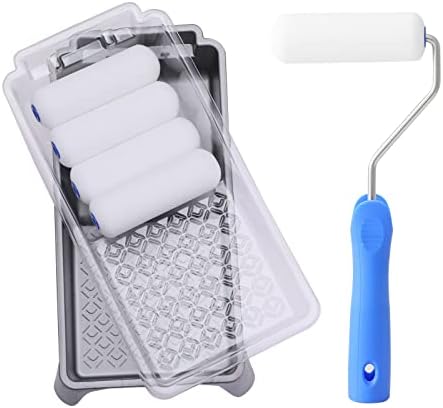
This Mister Rui set is a straightforward mini-roller option for small painting jobs. It comes with five four-inch foam covers, a frame, a plastic tray, and a tray liner. The product description specifically says the covers can be used with oil- or water-based paint and are intended for flat surfaces such as doors, tables, and cupboards.
Its main appeal is simplicity: you get the core parts needed to begin without a large assortment of brushes or accessories. The foam design is intended to avoid fiber loss and produce a smooth, even finish. That makes it a natural match for smaller, flat areas where a full-size roller would be awkward.
Compared with the first Mister Rui kit, this set has a similar mini-roller focus but a more basic tray setup. It does not include the same deep-well tray described for the other kit. As with any foam roller, it is less suited to textured surfaces or jobs where you need to cover a large area quickly.
Pros:
- Lists compatibility with oil-based and water-based paints
- Includes five covers, a frame, tray, and liner
- Compact format suits furniture, doors, and touch-ups
- Foam covers are designed for a smooth finish without loose fibers
Cons:
- Small roller is inefficient for large walls
- Basic tray may be less convenient than a deeper tray
Verdict: This is a good pick for occasional small jobs if you want a simple four-inch foam roller set with stated oil-based paint compatibility.
4. Bates Paint Roller Kit with Extension Pole: Best for Walls and High Areas

The Bates kit pairs a nine-inch roller for broader areas with a four-inch roller for details. It includes six covers, two frames, a plastic tray, and a stainless steel extension pole that extends to three feet. That combination is useful when you need more reach or want to move between larger sections and smaller areas.
The product description highlights durable frames and covers designed to hold paint and apply it evenly. However, it does not identify the cover material or specifically state that the covers work with oil-based paint. That missing detail matters: before using this set with an oil-based coating, check the cover packaging or confirm compatibility with the seller or manufacturer.
For shoppers who already know the covers match their coating, the wider roller and pole offer a practical setup for walls and ceilings. If oil-based compatibility is the deciding factor and you want a clear statement in the product information, the Mister Rui and Rhibak options are safer choices based on the details available here.
Pros:
- Includes both four- and nine-inch roller frames
- Three-foot extension pole adds reach
- Six covers are included
- Useful mix for broad surfaces and detail work
Cons:
- Oil-based paint compatibility is not specified
- Cover material and nap details are not provided
Verdict: Consider this kit for larger areas if you can verify that its covers suit your oil-based paint; otherwise, choose an option with explicit compatibility information.
5. Wagner SMART Paint Roller: A Powered-Feed Option for Latex, Not Oil-Based Paint

The Wagner SMART Roller uses a paint-holding handle and trigger to feed paint to the roller cover. The handle holds up to 22 ounces, and the product description says one fill can cover up to 70 square feet. It is designed to reduce trips to a tray and provide reach for walls and ceilings.
There is an important limitation for this guide: Wagner describes the tool for latex paints, including paint-and-primer combinations. It does not list oil-based paint compatibility, so it is not a suitable recommendation for an oil-based paint job based on the supplied product information. It also calls for water flushing during cleanup, which reinforces that the stated use is for water-based coatings.
This tool may make sense if you are painting with latex and want paint fed through the handle, but oil-based paint shoppers should look elsewhere. It is also listed as unavailable in the supplied product data, so it may not be an option to purchase at the time you check.
Pros:
- Paint feeds from the handle, so a separate roller tray is not needed during use
- Designed to reach walls and ceilings
- Can be used with latex paint, according to the product information
Cons:
- Oil-based paint compatibility is not listed
- Product is listed as unavailable in the supplied data
Verdict: Skip this roller for oil-based paint; consider it only if you need a paint-fed roller for latex and confirm it is available.
How to Choose a Roller for Oil-Based Paint
Confirm the cover works with your paint
Start with the roller cover’s stated compatibility, not just the frame or kit name. Look for wording that specifically includes oil-based paint or the type of coating you plan to use, such as enamel or varnish. If the product details do not say, check the cover packaging or ask the manufacturer before buying. A roller can fit the frame and still be a poor match for the coating.
Match the roller material to the surface
Foam mini rollers are a useful option for smooth, flat surfaces such as cabinets, doors, and furniture. They are compact and designed to apply paint without loose fibers. For large walls, a wider cover can save time, while a textured surface may need a cover chosen specifically for that texture. The product information for the larger kits does not always specify cover material or nap, so verify those details for your job.
Choose a practical roller width
A four-inch roller gives you control around trim, furniture, and narrow sections, but it takes many more passes to cover a wall. A nine-inch roller is more efficient on broad areas, while a kit with both sizes can handle a mix of surfaces. If your project is limited to a door or cabinet, a mini roller kit may be easier to manage than a large set.
Consider how much equipment you need
A basic kit with covers, a frame, and a tray is often enough for a small project. Larger kits add brushes, extra roller sizes, trays, and other accessories, which can be useful if you are doing several kinds of work. More parts can also mean more setup and cleanup. Choose the simplest kit that covers your actual needs.
Think about reach and control
An extension pole can help with high walls and ceilings, while a short-handled mini roller is easier to guide on detailed work. If you are painting overhead or in a tall room, check the pole’s length and how it attaches to the frame. For small, precise areas, reach is less important than having a stable frame and a roller width you can control.
Plan for cleanup and paint handling
Oil-based paints and related coatings have different cleanup needs from water-based paints. Follow the directions on the paint container and on the roller cover, frame, and tray. A tray liner may simplify cleanup, but it does not replace the coating’s instructions. Avoid assuming that a powered or paint-fed roller is compatible with oil-based paint unless the manufacturer says so.
Frequently Asked Questions
Can you use a foam roller with oil-based paint?
Yes, if the foam cover is labeled for that coating. Both Mister Rui foam sets in this guide list oil-based paint compatibility. Check the product instructions and test the roller on a small area before applying paint across the full surface.
Is a foam roller a good choice for cabinets and doors?
A foam mini roller can be a practical choice for smooth, flat surfaces such as cabinets and doors. Its small size helps with control, and the foam covers in the Mister Rui kits are designed for smooth finishes. Use a brush where the shape or edges are too detailed for a roller.
Should I choose a four-inch or nine-inch roller?
Choose a four-inch roller for narrow areas, trim, furniture, and touch-ups. A nine-inch roller is generally more efficient for broad surfaces. If your project includes both, a kit with both sizes can reduce the need to switch tools or buy another frame.
Can I use any roller cover with oil-based paint?
No. The cover material and its stated coating compatibility matter. If the product information does not clearly list oil-based paint, verify compatibility before using it. This is especially important for kits where the cover material is not specified.
Is the Wagner SMART Roller suitable for oil-based paint?
The supplied product information describes the Wagner SMART Roller for latex paints and does not list oil-based paint compatibility. For an oil-based project, choose a roller that specifically states it works with your coating.
Do I need an extension pole for oil-based painting?
Not for every project. An extension pole can help you reach high walls or ceilings, but it is unnecessary for furniture, cabinets, and other low, small surfaces. Choose based on your working height and the roller frame’s compatibility with the pole.
Final Recommendation
For most small oil-based paint projects on smooth surfaces, the Mister Rui 4-Inch Foam Paint Roller Kit is the strongest match: it includes the basic tools and clearly lists oil-based paint compatibility. Choose the Rhibak set if you need both mini and full-size rollers, brushes, and extra reach. For larger roller kits without a clear compatibility statement, confirm the cover is suitable before you start. Avoid the Wagner SMART Roller for oil-based paint because its stated use is for latex coatings.
