
A rug that slides or curls on a wood floor can be annoying—and may create a tripping hazard. The right gripper depends on your rug’s backing, how much of its edge needs support, and whether you prefer a reusable adhesive pad or a cushioned, nonadhesive layer. These five options include edge strips, corner-shaped stickers, and a trim-to-fit rug pad. Check the product’s compatibility notes before buying, especially if your rug has a fluffy, jute, or rubber backing.
Table of Contents
Quick Comparison
| Product | Type | Best suited for | Key detail |
|---|---|---|---|
| GORILLA GRIP Extra Long Rug Grippers | Adhesive edge grippers | Supporting straight rug edges | Reusable 6.5-by-2-inch rectangular pads |
| Rabenda Rug Tape Grippers | Adhesive corner grippers | Anchoring rug corners | Triangle pads that can be cut smaller |
| Tiergrade Rug Tape | Grid-style adhesive grippers | Corner support with a thin profile | Includes 16 pieces |
| GORILLA GRIP Slip Resistant Rug Gripper Pad | Nonadhesive cushioned pad | Adding grip and cushioning beneath a rug | Measures 2 by 3 feet and can be trimmed |
| ZONGOOL Rug Tape | Adhesive tape strips | Securing corners and rug edges | 12 washable, reusable strips |
Our Picks: Best Rug Gripper For Wood Floors reviews
GORILLA GRIP Extra Long Rug Grippers: Best for Straight Edges

These rectangular adhesive grippers are designed to run along the straight edges of an area rug. Each pad measures 6.5 by 2 inches, so it covers more edge than a small corner-only sticker. The low-profile design is intended to stay hidden beneath the rug.
The pads attach to both the rug and the floor, and the maker describes them as removable and reusable. When they need refreshing, the instructions call for wiping them with a damp cloth and letting them dry before applying them again. They are made for hardwood, vinyl, and most smooth floors, but not for carpet-to-carpet use.
This is a practical choice if the sides of your rug lift or shift and you want to add support along the border. The product can also be paired with the brand’s separate corner grippers for more coverage. The main limitation is its shape: rectangular edge pads are less targeted for a rug whose main problem is curled corners. As with any adhesive, check the backing and floor-care instructions before use.
Pros:
- Long rectangular shape suits straight rug edges.
- Low-profile pads are designed to stay out of sight.
- Reusable after cleaning and drying.
- Can be combined with corner grippers for more coverage.
Cons:
- Not intended for carpet-to-carpet use.
- May be more coverage than needed if only the corners curl.
Verdict: Choose these grippers if you want reusable adhesive support along the straight edges of a rug on a smooth floor.
Rabenda Rug Tape Grippers: Best for Adjustable Corner Support

Rabenda’s grippers use a triangle shape intended to anchor rug corners while keeping the pads mostly hidden. Each piece measures 5.9 inches along the base and 2.95 inches high. The product information says the pads can be cut into smaller triangles or strips, giving you some flexibility for different corner shapes and edge lengths.
The adhesive pads are described as removable and reusable. To restore their grip, the instructions suggest cleaning them with water or soapy water; rubbing alcohol is also mentioned as an option. The maker lists hardwood, tile, concrete, and marble as suitable floor types.
The adjustable shape is useful if you want to tailor coverage rather than use one fixed-size strip. However, the backing matters: the product is not recommended for rugs with fluffy, jute, or rubber backing, or for rugs placed over carpet. Those limits make it important to check your rug before choosing this option.
Pros:
- Triangle shape is designed to support rug corners.
- Can be cut into smaller shapes or strips.
- Thin pads are intended to remain hidden beneath the rug.
- Designed to be cleaned and reused.
Cons:
- Not recommended for fluffy, jute, or rubber rug backing.
- Not intended for rugs placed over carpet.
Verdict: Rabenda is a good fit if you need adaptable corner grippers and your rug backing is compatible with adhesive pads.
Tiergrade Rug Tape: Best for Thin, Grid-Style Grippers
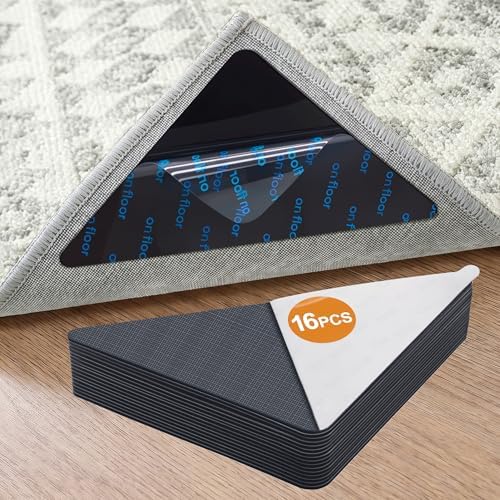
This set includes 16 adhesive grippers with a triangle shape and a grid-style adhesive design. The pads are intended to hold the rug in place while allowing airflow through the grid. Their thin profile is designed to avoid changing the rug’s flat appearance.
Installation uses two peel-off liners: attach one side to the rug, remove the second liner, then press the pad onto the floor. The instructions stress cleaning both contact surfaces first. The pads are described as reusable and can be cleaned with water or soapy water; rubbing alcohol is also suggested to help restore adhesion.
The piece count may be useful if you want to place grippers at several corners or along more than one rug. Tiergrade lists hardwood, tile, concrete, and marble as compatible surfaces. It also cautions against using the pads with fluffy, jute, or rubber rug backing, or on a rug over carpet. The grid design sets this option apart from the solid-style adhesive pads in the comparison, though it still depends on suitable surfaces and careful installation.
Pros:
- Includes 16 pieces for flexible placement.
- Thin grid design is intended to allow airflow.
- Reusable after cleaning.
- Designed for several smooth floor types, including hardwood.
Cons:
- Not recommended for fluffy, jute, or rubber rug backing.
- Both contact surfaces need to be clean before installation.
Verdict: Consider Tiergrade if you want multiple thin adhesive grippers and your rug’s backing is suitable for this type of pad.
GORILLA GRIP Slip Resistant Rug Pad: Best for Cushioning Without Adhesive

Unlike the adhesive products in this list, this GORILLA GRIP pad sits between the rug and floor without sticking to either surface. Its open-grid construction is designed to grip both sides, while the cushioning adds softness and can help reduce everyday noise. The pad measures 2 by 3 feet and can be trimmed with scissors to fit a different rug shape.
The pad is reversible and vacuum-friendly, and its open-grid design is intended to let floors breathe. The product is made from OEKO-TEX Certified materials, according to its description. For setup, the floor should be clean, and the maker advises securing the corners for a stronger hold.
This option is worth considering if you prefer to avoid adhesive contact with your floor or want extra cushioning beneath a smaller rug. It is less suitable when you need an adhesive anchor along a particular edge, and you will need to trim it if the included size does not match your rug. The description does not specify compatibility with every rug backing, so check fit and care guidance before placing it.
Pros:
- Nonadhesive design avoids sticking directly to the floor.
- Adds cushioning beneath a rug.
- Can be trimmed to fit different shapes.
- Reversible and vacuum-friendly.
Cons:
- The included 2-by-3-foot size may need trimming.
- Does not provide targeted adhesive support along a specific edge.
Verdict: Pick this pad if cushioning and a nonadhesive setup matter more to you than having small, targeted grippers.
ZONGOOL Rug Tape: Best for Reusable Adhesive Strips

ZONGOOL supplies 12 double-sided tape strips for securing a rug to a hard floor. The strips are labeled to show which side goes on the rug and which goes on the floor, making the intended placement clear. The product is designed to reduce shifting and corner curling on rugs of different shapes.
The maker describes the strips as washable and reusable. For a stronger hold, the floor should be dry, flat, and free of dust, wax, grease, and hair. To remove the tape, the instructions recommend lifting it with the rug, dampening the adhesive, and peeling slowly. The product is listed for hardwood, tile, laminate, marble, concrete, and wall surfaces.
This set offers more strips than a small corner-only pack, which can help if you want to secure several points around a rug. It is not recommended for fluffy, jute, or rubber backing, or for rugs placed over carpet. Although the description says the adhesive is designed to leave no sticky residue, removal should still be done slowly and according to the directions.
Pros:
- Includes 12 strips with placement labels.
- Designed to be washed and reused.
- Can support rugs of different shapes.
- Listed for several hard-floor surfaces, including hardwood.
Cons:
- Not recommended for fluffy, jute, or rubber rug backing.
- Needs a clean, dry, flat surface for installation.
Verdict: ZONGOOL is a useful option if you want multiple reusable adhesive strips and can follow its surface and backing restrictions.
How to Choose a Rug Gripper for Wood Floors
Match the Gripper to Your Rug’s Backing
Start by checking what the underside of your rug is made of. Several adhesive options here are not recommended for fluffy, jute, or rubber backing, and some also warn against use over carpet. If the product instructions do not clearly cover your rug, choose a compatible option rather than assuming the adhesive will hold safely.
Choose Between Adhesive and Nonadhesive Designs
Adhesive grippers attach to both the rug and floor, which can provide targeted support at corners or along edges. A nonadhesive pad sits under the rug instead and may be preferable if you do not want sticky pads on the floor. The trade-off is that a full pad may need trimming and may add more cushioning than a slim corner gripper.
Consider Where the Rug Moves or Curls
If only the corners lift, triangle-shaped grippers or tape strips may be a direct fit. If a long side shifts or bunches, rectangular edge pads can provide support along that border. A cushioned pad covers the area beneath the rug rather than focusing on one edge, so consider the pattern of movement before choosing.
Check Floor Compatibility and Care Instructions
Products can list different compatible surfaces, even when they are all intended for hard floors. Confirm that the gripper is listed for your floor type and follow its cleaning and removal directions. Because floor finishes vary, consider testing a discreet area first, particularly before using adhesive on a finished wood floor.
Measure Before You Buy
Compare the pad or strip dimensions with your rug. The GORILLA GRIP edge grippers are 6.5 by 2 inches, the Rabenda pieces are triangular and can be cut smaller, and the nonadhesive GORILLA GRIP pad measures 2 by 3 feet and can be trimmed. A quick measurement helps you estimate coverage and avoid buying a format that does not suit your rug.
Plan for Installation and Reuse
Adhesive products generally need clean contact surfaces and firm pressure during installation. Dust, hair, moisture, or residue can interfere with adhesion, so prepare the floor and rug as directed. If you expect to move or wash the rug, look for a product described as reusable and read how it should be cleaned and removed.
Frequently Asked Questions
What type of rug gripper works best on wood floors?
It depends on the rug and the problem you want to solve. Adhesive pads can target corners or edges, while a nonadhesive rug pad adds grip beneath a larger area and may provide cushioning. Check floor and rug-backing compatibility before choosing.
Can adhesive rug grippers damage a wood floor?
Some products are described as removable or designed to leave no residue, but that is not a guarantee for every floor finish or installation. Follow the product’s removal instructions, and consider testing a discreet spot first.
Are these grippers suitable for every rug backing?
No. Some of the adhesive products specifically advise against fluffy, jute, or rubber backing. The restrictions vary by product, so read the compatibility notes for the exact gripper you plan to use.
Can I use these rug grippers on tile or other hard floors?
Several products list tile as a compatible surface, and some also list concrete, marble, or laminate. Check the individual product description because compatibility differs across the options.
How do I help adhesive grippers hold properly?
Clean and dry the rug backing and floor before applying the pads, then press them firmly into place. Dust, hair, wax, grease, or moisture can reduce adhesion, so follow the product’s setup directions closely.
Can reusable grippers be cleaned?
The adhesive products in this selection are described as reusable, with cleaning methods that vary by product. Instructions include wiping with a damp cloth or using water or soapy water. Let pads dry as directed before reapplying them.
Should I choose a rug pad or small grippers?
Choose small grippers when you want targeted support at corners or along an edge. Choose a rug pad when you want a layer beneath more of the rug and prefer added cushioning. Measure your rug and check the product’s compatibility notes before deciding.
Final Recommendation
For straight edges that need extra support, the GORILLA GRIP Extra Long Rug Grippers are a focused choice. Rabenda and Tiergrade offer corner-oriented adhesive options, while ZONGOOL provides multiple reusable strips. If you prefer to avoid adhesive and want cushioning, consider the trim-to-fit GORILLA GRIP rug pad. The best match comes down to your rug’s backing, the area that shifts, and the care requirements of your wood floor.
