
Treated pine is a practical deck material, but it can be tricky to stain while it is still too damp to absorb a finish. The best choice depends on how much of the wood grain you want to see, the deck’s condition, and how much prep and upkeep you are willing to take on. These five options include penetrating semi-transparent stains and solid-color finishes, so you can compare them by finish type and application details.
Table of Contents
Quick Comparison
| Product | Finish and formula | Best suited for |
|---|---|---|
| Ready Seal Exterior Wood Stain & Sealer, Golden Pine | Semi-transparent, oil-based | Large projects and a lower-fuss application |
| Restore-A-Deck Semi-Transparent Wood Stain | Penetrating, water-based | Weathered or pressure-treated wood and easier maintenance coats |
| Cabot VOC Solid Color Oil-Based Decking Stain | Solid-color, oil-based | Those who want a more uniform color |
| Cabot Solid Color Decking Stain, Driftwood Gray | Solid-color, 100% acrylic | A water-repellent, scuff-resistant solid finish |
| Cabot Redwood Solid Color Acrylic Stain | Solid acrylic, low luster | A redwood color with listed coverage and application details |
Our Picks: Best Stain For Treated Pine Decking reviews
Ready Seal Golden Pine: A Semi-Transparent Option for a Large Deck

Ready Seal is a semi-transparent, oil-based stain and sealer in a five-gallon size. Its Golden Pine color is intended to add color while allowing some wood grain to remain visible. That makes it a better match for a deck where you want a stained-wood look rather than a solid, painted appearance.
The listing highlights a “Goof Proof” formula that does not require back-brushing and is designed to help avoid laps, runs, and streaks. That could be useful when you are coating a broad deck surface, where keeping a consistent wet edge can take extra attention. Even so, follow the product label for surface preparation, application conditions, and coverage.
Compared with the water-based Restore-A-Deck option below, Ready Seal is oil-based and sold in a larger container. It may suit a sizable project, but the five-gallon format is less convenient if you only need a small amount. Its semi-transparent finish also offers less visual coverage than the solid-color Cabot choices.
Pros:
- Semi-transparent finish lets some wood grain show.
- Oil-based stain and sealer in one product.
- Goof Proof formula is designed to reduce application marks.
- Five-gallon size may suit a larger deck project.
Cons:
- The large container may be more than a small project needs.
- Its semi-transparent finish will not provide the uniform look of a solid stain.
Verdict: Choose Ready Seal if you want a semi-transparent oil-based finish and value the listed no-back-brushing application approach, especially for a larger project.
Restore-A-Deck: A Penetrating Stain for Weathered or Treated Wood

Restore-A-Deck is a water-based, semi-transparent stain designed for decks, fences, siding, and pressure-treated lumber. Its penetrating finish is intended to soak into wood fibers rather than form a thick surface film. The brand positions that design as a way to reduce peeling and make future maintenance coats easier.
This option stands out for its restoration approach. The product information says it can often be applied the same day after using the brand’s cleaner and brightener system. “Often” matters: the actual timing depends on the product directions and the condition of your deck, so check the label before planning the work. The stain comes in five listed colors, including Natural, Cedar, Light Walnut, Dark Walnut, and Cottage Gray.
For treated pine, this is a relevant choice if you want a semi-transparent finish and are dealing with older, weathered boards. It is also a water-based option with easy cleanup. In contrast, a solid stain such as Cabot’s Driftwood Gray will hide more of the wood’s natural appearance.
Pros:
- Designed for pressure-treated wood as well as other exterior wood.
- Penetrating finish is intended to simplify later maintenance coats.
- Water-based formula allows easy cleanup.
- Several semi-transparent color options are listed.
Cons:
- The stated same-day process depends on using the specified prep system and following its directions.
- A semi-transparent finish will not conceal the wood as much as a solid-color stain.
Verdict: Restore-A-Deck is a strong fit if you want a penetrating, water-based stain for treated or weathered wood and are prepared to follow its recommended prep process.
Cabot Oil-Based Solid Stain: A More Uniform Color Choice
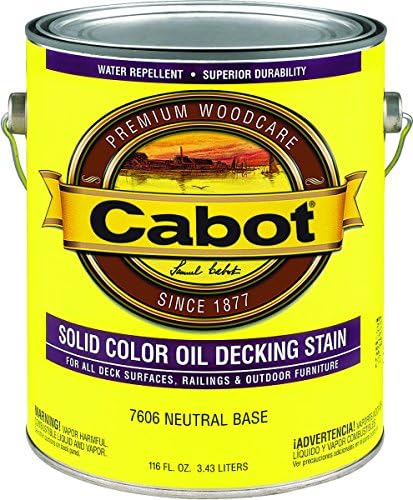
This Cabot stain is listed as an oil-based, solid-color decking stain. Its solid finish is the key difference from the semi-transparent picks: it is the type to consider when you want a more even color and are less concerned with showing the pine grain. The product description also identifies it as a stain and sealer for exterior wood.
The listing says it can be applied with a brush, roller, or sprayer and describes a waterproof barrier. It also mentions a neutral base for custom tinting, which may appeal if you need a color matched to a particular exterior scheme. Since solid-color products vary in their exact application and tinting requirements, check the container or manufacturer instructions before buying.
Compared with the other Cabot choices here, this product is identified as oil-based, while the Driftwood Gray and Redwood options are acrylic. That difference may affect which application and cleanup process you prefer. The supplied product details do not specify a container size or coverage, so confirm those details on the listing before estimating how much to order.
Pros:
- Solid-color finish for a more uniform appearance.
- Oil-based formula is described as providing deep penetration.
- Can be applied by brush, roller, or sprayer, according to the listing.
- Neutral base is listed for custom tinting.
Cons:
- Solid color will show less of the pine grain than a semi-transparent stain.
- Coverage and container size are not specified in the supplied product details.
Verdict: Consider this Cabot option if a solid, potentially tintable oil-based finish matters more to you than keeping the natural grain prominent.
Cabot Driftwood Gray: Solid Acrylic Stain with a Scuff-Resistant Finish

Cabot Driftwood Gray is a solid-color deck stain with a 100% acrylic formula. The supplied description highlights water repellency and scuff resistance, along with a highly pigmented formula intended for areas with heavy foot traffic. Its gray color gives you a different look from the warmer pine and redwood shades in this group.
Because it is a solid stain, expect a more uniform color than you would get from a semi-transparent product. That can be useful if you want to change the deck’s overall appearance, but it is not the pick for showcasing the wood grain. The product details provided do not include coverage or application tools, so check the label and listing for those specifics before planning the job.
Compared with Cabot’s oil-based solid stain, this one is identified as acrylic. The product description does not provide enough information to make a direct claim about which will last longer, so choose based on the stated formula, finish, color, and the directions for your deck’s condition.
Pros:
- 100% acrylic formula.
- Solid Driftwood Gray color for a consistent look.
- Listed as water repellent and scuff resistant.
- Described as suitable for heavy foot traffic.
Cons:
- Solid color will obscure more of the wood grain.
- Coverage and application details are not included in the supplied information.
Verdict: Choose Driftwood Gray if you want a solid acrylic finish in gray and value the listed water-repellent and scuff-resistant features.
Cabot Redwood: Solid Acrylic Stain with Clear Coverage Details

This Cabot stain is a solid acrylic product in Redwood, with a low-luster finish. It is designed for exterior wood, and the supplied specifications also list cement surfaces. For a treated pine deck, the red tone and solid finish are the main reasons to consider it: it offers a more consistent color than a transparent or semi-transparent stain.
The product information lists coverage of 150 to 250 square feet per gallon, application by brush, roller, or spray, and an application temperature above 50°F. It also gives a one-hour dry time and a four-to-six-hour recoat time. These are listing specifications, so use the product label as the final guide, especially if weather or surface conditions differ from the instructions.
Compared with the other Cabot options, this pick gives you a specified Redwood color and more application details in the supplied data. The trade-off is the same as with other solid stains: it will cover more of the pine’s natural appearance. Measure your deck and plan for the stated coverage range rather than assuming a single gallon will cover a particular area.
Pros:
- Solid acrylic stain in a Redwood color.
- Low-luster finish is specified.
- Coverage range and application methods are listed.
- Recoat timing and minimum application temperature are provided in the product details.
Cons:
- Solid finish is not intended to preserve the natural grain as clearly as a semi-transparent stain.
- Coverage varies by project, so the listed range may require careful planning.
Verdict: Pick this Cabot stain if you want a solid Redwood color and prefer having coverage and application specifications to use when planning the work.
How to Choose a Stain for Treated Pine Decking
Check the Wood Before Choosing a Finish
New pressure-treated lumber may contain moisture that makes it harder for stain to absorb. Do not choose a stain based on appearance alone; check the product directions and the condition of the boards before applying anything. If the wood is still too damp, wait until it meets the stain maker’s requirements. On an older deck, look for worn finish, dirt, and weathering so you can choose the right preparation steps.
Decide How Much Grain You Want to See
A semi-transparent stain adds color while allowing more of the wood’s appearance to remain visible. A solid-color stain gives a more uniform look and hides more of the grain. Consider the deck’s current appearance and the result you want before choosing between the two. Switching to a solid color can make a stronger visual change than refreshing a semi-transparent finish.
Compare Oil-Based and Water-Based Formulas
The products in this guide include oil-based and water-based or acrylic formulas. Formula can affect application, cleanup, and the product directions you need to follow. Restore-A-Deck is identified as water-based with easy cleanup; Ready Seal and one Cabot option are identified as oil-based. Check each label for recommended tools, cleanup steps, and application conditions rather than assuming all products work the same way.
Match the Product to the Deck’s Condition
For weathered boards, consider whether the product is designed for restoration and what prep it requires. Restore-A-Deck is specifically described for old, weathered, and pressure-treated wood, and its directions reference a cleaner and brightener system. A different product may suit a deck that is already in good condition. In either case, remove dirt and loose material as directed before staining.
Plan for Coverage and Container Size
Measure the deck’s surface area and compare it with the coverage listed on the product. Coverage can vary with the wood and its condition, so use the manufacturer’s range rather than treating it as a guarantee. Ready Seal is sold in a five-gallon size, while the supplied details for Cabot Redwood list a coverage range of 150 to 250 square feet per gallon. Confirm the size and coverage for any product before ordering.
Follow Weather and Application Instructions
Stain labels can set limits for temperature, drying, and recoat timing. Those instructions matter on a deck because the surface is exposed to weather and foot traffic. Cabot Redwood’s supplied details list an application temperature above 50°F, but follow the product label for the conditions where you live. Allow the finish to dry as directed before using the deck.
Frequently Asked Questions
Can you stain pressure-treated pine?
Yes, but the wood needs to be ready to accept the finish. Check its condition and follow the stain maker’s directions for moisture, preparation, and application. Do not rely on a fixed waiting period unless the product instructions specify one.
Should I choose a semi-transparent or solid stain?
Choose semi-transparent if you want more of the wood grain to show. Choose solid color if you prefer a more uniform appearance and are comfortable covering more of the natural wood look. The deck’s condition and your desired color also matter.
Which option in this guide is water-based?
Restore-A-Deck is described as a penetrating water-based stain with easy cleanup. Cabot Driftwood Gray and Cabot Redwood are listed as acrylic products. Check the current product label for complete formula and cleanup instructions.
Can I apply stain the same day I clean the deck?
Restore-A-Deck says its stain can often be applied the same day after using its cleaner and brightener system. That timing is not a guarantee for every deck or condition. Follow the prep products’ instructions and make sure the surface meets the stain’s requirements.
How much stain do I need for my deck?
Measure the area you plan to coat and compare it with the product’s coverage information. The supplied Cabot Redwood details list 150 to 250 square feet per gallon, but actual coverage can vary. For products without coverage information here, check the label or listing before deciding how much to buy.
Does a solid stain show the wood grain?
A solid stain gives a more uniform color and generally shows less of the wood’s natural appearance than a semi-transparent stain. If seeing the grain is important to you, compare semi-transparent products instead.
Final Recommendation
For treated pine, the best stain is the one that matches the wood’s condition and the finish you want. Restore-A-Deck is the most directly targeted option for pressure-treated and weathered wood, with a penetrating water-based formula. Ready Seal is worth considering for a semi-transparent oil-based finish in a larger container, while the Cabot solid-color options suit those who prefer more uniform coverage. Before buying, check the product label for surface preparation, application conditions, and coverage.
