
Choosing the best shock for a hot tub starts with your sanitizer system and what you want the treatment to do. Some shocks contain chlorine, while non-chlorine oxidizers are designed to break down organic buildup without adding chlorine. The five options below cover both types, with differences in compatibility, size, and stated features. Always follow the product label and your spa manufacturer’s directions.
Table of Contents
Quick Comparison
| Product | Type | Size | Best For |
|---|---|---|---|
| SpaGuard Enhanced Shock | Chlorinated, multipurpose shock | 2 lb | Shoppers wanting shock plus clarifying and pH-buffering features |
| AquaDoc Non-Chlorine Hot Tub Shock | Oxygen-based, non-chlorine oxidizer | 5 lb | Routine oxidation without adding chlorine |
| POOLHOUR Non-Chlorine Hot Tub Shock | Non-chlorine oxidizer | 5 lb | Those who want a larger supply for regular spa care |
| HTH Spa Non-Chlorine Shock Oxidizer | Non-chlorine oxidizer | 2.25 lb | Addressing cloudy water and odor-causing contaminants |
| SpaGuard Spa Shock Oxidizer | Non-chlorine oxidizer | 7 lb | A larger non-chlorine supply for chlorine or bromine spas |
Our Picks: Best Shock For Hot Tub reviews
1. SpaGuard Enhanced Shock: A Multi-Function Chlorinated Option

SpaGuard Enhanced Shock is a chlorinated, multipurpose treatment for spas and hot tubs. Its listed functions include shocking, clarifying, flocculating, and buffering pH. That combination may appeal if you want one product with several water-care roles rather than a basic oxidizer alone.
The formula is described as compatible with chlorine, bromine, ozone, and ionization systems. Its pH-buffering feature is intended to help limit changes to spa pH, though you should still test and balance your water as needed. The 2-pound package is a smaller option than the 5- and 7-pound choices here.
Because this is a chlorinated shock, it may not suit someone specifically looking to oxidize without raising chlorine. Check the label for dosage, application steps, and when it is safe to use the spa after treatment.
Pros:
- Combines shock treatment with clarifying and flocculant functions.
- Includes a pH-buffering feature.
- Listed as compatible with several sanitizing systems.
- Smaller package than the larger options in this guide.
Cons:
- It is chlorinated, so it is not a chlorine-free choice.
- Its multiple functions may be unnecessary if you only want a non-chlorine oxidizer.
Verdict: Choose SpaGuard Enhanced Shock if you want a chlorinated treatment with added clarifying and pH-buffering functions.
2. AquaDoc Non-Chlorine Shock: Oxygen-Based Routine Oxidation

AquaDoc is an oxygen-based, non-chlorine shock made to complement chlorine or bromine systems. It is intended to oxidize non-living organic buildup, including oils, lotions, and cosmetic residue, and to help reduce chloramines that can contribute to strong chlorine odors.
The product description says it dissolves quickly, needs no premixing, and can be added directly while the water is circulating. Its 5-pound size makes it a substantial supply for routine care. Since it is non-chlorine, it does not replace your regular sanitizer; keep monitoring and maintaining sanitizer levels separately.
This is a practical match for spa owners who want an oxidizer that does not add chlorine. The main trade-off is that it does not offer the extra clarifier and pH-buffer claims found with SpaGuard Enhanced Shock. Follow the label for amounts and use instructions.
Pros:
- Oxygen-based formula does not add chlorine.
- Designed to work alongside chlorine and bromine systems.
- Targets oils, lotions, and other organic residue.
- 5-pound size and no-premixing application.
Cons:
- Does not replace the spa’s sanitizer.
- Does not list added clarifier or pH-buffer functions.
Verdict: AquaDoc is a strong fit if you want a larger oxygen-based shock for routine oxidation in a chlorine or bromine hot tub.
3. POOLHOUR Non-Chlorine Shock: A Straightforward 5-Pound Supply
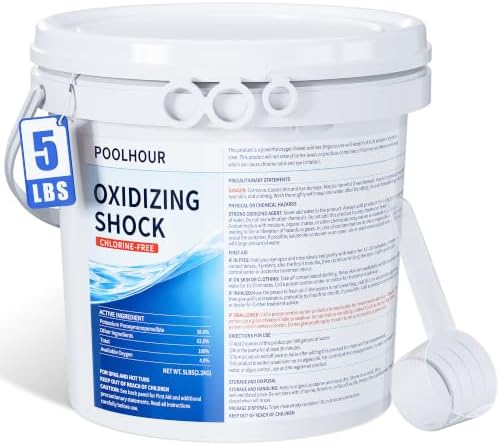
POOLHOUR is a non-chlorine oxidizing shock intended for pools, spas, and hot tubs. The product is described as fast-dissolving and suitable for routine water care. It can be used alongside compatible chlorine or bromine systems, making it an option for owners who want oxidation without a chlorine-based shock.
The listed application is simple: add it directly to the spa without premixing. Its 5-pound size is similar to AquaDoc’s, but the product description provides fewer details about specific contaminants or additional water-care functions. It does state that the formula is intended to help manage unwanted odors.
POOLHOUR may suit shoppers who want a multipurpose pool-and-spa product and a larger supply. Confirm that the product label matches your spa and sanitizer setup, and use the label’s directions rather than assuming a dose based on another brand.
Pros:
- Non-chlorine oxidizer for compatible chlorine and bromine systems.
- Designed for pools, spas, and hot tubs.
- No premixing is listed as necessary.
- 5-pound supply for ongoing water care.
Cons:
- Product details provide less specific information about its oxidation targets.
- Does not replace the sanitizer in your spa.
Verdict: Consider POOLHOUR if you want a no-premix, non-chlorine shock in a 5-pound size for compatible pool or spa water care.
4. HTH Spa Non-Chlorine Shock: A Focus on Cloudy Water and Odors

HTH Spa Non-Chlorine Shock Oxidizer is designed to help clear cloudy water and reduce odor-causing ammonia, chloramines, and other contaminants. It is a non-chlorine option for spas and hot tubs, with compatibility listed for most spas using chlorine or bromine systems.
The 2.25-pound package is smaller than the 5-pound and 7-pound choices, which can be convenient if you prefer not to store a larger supply. HTH recommends using it as part of its spa-care routine. As with any shock, it should be used according to the product label, and it should not be treated as a replacement for regular sanitizer or water testing.
Compared with the other options, HTH’s description puts particular emphasis on cloudy water and odor reduction. It does not list the pH-buffer or clarifier functions described for SpaGuard Enhanced Shock.
Pros:
- Non-chlorine formula for chlorine or bromine systems.
- Specifically intended to help clear cloudy water.
- Targets odor-related contaminants, including chloramines.
- Smaller package than the larger bulk options.
Cons:
- Does not list additional pH-buffering features.
- Smaller size may be less convenient for frequent use.
Verdict: HTH is a sensible choice if you want a non-chlorine shock whose stated benefits focus on cloudy water and odors.
5. SpaGuard Spa Shock Oxidizer: A Large Non-Chlorine Package

SpaGuard Spa Shock Oxidizer is a non-chlorine treatment for hot tubs and spas using chlorine or bromine sanitizers. The product is described as quick-dissolving and designed to oxidize microscopic organic contaminants while helping maintain clear water. It is not a sanitizer or algaecide, so it does not take the place of those parts of your water-care routine.
The 7-pound size is the largest in this comparison, which may be useful if you use non-chlorine shock regularly and have suitable storage. The product description says it does not raise chlorine residual and can be used when you need to shock the tub shortly before use, but it also specifies waiting at least 15 minutes after adding it. Follow the package directions and verify that the water is ready before soaking.
Compared with the 2-pound SpaGuard Enhanced Shock, this product is the non-chlorine choice and comes in a larger package. It is a better fit when you want oxidation without raising chlorine levels, rather than an all-in-one chlorinated treatment.
Pros:
- Non-chlorine oxidizer compatible with chlorine and bromine systems.
- Does not raise chlorine residual, according to the product description.
- Quick-dissolving formula intended to support water clarity.
- Largest package in this comparison.
Cons:
- Does not replace sanitizer or algaecide.
- The 7-pound size may be more than occasional users need.
Verdict: Choose SpaGuard Spa Shock Oxidizer if you want a larger non-chlorine supply and do not want the shock treatment to raise chlorine residual.
How to Choose the Best Shock for Your Hot Tub
Match the shock to your sanitizer system
Start by checking whether your spa uses chlorine, bromine, ozone, ionization, or another system. Product compatibility varies. The listed options here include products for chlorine and bromine systems, while SpaGuard Enhanced Shock also names ozone and ionization systems. Check your spa and chemical labels before buying, especially if you use a less common setup.
Decide whether you want a chlorinated or non-chlorine shock
A chlorinated shock adds chlorine as part of its treatment. A non-chlorine oxidizer is intended to break down organic material without raising chlorine residual in the same way. Your choice depends on your water-care routine and the product instructions. A non-chlorine shock still does not replace the sanitizer needed to keep spa water properly maintained.
Consider the problem you are trying to address
Look at the product’s stated purpose. SpaGuard Enhanced Shock combines shock treatment with clarifying, flocculant, and pH-buffer features. HTH emphasizes cloudy water and odor-related contaminants. AquaDoc describes oxidation of oils, lotions, and cosmetic residue. These claims can help narrow your options, but shock is only one part of water care; test the water and address balance or filtration issues as needed.
Choose a package size that fits your routine
The products range from 2 to 7 pounds. A smaller package may make sense if you shock less often or want to store less chemical. A larger size may suit a spa that needs regular treatment, provided you can store it safely and use it before the product’s stated shelf-life limits, if any. Do not choose only by package size; follow the label for the amount needed per treatment.
Check application and re-entry directions
Some product descriptions say the shock can be added directly to circulating water, while others do not give detailed application steps. Use the directions on the product you buy, including any instructions about circulation, water testing, and when the tub can be used. SpaGuard Spa Shock Oxidizer specifically says to wait at least 15 minutes after addition; do not apply that timing to other products unless their labels say so.
Store and handle spa chemicals carefully
Follow the package safety instructions, keep chemicals in their original containers, and store them as directed. Do not mix different spa chemicals together or combine products unless the labels explicitly instruct you to do so. Keep chemicals away from children and pets, and use the protective measures stated on the label.
Frequently Asked Questions
What does hot tub shock do?
Shock products are used to oxidize contaminants and organic buildup in spa water. Some products also make claims about reducing odors or helping clear cloudy water. They do not all work the same way, so check the label for the product’s intended use.
Is non-chlorine shock better than chlorinated shock?
Neither type is best for every spa. Non-chlorine oxidizers are an option if you want oxidation without raising chlorine residual in the same way as a chlorinated shock. Chlorinated shock may suit a different water-care routine. Choose a product that matches your sanitizer and follow its instructions.
Can I use non-chlorine shock with a bromine hot tub?
Several products in this guide are listed as compatible with bromine systems, including AquaDoc, HTH Spa, and both SpaGuard options. Confirm compatibility on the package and follow your spa’s care instructions.
Will shock replace my hot tub sanitizer?
No. Shock and sanitizer are not interchangeable by default. SpaGuard Spa Shock Oxidizer explicitly says it does not replace sanitizers, and non-chlorine oxidizers should generally be treated as a complement to the sanitizer system unless the product label says otherwise. Maintain sanitizer levels according to your spa’s directions.
How often should I shock my hot tub?
Follow the product label and your spa manufacturer’s water-care schedule. The right frequency can depend on the product and how the spa is used. Do not use a dosing schedule from another product as a substitute for the directions on your chosen shock.
Can I use the hot tub right after adding shock?
Use the re-entry instructions on the product label and confirm the water meets your spa’s requirements before soaking. SpaGuard Spa Shock Oxidizer says to wait at least 15 minutes after addition. Other products may have different directions, so do not assume the same wait time applies to every shock.
What should I do if my hot tub water stays cloudy after shocking?
Check water balance, sanitizer levels, circulation, and filtration, and follow your spa’s troubleshooting guidance. Some shocks are described as helping with cloudy water, but shock alone may not address every cause. Avoid adding extra chemicals without checking the label and testing the water.
Final Recommendation
For an all-in-one chlorinated option with listed clarifying and pH-buffering functions, consider SpaGuard Enhanced Shock. If you want a non-chlorine oxidizer in a larger package, SpaGuard Spa Shock Oxidizer offers the biggest size in this group; AquaDoc is another 5-pound option with specific claims about oils, lotions, and chloramines. Match your choice to your sanitizer system, then follow the product label for dosing, handling, and safe spa use.
