
Soap scum can leave shower glass cloudy and tile looking dull, but the right cleaner depends on what has built up and what your surfaces can handle. Some formulas are made for quick spray-and-rinse cleaning, while others use a paste that you apply and scrub. Below, we compare five options by formula, stated surface compatibility, and the type of shower cleanup each is designed to handle.
Table of Contents
Quick Comparison
| Product | Formula | Best suited for | Key detail |
|---|---|---|---|
| Rejuvenate Soap Scum Remover, 1 Gallon | Liquid refill | Routine soap-scum cleaning | Non-bleach; spray and rinse |
| Uncle Todd’s Hard Water Stain Remover & Soap Scum Shower Cleaner | Mint paste | Stubborn buildup on bathroom surfaces | Clings to surfaces; requires scrubbing |
| StoneTech Soap Scum Remover | Foaming spray | Natural stone, tile, and grout | Product data lists it as unavailable |
| Black Diamond Stoneworks Natural Stone Soap Scum Remover | Spray | Natural stone and mixed bathroom surfaces | Acid-free formula |
| comeast Soap Scum Remover for Shower | Thick paste | Shower residue and hard-water buildup | Designed to cling to vertical surfaces |
Our Picks: Best Shower Soap Scum Remover reviews
1. Rejuvenate Soap Scum Remover: A Convenient Refill for Routine Cleaning
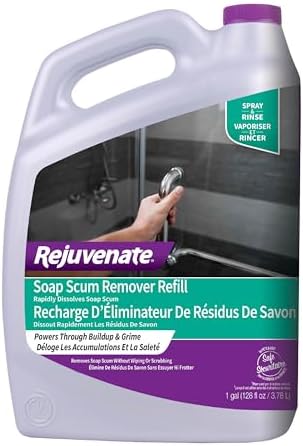
Rejuvenate is a liquid soap-scum cleaner sold here in a one-gallon refill size. It is intended to refill the brand’s 24-ounce or 32-ounce bottles, so it may suit households that already use the smaller spray container and want a larger supply on hand.
The non-bleach formula is described as non-abrasive and suitable for glass showers, ceramic tile, chrome, plastic, and fiberglass. Its spray-and-rinse approach is a practical fit for routine buildup: apply it as directed, then rinse rather than relying on a scrubbing step. The product is also described as gentle enough for daily use, though you should still follow the label and avoid using it on surfaces not listed there.
This is the most straightforward option in the group for regular soap-scum maintenance. It is less clearly suited to heavy mineral deposits than the products specifically described as hard-water stain removers. The gallon container is a refill, not the smaller ready-to-use bottle, so check what you already have before choosing it.
Pros:
- Non-bleach, non-abrasive formula
- Listed for glass, ceramic tile, chrome, plastic, and fiberglass
- Designed to dissolve soap scum without wiping or scrubbing
- Large refill format for compatible 24-ounce or 32-ounce bottles
Cons:
- Refill size may be less convenient if you do not already have a suitable spray bottle
- Product details emphasize soap scum more than hard-water mineral stains
Verdict: Choose Rejuvenate if you want a non-bleach refill for regular soap-scum cleanup and prefer a spray-and-rinse routine.
2. Uncle Todd’s Mint Paste: A Clinging Formula for Stubborn Buildup

Uncle Todd’s combines soap-scum cleaning with hard-water stain removal in a mint-scented paste. Unlike a thin spray, the paste is designed to stay on vertical glass, walls, and tile longer instead of quickly running down the surface.
The product description says its micro-cleaning crystals target calcium, lime, and rust, as well as soap scum. Use a small amount on a sponge, microfiber cloth, or non-scratch pad, scrub the affected area, and rinse. It is listed for glass, ceramic tubs, porcelain, chrome, and stainless steel. The formula is described as bleach-free and ammonia-free.
This format makes more sense for localized, visible buildup than for a quick spray-down of an entire shower. It also requires hands-on scrubbing, unlike Rejuvenate’s spray-and-rinse approach. Even though the paste is described as non-scratching, follow the product label and test an inconspicuous area first, particularly on delicate finishes.
Pros:
- Paste is designed to cling to vertical surfaces
- Targets soap scum and hard-water deposits, including calcium, lime, and rust
- Listed for several common bathroom surfaces
- Bleach-free and ammonia-free, with a mint scent
Cons:
- Requires scrubbing rather than a simple spray-and-rinse routine
- Not listed for natural stone, so confirm surface compatibility before use
Verdict: Pick this paste if you need a cling-on cleaner for stubborn soap scum or hard-water buildup and are comfortable scrubbing the affected area.
3. StoneTech Soap Scum Remover: A Foaming Option for Stone and Tile

StoneTech is a foaming spray intended for soap scum, hard-water stains, and dirt. Its stated surface range includes natural stone, tile, and grout, making it a possible match for showers where material compatibility is a key concern.
The product description says the foam cleans and shines and notes that the formula has no VOCs. A spray bottle can be convenient for covering shower surfaces, though the supplied details do not specify a dwell time or a no-scrub application method. Follow the label instructions for how long to leave it on and how to rinse it.
The main limitation is availability: the supplied product information lists this item as unavailable. That status may change, so check the listing before planning to buy it. If it cannot be found, Black Diamond Stoneworks is another option in this selection that specifically names natural stone among its compatible surfaces.
Pros:
- Designed for soap scum, hard-water stains, and dirt
- Listed for natural stone, tile, and grout
- Foaming spray format
- Described as having no VOCs
Cons:
- Product data lists it as unavailable
- Supplied details do not explain whether scrubbing is needed
Verdict: Consider StoneTech if you need a cleaner specifically listed for stone, tile, and grout, but check the listing first because the supplied data marks it unavailable.
4. Black Diamond Stoneworks: An Acid-Free Spray for Natural Stone
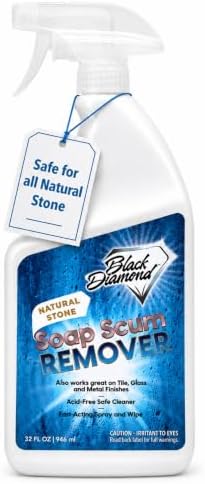
Black Diamond Stoneworks is a spray cleaner formulated for soap scum, hard-water buildup, body oils, and everyday shower residue. Its acid-free formula and stated compatibility with natural stone make it a useful option to compare with general-purpose shower cleaners.
The product is listed for marble, granite, travertine, limestone, slate, tile, glass, and acrylic. It is also described as leaving a streak-free finish without harsh abrasives. Those surface claims are broad, but stone types and finishes can differ; check the bottle directions and test an out-of-sight area before using it on a valuable or delicate surface.
As a spray, it is a more convenient shape for routine cleaning than a paste that needs to be worked over the surface. The product information does not say that it dissolves soap scum without wiping or scrubbing, so expect to follow the label’s cleaning directions rather than assuming it is a spray-and-rinse formula.
Pros:
- Acid-free formula designed for natural stone care
- Listed for a range of stone, tile, glass, and acrylic surfaces
- Targets soap scum, hard-water buildup, and body oils
- Spray format for bathroom cleaning
Cons:
- Supplied details do not confirm a no-scrub cleaning method
- Check surface compatibility and label directions before using on specialty finishes
Verdict: Choose Black Diamond Stoneworks if natural stone is a priority and you want an acid-free spray with a broad stated surface range.
5. comeast Soap Scum Remover: A Thick Paste for Shower Residue and Water Spots

comeast is a thick-paste cleaner intended for shower residue, water spots, and hard-water mineral buildup. Its main design feature is its consistency: the paste is made to adhere to vertical shower glass and walls instead of running down quickly like a thin liquid.
The product description lists shower doors, tubs, tiles, faucets, and sinks as suitable areas. It says to apply the paste to the affected surface, allow time for it to work, then wipe or rinse it clean. The supplied information does not name the specific ingredients or give an exact wait time, so check the package directions and follow them closely.
This is a targeted option for cloudy glass and localized deposits, but its use involves more steps than a cleaner described as spray-and-rinse. The product details also do not list natural stone, so choose a different product if you need a cleaner explicitly intended for stone surfaces.
Pros:
- Thick paste is designed to cling to vertical surfaces
- Targets soap scum, shower residue, water spots, and mineral buildup
- Listed for shower doors, tubs, tiles, faucets, and sinks
- Can be wiped or rinsed clean according to the product description
Cons:
- Requires applying the paste and allowing it time to work
- Natural stone compatibility is not stated in the supplied details
Verdict: Consider comeast if you want a paste that stays on cloudy shower glass or other listed bathroom surfaces while you tackle buildup.
How to Choose the Best Shower Soap Scum Remover
Match the cleaner to your shower surface
Start by identifying what your shower is made of, including the walls, floor, door, and fixtures. A cleaner may be listed for glass and ceramic tile but not natural stone, or it may name specific stones such as marble or granite. Check both the product label and the surface manufacturer’s care instructions. When in doubt, test a small, hidden area first.
Know whether you are cleaning soap scum or mineral stains
Soap scum is the film left by soap and body products. Hard-water deposits can leave cloudy spots or chalky buildup. Some products in this list address both types of residue, while Rejuvenate’s description focuses on soap scum. If mineral buildup is your main problem, look for a formula that specifically names hard-water stains, calcium, lime, or similar deposits.
Choose a spray or paste based on the job
A spray is easy to apply across a wider area and may fit routine shower maintenance. Paste is thicker and designed to stay in place on vertical glass or walls, which can be useful for focused cleaning. In exchange, paste products generally call for more direct application and wiping or scrubbing. Check the label for application steps and contact time.
Consider how much effort the directions require
Product directions can range from spray-and-rinse to applying cleaner with a sponge and scrubbing. If you want to limit hands-on work, choose a product whose description specifically supports that method, such as Rejuvenate. For stubborn or concentrated buildup, a paste may offer more control, but it is not the same as a no-scrub spray.
Review ingredients and household precautions
Look for details that matter to your household, such as whether a product is bleach-free, ammonia-free, acid-free, or non-abrasive. These terms do not replace safe handling. Use the product as directed, keep it away from children and pets during cleaning, and follow the label’s ventilation and rinsing instructions. Do not mix cleaners unless the labels specifically say it is safe to do so.
Think about container size and storage
A refill can make sense if you already have a compatible bottle, while a spray bottle may be simpler if you want a ready-to-use format. Paste products can be useful for spot cleaning but may not be as convenient for covering a large shower area. Choose a size and format that fit your storage space and cleaning routine.
Frequently Asked Questions
What removes soap scum from shower glass?
Use a cleaner labeled for shower glass and follow its directions. Rejuvenate is listed for glass showers, while the paste options are intended to tackle soap scum or residue on glass surfaces. For mineral spots as well as soap scum, look for a product that specifically mentions hard-water buildup.
Can I use soap scum remover on natural stone?
Only use a product that specifically lists your stone or is approved by the stone’s care instructions. Black Diamond Stoneworks lists several natural stones, and StoneTech is listed for natural stone, tile, and grout. The supplied details for the other options do not establish that they are suitable for natural stone.
Is a paste or spray better for shower doors?
It depends on the buildup and how you prefer to clean. Sprays are convenient for covering surfaces, while paste is designed to cling to vertical glass and may be more useful for targeted spots. Paste formulas in this selection require application and wiping or scrubbing; check each label for exact steps.
Which option is designed for cleaning without scrubbing?
Rejuvenate is described as dissolving soap scum without wiping or scrubbing, using a spray-and-rinse method. Follow the product label, and remember that results can depend on the amount and type of buildup.
Can one cleaner handle both soap scum and hard-water stains?
Some products are described as addressing both. Uncle Todd’s targets soap scum along with calcium, lime, and rust, while StoneTech and Black Diamond Stoneworks are also described as addressing hard-water stains or buildup. Check that the product is suitable for your shower surface before using it.
How can I avoid damaging shower surfaces?
Check the label for compatible materials, follow the application directions, and test an inconspicuous spot first. Use a non-scratch cloth or pad when the directions call for scrubbing, and rinse as instructed. If your shower has natural stone or a specialty finish, use guidance from its manufacturer as well.
Final Recommendation
For routine soap-scum cleaning with minimal scrubbing, Rejuvenate is the clearest fit because it is described as a non-bleach spray-and-rinse formula and comes in a large refill size. If hard-water stains are a major concern, Uncle Todd’s paste is designed to address mineral deposits but requires scrubbing. For natural stone, compare the stated surface compatibility of Black Diamond Stoneworks and StoneTech, and confirm the label supports your specific material before buying.
