
The best caulking for bathrooms creates a flexible seal that keeps water from slipping into gaps around tubs, showers, sinks, and countertops. The right choice depends on the joint and finish: 100% silicone is a strong option for wet areas, while a paintable silicone-acrylic formula can suit repairs where matching the color matters. These five picks include options for full projects, small touch-ups, and color-matched work.
Before applying any new caulk, remove loose or failing material and make sure the surface is clean and dry. Follow the product label for application and water-exposure times; a bead that feels dry on the surface may not be fully cured.
Table of Contents
Quick Comparison
| Product | Type and format | Best suited for |
|---|---|---|
| CXYARY Silicone Caulk & Sealant | White 100% silicone, multi-pack | Large jobs and tool-inclusive projects |
| Gorilla 100% Silicone Caulk | White silicone, small squeeze tube | Touch-ups and smaller gaps |
| Soma Fix Beige Silicone Caulk | Beige silicone, squeeze tube | Small repairs on warm-toned surfaces |
| Red Devil Silicone Acrylic Caulk | White, paintable silicone-acrylic | Repairs that need a paintable finish |
| XFasten Gray Silicone Caulk | Gray neutral-cure silicone, cartridge | Gray joints and larger applications |
Our Picks: The Best Caulking For Bathrooms reviews
1. CXYARY Silicone Caulk & Sealant: Best for a Larger Project

This white, 100% silicone sealant comes in a multi-pack intended for jobs that need more material than a small touch-up. The product description lists bathroom and tub use, along with adhesion to surfaces such as tile, ceramic, metal, glass, plastic, stone, and wood. Check the label and test an inconspicuous spot if you are unsure about a particular surface.
The set includes a glue gun, scraper accessories, extra scraper heads, and nozzles. That can be useful if you need to gather application tools at the same time as the caulk. The brand says the surface dries in about 30 minutes and the seal is fully cured after 24 hours; follow the package directions and conditions for your project before exposing the joint to water.
The main trade-off is the amount. A multi-pack may make sense for several fixtures or a larger renovation, but it can be excessive for a single short seam. The instructions also say to use an opened tube as soon as possible, within three days, so plan the work rather than opening more tubes than you need.
Pros:
- 100% silicone formula intended for waterproof sealing
- Multi-pack may suit several joints or a larger project
- Includes a glue gun, nozzles, and smoothing tools
- Listed for use on a range of common materials
Cons:
- The multi-pack may be more than needed for a small repair
- Opened material should be used promptly, according to the product description
Verdict: Choose CXYARY if you have several bathroom joints to seal and want application tools included; for one small gap, a smaller tube may be more practical.
2. Gorilla 100% Silicone Caulk: Best for Small Touch-Ups

This white 100% silicone caulk comes in a 2.8-fluid-ounce squeeze tube, a convenient format for refreshing a short section around a sink, tub, shower, faucet, tile, or countertop. The removable nozzle is designed for application without a caulk gun, and the tip can be cut at an angle to control the bead size.
Its cured seal is described as waterproof, flexible, and mold resistant. Those features make it a practical candidate for humid bathroom joints, though regular cleaning and sound surface preparation still matter. Mold resistance does not mean a joint is immune to mold or a replacement for fixing leaks and poor ventilation.
The product is listed as water-ready in 30 minutes under specific conditions: a 3/16-inch bead at 70°F and 50% humidity. Conditions can differ in a real bathroom, so check the label rather than treating that timing as universal. The small tube is helpful for limited repairs but is less suited to long runs or a full-room project.
Pros:
- Small squeeze-tube format is handy for touch-ups
- Does not require a separate caulk gun
- Waterproof and mold-resistant properties are specified
- Listed as water-ready in 30 minutes under stated conditions
Cons:
- The small tube may not cover a larger job
- Water-ready timing depends on the stated bead size and conditions
Verdict: Gorilla is a practical pick for small bathroom repairs when you want a compact tube and a quick stated water-ready time, provided the job matches the product’s size and label conditions.
3. Soma Fix Beige Silicone Caulk: Best for Warm, Neutral Finishes

This beige silicone caulk is supplied in a small squeeze tube, so you do not need a caulk gun for a short repair. Its RAL 1015 beige finish is intended to blend with cream-colored surfaces, neutral tile, natural stone, wood, and similar warm tones. Color is especially important on a visible seam, so compare the shade with your surface before applying a long bead.
The product is described as flexible and waterproof, with use listed for bathrooms, showers, sinks, and tubs as well as other household joints. It is also described as having less than 15% shrinkage. That may appeal when appearance matters, but the size and color make this a more specialized choice than a standard white tube.
Because it is a silicone product, it is best considered for joints where you want a flexible seal, not a surface you plan to paint. The supplied information does not give a cure time, so follow the package instructions for when the joint can be exposed to water. The squeeze format is easy to keep on hand for a small seam, but it may be slow for extensive caulking.
Pros:
- Beige color can suit cream and warm-toned finishes
- Squeeze tube needs no caulk gun
- Flexible, waterproof seal is listed for bathroom use
- Product description specifies less than 15% shrinkage
Cons:
- Beige is less versatile than white or clear for many bathrooms
- Small tube is better suited to limited work than long runs
Verdict: Pick Soma Fix when a beige bead is a closer visual match than white and you are sealing a small joint; choose another option for a larger project or a paintable finish.
4. Red Devil Silicone Acrylic Caulk: Best When You Need a Paintable Seal

Red Devil’s silicone-acrylic caulk is a white sealant listed for kitchen and bath use. Unlike the 100% silicone choices in this lineup, its key stated advantage is that it can be painted. That makes it worth considering when a visible seam needs to match a painted surface or when the repair is part of a broader paint job.
The product description says it forms a durable, watertight seal, adheres to a range of kitchen and bath surfaces, and is easy to apply and tool. Cleanup with soap and water is another practical feature during application. Those qualities can make it less demanding to work with than a product that requires more cleanup care.
For a joint that sees frequent direct water exposure, compare the label with the demands of the location before choosing it over 100% silicone. The supplied information does not specify a water-ready or full-cure time, so do not assume a particular waiting period. This option stands out for paintability and cleanup, rather than for a stated fast return to shower use.
Pros:
- Paintable finish can help match surrounding colors
- Described as providing a watertight seal
- Soap-and-water cleanup is specified
- Listed for kitchen and bath surfaces
Cons:
- Does not have a stated water-ready time in the supplied product details
- For joints with constant water exposure, check suitability and directions carefully
Verdict: Red Devil is the most suitable choice here when paintability and easy cleanup are priorities; for a shower joint where 100% silicone is preferred, consider one of the silicone options instead.
5. XFasten Gray Silicone Caulk: Best for Gray Tile and Stone Joints
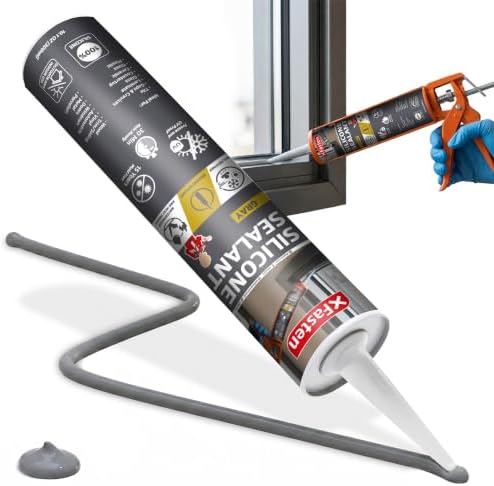
This gray neutral-cure silicone comes in a 10.1-ounce cartridge, a larger format suited to longer joints than a small squeeze tube. Gray can be a closer match for some tile, stone, or fixture finishes, though it is worth checking the color against your surfaces before committing to a visible seam.
XFasten describes the formula as waterproof after full cure, low odor, and VOC-free. It also lists adhesion to materials including wood, metal, granite, stone, and glass. The product details say it becomes tack-free in 30 minutes, but that is not the same as being fully cured or ready for water; use the label’s full-cure directions for bathroom work.
The brand states that the sealant can remain flexible for up to 25 years. That is a product claim, not a guarantee for every joint or installation. The cartridge format will generally be more useful for longer beads, but it requires a compatible caulk gun, which is not listed as included.
Pros:
- Gray color may blend with gray tile and stone
- Large cartridge suits longer application runs
- Neutral-cure formula is described as low odor and VOC-free
- Product details specify flexibility and a waterproof seal after full cure
Cons:
- Requires a caulk gun, which is not listed as included
- Tack-free time should not be mistaken for full cure or water readiness
Verdict: Choose XFasten if you need gray silicone for a longer joint and already have a caulk gun; for a small white touch-up, a squeeze tube is simpler.
How to Choose the Best Caulking for Bathrooms
Match the caulk to the joint
Think about where the bead will go and how much water it will face. Around tubs, showers, and sinks, look for a product specifically described as waterproof and suitable for bathroom use. A joint that gets frequent direct splashes has different needs from a small gap beside a painted trim piece. Follow the label if it limits where the product should be used.
Choose silicone or silicone-acrylic based on the finish
Several options here are 100% silicone, which is intended to form a flexible, waterproof seal. Silicone is generally not paintable, so choose a color that works with the surrounding surface. Red Devil’s silicone-acrylic formula is listed as paintable and may be a better fit when matching paint is important. Do not assume every formula has the same water-use directions.
Consider color before you start
White is a common choice for light fixtures and finishes, while beige or gray may blend better with warm-toned or darker surfaces. A color mismatch is especially noticeable along a long, visible bead. Check the product color against the actual tile, countertop, or fixture rather than relying only on a name or online image.
Pick a format that fits the size of the job
A small squeeze tube can be convenient for one short seam and may not need a caulk gun. A larger cartridge is more practical for longer runs, but you will need the right gun. A multi-pack with tools can make sense for several joints, although it may leave you with more material than a single repair requires.
Read the water-exposure and cure directions
“Tack-free,” “surface dry,” “water-ready,” and “fully cured” do not necessarily mean the same thing. For example, the Gorilla product lists a 30-minute water-ready time under specific conditions, while XFasten lists a 30-minute tack-free time and says it is waterproof after full cure. Follow the exact product instructions and account for the bead size and conditions in your bathroom.
Prepare the surface and plan the application
Remove loose or failing caulk, clean away residue, and let the joint dry before applying new material. Use a steady bead and smooth it with an appropriate tool before the sealant begins to set. Avoid exposing the joint to water until the product’s directions allow it. If the gap is caused by movement, damage, or a leak behind the surface, caulk alone may not address the underlying problem.
Frequently Asked Questions
What type of caulk is best for a shower?
For many shower joints, a waterproof silicone sealant specifically labeled for bathroom use is a suitable starting point. Check that the product is intended for the materials you are sealing, and follow its cure and water-exposure directions.
Is 100% silicone caulk paintable?
In general, 100% silicone is not a paintable finish. If you need to paint over the sealed area, look for a product explicitly labeled as paintable, such as the silicone-acrylic Red Devil option listed here.
How long should bathroom caulk dry before a shower?
It depends on the product and conditions. A surface that feels dry may not be fully cured. Check the package directions for the specific bead size, temperature, humidity, and water-ready or full-cure time.
Does mold-resistant caulk prevent all bathroom mold?
No. A mold-resistant finish can help in a damp setting, but it does not make a joint mold-proof. Regular cleaning, ventilation, and fixing leaks are still important.
Can I apply new caulk over old caulk?
For a reliable repair, remove loose or failing old caulk and prepare the surface before applying the new bead. New material may not bond well over residue or a deteriorating seal. Follow the product’s surface-preparation instructions.
Do I need a caulk gun for every product?
No. The Gorilla and Soma Fix options are supplied in squeeze tubes, and CXYARY’s set lists a glue gun as included. The XFasten cartridge does not list a gun as included, so check your tools before starting.
Final Recommendation
For a straightforward small repair, Gorilla’s squeeze tube offers a useful combination of bathroom-focused silicone and a compact format. For several joints, the CXYARY set includes application tools and multiple tubes. Choose Soma Fix or XFasten when beige or gray better matches your finish, and consider Red Devil when paintability is the priority. Whichever you select, confirm the color, surface compatibility, and water-exposure directions before applying it.
