
Choosing the best 2 inch insulation board depends on what you need it to do. Fiberglass boards in this roundup are designed for sound absorption and thermal insulation, while ceramic fiber boards are made for very high-temperature applications such as stoves, kilns, and forges. These materials are not interchangeable, so match the board to your project before you buy.
Table of Contents
Quick Comparison
| Product | Material | Notable details | Best suited for |
|---|---|---|---|
| Owens Corning 703 Unfaced Fiberglass Board | Semi-rigid fiberglass | Six 24 x 48 inch boards; R-value 8.7; NRC 1.0 | Sound absorption and general thermal insulation |
| SIMOND STORE Ceramic Fiber Board | Ceramic fiber | One 19.7 x 39.4 inch board; rated for use up to 2300°F | Stoves, ovens, kilns, and other high-heat equipment |
| Owens Corning 705 Rigid Fiberglass Board | Rigid fiberglass | Four 24 x 48 inch boards; R-value 8.7; NRC 1.05 | Sound absorption where a firmer board is preferred |
| SIMOND STORE Ceramic Fiber Board, 2-Pack | Ceramic fiber | Two 19.7 x 39.4 inch boards; rated for use up to 2300°F | High-heat projects that need more than one board |
| Owens Corning 703 FRK Fiberglass Board | Foil-faced semi-rigid fiberglass | Six 24 x 48 inch boards; R-value 8.7; NRC 0.75 | Projects that call for a foil-reinforced facing |
Our Picks: Best 2 Inch Insulation Board reviews
Owens Corning 703 Unfaced Board: A Versatile Pick for Sound Absorption

This six-board pack of unfaced Owens Corning 703 is a strong all-around choice when your project needs both acoustic absorption and thermal insulation. Each board measures 24 x 48 inches and is 2 inches thick. The listed R-value is 8.7, and the NRC is 1.0.
The unfaced design makes this a straightforward option for projects where you do not want the foil-reinforced kraft facing found on the FRK version. The product is described as semi-rigid, which distinguishes it from the more rigid Owens Corning 705 board. It is also Class A or Class 1 fire rated per ASTM E84 and is certified to contain an average of 53% recycled glass content.
Consider it for acoustic projects or other applications that call for fiberglass board, but check your plans and installation requirements before choosing it for a specific wall, ceiling, or enclosure. It is not the right substitute for a ceramic board in equipment exposed to very high temperatures.
Pros:
- Six full-size 24 x 48 inch boards in the pack
- Listed R-value of 8.7 and NRC of 1.0
- Unfaced design avoids a foil-reinforced kraft exterior
- Class A or Class 1 fire rating per ASTM E84
Cons:
- Semi-rigid rather than the more rigid 705 option
- Not intended as a replacement for high-temperature ceramic insulation
Verdict: Choose the unfaced 703 if you want a multi-board fiberglass pack with strong listed sound-absorption and thermal figures.
SIMOND STORE Ceramic Fiber Board: A Single Board for High-Heat Work

This ceramic fiber board is meant for a different job than the Owens Corning fiberglass products. It measures 2 x 19.7 x 39.4 inches and is listed for a maximum use temperature of up to 2300°F. The stated density is 20–24 lb/ft³.
The manufacturer describes it for heating equipment and projects such as wood stoves, fireplaces, pizza ovens, kilns, and forges. It can be cut with a hacksaw blade or knife and can also be drilled or machined. Its listed compressive strength is 78 PSI at 25% deformation, so it should not be treated as a sturdy firebrick or structural board.
This single-board pack may suit a smaller repair or a project that needs one piece. The listed size is narrower and shorter than the 24 x 48 inch fiberglass boards, so compare dimensions with your project before ordering. For any high-heat installation, follow the equipment maker’s instructions and the board’s product guidance.
Pros:
- Listed for use at temperatures up to 2300°F
- Suitable for a range of heating equipment and refractory applications
- Can be cut, drilled, or machined to fit a project
Cons:
- One board per pack, with a smaller face size than the fiberglass options
- Not as strong as firebrick and can dent easily
Verdict: Pick this board for a high-heat application that needs one cuttable ceramic fiber panel, not for room acoustics or ordinary fiberglass insulation work.
Owens Corning 705: A More Rigid Fiberglass Sound Board

Owens Corning 705 is the rigid fiberglass option in this group. The pack contains four unfaced boards, each 24 x 48 inches and 2 inches thick. Its listed R-value is 8.7, while its NRC is 1.05, slightly higher than the 1.0 listed for 703.
That higher rigidity can make 705 a better fit when the project calls for a firmer board rather than a semi-rigid one. It shares several specifications with the 703: both are unfaced, have the same stated R-value, are Class A or Class 1 fire rated per ASTM E84, and are certified to contain an average of 53% recycled glass content.
The main trade-off is pack size: this option includes four boards rather than the six in the 703 packs. If you are comparing the two, consider how much coverage you need and whether rigidity matters more than the extra boards. Like the other fiberglass choices here, it is not a ceramic high-temperature lining.
Pros:
- Rigid board construction
- Listed NRC of 1.05 and R-value of 8.7
- Four 24 x 48 inch boards per pack
- Unfaced and Class A or Class 1 fire rated per ASTM E84
Cons:
- Four boards per pack, fewer than the six-board 703 options
- Not designed for the high-use temperatures listed for ceramic fiber boards
Verdict: Choose Owens Corning 705 when you want a rigid fiberglass board and its listed sound and thermal specifications fit your project.
SIMOND STORE Ceramic Fiber Board 2-Pack: More Coverage for High-Heat Projects

This two-piece ceramic fiber pack provides the same listed board dimensions as the single-board SIMOND option: each panel is 2 x 19.7 x 39.4 inches. It is rated for a maximum use temperature of up to 2300°F and has a stated density of 20–24 lb/ft³.
The product is described for stoves, fireplaces, pizza ovens, kilns, forges, furnace linings, heat shields, and other high-temperature uses. The boards can be cut with a knife or hacksaw blade, drilled, and machined. The listed compressive strength is 78 PSI at 25% deformation, and the product description cautions that the board is not as strong as firebrick and dents easily.
The extra board can be useful when your layout needs more than one panel, but the pack does not change the material’s limitations. It is a heat-insulation product, not a rigid structural substitute for firebrick. Check the dimensions and the equipment maker’s requirements before settling on it.
Pros:
- Two boards for projects needing more than one panel
- Listed for use up to 2300°F
- Can be cut, drilled, or machined
- Described for several stove, oven, kiln, and furnace applications
Cons:
- Can dent easily and is not as strong as firebrick
- Each board is smaller than the 24 x 48 inch fiberglass panels
Verdict: The two-pack is the more practical SIMOND choice when a high-heat project calls for two ceramic fiber panels in the listed size.
Owens Corning 703 FRK: Foil-Faced Fiberglass for a Different Acoustic Profile
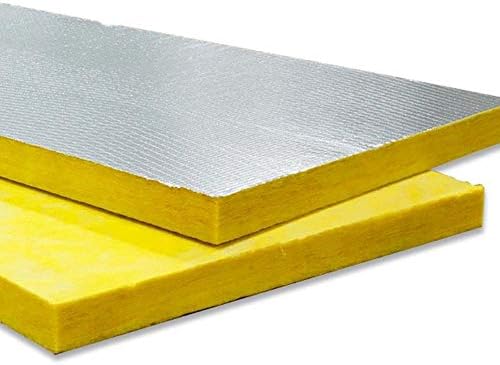
This six-board Owens Corning 703 pack has a foil-reinforced kraft facing over the fiberglass. Each board measures 24 x 48 inches and is 2 inches thick. The listed R-value is 8.7, and the NRC is 0.75, lower than the unfaced 703 and 705 figures in this roundup.
The foil facing is described as easy to clean and as reflecting some mid- to high-range sound frequencies while allowing low-end frequencies to pass through to the absorption material. That makes this a more specialized choice than the unfaced boards: consider it when the facing is useful for your installation, rather than assuming it will provide the same sound profile as an unfaced panel.
The product is also listed as Class A or Class 1 fire rated per ASTM E84 and certified to contain an average of 53% recycled glass content. The supplied product information marks this option as unavailable, so check the listing before planning a project around it.
Pros:
- Six 24 x 48 inch boards per pack
- Foil-reinforced kraft facing is described as easy to clean
- Listed R-value of 8.7
- Class A or Class 1 fire rating per ASTM E84
Cons:
- Listed NRC of 0.75, below the unfaced fiberglass choices here
- Supplied product information marks it unavailable
Verdict: Consider the 703 FRK if you specifically need its foil-reinforced facing and the listing is available; otherwise, the unfaced 703 is the simpler choice for sound absorption.
How to Choose a 2 Inch Insulation Board
Start with the material and the job
First decide whether your project needs acoustic or thermal insulation for a building or sound setup, or insulation for equipment that operates at very high temperatures. The Owens Corning products are fiberglass boards with listed sound and thermal figures. The SIMOND products are ceramic fiber boards described for stoves, ovens, kilns, forges, and related high-heat uses. Do not choose between them based on thickness alone.
Check the temperature requirements
For a high-heat application, compare the equipment’s requirements with the product’s stated maximum use temperature. The SIMOND ceramic boards are listed for use up to 2300°F. The fiberglass options in this roundup provide R-value and sound-absorption information, but no comparable maximum-use temperature is supplied. Follow the equipment maker’s instructions when selecting and installing insulation near heat.
Compare sound-absorption figures carefully
If sound absorption is a priority, compare the listed NRC figures: 703 unfaced is 1.0, 705 is 1.05, and 703 FRK is 0.75. The FRK facing also has a described effect on sound frequencies, so it is not simply a faced version with identical acoustic performance. Consider the whole assembly and your project requirements rather than relying on one number alone.
Choose the right firmness
The 703 is described as semi-rigid, while the 705 is described as rigid. That distinction can matter when your project calls for a firmer board. The ceramic boards have different strengths and limitations: the product information says they can be machined but can dent easily and are not as strong as firebrick.
Measure the area and compare pack sizes
The Owens Corning products come in boards measuring 24 x 48 inches, with six boards in each 703 pack and four in the 705 pack. The SIMOND ceramic boards measure 19.7 x 39.4 inches; one option is sold as a single board and the other as a two-pack. Measure your project and account for the number of pieces needed before choosing a pack.
Decide whether a facing is appropriate
The 703 and 705 listed here are unfaced. The 703 FRK has a foil-reinforced kraft exterior, which the product description says is easy to clean and affects how sound frequencies interact with the panel. Choose a facing only when it suits the intended installation; it does not make the board interchangeable with a ceramic high-heat panel.
Review installation and safety instructions
Before cutting or installing any insulation board, read the product instructions and check the requirements for your specific project. For stove, oven, kiln, or furnace work, confirm that the board is suitable for the equipment and placement. If the application is part of a building assembly, verify the applicable construction and fire requirements rather than relying on a product description alone.
Frequently Asked Questions
Which 2 inch board is best for sound absorption?
Among these options, Owens Corning 705 has the highest listed NRC at 1.05. The unfaced 703 is listed at 1.0. The 703 FRK is listed at 0.75 and has a facing described as affecting how sound frequencies interact with the board.
Can I use ceramic fiber board instead of fiberglass board?
Not automatically. The ceramic boards are described for high-temperature equipment, while the Owens Corning fiberglass boards list thermal and acoustic insulation features. Choose the material based on the temperature and purpose of your project.
What is the difference between Owens Corning 703 and 705?
The 703 is semi-rigid, while the 705 is rigid. Both are unfaced 2-inch fiberglass boards with a listed R-value of 8.7. Their listed NRC figures are 1.0 for 703 and 1.05 for 705, and their pack counts differ.
What does the FRK facing do?
FRK stands for foil-reinforced kraft. The product description says its facing is easy to clean and reflects some mid- to high-range sound frequencies while allowing low-end frequencies to pass through to the absorption material. Its listed NRC is 0.75.
Are the ceramic fiber boards strong enough to replace firebrick?
The product information says they are not as strong as firebrick and can dent easily. They are intended as insulation boards for listed applications, not as a like-for-like structural replacement for firebrick.
How many boards should I buy?
Measure the area to be covered and compare it with each board’s dimensions and pack count. The fiberglass options measure 24 x 48 inches per board; the ceramic options measure 19.7 x 39.4 inches per board. Allow for the layout and any cuts required by your project.
Final Recommendation
For a general-purpose fiberglass board with strong listed acoustic and thermal figures, the Owens Corning 703 unfaced pack is the most versatile place to start. Choose the 705 if you specifically want a rigid board and its slightly higher listed NRC fits your needs. For stoves, kilns, ovens, and similar high-heat applications, choose a SIMOND ceramic fiber board and verify that its size and product guidance suit the equipment. The FRK version makes sense when its facing is useful, but the supplied listing information marks it unavailable.
