
Choosing the best basement cement wall paint starts with the wall’s condition and the kind of protection you need. A waterproofing coating may help with moisture that passes through sound masonry, but it won’t fix an active leak or replace needed repairs. The picks below range from basement-focused waterproofing paints to coatings better suited to dry interior walls or exterior masonry, so you can match the product to your project.
Table of Contents
Quick Comparison
| Product | Best For | Key Consideration |
|---|---|---|
| KILZ Basement and Masonry Waterproofing Paint | Basement and masonry walls | Not for active leaks or floors |
| Zinsser WaterTite Mold & Mildew Waterproofing Paint | Waterproofing and mold-resistant paint film | Apply to dry walls; check the product label |
| Zinsser PERMA-WHITE Interior Paint | Dry interior walls needing a washable finish | Not a masonry waterproofing coating |
| Hensire Exterior Wall Paint for Concrete & Masonry | Small exterior masonry projects | Exterior use; 17-ounce size |
| ShangTianFeng Concrete Coating Kit | Concrete floors and floor-focused coating projects | Not the clearest choice for basement walls |
Our Picks: Best Basement Cement Wall Paint reviews
1. KILZ Basement and Masonry Waterproofing Paint: Best Overall Fit

KILZ is the most directly targeted option here for basement cement walls. It is made for concrete, brick, cinder block, stucco, and other masonry, and the product description says its coating blocks up to 12 PSI of water pressure. It can be used indoors or outdoors, which makes it a flexible pick for compatible masonry surfaces around the home.
Preparation matters. For below-grade walls, the manufacturer calls for filling holes and cracks with hydraulic cement before painting. The coating is not intended for floors or walls with active water leaks, so fix the source of water and prepare the surface before relying on paint for protection. KILZ lists a one-hour touch-dry time, four hours before recoating, and a full cure of seven to 14 days.
Compared with the other choices, this is the strongest match for someone who wants a purpose-made basement and masonry waterproofing paint without choosing a floor coating or a general interior paint. Its main limitation is that it cannot substitute for leak repairs or proper moisture management.
Pros:
- Made for basement walls and several common masonry surfaces
- Designed to block water pressure up to 12 PSI
- Suitable for interior and exterior use
- Low-odor formula with listed drying and recoating times
Cons:
- Not for active leaks or floors
- Cracks and holes below grade need repair before painting
Verdict: Choose KILZ if you want the clearest all-around fit for prepared basement cement or masonry walls.
2. Zinsser WaterTite: Waterproofing with a Mold-Resistant Paint Film
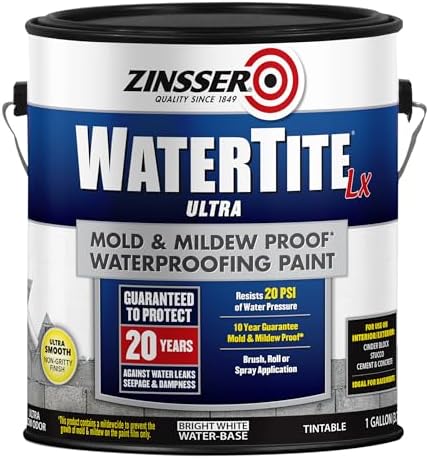
Zinsser WaterTite is a latex-based waterproofing paint intended for basement wall protection. Its product description says it resists up to 20 pounds of water pressure and forms a mold- and mildew-resistant paint film. The finish is described as smooth and bright white, rather than gritty, and the formula is listed as ultra-low odor with soap-and-water cleanup.
The product description also lists a 15-year waterproof guarantee and a 10-year mold- and mildew-proof paint-film guarantee. Read the label and guarantee terms to confirm the conditions that apply to your project. The coating is specified for dry walls, so it is not a shortcut for painting over active seepage, damp surfaces, or untreated mold.
WaterTite is a strong alternative to KILZ if its listed protection and finish suit your needs. The supplied product details do not give a drying or recoating schedule, so check the container instructions before planning the job.
Pros:
- Designed for basement wall waterproofing
- Product description lists resistance to water pressure up to 20 pounds
- White, smooth finish and low-odor formula
- Paint film is described as mold- and mildew-resistant
Cons:
- Specified for dry walls, not active leaks
- Drying and recoating times are not included in the supplied product details
Verdict: Consider WaterTite if you want a basement waterproofing paint with a smooth finish and mold-resistant paint-film claims, while carefully following its label and guarantee terms.
3. Zinsser PERMA-WHITE: Best for a Dry Interior Wall

PERMA-WHITE is an interior paint, not a dedicated waterproofing product. Its self-priming formula is described as requiring no sanding, and its washable, scrubbable finish can suit a dry basement wall where easy cleaning is a priority. The product information also describes a mold- and mildew-resistant paint film.
That distinction is important: the listed mildewcide is intended to prevent mold and mildew growth on the paint film only. It does not remove existing growth, correct damp conditions, or make the coating a barrier against water passing through concrete. Address moisture and clean the surface appropriately before painting.
Compared with KILZ and WaterTite, this is better viewed as a finish coat for a suitable, dry interior surface than as a solution to water seepage. The supplied listing identifies a quart size, which may work for a smaller area or touch-up but may not be practical for a large basement.
Pros:
- Self-priming formula is described as requiring no sanding
- Washable and scrubbable finish
- Paint film is designed to resist mold and mildew growth
Cons:
- Not presented as a masonry waterproofing paint
- Mildew protection applies to the paint film, not the wall or room
Verdict: Choose PERMA-WHITE for a dry interior wall where a washable, mold-resistant paint film matters more than waterproofing.
4. Hensire Exterior Masonry Paint: Best for Small Outdoor Touch-Ups

Hensire is a water-based paint for exterior concrete, cement, brick, stone, stucco, and masonry. It is described as a self-priming product for properly prepared compatible surfaces, with a matte finish and a water-repellent, weather-resistant coating. The listed colors are white, light gray, and black.
This product is aimed at outdoor walls, facades, and garden walls, not basement interiors. Its 17-ounce size makes it a more natural fit for a small repair or refresh than a large wall project. The supplied description lists a touch-dry time of about two to three hours and a four-hour wait before recoating; actual coverage can vary with surface texture, porosity, and application.
For a basement cement wall, KILZ or WaterTite is a more direct match because those products are specifically described for basement waterproofing. Hensire makes more sense when the project is an exterior masonry surface and you want a matte decorative finish.
Pros:
- Made for several exterior masonry surfaces
- Water-based, low-odor formula
- Self-priming on properly prepared compatible surfaces
- Available in three listed colors
Cons:
- Designed for exterior use, not basement interiors
- Small 17-ounce size may not suit a large wall
Verdict: Pick Hensire for a small exterior masonry job, but choose a basement-specific coating for an indoor cement wall.
5. ShangTianFeng Concrete Coating Kit: A Floor-First Option
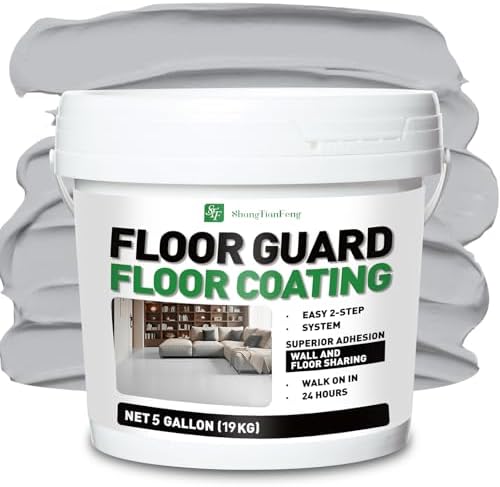
This smoke-gray concrete coating is described as suitable for floors or walls, but much of the product information focuses on garage floors, parking areas, and other surfaces that see foot or vehicle traffic. It emphasizes a durable, cleanable finish and calls for two coats. The preparation instructions focus on thoroughly cleaning concrete, filling floor cracks, and using a primer sealer when the floor is dusty or lacks hardness.
That floor-centered guidance makes this a less straightforward choice for a vertical basement cement wall. The supplied title describes an acrylic concrete coating, while the detailed description refers to an epoxy resin formula. Because the listing uses different coating terms, confirm the product label’s surface compatibility and application instructions before buying it for a wall.
Compared with the basement-focused paints in this list, this option has the most project-specific questions to resolve. It may suit someone coating a concrete floor, but a dedicated wall waterproofing product is a safer match for a basement wall project.
Pros:
- Described for concrete floors or walls
- Smoke-gray finish and cleanable coating are highlighted
- Instructions include surface-preparation guidance
Cons:
- Product description is primarily focused on floor use
- Listing uses both acrylic and epoxy terms, so confirm the coating details before purchase
Verdict: Consider this kit mainly for a concrete floor; for a basement cement wall, choose a product with clearer wall and waterproofing instructions.
How to Choose Basement Cement Wall Paint
Decide Whether You Need Waterproofing or a Decorative Finish
Start by identifying the job. If you want to reduce moisture passing through prepared masonry, look for a product specifically described as basement or masonry waterproofing paint. A standard interior paint may provide color and a washable finish, but it should not be treated as a water barrier unless the product is specifically designed for that purpose.
Check the Wall for Leaks and Damage First
Paint is not a fix for active water leaks. Address the source of water before coating the wall, and repair holes or cracks with a suitable masonry repair material. KILZ specifically calls for hydraulic cement to fill holes and cracks for below-grade use. Follow the chosen product’s label for surface preparation and conditions.
Match the Product to the Surface and Location
Confirm that the paint is intended for concrete, cement, or masonry and that it is suitable for the wall’s location. Some products are for interior use, some are for exterior masonry, and others are mainly designed for floors. A product that mentions concrete is not automatically the right choice for a vertical basement wall.
Understand What Mold-Resistant Claims Cover
A mold- or mildew-resistant paint film is not the same as mold removal or moisture control. For example, PERMA-WHITE’s listed mildewcide is intended to prevent growth on the paint film only. Deal with existing mold safely and correct the moisture conditions before painting; do not rely on paint alone to solve either issue.
Plan for Surface Preparation and Drying Time
Basement coatings can require careful cleaning, repairs, and drying before application. Check how long the product takes to dry and when it can be recoated. KILZ lists a four-hour recoat time and a full cure of seven to 14 days, while other products may have different instructions. Use the container directions for your exact project conditions.
Estimate the Amount You Need
Measure the wall area and compare it with the product’s stated coverage. Rough, porous, or uneven masonry may use more paint than a smooth surface. Also check package size: a small container may suit a patch or touch-up but can be impractical for a full basement.
FAQs
Can I use regular interior paint on a basement cement wall?
You can use an interior paint only when the wall is suitable for that product and does not need waterproofing. If moisture protection is the goal, choose a coating specifically made for basement or masonry waterproofing and follow its preparation instructions.
Will basement wall paint stop an active leak?
No. The KILZ product information specifically says it is not for walls with active water leaks. Find and address the source of the water before applying paint; a coating should not replace needed repairs.
Should I fill cracks before painting?
Yes. Repair holes and cracks with a suitable material before coating. For below-grade application, KILZ specifies filling holes and cracks with hydraulic cement. Always follow the instructions for the product you choose.
Does mold-resistant paint remove existing mold?
No. A mold-resistant paint film is intended to resist growth on the coating, not remove existing mold or fix damp conditions. Address the mold and the moisture source before painting.
Can I use exterior masonry paint in my basement?
Check the label rather than assuming it is suitable. Hensire is described for exterior masonry, while KILZ is listed for both interior and exterior use. For indoor basement walls, choose a product whose instructions clearly allow that application.
Is concrete floor coating a good choice for basement walls?
Not necessarily. Floor coatings may have instructions and performance claims aimed at horizontal surfaces and traffic. Confirm that the product is approved for vertical masonry before using it on a wall. For clearer wall guidance, a basement-specific waterproofing paint is a better fit.
Final Recommendation
For most prepared basement cement walls, KILZ Basement and Masonry Waterproofing Paint is the most direct match in this group because it is specifically described for basement and masonry surfaces and includes below-grade preparation guidance. Zinsser WaterTite is another basement-focused option with a smooth finish and stated mold- and mildew-resistant paint-film features. If the wall is dry and you mainly want a washable finish, PERMA-WHITE may be more appropriate. Whatever you choose, fix active leaks and follow the product label before painting.
