
Painting a basement ceiling black can help exposed joists, pipes, and ductwork blend into the background, giving the room a more finished look without hiding every detail behind a new ceiling. For a basement, the right paint should suit the ceiling material, offer the finish you want, and be appropriate for the room’s moisture conditions. These five options include flat black paints and primers, a larger-volume interior paint, an eggshell option, and a familiar one-gallon choice.
Quick take: KOMPOZIT Acrylic Paint & Primer in One is the most clearly specified option here for a flat black ceiling. If you have a large ceiling, consider EVOLVE’s five-gallon flat paint. Check the product details carefully before choosing the Farba USA listing, since its description also emphasizes chalkboard use.
Table of Contents
Quick Comparison
| Product | Finish / Size | Best For | Key Detail |
|---|---|---|---|
| KOMPOZIT Acrylic Paint & Primer in One | Flat; size not specified | A versatile black ceiling paint | Listed coverage is about 300–400 sq. ft. per gallon, depending on the surface |
| KOMPOZIT Acrylic Paint & Primer, Black Flat | Flat; size not specified | Shoppers considering a multi-surface paint | Listing description also highlights chalkboard use |
| EVOLVE Interior Paint & Primer, Flat | Flat; 5 gallons | Larger interior painting projects | Black Iron color; paint-and-primer formula |
| EVOLVE Interior Paint & Primer, Eggshell | Eggshell; 5 gallons | Rooms where cleanability matters | Black Iron color; gentle sheen |
| Glidden Total Interior Wall Paint & Primer | Flat; 1 gallon | A smaller project or a named black color | Black Magic/Black; listed for walls, ceilings, and trim |
Our Picks: Best Black Ceiling Paint Basement reviews
1. KOMPOZIT Acrylic Paint & Primer in One — Best All-Around Flat Black

This KOMPOZIT paint is the most straightforward match for a basement ceiling if you want a flat black finish. It is described as an acrylic paint and primer in one for ceilings, walls, trim, drywall, concrete, and other properly prepared surfaces. That range may be useful in a basement with a mix of ceiling materials or nearby painted trim.
The product description lists coverage of about 300–400 square feet per gallon, depending on surface porosity. It can be applied by brush, roller, or paint sprayer, and the listed touch-dry and recoat times are about one hour and two to four hours, respectively, at 77°F. Those timings are product specifications, so allow for conditions in your own space and follow the container directions.
Its low-sheen finish is a practical choice when you want the ceiling to look less reflective. The listing also describes the paint as washable, low-VOC, and low-odor. Still, a paint-and-primer formula does not remove the need to check the ceiling’s condition: dirty, glossy, stained, or poorly bonded surfaces may need extra preparation or a suitable separate primer.
Pros:
- Flat black finish intended for ceilings and several other surfaces
- Paint-and-primer formula may simplify a properly prepared project
- Works with a brush, roller, or paint sprayer
- Listed coverage is about 300–400 sq. ft. per gallon, depending on the surface
Cons:
- Container size is not clear in the supplied product details
- Coverage can vary with surface porosity, so rough or absorbent ceilings may need more paint
Verdict: Choose this as the leading option if you want a clearly described, versatile flat black paint for a properly prepared basement ceiling.
2. KOMPOZIT Black Flat Paint — A Multi-Surface Option to Check Carefully

This listing describes a black flat acrylic paint and primer for interior and exterior use, including walls and ceilings. On paper, that broad surface range could suit a basement with drywall, wood, or other prepared materials. The product title also identifies it as black flat paint, which is the finish many people want for a ceiling.
There is an important point to verify before ordering: the supplied description spends much of its space describing chalkboard use on materials such as walls, wood, glass, and metal. It also claims one-coat coverage, but does not provide a coverage rate or explain the ceiling conditions for that claim. Confirm that the selected product and finish match your intended ceiling project rather than relying on a broad listing description.
Compared with the first KOMPOZIT option, this one has less clear ceiling-specific application information in the supplied details. It may be worth considering if the listing confirms the exact black flat paint you want, but the ambiguity makes it a less certain pick for a full basement ceiling.
Pros:
- Described as an interior and exterior acrylic paint and primer
- Black flat finish is identified in the product title
- Listing names ceilings among its intended surfaces
Cons:
- The description mixes ceiling paint details with chalkboard-paint claims
- No coverage rate or container size is specified in the supplied details
Verdict: Consider this option only after confirming the Amazon listing’s exact product, finish, and intended use for your ceiling.
3. EVOLVE Interior Paint & Primer, Flat — Best for a Larger Ceiling

EVOLVE’s flat interior paint comes in a five-gallon size and the Black Iron color. That larger format may be convenient when you have a broad ceiling to cover, want to limit the number of containers, or are painting other interior surfaces in the same color. The formula combines paint and primer, and the listing says the flat finish is designed to hide surface imperfections.
A flat finish is a sensible choice when you want to avoid a noticeable sheen overhead. The supplied description also says this paint resists stains and scuffs and allows touch-ups. Those benefits may matter in a finished basement, though the product is described as ideal for low-traffic areas, and the listing does not give a coverage figure for estimating a ceiling project.
Compared with the KOMPOZIT option, EVOLVE offers a clearly stated five-gallon size but less specific information about ceiling coverage and application tools. Measure your ceiling and check the current package details before choosing a container size. A large pail is not automatically the best value if your project is small or you are unsure about the color.
Pros:
- Five-gallon size may suit a larger painting project
- Flat Black Iron finish is available
- Paint-and-primer formula is intended to help with initial coverage
- Listing describes stain resistance and touch-up capability
Cons:
- Five gallons may be more paint than a small ceiling requires
- The supplied details do not state a coverage rate
Verdict: Pick this flat option if your basement project is large enough to make a five-gallon container practical and Black Iron is the color you want.
4. EVOLVE Interior Paint & Primer, Eggshell — Best When a Slight Sheen Is Preferred
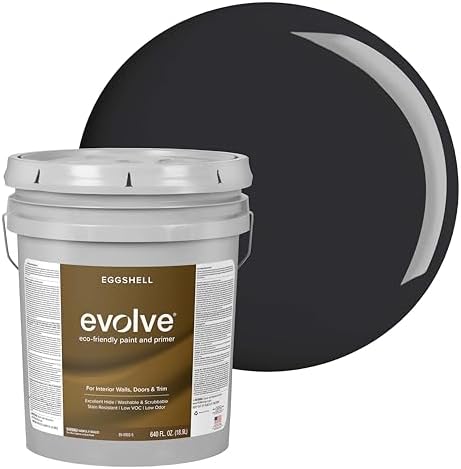
This EVOLVE option shares the Black Iron color and five-gallon size of the flat version, but it has an eggshell finish. The listing describes eggshell as having a soft glow and being easier to clean than a flat finish. That may appeal if your basement ceiling is part of a finished room where cleanability is a higher priority.
The trade-off is appearance. Eggshell reflects more light than flat paint, so it may draw more attention to uneven areas or ceiling details. If your goal is to make joists, ducts, or other overhead elements recede visually, the flat EVOLVE option or the KOMPOZIT flat paint is a closer match.
The product description says it is designed for moisture-prone areas such as bathrooms, kitchens, entryways, and laundry rooms. That does not make paint a solution for basement leaks, condensation, or ongoing dampness. Address moisture problems first, and follow the product label’s preparation and application instructions.
Pros:
- Eggshell finish offers a gentle sheen and easier cleaning, according to the listing
- Five-gallon size may work for a larger project
- Black Iron color matches the flat EVOLVE option
- Paint-and-primer formula is intended to help with coverage
Cons:
- Eggshell may show ceiling imperfections more than a flat finish
- The supplied details do not state a coverage rate
Verdict: Choose this if you prefer a washable-looking eggshell finish over the more subdued appearance of flat paint.
5. Glidden Total Interior Wall Paint & Primer — Best One-Gallon Choice

Glidden’s one-gallon interior paint and primer is listed in Black Magic/Black with a flat finish. It is specified for properly prepared interior walls, ceilings, and trim made from materials such as drywall, plaster, masonry, wood, and metal. The one-gallon size may be easier to manage for a smaller ceiling or a limited painting area than a five-gallon pail.
The product description highlights hide, coverage, washability, and scrubbability. It also notes that colorants added to the base paint may increase VOC levels depending on the color choice, so check the label for the specific product. For a large or rough ceiling, the lack of a supplied coverage figure makes it important to estimate carefully and allow for the condition of the surface.
Compared with KOMPOZIT’s first option, Glidden gives you a named black color and a clear one-gallon format, while KOMPOZIT provides a stated coverage range and application details. This is a useful choice if the package size and color suit your project, but you may need more than one gallon depending on your ceiling’s area and texture.
Pros:
- Flat Black Magic/Black finish
- Listed for ceilings as well as walls and trim
- One-gallon size may suit a smaller project
- Paint-and-primer formula with listed washability and scrubbability
Cons:
- The supplied details do not state a coverage rate
- Colorants may affect VOC levels, according to the product description
Verdict: Consider Glidden for a smaller ceiling project when you want a one-gallon flat black option with a named color.
How to Choose Black Ceiling Paint for a Basement
Match the Sheen to Your Ceiling
Flat paint has little shine and is often a good fit when you want an overhead surface to look understated. It can also be more forgiving of small surface irregularities than a sheen finish. Eggshell has a soft glow and is generally easier to clean, but its extra reflection can make ceiling texture or unevenness more noticeable. Choose based on the look you want as well as how often the ceiling may need cleaning.
Check the Surface and Its Preparation Needs
Basement ceilings can include drywall, exposed wood, masonry, or previously painted surfaces. Confirm that the paint is labeled for your specific material, then prepare the surface according to the container directions. Remove dust and loose material, and check for stains, glossy coatings, or areas where old paint is peeling. A paint-and-primer product can help simplify a project, but it should not be treated as a substitute for needed repairs or the right primer for a problem surface.
Measure the Area Before Choosing a Container
Measure the ceiling’s length and width to estimate its square footage, then compare that total with the coverage listed on the paint label. Rough, porous, or exposed surfaces can take more paint than smooth drywall. Only the first KOMPOZIT product in this list provides a coverage estimate in the supplied details, so check the packaging or product listing for the other options before deciding how much to buy.
Think About Basement Moisture
Paint is not a fix for water intrusion, condensation, or persistent dampness. Deal with leaks and moisture sources before painting, and make sure the ceiling is suitable for coating. If you are choosing paint for a room with higher humidity, review the product’s stated uses and instructions. The eggshell EVOLVE listing mentions moisture-prone rooms, but that should not be read as a replacement for proper moisture control.
Choose a Color and Finish That Suit the Room
Black can help overhead pipes and joists blend together, but a dark ceiling may also make the space feel more enclosed. Consider the room’s lighting, wall colors, and ceiling height before committing. If you are unsure about the shade or sheen, check whether you can test a small area first and view it under the basement’s usual lighting.
Plan for Application and Ventilation
Choose a paint that works with the application method you plan to use, whether that is a brush, roller, or sprayer. Cover flooring and nearby items, and protect fixtures and equipment before painting overhead. Follow the paint label for ventilation, drying, recoating, and cleanup. Even a product described as low-odor should be used as directed, with suitable airflow.
FAQs
Is flat black paint a good choice for a basement ceiling?
Flat black is a strong option when you want a low-sheen ceiling that draws less attention to overhead details. It is not the only suitable finish: eggshell may be easier to clean, but it reflects more light and can make imperfections more visible.
Will black paint make my basement look smaller?
It can make the ceiling feel more visually present or the room feel more enclosed, especially in a basement with limited light. The effect depends on the room’s lighting, wall color, ceiling height, and how much of the ceiling is painted.
Do I need primer before painting a basement ceiling?
It depends on the surface and its condition. Paint-and-primer products may help on suitable, properly prepared surfaces, but stains, bare materials, glossy coatings, or peeling paint may call for extra preparation or a separate primer. Follow the paint maker’s instructions.
Can I use these paints on exposed basement joists and pipes?
Some products in this list are described for multiple surfaces, including wood, metal, or other materials. Check the specific product label to confirm that it is suitable for each part of your ceiling, and prepare each surface as directed.
How much paint do I need for a basement ceiling?
Measure the ceiling area and compare it with the coverage information on the product label. Texture and porosity can change how much paint you use. The first KOMPOZIT listing estimates about 300–400 square feet per gallon depending on the surface; the supplied details for the other products do not state a coverage rate.
Is eggshell or flat better for a basement ceiling?
Flat is usually the better match if you want a subdued look that hides minor imperfections. Eggshell may suit you if cleaning is a higher priority and you do not mind a slight sheen. Choose based on the ceiling’s condition and the look you prefer.
Final Recommendation
For most shoppers seeking a black basement ceiling paint, KOMPOZIT Acrylic Paint & Primer in One is the clearest all-around match because its listing specifically describes a flat black finish for ceilings and gives application and coverage details. Choose EVOLVE’s flat Black Iron option when a five-gallon container makes sense for your project. If you prefer a slight sheen, consider the EVOLVE eggshell paint; for a smaller project, Glidden offers a one-gallon flat option. Whichever you choose, confirm the exact finish, coverage, and surface compatibility, and address any moisture problems before painting.
