
Choosing the best ceiling insulation for sound depends on what you want to fix. A dense mass-loaded vinyl (MLV) barrier can help limit airborne noise moving between rooms, while fiberglass ceiling tiles are designed to absorb sound in a room and can also provide thermal insulation. The right choice also depends on your ceiling type, available space, coverage needs, and whether the structure can support the material’s weight.
These three options serve different purposes: a large MLV roll for broader ceiling coverage, a compact MLV sheet for smaller areas, and fiberglass tiles for a compatible suspended ceiling grid. Compare their intended uses before you buy, because sound absorption and sound blocking are not the same job.
Table of Contents
Quick Comparison
| Product | Type | Coverage or Fit | Best For |
|---|---|---|---|
| SoundwreX Mass Loaded Vinyl Soundproofing Material | 1 lb/sq ft MLV barrier | 4 ft × 25 ft roll; 100 sq ft | Adding a sound barrier across a larger ceiling area |
| Focusound Mass Loaded Vinyl Soundproofing Barrier | 1.1 lb/sq ft MLV barrier | 1 ft × 8 ft sheet; about 8 sq ft | Small sections, patches, or targeted projects |
| Soundsulate Acoustical Insulating Fiberglass Ceiling Tiles | Fiberglass ceiling tiles | Four 2 ft × 4 ft tiles; fits compatible 15/16-inch grids | Reducing room echo and adding insulation to a suspended ceiling |
Our Picks: Best Ceiling Insulation For Sound reviews
SoundwreX MLV Roll: Best for Covering a Larger Ceiling Area
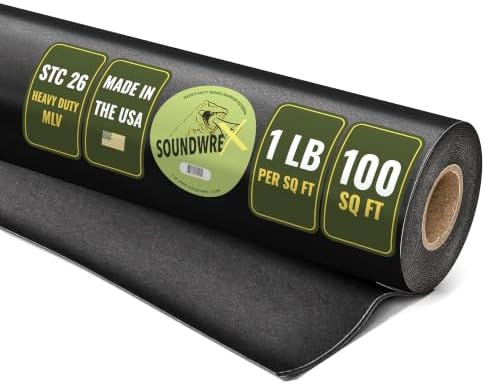
This SoundwreX roll is a dense, flexible MLV sound barrier intended for walls, ceilings, and floors. At 1 pound per square foot and about 1/8 inch thick, it adds mass to a ceiling assembly to help reduce airborne noise passing between spaces. It is a barrier material, not an acoustic panel designed to absorb echo inside a room.
The 4-foot-wide, 25-foot-long roll covers 100 square feet. Its width can span several common joist bays, which may mean fewer seams than working with narrow sheets. The trade-off is weight: a full roll weighs about 100 pounds, and the product information recommends planning for two people to hang it.
It is not self-supporting, so you need to fasten it to joists, studs, or drywall with suitable fasteners and washers. Seams and edges also need attention; the product description recommends overlapping or butting seams and sealing them with acoustic caulk or MLV tape. For best results, treat it as one part of a sealed ceiling assembly rather than a stand-alone fix.
This is the most practical pick here when you need broad coverage and want a continuous MLV barrier. It is less convenient for a small repair or a ceiling where handling heavy material overhead is difficult. Check your ceiling structure and fastening plan before installation.
Pros:
- Provides 100 square feet of material in one roll
- Dense 1 lb/sq ft construction adds mass to a ceiling assembly
- Wide format can reduce the number of seams across joist bays
- Can be cut with a utility knife
Cons:
- A full roll weighs about 100 pounds and is difficult to handle overhead alone
- Requires secure fastening and careful seam sealing
Verdict: Choose the SoundwreX roll for larger ceiling projects where you can safely support and install a heavy MLV barrier.
Focusound MLV Sheet: Best for Small or Targeted Projects

Focusound’s MLV is a flexible sound barrier rated at about 1.1 pounds per square foot and 1/8 inch thick. It is designed to add mass to ceilings, walls, doors, floors, and other surfaces. Like the larger SoundwreX product, its purpose is to help limit sound transmission, not absorb room echo.
The sheet measures 1 foot by 8 feet and covers about 8 square feet. That compact size is easier to handle than a 100-square-foot roll, but it makes this a poor fit for covering a typical full ceiling unless you are prepared to join multiple pieces. The narrower format can also mean more seams, which need to be sealed carefully.
The product can be cut with a utility knife or heavy-duty scissors and attached with construction adhesive, screws, nails, or other suitable fasteners. For an overhead installation, choose a fastening method appropriate for the ceiling surface and the material’s weight. A small sheet may work well for a localized project, but it is not a complete soundproofing solution on its own.
Compared with the SoundwreX roll, Focusound offers slightly more mass per square foot but much less coverage per package. It is a more manageable option for limited areas or a trial project; for a large ceiling, its small format may add time and seams.
Pros:
- Compact sheet is easier to handle than a large roll
- About 1.1 lb/sq ft of flexible barrier material
- Can be cut to fit smaller areas or unusual shapes
- Suitable for several surfaces beyond ceilings
Cons:
- About 8 square feet of coverage per sheet is limited for a full ceiling
- Multiple sheets create more seams to fasten and seal
Verdict: Pick Focusound for a small, targeted ceiling area or a project where a compact sheet is easier to manage than a full roll.
Soundsulate Fiberglass Tiles: Best for a Suspended Ceiling

Soundsulate’s product is a set of four white, 3-inch-thick fiberglass ceiling tiles, each measuring 2 by 4 feet. Unlike the MLV options, these are made to sit in a compatible suspended ceiling grid. The manufacturer lists a fit for standard 15/16-inch grids, so check your grid dimensions before ordering.
The tiles have a stated NRC of 1.00 or higher, a measure related to sound absorption, and a stated R-value of 13.6. That makes them a strong match for reducing sound reflections in a room while also adding thermal insulation. Sound absorption inside a room is different from blocking sound from passing through a ceiling, so these tiles should not be treated as a direct substitute for a sealed MLV barrier when sound transfer between floors is the main problem.
The product description says the tiles provide tool-free access to the space above and have a cleanable white vinyl facing. That access can be useful when you need to reach the ceiling plenum. Their main limitation is the grid requirement: they are not a universal replacement for drywall or a standard joist ceiling.
Of the three choices, these tiles are the simplest fit for a compatible drop ceiling and the clearest option for room echo and thermal performance. If your priority is stopping airborne noise between rooms, consider the limits of an exposed grid ceiling and whether a separate sound-barrier assembly is needed.
Pros:
- Designed for compatible 15/16-inch suspended ceiling grids
- Stated NRC of 1.00 or higher for sound absorption
- Stated R-value of 13.6 adds thermal insulation
- Tool-free access to the space above the tiles
Cons:
- Requires a compatible suspended ceiling grid
- Sound absorption does not make it equivalent to a sealed sound-blocking barrier
Verdict: Choose Soundsulate if you have a compatible drop ceiling and want sound absorption plus insulation; look to an MLV assembly if blocking sound between spaces is your main goal.
How to Choose Ceiling Insulation for Sound
Decide Whether You Need Sound Blocking or Sound Absorption
Start by identifying where you hear the noise. If sound is traveling from a room above or through a shared ceiling, a barrier such as MLV may help limit airborne sound transmission when used as part of a well-sealed assembly. If the problem is echo or a lively, reflective sound within the room, sound-absorbing ceiling tiles may be a better match. These products address different problems, so one should not be assumed to replace the other.
Match the Material to Your Ceiling
Check how your ceiling is built before choosing a product. The Soundsulate tiles are designed for a compatible 15/16-inch suspended grid. The MLV products need to be fastened to an appropriate surface or ceiling structure; they are not self-supporting. If you have a drywall ceiling, exposed joists, or a drop ceiling, the installation approach will differ.
Plan for Weight and Safe Installation
MLV is heavy by design. The SoundwreX roll weighs about 100 pounds, and the Focusound sheet weighs about 9 pounds. Before mounting either overhead, consider the ceiling structure, the fasteners, and how you will lift and support the material during installation. Follow product instructions and seek qualified help if you are unsure whether your ceiling can support the added load.
Measure Coverage and Account for Seams
Measure the area you want to cover before choosing between a 100-square-foot roll and an 8-square-foot sheet. A wider roll can reduce the number of joins, while smaller sheets may be easier to move and cut for a limited area. With MLV, plan how you will seal edges and seams; gaps can weaken the result of a sound-barrier installation.
Think About the Whole Ceiling Assembly
A single layer of material is not a guarantee of a quiet room. The SoundwreX product information notes that MLV works best as part of a sealed assembly with insulation and drywall. Consider the existing ceiling, any gaps or openings, and whether sound may also travel through walls, ducts, or other paths. A ceiling treatment may have limited impact if noise is bypassing it elsewhere.
Consider Access and Room Use
If you need to reach wiring, pipes, or other equipment above the ceiling, removable grid tiles can make access easier. A fixed MLV installation may require more planning around access points. Also consider whether you want to change the appearance of the ceiling, as the Soundsulate tiles have a white vinyl-facing surface while the MLV products are barrier materials intended to be covered or integrated into an assembly.
Frequently Asked Questions
What is the best ceiling material for blocking sound?
For airborne noise moving between spaces, a dense barrier such as MLV may help when it is securely installed and seams are sealed as part of a complete ceiling assembly. No single material guarantees full soundproofing, and the ceiling’s construction and other sound paths matter.
Does fiberglass ceiling insulation stop sound from traveling between floors?
Fiberglass ceiling tiles can absorb sound within a room, which may help reduce reflections and echo. That is different from blocking sound from passing through a ceiling. Their stated absorption rating does not mean they will fully isolate one floor from another.
Can I install MLV directly on a ceiling?
The MLV products are intended to be fastened to an appropriate surface or structure and are not self-supporting. Check the product instructions, choose suitable fasteners, and make sure the ceiling can support the added weight before starting an overhead installation.
How much MLV do I need for my ceiling?
Measure the ceiling area you plan to cover and compare it with the listed coverage: the SoundwreX roll covers 100 square feet, while the Focusound sheet covers about 8 square feet. Allow for your layout and seam plan, and verify package coverage before purchasing.
Will MLV absorb echo in a room?
No. MLV is a sound-barrier material and does not absorb echo, according to the product information. If echo is the issue, look for sound-absorbing treatments such as the Soundsulate fiberglass tiles, provided your ceiling has a compatible grid.
Can I use Soundsulate tiles in any ceiling?
No. They are designed to fit compatible standard 15/16-inch ceiling grids. Measure your grid and confirm compatibility before ordering; they are not described as a universal fit for every ceiling type.
Final Recommendation
For broad coverage with a sound-blocking material, the SoundwreX roll is the most practical choice here if your ceiling can support it and you can install it securely. Choose the Focusound sheet for a smaller, targeted project where compact handling matters more than coverage. If you have a compatible suspended ceiling and want to reduce room echo while adding thermal insulation, Soundsulate is the better match. In every case, choose based on the sound problem you are trying to solve and the limits of your ceiling assembly.
