
A garage door screen cover can turn an open garage into a breezy workspace or hangout while helping keep flying pests and loose debris outside. The right choice depends on your opening size, how much wind resistance you need, and whether you want a standard mesh screen or added privacy. Measure the opening carefully before you buy: several options here are made for openings up to about 16 feet wide and 7 feet tall, but their listed screen dimensions are larger to allow for the frame.
Table of Contents
Quick Comparison
| Product | Notable features | Best for |
|---|---|---|
| Elytsemoh Fiberglass Magnetic Garage Screen | Fiberglass mesh, magnetic center, bottom gravity sticks, roll-up straps | A 2-car garage needing a heavier screen |
| Iduontis Retractable Fiberglass Garage Screen | Fiberglass mesh, 40 magnets, 16 gravity rods, removable design | Ventilation with added bottom weight |
| LIAMST Reinforced Fiberglass Garage Screen | Magnetic center closure, weighted bottom, roll-up straps | A simple, removable screen for a high-traffic opening |
| Cnynail Heavy-Duty Fiberglass Garage Screen | 18×16 fiberglass mesh, 38 magnets, 20 gravity sticks | A reinforced screen with detailed fit guidance |
| LIAMST Blackout Privacy Garage Screen | Blackout fabric, thickened mesh, reinforced edges | More garage privacy while retaining airflow |
Our Picks: Best Garage Door Screen Cover reviews
1. Elytsemoh Fiberglass Screen for a Heavier-Duty Setup

The Elytsemoh is a magnetic fiberglass screen sized for a typical 2-car garage opening. Its listed screen dimensions are 16.3 by 7.15 feet, and the product information says it fits openings about 188–192 inches wide and 82–84 inches high. Measure your frame rather than relying on the “16×7” label alone.
The screen weighs 5.1 pounds and uses magnetic closure points down the center, plus 20 gravity sticks along the bottom. That combination is intended to help the screen fall back into place after people or pets pass through. Six sewn-in straps let you roll it up when you need the full garage opening. The top hook-and-loop strip is widened for added support.
This is a reasonable option if you want fiberglass rather than polyester and expect frequent walk-through use. It can also be used in other openings, such as a patio or workshop, if the dimensions suit. One practical detail matters for garages with metal doors: the product instructions say to roll up the screen before raising the door, because the magnets can stick to the iron door.
Pros:
- Fiberglass mesh is described as tear-resistant and breathable.
- Includes 20 bottom gravity sticks and multiple magnetic closure points.
- Sewn-in straps make it possible to roll the screen up for vehicle access.
- Can be used in some other large openings if the fit works.
Cons:
- Careful measuring is important because the screen needs room around the frame.
- Needs to be rolled up before raising a metal garage door, according to the product instructions.
Verdict: Choose the Elytsemoh if you want a heavier fiberglass screen with bottom weights and roll-up straps, and you are comfortable managing it around a metal garage door.
2. Iduontis Screen with 40 Magnets and 16 Bottom Rods

The Iduontis is another fiberglass magnetic screen for a 2-car garage. Its listed dimensions are 16.3 by 7.15 feet, with a stated fit for openings up to 188–192 inches wide and 82–84 inches high. The manufacturer recommends leaving extra space for the frame, so check both the opening and the surface where the screen will attach.
Its closure system includes 40 magnets and 16 gravity rods at the bottom. The bottom weight may help the screen settle after a pass-through, while the center magnets are designed to close the opening. The screen attaches with included hook-and-loop material, and the package description also mentions extra push pins for added security. It can be removed and wrapped for storage when not in use.
This model suits a garage where ventilation and natural light matter more than privacy. The product description also lists patios, balconies, studios, and home gyms as possible uses, though the dimensions and attachment surface still need to work for your space. Compared with the Elytsemoh, it lists more magnets but fewer bottom rods; the information provided does not establish which system performs better in every wind condition.
Pros:
- Fiberglass mesh allows airflow and natural light.
- Includes 40 magnets and 16 bottom gravity rods.
- Removable design can be wrapped and stored.
- Installation materials include hook-and-loop strips and extra push pins.
Cons:
- Does not provide privacy like a blackout-style screen.
- Its fit depends on leaving enough room around the garage frame.
Verdict: The Iduontis is a good match if you want a removable fiberglass screen with a high number of magnets and bottom rods for a properly measured opening.
3. LIAMST Removable Screen for Everyday Walk-Through Access

This LIAMST screen uses a magnetic center seam so people and pets can pass through without opening a framed door. It measures 16.3 by 7.15 feet and is designed for a 2-car garage opening. The screen is frameless and detachable, which makes it easier to take down and store when you no longer need it.
The product description specifies reinforced fiberglass mesh and a weighted bottom intended to help the center close. A full-frame hook-and-loop strip attaches the screen, and the package includes thumbtacks for added security. Six straps are sewn in for rolling the screen up. As with other magnetic models, the instructions warn that magnets can stick to an iron garage door, so the screen should be rolled up before raising that door.
The LIAMST is a straightforward choice for a garage that doubles as a workspace or hangout and needs a walk-through opening. It does not list a specific number of magnets or bottom weights, unlike several other picks here, so shoppers comparing by those counts may prefer a model with more detailed specifications.
Pros:
- Reinforced fiberglass mesh is designed for ventilation and regular use.
- Magnetic center seam is designed to close after pass-through.
- Detachable design and six straps support seasonal storage.
- Includes thumbtacks to reinforce the hook-and-loop attachment.
Cons:
- The product information does not state a specific magnet or bottom-weight count.
- Requires extra care around an iron garage door that is raised.
Verdict: Pick this LIAMST model if you want a removable fiberglass screen with roll-up straps and do not need a detailed count of its magnets or bottom weights.
4. Cnynail Screen with Reinforced Fiberglass Mesh

The Cnynail is a fiberglass magnetic screen for openings up to about 16 feet wide and 7 feet high. Its stated screen size is 16.3 by 7.15 feet, and the product gives an opening range of 188–192 inches wide by 82–84 inches high. This is useful fit guidance, but your garage frame and mounting surface still need to be measured before ordering.
Its listed construction includes 18×16 fiberglass mesh, reinforced edges, 38 magnets, and 20 gravity sticks along the bottom. Six sewn-in straps help with rolling the screen up, and the screen is described as detachable for off-season storage. The package includes attachment strips and extra push pins. The description also says to roll up the screen before raising an iron garage door to avoid magnet contact.
Among the standard mesh options here, Cnynail provides one of the clearest sets of material and closure details. That makes it easier to compare specifications, though the feature list alone cannot guarantee how it will hold up in a particular garage or in strong wind. It is best for shoppers who want airflow and a removable screen rather than a privacy barrier.
Pros:
- Lists 18×16 fiberglass mesh, reinforced edges, 38 magnets, and 20 gravity sticks.
- Includes straps for roll-up storage and push pins for added attachment support.
- Fits several spaces beyond a garage if the dimensions are appropriate.
- Detailed opening measurements help with fit planning.
Cons:
- Requires accurate measuring to account for the frame and attachment area.
- Needs to be rolled up before raising an iron garage door, according to the product information.
Verdict: The Cnynail is a strong specification-focused option if you want fiberglass mesh, a weighted bottom, and clear fit details for a 2-car garage.
5. LIAMST Blackout Screen for Added Garage Privacy
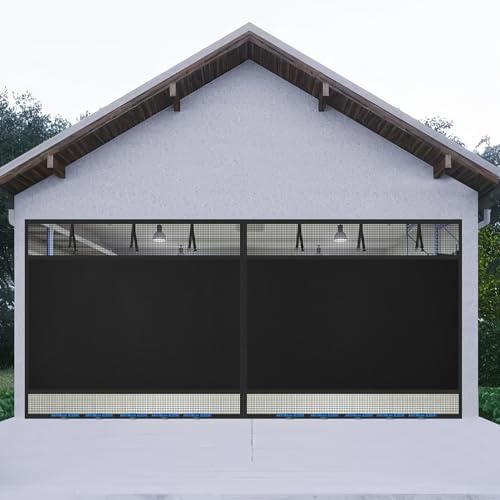
This LIAMST screen differs from the other picks by pairing mesh with triple-wave blackout fabric. The design is intended to provide more privacy than a standard open-weave screen while still allowing airflow. Its listing describes thickened 265 g/m² mesh, a wear-resistant sleeve at the bottom, and reinforcement along the edges and center.
The magnetic closure is designed to seal after someone walks through, and the package description mentions heavy-duty adhesive strips and thumbtacks for installation. The product title lists a 9.6-pound weight. Those details may appeal if the garage faces a street or neighboring property and you want to obscure the view into the space.
There is an important availability caveat: the supplied product information marks this item as unavailable. Check the listing before planning around it, since availability can change. It also offers less of an open, see-through feel than a standard fiberglass screen, so choose one of the mesh-focused options if maximum light and visibility are your priority.
Pros:
- Blackout fabric is designed to improve privacy compared with standard mesh.
- Thickened mesh and a bottom wear sleeve are intended to resist friction damage.
- Includes adhesive strips and thumbtacks for mounting.
- Magnetic closure is designed to seal after pass-through.
Cons:
- The supplied product information marks it as unavailable.
- Blackout fabric reduces the open view and light compared with a standard mesh screen.
Verdict: Consider this LIAMST option if privacy is more important than a fully open view, but confirm that it is available before choosing it.
How to Choose a Garage Door Screen Cover
Measure the opening and mounting area
Measure the clear opening in both directions, then check how much flat frame or trim is available for the hook-and-loop attachment. Several screens in this guide list dimensions around 16.3 by 7.15 feet and an intended opening range of about 188–192 inches wide by 82–84 inches high. Those are not interchangeable with every “16×7” garage. Confirm the exact measurements on the product listing and allow room for the frame as directed.
Choose mesh or privacy fabric
Standard fiberglass mesh is the better fit when airflow, daylight, and visibility are your main goals. A blackout-style screen is meant to obscure the garage more, but it will not feel as open as plain mesh. Think about how you use the space: a workshop or exercise area may benefit from ventilation, while a garage facing a public area may call for more privacy.
Compare the closure and bottom-weight design
Magnetic center closures are designed to let people and pets pass through and then bring the opening back together. Bottom gravity sticks or rods are intended to help the screen hang down and settle. Product specifications vary: some list their magnet and rod counts, while others do not. Treat those figures as comparison details, not a promise of performance in every wind condition.
Check installation and storage needs
Most of these screens attach with hook-and-loop material, and some include push pins for extra support. Look at what the package includes and whether your frame offers a clean attachment surface. Roll-up straps or a removable design can help when you need to drive a vehicle through or put the screen away for a season.
Plan for your garage door type
Some product instructions specifically warn that magnets may stick to an iron garage door. For those models, the screen should be rolled up before raising the door. Read the instructions for the model you choose and plan how you will secure or remove the screen before operating the garage door.
Match durability claims to your use
Fiberglass mesh, reinforced edges, heavier fabric, and bottom wear sleeves are features to compare if the screen will see frequent use. They do not remove the need for proper installation or careful handling. If the screen will be used in a windy area or by children and pets, pay close attention to the attachment method, included reinforcement, and the maker’s guidance.
Frequently Asked Questions
What size garage door screen should I buy for a 16×7 opening?
Do not rely only on the nominal 16×7 label. Several options here list screen dimensions of about 16.3 by 7.15 feet and an intended opening range of 188–192 inches wide by 82–84 inches high. Measure your opening and frame, then confirm the specific product’s fit requirements.
Can people and pets walk through a magnetic garage screen?
These screens are designed with a magnetic center opening that separates for pass-through and comes back together. How easily it works can depend on the fit, installation, and the way the screen is handled.
Will a garage screen keep bugs out?
The mesh models are designed to let air through while helping keep flying pests and debris outside. A screen is not a solid barrier, so its effectiveness depends on proper fit and a closed center seam.
Can I raise my garage door with the screen attached?
Some models specifically warn that magnets can stick to an iron garage door and instruct you to roll the screen up before raising the door. Follow the instructions for your chosen screen and avoid letting the screen interfere with the garage door’s movement.
Are fiberglass screens better than polyester screens?
Some product descriptions promote fiberglass as a more durable or tear-resistant material, but the best choice depends on the product’s construction and your use. Compare mesh material, edge reinforcement, attachment design, and care instructions rather than relying on material name alone.
Do these screens work for patios or workshops?
Several listings describe other uses, including patios, workshops, balconies, and home gyms. Check the dimensions and attachment surface for that opening before using a garage-sized screen elsewhere.
How should I store a garage door screen when it is not in use?
Several models include straps for rolling the screen up, and some are described as detachable or removable for storage. Follow the supplied instructions and store the screen in a way that avoids unnecessary pulling or creasing.
Final Recommendation
For a standard 2-car garage, the Cnynail is a compelling choice if you want fiberglass mesh and clearly listed reinforcement details. The Elytsemoh and Iduontis are also worth comparing if bottom weights and magnetic closure features are priorities. Choose the LIAMST blackout model only if privacy matters more than an open view, and confirm its availability first. Whichever screen you select, measure the opening and frame carefully, and check its instructions before using your garage door.
