
A green front door can give your entryway a strong focal point while keeping the look of painted wood. The options here are fiberglass doors supplied prehung on primed composite frames, so they are not made entirely from composite material. They differ in panel style, glass, and handing. Before choosing, check the opening size, hinge side, swing direction, and whether you want a clear or more private view through the door.
Availability note: The supplied product data marks all four listings as unavailable. Availability can change, so confirm the listing status and product details before making a decision.
Table of Contents
Quick Comparison
| Product | Design | Glass | Handing and swing | Notable detail |
|---|---|---|---|---|
| National Door Company Craftsman 3-Panel Fiberglass Door | 3-panel Craftsman | No glass specified | Right-hand inswing | Hunter green on both sides; 4-block dentil shelf |
| National Door Company Classic 6-Panel Fiberglass Door | Classic 6-panel | No glass specified | Left-hand inswing | Hunter green on both sides |
| National Door Company Hunter Green Door with Decorative Glass | Smooth fiberglass | Granite glass with clear bevel clusters and glue-chip glass | Left-hand inswing | Satin nickel caming; privacy rating listed as 6 out of 10 |
| National Door Company Craftsman 2-Panel Door with Clear Glass | Craftsman 2-panel | Low-E clear, double-pane, tempered, insulated | Left-hand inswing | Privacy rating listed as 0 out of 10 |
Our Picks: Best Green Composite Front Door reviews
1. Craftsman 3-Panel Door for a Solid, Traditional Entry
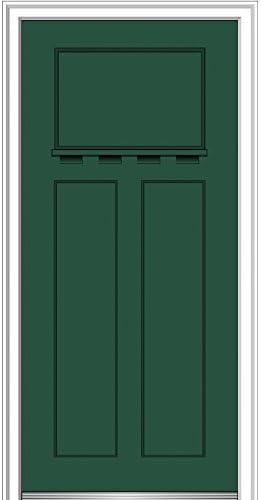
This National Door Company option pairs a smooth fiberglass door with a three-panel Craftsman design and a four-block dentil shelf. It arrives prehung on a 4-9/16-inch primed composite frame. The door is painted hunter green on both the exterior and interior, while the frame is primed.
Its solid design is a good fit if you want a defined Craftsman look without glass in the door. The manufacturer describes the fiberglass as resistant to rot, warping, dents, and splits. That can make it an appealing alternative to a wood door, though proper installation and routine care still matter.
This is a right-hand inswing door: when viewed from outside, the hinges are on the right, the knob is on the left, and the door swings into the home. Confirm that layout against your entry before ordering. Its main trade-off is that it does not provide the daylight or view offered by the glass models.
Pros:
- Distinctive three-panel Craftsman styling with a dentil shelf
- Hunter green finish on both sides of the door
- Fiberglass construction designed to resist common issues such as rot and warping
- Prehung on a primed composite frame
Cons:
- Right-hand handing may not suit every entry
- No glass is specified, so it will not add daylight through the door
Verdict: Choose this model if you want a solid, green Craftsman door and your opening needs a right-hand inswing configuration.
2. Classic 6-Panel Door for a Familiar Front Entry

This smooth fiberglass door uses a classic six-panel layout and comes painted hunter green on both sides. It is prehung on a 4-9/16-inch primed composite frame. The listing identifies this particular model as 32 inches wide, but you should verify the full size and rough-opening requirements in the current product details before buying.
The traditional panel pattern works well if you want a familiar look rather than a glass-forward or distinctly Craftsman design. Like the other solid options in this group, it keeps the entry visually private and does not specify a glass insert. Its fiberglass construction is described as resistant to rot, warping, denting, and splitting.
This model is left-hand inswing: from outside, the hinges are on the left, the knob is on the right, and the door opens inward. It is the clearest choice among these four if you prefer a standard six-panel appearance, but it will not suit an opening that requires right-hand handing.
Pros:
- Classic six-panel design that suits many traditional homes
- Hunter green finish on the interior and exterior of the door
- Prehung composite frame is primed for finishing
- Solid door design avoids a direct view through the entry
Cons:
- Left-hand inswing is not interchangeable with right-hand configurations
- No glass is specified for added natural light
Verdict: This is the straightforward pick for a traditional six-panel look, provided its listed size and left-hand inswing match your entry.
3. Decorative-Glass Door for Light with Some Privacy
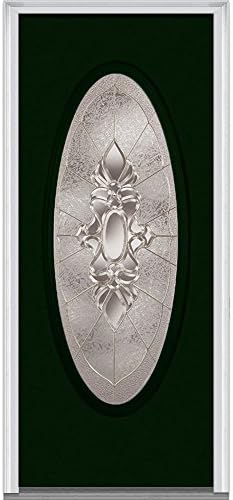
This smooth fiberglass door stands apart from the solid-panel choices with decorative glazing. Its glass is described as granite glass with clear bevel clusters and glue-chip glass, accented by satin nickel caming. The listed privacy rating is 6 out of 10, so it offers more screening than the clear-glass option, but it should not be treated as fully opaque.
The door is hunter green and prehung on a 4-9/16-inch-wide primed composite frame. The manufacturer describes the fiberglass as resistant to rot, warping, dents, and splits. The decorative insert gives the entry a more detailed look and can bring daylight into the foyer, though the amount of light and view depends on the glass design and the home’s layout.
This is a left-hand inswing door. The supplied description also explains handing from inside the home: if the hinge pins are on your right, it is a left-hand inswing. Because decorative glass changes the appearance and privacy of the entry, compare the product image and current listing details with your needs before choosing it.
Pros:
- Decorative glass combines granite, bevel, and glue-chip details
- Listed privacy rating is higher than the clear-glass model
- Hunter green finish provides a coordinated entry color
- Prehung composite frame is primed
Cons:
- Glass still allows some visibility, so it is not the most private option
- Left-hand inswing may not match your doorway
Verdict: Pick this model if decorative glass is important and you want some screening without choosing a fully solid door.
4. Craftsman 2-Panel Door with Insulated Clear Glass

This Craftsman-style model combines a two-panel design with low-E clear glass. The glazing is described as double-pane, tempered, and insulated. Its listed privacy rating is 0 out of 10, which makes the glass a poor fit if you need to block views into the home.
The fiberglass door comes painted hunter green on both sides and is prehung on a 4-9/16-inch primed composite frame. The manufacturer describes the door as resistant to rot, warping, dents, and splits. Compared with the decorative-glass model, this option prioritizes a clear view and a more open feel rather than privacy.
It is a left-hand inswing door: viewed from outside, the hinges are on the left and the knob is on the right. The clear glass may suit a shaded entry where you want more daylight, but consider sightlines from the street or walkway before selecting it. The low privacy rating is the key compromise.
Pros:
- Low-E clear glass is double-pane, tempered, and insulated
- Two-panel Craftsman design offers a distinct look
- Hunter green finish on both sides of the door
- Prehung on a primed composite frame
Cons:
- Listed privacy rating of 0 out of 10 means the glass offers little privacy
- Left-hand inswing will not fit every entry layout
Verdict: Choose this door if daylight and a clear view matter more to you than privacy and its left-hand swing matches your opening.
How to Choose a Green Fiberglass Door with a Composite Frame
Confirm the Door Material and Frame
These options are fiberglass doors, not solid-composite door slabs. Each is described as prehung on a primed composite frame. Fiberglass is presented as resistant to rot, warping, dents, and splits, while the frame arrives primed. Check the current listing for the exact materials, frame details, and finishing instructions so you know what you are buying.
Measure the Opening Before You Choose
Door width, height, jamb depth, and rough-opening size all affect fit. Only one supplied product title specifies a 32-inch width, and that does not confirm every measurement needed for installation. Measure your existing doorway carefully and compare it with the product’s current specifications. A prehung unit includes a frame, so installation may involve replacing more than just the door slab.
Match Handing and Swing Direction
Handing is one of the most important details to verify. The first option is right-hand inswing; the other three are left-hand inswing. The descriptions identify the hinge and knob sides when viewed from outside. Compare that layout with your existing door and the space inside your home, including walls, furniture, and nearby doors.
Decide How Much Glass and Privacy You Want
The two solid designs do not specify glass. The decorative-glass model has a listed privacy rating of 6 out of 10, while the clear-glass Craftsman model is rated 0 out of 10. If you want daylight but need to limit visibility, the decorative option may be a better starting point. If privacy is the priority, a solid design is the more direct choice among these products.
Choose a Style That Fits Your Home
The six-panel door has a familiar traditional look. The two- and three-panel options lean toward Craftsman styling, with the three-panel model also including a four-block dentil shelf. The glass choices add another visual detail. Consider the home’s exterior trim, porch style, and existing hardware so the green door feels connected to the rest of the entry.
Check Finish and Installation Requirements
The first, second, and fourth doors are described as painted hunter green on both sides, with primed frames. The decorative-glass listing says the door comes painted hunter green and the frame is primed. Confirm the current product details for finish coverage, required painting or sealing, included hardware, and installation instructions. The supplied descriptions do not specify all of these details.
Verify Availability and Listing Details
The supplied data marks all four products as unavailable. A listing can change, so check its current status before planning a project around a particular door. Recheck the exact handing, dimensions, finish, glass type, and included components on the product page, especially if you are replacing an existing prehung unit.
Frequently Asked Questions
Are these doors made entirely from composite material?
No. The supplied descriptions identify them as fiberglass doors prehung on primed composite frames. The door slabs themselves are described as fiberglass.
Which option has no glass specified?
The three-panel Craftsman door and the classic six-panel door have no glass specified in the supplied descriptions. The other two options include decorative or clear glass.
Which door offers the most privacy?
The two solid designs are the most direct choices for limiting visibility because no glass is specified. Of the glass models, the decorative-glass door has a listed privacy rating of 6 out of 10; the clear-glass model is rated 0 out of 10.
Which models are left-hand inswing?
The six-panel door, decorative-glass door, and two-panel Craftsman door are listed as left-hand inswing. The three-panel Craftsman door is listed as right-hand inswing.
Do these doors come painted green on both sides?
The three-panel, six-panel, and two-panel clear-glass models are specifically described as painted hunter green on both the exterior and interior. The decorative-glass listing says the door comes painted hunter green but does not specify both sides.
Are the doors available to buy now?
The supplied product data marks all four listings as unavailable. Check the Amazon listing directly for current availability and confirm that the product details still match your needs.
What should I verify before ordering a prehung door?
Confirm the rough opening, unit size, jamb depth, handing, swing direction, finish, and glass choice. Also check what hardware and installation materials are included, since those details are not provided for every option here.
Final Recommendation
For a solid green entry with Craftsman character, the three-panel National Door Company door is the strongest match if you need a right-hand inswing. If you prefer a traditional look, consider the six-panel model, while the decorative-glass option offers a balance of detail and some privacy. Choose the clear-glass Craftsman door only if a brighter, more open view matters more than privacy. Before committing, verify measurements and handing—and check whether the listing is currently available.
