
Green grey can mean a muted, nature-inspired shade for an art project—or a wall color for a room. The products below are artist paints in green-grey tones, not household wall paint, so they’re best suited to canvases, models, crafts, and other compatible surfaces. Our top pick for a versatile acrylic option is the 12 Shades of Grey Green Grey tube; the right choice for you depends on your medium, surface, and desired finish.
Table of Contents
Quick Comparison
| Product | Paint type | Best for | Standout feature |
|---|---|---|---|
| 12 Shades of Grey Green Grey Acrylic Paint | Acrylic | General art projects | Distinct green-grey shade in a larger tube |
| Liquitex BASICS Green Gray Acrylic Paint | Acrylic | Everyday painting and underpainting | Medium viscosity with a satin finish |
| Vallejo Model Color Green Grey | Water-based model paint | Models and small details | Made for adherence to surfaces such as metal and plastic |
| 12 Shades of Grey Green Grey Artist Oil Color | Oil | Oil-painting techniques and subtle shadows | Triple-milled, highly pigmented color |
| Lefranc Bourgeois Flashe Grey Green | Vinyl emulsion | Matte work on varied surfaces | Ultra-matte finish and fluid texture |
Our Picks: Best Green Grey Paint Color reviews
12 Shades of Grey Green Grey Acrylic Paint: A Focused Color for Art Projects

This single acrylic tube is a straightforward way to add a dedicated green-grey to your palette. Instead of mixing green with black or white and trying to keep the result muted, you can begin with a shade made specifically to sit between green and grey.
The supplied product details describe the color as highly pigmented and triple-milled. It is listed as a 75ml (2.5 oz.) tube, making it a larger format than the 4-ounce Liquitex tube? Actually, 75ml is smaller than 4 ounces, but still a generous single-color tube for projects that use one muted tone often. The maker’s wider range includes several other grey variations, which may be useful if you want related shades for shadows and color mixing.
This is a good fit for painters who already use acrylics and want a specific green-grey without buying a full set. It can also work as a starting point for mixing, though the final result will depend on the other paints and surface you use. The listing’s description mixes acrylic and oil terminology, so check the product label and listing details before purchase if the paint medium is essential to your project.
Compared with the Liquitex option, this tube is positioned around a specialized grey color range, while Liquitex provides clearer details about its acrylic line and satin finish. It is not a household paint, so don’t choose it for painting walls or large home surfaces.
Pros:
- Dedicated green-grey shade for art and craft work
- Listed in a 75ml tube
- Part of a range of complementary grey tones
- Described as highly pigmented
Cons:
- The product description contains mixed references to acrylic and oil paint
- Not intended as interior wall paint
Verdict: Choose this tube if you want a dedicated green-grey acrylic option and are comfortable confirming the medium from the product packaging.
Liquitex BASICS Green Gray: A Practical Everyday Acrylic

Liquitex BASICS is an acrylic paint line made for new painters as well as experienced artists who need an everyday or study paint. This Green Gray shade comes in a 4-ounce tube and has medium viscosity, which gives it more body than a very fluid paint. Its listed finish is satin, so expect a different surface look from the ultra-matte Flashe paint in this guide.
The product details note that BASICS uses a lower pigment concentration than Liquitex’s professional paints. The pigments are described as lightfast, and the paint is intended for uses such as sketching, underpainting, and color exploration. It is also described as intermixable with professional materials, which can make it useful when you want to test a palette or build a muted base layer.
This is the most clearly specified option for someone seeking a general-purpose green-grey acrylic. It suits artists who want one tube for practice, preliminary work, or regular painting without stepping up to a professional line. Keep in mind that the satin finish may not match a project that calls for a fully flat, non-reflective surface.
Compared with the first pick, Liquitex gives more detail about its paint line, finish, and intended uses. It may be the more predictable choice if you want an acrylic from an established range and don’t need a specialist grey collection.
Pros:
- 4-ounce tube for regular use
- Medium-viscosity acrylic with a satin finish
- Described as suitable for sketching and underpainting
- Intermixable with professional materials
Cons:
- Lower pigment concentration than the brand’s professional paints
- Satin finish may not suit projects calling for an ultra-matte look
Verdict: Pick Liquitex BASICS if you want a clearly described, versatile acrylic for everyday painting, color studies, or underpainting.
Vallejo Model Color Green Grey: A Small-Scale Paint for Models

Vallejo Model Color is an 18ml water-based paint aimed at detailed work, especially on models. The supplied description says it is formulated with permanent pigments and is lightfast and opaque. It also highlights a smooth, uniform paint film with no visible brushstrokes when applied as intended.
A key difference is its stated suitability for difficult surfaces such as metal and plastic. That makes it a more specialized pick than the larger acrylic tubes intended for general art use. The compact size is practical for painting small objects, but it is less suited to covering a large canvas or broad surface.
Choose it if you need a green-grey for model painting or other small-scale projects and want a water-based formula. Surface preparation and application can still affect adhesion, so follow the product’s directions for the specific material you’re painting.
Compared with the other options, Vallejo is the clearest choice for models and small details. Its 18ml size is also the smallest among the listed products, so it is not the best value in terms of volume if your project needs a lot of paint.
Pros:
- Made for model painting and fine detail
- Water-based formula
- Described as lightfast and opaque
- Formulated to adhere to surfaces such as metal and plastic
Cons:
- 18ml bottle is suited to small jobs rather than large areas
- More specialized than a general-purpose acrylic paint
Verdict: Choose Vallejo Model Color when your green-grey project involves models or small details, rather than broad canvas work.
12 Shades of Grey Green Grey Oil Color: For Oil-Painting Techniques
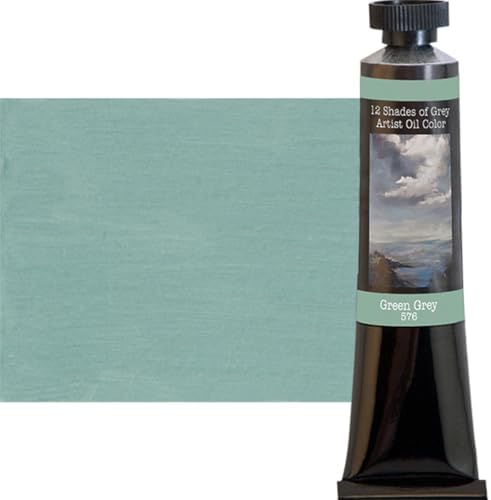
This product is an artist oil color in a green-grey shade, not an acrylic. The supplied description emphasizes high pigment content and triple milling, and says the paint is designed for shadow work, subtle grey tones, mixing, and underpainting. Those qualities make it a specialized option for artists who already work in oils.
Its main advantage over the acrylic picks is its oil medium. Oil paint behaves differently from acrylic, so it should be selected to match your painting process rather than simply because you like the color. The listed title specifies a 50ml tube, while the product description gives different tube-size details; confirm the size on the listing before ordering.
This paint may suit oil painters who want a premixed green-grey for subdued passages or who want to avoid building the tone from several colors. It is not the right choice for someone who needs a water-based acrylic or a model paint for plastic parts.
Compared with the acrylic version from the same brand, this tube is the better match for oil techniques but not for water-based projects. The product description’s size inconsistency is worth checking before you buy.
Pros:
- Oil paint for artists who work in that medium
- Described as highly pigmented and triple-milled
- Designed for shadows, subtle greys, and underpainting
Cons:
- Not suitable as a direct substitute for acrylic paint
- Listing details give conflicting tube-size information
Verdict: Select this option if you specifically need an oil-based green-grey and verify the tube size before placing an order.
Lefranc Bourgeois Flashe Grey Green: An Ultra-Matte Vinyl Paint

Flashe is a vinyl emulsion paint with a fluid texture and an ultra-matte finish. The product description says the finish is non-reflective and that the paint can be used on a range of non-oily surfaces, including wood, textile, leather, metal, paper, polystyrene, plastic, and glass. The title lists an 80ml tube.
The paint is described as highly pigmented, with color strength that remains powerful when diluted. The maker also lists a broad range of colors and finishes, though this particular product is the Grey Green shade. Its unusual medium and multi-surface claims make it different from standard acrylics, so check compatibility with your project and follow the manufacturer’s instructions.
This is the option to consider when a very matte appearance matters more than choosing a familiar acrylic or oil formula. It may suit artists working on varied non-oily surfaces, but it is not currently listed as available in the supplied product information. Availability can change, so check the listing before planning a project around it.
Compared with Liquitex BASICS, Flashe offers a more explicitly matte finish and lists a wider range of possible surfaces. Liquitex is the more straightforward choice if you specifically want acrylic paint.
Pros:
- Ultra-matte, non-reflective finish
- Fluid vinyl emulsion formula
- Described for use on many non-oily surfaces
- 80ml tube listed in the product title
Cons:
- Listed as unavailable in the supplied product information
- Vinyl emulsion is not the same medium as acrylic or oil paint
Verdict: Consider Flashe if you need a very matte green-grey for a compatible surface, but confirm current availability and surface suitability first.
How to Choose Green Grey Paint for Art
Match the paint medium to your project
Start by deciding whether you need acrylic, oil, water-based model paint, or vinyl emulsion. These are different types of paint and are not automatically interchangeable. If you already have a painting setup, choose a paint that works with your tools and process. For general acrylic work, Liquitex BASICS and the 12 Shades of Grey acrylic listing are the relevant options here. For models, Vallejo is the specialized pick; for oil work, choose the oil color.
Consider the surface you plan to paint
Canvas, paper, plastic, and metal can call for different paint choices and preparation. Vallejo specifically notes adherence to metal and plastic, while Flashe lists several non-oily surfaces. Those claims don’t mean every surface is ready to paint without preparation. Check the label and instructions for your material, and test a small area when compatibility is uncertain.
Think about finish and texture
Finish affects how green-grey looks under light. Liquitex BASICS is listed with a satin finish, while Flashe is ultra-matte and non-reflective. The other supplied details do not specify a finish in the same way. Paint viscosity matters too: Liquitex is described as medium viscosity, and Flashe as fluid. Choose based on the effect and handling you want, not just the color name.
Pick a tube size that fits your use
A small model-paint bottle can be practical for fine details, while a larger tube may make more sense for repeated use or broader artwork. Compare the stated volume with how much area you expect to cover. Be especially careful with the 12 Shades of Grey oil color, because its title and description give different size information.
Check the exact shade before committing
“Green grey” can vary from one brand to another, and a shade may look different on your screen than it does in person. If color matching matters, compare the maker’s color references and test the paint on the same kind of surface you plan to use. For home walls, look for a dedicated interior wall-paint product and test a physical sample; the products in this guide are art paints, not wall paint.
Frequently Asked Questions
Is green-grey paint in this guide suitable for walls?
No. These are artist, model, or craft paints, not household interior wall paints. For a room, look for a wall-paint product made for interior use and test a sample in the actual space.
Which option is best for general acrylic painting?
Liquitex BASICS is the clearest general-purpose acrylic choice in this group. The 12 Shades of Grey acrylic listing is another option, but its supplied description mixes acrylic and oil terminology, so confirm the medium on the product listing or package.
Which green-grey paint is best for painting models?
Vallejo Model Color is the most specialized choice for small-scale model work. Its description specifically mentions adherence to difficult surfaces such as metal and plastic.
Is the oil paint interchangeable with the acrylic paints?
No. Oil and acrylic are different paint mediums with different working properties. Choose the one that matches your materials and process, and follow the manufacturer’s instructions.
Which product has the most matte finish?
Lefranc Bourgeois Flashe is described as ultra-matte and non-reflective. It is a vinyl emulsion paint, not an acrylic, and it is listed as unavailable in the supplied product information.
How can I tell whether a green-grey shade will match my project?
Screen colors can be misleading. Check the brand’s color references and make a small test on your intended surface when possible. For wall painting, use a sample from a household wall-paint line rather than these artist paints.
Final Recommendation
For a clearly described, everyday acrylic, Liquitex BASICS Green Gray is the most straightforward choice. Choose the 12 Shades of Grey acrylic tube if you want a dedicated green-grey from a color-focused range, but verify the medium because the listing details are mixed. Model painters should look to Vallejo, oil painters to the oil-color tube, and anyone seeking an ultra-matte finish may consider Flashe if it becomes available. For interior walls, choose a dedicated wall paint instead.
