
A hand-crank corn grinder can give you more control over the texture of your cornmeal and help you prepare small batches without electricity. The right choice depends on what you plan to grind, how finely you need it milled, and whether your counter can hold a clamp securely. These five manual mills range from traditional cast-iron designs to models with adjustable settings for different grains.
Table of Contents
Quick Comparison
| Product | Notable feature | Best suited for |
|---|---|---|
| Victoria Manual Cast Iron Grain Mill | Adjustable grinding screw and low hopper | Traditional, versatile countertop grinding |
| Estrella Manual Grain Mill | Traditional molino design for corn and nixtamal | Masa and family recipes |
| DIMEGON Corn Grinder | Spiral auger and adjustable grinding plate | Small batches of several dry ingredients |
| NicBex Manual Grain Mill | Adjustable clamp and burr tension | Shoppers who value a stable mount and grind control |
| TIMCORR Corn Grinder Mill | Adjustable disc and protective rubber mat | Countertop use with a range of pantry ingredients |
Our Picks: Best Hand Grinder For Corn reviews
Victoria Manual Cast Iron Grain Mill: A Versatile Traditional Pick
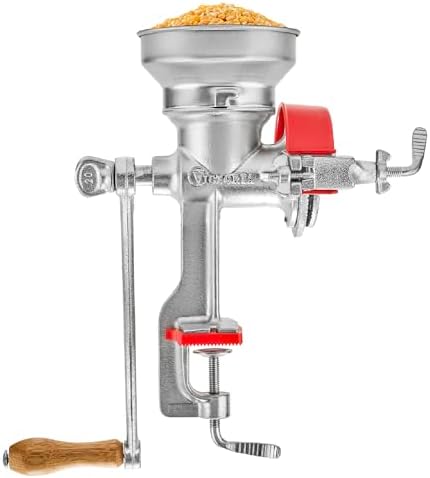
The Victoria is a hand-crank mill with a cast-iron body, a wooden handle, and white iron grinding discs. Its adjustable screw lets you change the grind setting, while the low hopper gives the mill a compact profile compared with a high-hopper version.
The mill clamps to tables from 1/2 to 2 inches thick and includes a rubber protector for the surface. That clamp range is useful to check before buying: a secure fit matters when you are turning the crank, and the rubber piece helps protect the counter while reducing slipping.
It can handle corn along with grains, beans, seeds, nuts, spices, and other ingredients listed by the maker. The key limitation is texture. The product description says it cannot make a superfine grind and will not turn whole wheat into fine powder, so it is a better match for coarse-to-medium grinding than very fine flour.
Compared with the other picks, the Victoria offers a clearly stated clamp range and a broad list of uses. It may be the more reassuring choice if you want a traditional mill from an established cookware maker, but it is not the right tool if your main goal is superfine flour.
Pros:
- Adjustable screw for changing grind coarseness
- Cast-iron construction with a wooden crank handle
- Fits tables from 1/2 to 2 inches thick
- Can be used with a range of grains and other ingredients
Cons:
- Not designed to produce a superfine texture
- Will not grind whole wheat into fine powder
Verdict: Choose the Victoria if you want a versatile, traditional hand mill and are comfortable with a grind that may not be flour-fine.
Estrella Manual Grain Mill: A Traditional Choice for Masa
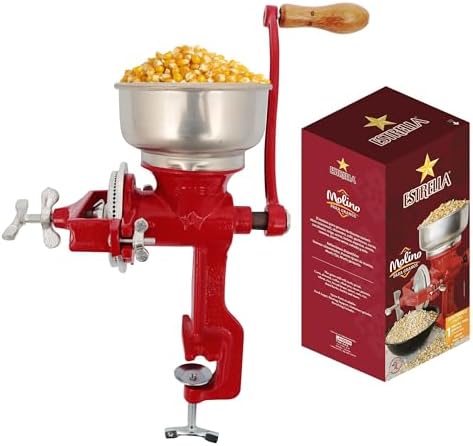
The Estrella is presented as a traditional Mexican molino for grinding corn and nixtamal. Its cast-iron construction and adjustable grinding settings are intended for homemade preparations such as masa, tortillas, tamales, atole, pupusas, and arepas.
It clamps to countertops up to 1.5 inches thick. The product description also says the parts can be removed for cleaning and storage. If you are considering it, measure your counter edge first, especially if it has a thick lip or an unusual shape that could interfere with the clamp.
This model stands out for its specific focus on traditional corn preparations, while the Victoria, DIMEGON, and TIMCORR are described more broadly as grain mills. It is also listed as unavailable in the supplied product information, so check the product page to confirm whether you can currently purchase it.
Pros:
- Designed with masa and nixtamal preparations in mind
- Cast-iron construction and adjustable grinding settings
- Clamps to countertops up to 1.5 inches thick
- Removable parts are described as helpful for cleaning and storage
Cons:
- Countertop thickness limit is narrower than the Victoria’s stated range
- Listed as unavailable in the supplied product information
Verdict: If your priority is a traditional molino for masa and related recipes, the Estrella’s stated purpose is a strong match, provided it is available and fits your counter.
DIMEGON Corn Grinder: Adjustable Milling for Small Batches

The DIMEGON is a tabletop hand mill with a spiral auger, a manual crank, and an adjustable grinding plate. Its description says the adjustment can move between coarse grain and fine powder, giving you control over the texture for different recipes.
The hopper is described as having a large capacity, though no specific capacity measurement is supplied. It clamps to a table or counter up to about 1.57 inches thick. The product is intended for corn and a mix of other ingredients, including coffee beans, rice, soybeans, chickpeas, and dried peppers.
Its stated range of settings and ingredients makes it a flexible option for small-batch kitchen work. As with other hand mills in this group, you will need a suitable table edge and room to turn the crank. The supplied information does not give a specific output rate, so it is hard to judge how long larger batches might take.
Pros:
- Adjustable grinding plate for changing texture
- Spiral auger and hand crank for manual operation
- Suitable for several grains and pantry ingredients
- Clamps to surfaces up to about 1.57 inches thick
Cons:
- No measured grinding capacity or output rate is provided
- Requires a compatible counter edge for mounting
Verdict: The DIMEGON is worth considering if you want one manual mill for corn and other small-batch ingredients, and you do not need a stated production rate before buying.
NicBex Manual Grain Mill: A Stable Clamp and Fine Adjustment

The NicBex mill is designed around a locking clamp and adjustable burr tension. Its description says it can be set for a coarse crack or a medium-fine texture, making those two ends of the range especially relevant if you want to use the same mill for cooking and home brewing.
One detail to note is the construction wording: the product description identifies a 7.5-pound aluminum-alloy body, while also referring to cast-iron components. That differs from the all-cast-iron descriptions of several competing mills. The clamp is stated to fit countertops up to 1.5 inches thick.
The maker also emphasizes cleaning and care. The mill comes apart for cleaning, and the instructions warn that cast-iron components can rust if left wet. Hand-washing and thorough drying are recommended. This is a practical pick if you value a secure mount and are willing to follow the drying instructions after use.
Pros:
- Adjustable burr tension for coarse or medium-fine grinding
- Locking clamp designed for countertops up to 1.5 inches thick
- Can be taken apart for cleaning
- Intended for corn, wheat, oats, barley, nuts, seeds, and coffee beans
Cons:
- Cast-iron components need to be dried thoroughly to help prevent rust
- Countertop limit is 1.5 inches
Verdict: Pick the NicBex if its stated coarse-to-medium-fine range suits your recipes and you want a clamp-focused design with clear care instructions.
TIMCORR Corn Grinder Mill: A Multi-Ingredient Option with a Rubber Mat

The TIMCORR is a hand-crank grain mill with a spiral auger and adjustable grinding disc. The product description says you can change the setting from fine flour to chunky meal, and it includes a shaped wooden grip for turning the crank.
It clamps to flat surfaces up to 1.57 inches thick and comes with a protective rubber mat. The mill is described for corn, rice, soybeans, split peas, roasted coffee, and dried chilies, among other ingredients. That range makes it a possible fit for both grain grinding and small-batch seasoning work.
The TIMCORR shares several core features with the DIMEGON, including a spiral auger, a tabletop clamp, and an adjustable plate or disc. The rubber mat is a useful distinction in its listed setup, but the supplied information does not specify a measured hopper capacity or how quickly it processes a batch. It is also listed as unavailable in the supplied product information, so check the listing before deciding.
Pros:
- Adjustable disc for different stated grind textures
- Rubber mat included to help protect the mounting surface
- Can grind several grains and other pantry ingredients
- Wooden crank grip and spiral auger design
Cons:
- Listed as unavailable in the supplied product information
- No measured grinding capacity or output rate is provided
Verdict: Consider the TIMCORR if its adjustable grind and included rubber mat suit your setup, but confirm availability and counter fit before ordering.
How to Choose a Hand Grinder for Corn
Match the grind to your recipe
Think about the texture you need before choosing a mill. Coarse meal, cracked corn, and finer flour are different goals, and not every hand grinder can achieve all of them. The Victoria specifically says it cannot produce a superfine texture. Other listings describe adjustable settings, but they do not give a shared standard for how fine the result will be. If you need a very fine grind, check the product details carefully and keep realistic expectations.
Consider the corn and other ingredients
Some mills are described for dried corn and grains, while the Estrella is specifically presented for nixtamal and masa preparations. Check that the mill is intended for the ingredient and preparation you have in mind. If you also want to grind coffee, beans, seeds, or spices, compare the listed uses rather than assuming every mill is suitable for every food.
Measure your counter before buying
These mills attach to a table or counter, so the clamp dimensions matter. The Victoria lists a range from 1/2 to 2 inches; the Estrella and NicBex specify up to 1.5 inches; and the DIMEGON and TIMCORR list about 1.57 inches. Measure the edge where you plan to work, and consider whether the counter shape leaves enough room for the clamp and crank.
Look at stability and surface protection
Turning a hand crank applies force to the mount. A clamp that fits snugly can help the mill stay in place, while a rubber protector or mat may help protect the counter. The Victoria includes a non-slip rubber protector, and the TIMCORR lists a protective rubber mat. Regardless of the model, check that the mill is secured before grinding.
Think about construction and upkeep
Cast iron is common among these traditional-style mills, but product descriptions may list other materials too. The NicBex description, for example, identifies an aluminum-alloy body and cast-iron components. Follow the care instructions for your specific model. The NicBex listing warns that cast-iron parts can rust if left wet and recommends hand-washing and thorough drying.
Choose a mill you can comfortably operate and clean
Manual grinding takes repeated turns of the crank, so consider how often you plan to use the mill and how much you intend to process at once. The product information does not provide comparable output rates, so these picks are best assessed as hand-operated tools rather than by assumed speed. Removable parts, where specified, may also make cleaning and storage more convenient.
Frequently Asked Questions
Can a hand grinder make cornmeal?
These mills are described for grinding corn, and several have adjustable settings for changing the texture. The exact result depends on the mill and setting. Check the product details if you need a particular texture, especially if you want a very fine meal.
Can these grinders make superfine corn flour?
Do not assume they can. The Victoria explicitly says it cannot grind to a superfine texture. The other products describe adjustable settings but do not provide a fine-grind measurement, so check the listing and choose based on the texture it clearly supports.
Can I grind nixtamal for masa?
The Estrella is specifically described for nixtamal, masa, and related recipes. The other mills list corn or grains more generally, so confirm that their instructions match your intended preparation before using them for nixtamal.
Will these mills fit any countertop?
No. Each has a clamp thickness limit, and the counter edge must also allow the clamp to attach securely. The stated limits range from 1.5 inches to 2 inches, depending on the model. Measure your counter before buying.
Can I use a corn grinder for other foods?
The listed uses vary by model, but they include ingredients such as grains, rice, beans, seeds, spices, and coffee. Follow the instructions for your particular mill, and avoid using ingredients that are not listed as compatible.
How should I care for a cast-iron hand mill?
Follow the product’s care instructions. The NicBex description warns that cast-iron components can rust if left wet and recommends hand-washing and drying thoroughly. The other product descriptions also call for hand washing or wiping after use.
Which hand grinder is the best choice for most corn grinding?
The Victoria is a strong all-around option if you want a traditional cast-iron mill, a stated clamp range, and several possible uses. If your main goal is masa and nixtamal, the Estrella is more specifically described for that work, but its availability should be confirmed first.
Final Recommendation
For a versatile hand grinder with a clear mounting range and adjustable grind, the Victoria is the most balanced choice in this group, as long as you do not need superfine flour. For masa and nixtamal recipes, look first at the Estrella’s stated purpose and verify that it is available. Whichever mill you choose, make sure it fits your counter and matches the texture you want to make.
