
Interlocking soundproof floor mats can help tame echoes, soften foot traffic, and protect hard floors under instruments or exercise equipment. They are best understood as sound-absorbing and vibration-dampening surfaces, not a full soundproofing solution: they may improve room acoustics, but they are not designed to block all noise from reaching other rooms. The picks below vary in tile count, thickness, and stated features, so consider the area you need to cover and how firmly the mats must stay in place.
Table of Contents
Quick Comparison
| Product | Pack and tile size | Notable features | Best suited for |
|---|---|---|---|
| LITLANDSTAR 20-Piece Felt Mats | 20 pieces; 11.8 x 11.8 x 0.4 inches | Felt construction; 48 tape pieces included | Custom small practice or play areas |
| TroyStudio 16-Piece Acoustic Mats | 16 pieces; 11 x 11 x 0.4 inches | Stated density of 150 kg/m³; cuttable; tape included | Instrument and equipment areas |
| Focusound 20-Piece Drum Rug | 20 pieces; 11.8 x 11.8 x 0.4 inches | Polyester felt; interlocking design; tape included | Drums, pianos, and music rooms |
| GOGHOST 20-Piece Floor Mats | 20 pieces; 11.8 x 11.8 x 0.4 inches | Cuttable; 48 tape pieces; listing states NRC 0.87 | Practice spaces needing a custom fit |
| Wunzkii 16-Piece Felt Mats | 16 pieces; 11.8 x 11.8 x 0.35 inches | Polyester felt; interlocking construction | Smaller setups and floor protection |
Our Picks: Best Interlocking Soundproof Floor Mats reviews
1. LITLANDSTAR: A Flexible 20-Piece Set for Small Areas

This set includes 20 high-density felt puzzle pieces, each measuring 11.8 by 11.8 inches and 0.4 inches thick. LITLANDSTAR says the pieces can cover up to 17 square feet when assembled. The muted black finish is simple, and the interlocking edges let you shape the mat around a small instrument setup, play area, or home workout spot.
The felt is intended to absorb some room echo and soften the impact of movement on a hard floor. The package also includes 48 pieces of removable double-sided tape for added grip. That can be useful if the mat will sit under active equipment, though tape may be less convenient if you plan to move the layout often.
Compared with the 16-piece choices, this set offers more tiles and a larger stated coverage area. The product details do not give a density figure or measured sound-absorption rating, so shoppers who want those specifications may prefer a different option. As with any felt mat, treat it as a way to reduce reflections and protect flooring rather than a barrier that can fully stop sound from traveling through a building.
Pros:
- 20 interlocking pieces for a customizable layout
- 0.4-inch thickness adds a cushioning layer
- 48 removable double-sided tape pieces are included
- Suitable for music, play, and exercise spaces
Cons:
- No density or sound-absorption rating is stated in the supplied details
- Adhesive tape may be inconvenient if you frequently rearrange the mats
Verdict: Choose the LITLANDSTAR set if you want 20 thick felt tiles and included tape for a small, flexible floor area.
2. TroyStudio: Detailed Specs and Cut-to-Fit Tiles

TroyStudio’s 16-piece set uses 100% polyester felt. Each tile measures 11 by 11 inches and is 0.4 inches thick. The supplied specifications state a density of 150 kg/m³, and the product description also provides sound-absorption figures: an NRC of 0.87 and an average absorption coefficient of 0.78. These are product claims, not a guarantee of the results you will get in a particular room.
The smaller tile size may suit a compact instrument setup or a spot beneath a chair or treadmill. The mats can be cut with a knife, which may help fit a corner or work around a fixed object. The package includes 36 removable double-sided tape pieces. The description also says the material is easy to clean, but you should follow the current care instructions on the product listing.
Compared with the 20-piece sets, TroyStudio gives you fewer tiles and a smaller individual tile size, but it offers more detailed material and acoustic specifications. Keep in mind that sound absorption in a room is different from sound isolation through a floor; these tiles are not a substitute for a purpose-built isolation system.
Pros:
- Stated density and acoustic figures provide more specification detail
- 0.4-inch-thick polyester felt construction
- Can be cut to fit a custom layout
- 36 removable tape pieces are included
Cons:
- 16-piece pack has fewer tiles than the 20-piece options
- Acoustic ratings do not guarantee sound isolation in your room
Verdict: TroyStudio is a strong fit if you value detailed specifications and the option to trim tiles for a compact or irregular area.
3. Focusound: A Drum-Focused Set with 20 Felt Tiles
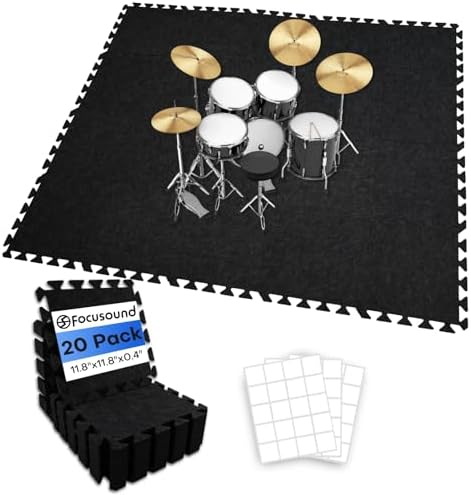
Focusound’s set contains 20 polyester-felt tiles measuring 11.8 by 11.8 inches and 0.4 inches thick. The stated density is 150 kg/m³, and the product description says the set can cover up to 17 square feet. Its interlocking edges create a surface for drums, a piano, or other equipment without the need for one large, fixed-size rug.
The maker describes the mats as a way to reduce echo and reverberation while helping limit vibration from instruments reaching the floor. The tiles are also presented as a protective, cushioned layer for hard flooring. Double-sided tape is included for extra hold, though the supplied details do not specify the number of tape pieces.
This option is similar in size and tile count to the LITLANDSTAR set, and it gives a density specification like TroyStudio. Its description is especially focused on musical setups. If your main goal is to keep sound from passing to another room or floor, these mats alone may not provide the isolation you need.
Pros:
- 20 tiles with a stated density of 150 kg/m³
- 0.4-inch thickness and up to 17 square feet of stated coverage
- Interlocking format can be arranged for a music setup
- Double-sided tape is included
Cons:
- Number of included tape pieces is not stated in the supplied details
- Does not provide a stated NRC or average absorption coefficient
Verdict: Consider Focusound if you want a 20-tile felt surface for a drum or piano area and value its stated density specification.
4. GOGHOST: Cuttable Tiles with Extra Grip Options

GOGHOST’s 20-piece set uses 100% polyester felt tiles measuring 11.8 by 11.8 inches and 0.4 inches thick. The product details state a density of 150 kg/m³ and coverage of up to 17 square feet. The puzzle-style edges make it possible to join multiple sets, and the description says the tiles can be trimmed with a utility knife for an unusual floor shape.
The listing states an NRC of 0.87 and describes the mats as helpful for absorbing echoes and vibrations. Treat that figure as a product specification rather than a promise that neighbors will not hear your practice. The package lists 48 pieces of double-sided adhesive for extra grip, and the surface is described as wipe-clean with a damp cloth.
This set has a useful mix of stated density, cut-to-fit construction, and included tape. However, the supplied product data marks it as unavailable, so confirm that it can be ordered before planning around it. If it is unavailable, the Focusound or LITLANDSTAR sets have similar tile dimensions and counts.
Pros:
- 20 tiles with stated density and up to 17 square feet of coverage
- Can be cut for a custom floor layout
- 48 pieces of double-sided tape are included
- Listing states an NRC of 0.87
Cons:
- Supplied product data marks the item as unavailable
- The stated acoustic rating does not mean the mats block all transmitted noise
Verdict: GOGHOST is worth considering for its cuttable, tape-supported design if the listing is available when you shop.
5. Wunzkii: A Slimmer 16-Piece Option for Smaller Setups

Wunzkii’s pack contains 16 interlocking polyester-felt tiles. Each measures 11.8 by 11.8 inches and 0.35 inches thick, making this set slightly thinner than the 0.4-inch options in this roundup. The product description says the material is designed to reduce room echo and reverberation while protecting floors beneath drums, pianos, speakers, or other equipment.
The listing describes the felt as dense enough for stands and spurs to press into it, which may help keep equipment in place. It also states that the material is odorless, non-toxic, colorfast, formaldehyde-free, and easy to clean. Those are product claims; check the current listing for any updated material or care details before buying.
With fewer tiles and less thickness than most of the other picks, Wunzkii may be a better match for a smaller setup where floor protection and a connected surface matter more than maximizing coverage or cushioning. The supplied product data marks it as unavailable, and it does not list included tape.
Pros:
- 16 tiles with a generous 11.8-inch tile size
- Interlocking layout can be assembled and taken apart
- Suitable for instrument, office, and play areas
- Product details describe the material as easy to clean
Cons:
- At 0.35 inches, it is thinner than the other listed options
- Supplied product data marks it as unavailable and does not mention included tape
Verdict: Wunzkii could suit a compact setup that needs a felt floor layer, but check availability and compare its thinner profile with your cushioning needs.
How to Choose Interlocking Soundproof Floor Mats
Be clear about what “soundproof” means
Felt floor tiles can absorb some sound energy in a room, helping reduce echo and reverberation. They may also soften impacts and help limit some vibration where equipment meets the floor. That is different from blocking sound from traveling through walls or floors. If your main concern is noise reaching another room, do not expect a thin mat by itself to provide full sound isolation.
Measure the area before choosing a pack
Check the tile dimensions and the stated coverage, then measure the spot you want to cover. The 20-piece sets in this roundup state coverage of up to 17 square feet, while the 16-piece sets include fewer tiles. Leave room for equipment feet, pedals, and stands, and consider whether you need a simple rectangle or a layout that fits around furniture.
Compare thickness and material details
Most of these options are 0.4 inches thick, while the Wunzkii set is 0.35 inches thick. A thicker tile can add cushioning, but thickness alone does not establish how much sound it will absorb or isolate. Look for details such as material, density, and any stated acoustic measurements, and treat those figures as product specifications rather than guaranteed results in your space.
Consider how firmly the tiles need to stay in place
Interlocking edges help connect the pieces, but they may not prevent every layout from shifting during active use. Several sets include removable double-sided tape, which can add grip. Think about whether you are placing the mats under a stationary piano or beneath equipment that moves, and whether you may want to lift or rearrange the tiles later.
Check whether you need a custom cut
If your setup must fit around a corner, doorway, or fixed object, check whether the product description says the tiles can be cut. TroyStudio and GOGHOST state that their mats can be trimmed. Before cutting any set, plan the layout carefully and use an appropriate cutting surface and tool.
Match the surface to your equipment and floor
Consider what will sit on the mats: instrument stands, pedals, a treadmill, chairs, or play equipment may need different levels of grip and support. These products are also intended to protect hard flooring from scratches and impacts. Confirm that the assembled surface is stable for your equipment, and check the current care instructions if you expect spills or frequent cleaning.
Frequently Asked Questions
Do interlocking soundproof floor mats block all noise?
No. These felt mats are described as sound-absorbing and vibration-dampening, which can help with echo and some impact noise. They are not a complete soundproofing system and may not stop sound from traveling through a floor or wall.
Can I use these mats under a drum kit or piano?
The listed sets are described for use under drums, pianos, and other music equipment. Check the assembled area and make sure the instrument’s feet, pedals, and stands sit securely on the tiles.
Will interlocking tiles stay in place without tape?
The interlocking edges connect the tiles, but how stable the layout feels can depend on the floor and activity. Some products include removable double-sided tape for added grip. Check the specific pack details before buying if tape is important to you.
Can these mats be cut to fit my room?
Some can. TroyStudio and GOGHOST state that their tiles can be cut, but the other supplied product descriptions do not make the same claim. Confirm the listing instructions before trimming any mat.
How much floor area will a pack cover?
The LITLANDSTAR, Focusound, and GOGHOST descriptions state coverage of up to 17 square feet per 20-piece set. Coverage for the two 16-piece sets is not specified in the supplied details. Measure your floor and check the current product listing before ordering.
Which set is thickest?
The supplied specifications list the LITLANDSTAR, TroyStudio, Focusound, and GOGHOST tiles at 0.4 inches thick. Wunzkii lists its tiles at 0.35 inches thick.
Final Recommendation
For a flexible small-area layout, the LITLANDSTAR set combines 20 tiles, 0.4-inch thickness, and included tape. TroyStudio is a good alternative if you want a 16-piece set with stated density and acoustic figures, plus the option to cut tiles to fit. For any of these products, set realistic expectations: they can help absorb room reflections and protect floors, but they should not be treated as a complete fix for noise transmission between rooms.
