
The best mold remover for a bathroom shower depends on where the stains are and how much time you want to spend applying cleaner. Sprays can be convenient for tile and grout, while gels stay put on vertical caulk lines. The options below range from a bleach-based bathroom spray to concentrated stain removers, so check each product’s label for surface compatibility and directions before use.
Safety first: Follow the label, ventilate the bathroom, and use any protective gear the product calls for. Never mix mold removers with other cleaners, especially ammonia or acidic products.
Table of Contents
Quick Comparison
| Product | Type | Best for | Key consideration |
|---|---|---|---|
| 30 SECONDS Pro Mold & Mildew Stain Remover | Spray | Shower tile and grout stains | Strong odor may make ventilation especially important |
| RMR-86 Instant Mold and Mildew Stain Remover | Ready-to-use spray | Stubborn, widespread staining | Calls for proper ventilation and protective equipment |
| Clorox Plus Tilex Mold and Mildew Remover | Bleach-based spray | Hard, nonporous shower surfaces | Avoid prolonged contact with metal and old porcelain |
| APULITO Household Cleaner Gel | Clinging gel | Caulk and targeted stain lines | Requires several hours of dwell time |
| ACTIVE Mold Stain Remover Gel Cleaner | Concentrated gel | Small areas and vertical seals | Directions call for at least five hours on the surface |
Our Picks: best mold remover for bathroom shower reviews
30 SECONDS Pro: A Scrub-Free Spray for Shower Stains
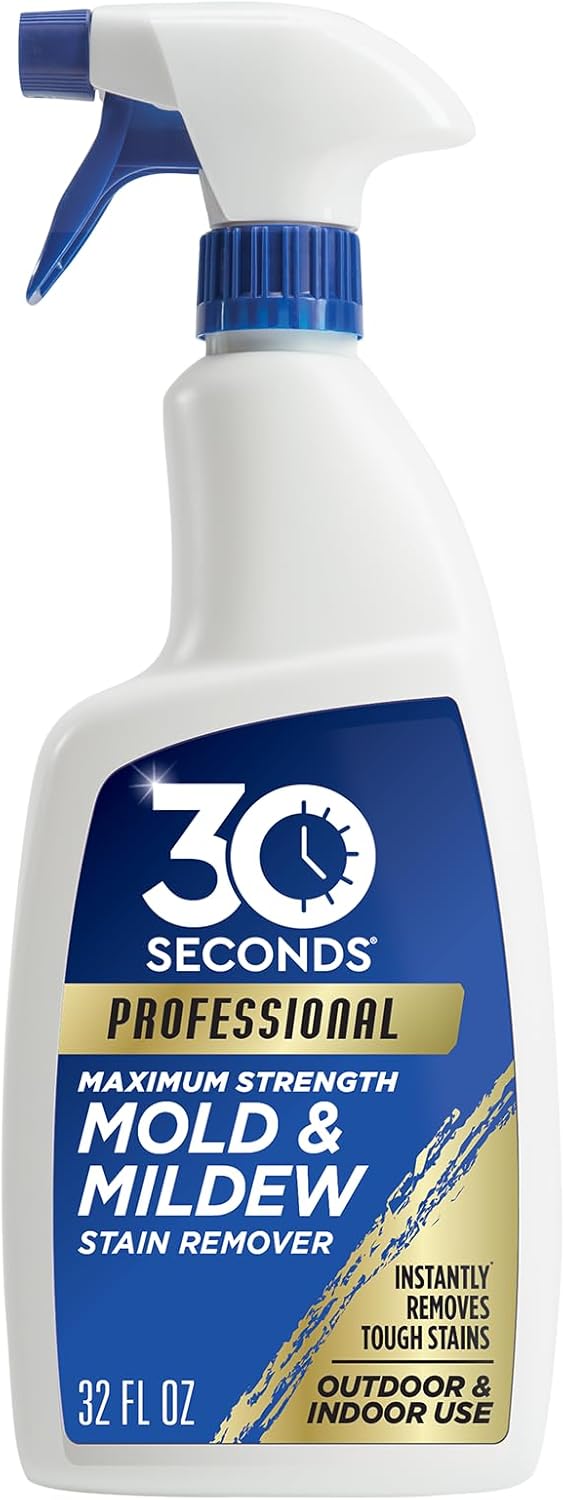
This ready-to-use spray is made to remove visible mold and mildew stains without scrubbing. Its listed uses include bathroom tile, grout, bathtubs, and showers, along with some indoor and outdoor surfaces. That broad range can make it a practical pick if you want one product for more than one cleaning job.
Some users report that it brightens stained grout and caulk after a short wait, but the strong smell is a recurring concern. Ventilate the room well, follow the label’s instructions for application and rinsing, and test an inconspicuous spot first—particularly around colored or delicate surfaces. Avoid assuming that a stain remover will repair damaged grout or caulk.
Compared with the bleach-based Tilex spray, this product is described as a general mold and mildew stain remover rather than being presented with the same specific disinfection claim. It may suit you if your priority is a spray intended for multiple surface types, but check the label carefully before using it on a particular shower material.
Pros:
- Designed for use on bathroom tile, grout, tubs, and showers.
- Scrub-free formula is intended to lift stains on contact.
- Can be used on a range of indoor and outdoor surfaces, according to the product description.
- May be useful for both shower cleanup and other stained areas around the home.
Cons:
- Users often note that the odor is strong, so good ventilation is important.
- Surface compatibility should be checked before use; broad-use claims do not mean every material is suitable.
Verdict: Choose 30 SECONDS Pro if you want a versatile, no-scrub spray for shower stains and can ventilate the room while using it.
RMR-86: A Fast-Acting Spray for Tough Discoloration

RMR-86 is a ready-to-use spray formulated to remove discoloration left by mold and mildew. Its listed applications include surfaces such as drywall, wood, concrete, and vinyl siding, as well as kitchen surfaces. The product description stresses that it works on stains without scrubbing, which can help when marks are difficult to reach.
For shower use, the key issue is safe handling. The manufacturer calls for proper ventilation and protective equipment, and users commonly describe the formula as very strong. Treat it as a product that requires careful preparation rather than a casual, everyday bathroom spray. Check the label for your specific surface and directions before applying it indoors.
This option is a larger-format choice compared with the smaller sprays in this list. It may be worth considering for extensive staining or repeated projects, but its precautions make it less appealing if you only need a mild, occasional shower cleaner. Also note that removing discoloration is not the same as fixing a moisture problem or replacing damaged material.
Pros:
- Ready-to-use spray is designed to act on stubborn mold and mildew stains.
- Intended for a range of surfaces, including drywall, wood, and concrete.
- No-scrub application may help with hard-to-reach stained areas.
- The larger listed size may suit bigger jobs.
Cons:
- Requires careful attention to ventilation and protective equipment.
- May be more product than needed for a small shower spot.
Verdict: RMR-86 is best suited to people tackling significant staining who are prepared to follow its safety directions closely.
Clorox Plus Tilex: A Bleach-Based Choice for Hard Surfaces

This bleach-based spray is designed for mold and mildew on hard, nonporous surfaces. The product description lists shower walls, sinks, counters, tubs, and tile among its uses, and states that it kills mold and mildew on suitable surfaces. Its three-bottle pack may be convenient if you clean often or want to keep a bottle in more than one place.
Some users find that the spray works quickly on shower grime and stains, sometimes with rinsing alone and sometimes with a little scrubbing. The bleach-based formula can damage fabrics and colored items, and the product instructions warn against prolonged contact with metal and old porcelain. Keep it away from towels, bath mats, clothing, and other items that could be discolored.
Unlike the gels in this guide, Tilex is a spray that suits broad areas of hard, nonporous tile and similar surfaces. It is not the best choice for every shower material, nor should the listed hard-surface use be taken as permission to apply it to porous or delicate finishes. Read the label and rinse as directed.
Pros:
- Made for shower walls, tubs, tile, sinks, and other hard, nonporous surfaces.
- Bleach-based formula is described as killing mold and mildew on suitable surfaces.
- Spray format is convenient for covering larger areas.
- Three-bottle pack can suit regular cleaning routines.
Cons:
- Strong fumes call for ventilation and careful use.
- Can bleach fabrics and should not remain on metal or old porcelain for a long time.
Verdict: Pick Clorox Plus Tilex for hard, nonporous shower surfaces if a bleach-based spray fits your cleaning needs and you can protect nearby items.
APULITO Household Cleaner Gel: A Clinging Formula for Caulk Lines

APULITO is a concentrated gel intended for bathroom and kitchen stains, including areas around tile, grout, tubs, and silicone sealant. Its thicker texture is designed to stay in place rather than run off quickly, which can be useful on vertical shower grout or caulk lines.
The trade-off is time: the directions call for leaving the gel on for several hours, with longer treatment suggested for severe stains. You will need to apply it to a dry surface and plan around the dwell time. That makes it less convenient than a spray for a quick shower cleanup, but potentially more targeted for a narrow stained seam.
Compared with ACTIVE’s gel, APULITO has a similar slow, stay-put approach, but its product directions give a range of three to ten hours. Check the label for use on your exact surface, and do not use a long dwell time as a substitute for checking whether the material is compatible.
Pros:
- Gel consistency is designed to cling to vertical surfaces.
- Listed for use on tile, grout, tubs, and silicone sealant.
- Does not require scrubbing according to the product description.
- Can be applied to specific seams rather than spraying a whole shower area.
Cons:
- Requires several hours of dwell time.
- Small bottle may be less convenient for treating a large area.
Verdict: APULITO is a practical option for targeted stains on caulk or grout when you prefer a clinging gel and can wait several hours.
ACTIVE Mold Stain Remover Gel: A Targeted Cleaner for Seals and Grout

ACTIVE is a concentrated gel made for discoloration on areas such as rubber seals, shower walls, caulking, tubs, tile, and grout. Its listed directions call for shaking the bottle, applying an even layer, and leaving it in place for at least five hours before wiping and rinsing. That extended dwell time is intended to let the gel work on the stain without immediately running down a vertical surface.
The small container and focused application make this a better fit for seams, seals, and isolated spots than for coating an entire shower. For stubborn marks, the product information says a heavier application or another treatment may be needed. Plan ahead, and follow the label’s advice on surface compatibility and rinsing.
The product description characterizes its odor as gentle compared with harsher-smelling options, but you should still use it according to the label and keep the room ventilated. It is primarily a stain cleaner; do not assume that visible stain removal alone addresses the source of moisture or any deeper damage.
Pros:
- Gel is designed for vertical lines and small areas such as seals and caulk.
- Listed for bathroom surfaces including shower walls, tubs, tile, and grout.
- Can be reapplied to stubborn stains according to the product directions.
- Useful beyond the shower, including some appliance seals.
Cons:
- Requires at least five hours of dwell time.
- Small bottle is not designed for quick coverage of a large shower.
Verdict: Choose ACTIVE if you need a targeted gel for shower caulk, grout, or seals and do not mind leaving it in place for several hours.
How to Choose a Mold Remover for a Bathroom Shower
Match the cleaner to the surface
Shower surfaces can include glazed tile, grout, caulk, metal fixtures, and different tub materials. A product that is listed for hard, nonporous tile may not be suitable for every sealant or finish. Check the label before use, and test a small, hidden spot if you are unsure. Pay special attention to warnings about bleach, metal, old porcelain, fabrics, and colored surfaces.
Choose between a spray and a gel
Sprays are often easier to apply across broad areas such as shower walls or tile. Gels are better suited to narrow lines where you want cleaner to cling, such as caulk or vertical grout. Consider how much surface you need to treat and whether the formula can stay where you apply it.
Check the dwell time and cleanup steps
Some products are intended to work quickly; others call for several hours on the surface. Make sure the required wait fits your routine, and follow the directions for rinsing or wiping away residue. Do not leave a cleaner on longer than the label allows in hopes of getting a stronger result.
Consider fumes and protective gear
Strong-smelling formulas can be unpleasant in a small bathroom. Ventilate the space as directed, use the protective equipment listed on the product label, and keep children and pets away from the treated area. If you cannot ventilate the room adequately, consider whether another product or a different cleaning plan is safer for your space.
Know the difference between stains and mold growth
A cleaner may remove visible discoloration without solving the damp conditions that allow mold or mildew to return. If staining keeps coming back, look for ongoing moisture, poor ventilation, or a leak. Persistent growth or damaged material may need more than a surface cleaner.
Think about the size of the job
A small gel bottle may be enough for a few caulk lines, while a spray or larger format may be more practical for broader staining. Buying a larger quantity is not automatically better: choose an amount you can use safely and store according to the product directions.
Frequently Asked Questions
What type of mold remover is best for shower grout?
It depends on the grout and the stain. A spray can cover a larger tiled area, while a gel can cling to a narrow grout or caulk line. Confirm that the product is suitable for your grout and follow its directions.
Should I use a spray or a gel on shower caulk?
A gel may be easier to keep on a thin vertical caulk line because it is designed to cling. A spray may be more convenient for a broad area. Check the product label for caulk compatibility before applying either type.
Do these products require scrubbing?
Several products in this guide are described as no-scrub or scrub-free, but results can depend on the stain and surface. Some areas may still need wiping or gentle scrubbing. Follow the label rather than forcing a scrub on delicate or damaged material.
Can I use bleach-based mold remover on every shower surface?
No. The Tilex product is listed for hard, nonporous surfaces, and its description warns against prolonged contact with metal and old porcelain. Check the label for your surface, protect nearby fabrics, and rinse as directed.
Can I mix two mold removers to make them work better?
No. Do not mix mold removers with each other or with other cleaners. Mixing cleaning products can create dangerous fumes or reactions. Use one product at a time and follow its label.
Why does mold keep returning after cleaning?
Cleaning visible stains may not remove the moisture source. Poor ventilation, lingering dampness, or a leak can contribute to recurring growth. Improve drying and airflow where possible, and address ongoing water problems.
When should I replace caulk instead of cleaning it?
If caulk is cracked, peeling, or damaged, a surface cleaner may not fix the underlying problem. Persistent staining inside or beneath deteriorated caulk may also call for repair or replacement. Consider a qualified professional if the damage is extensive or you are unsure how to proceed.
Final Recommendation
For an all-around shower spray, 30 SECONDS Pro stands out for its listed bathroom uses and scrub-free approach, provided you can manage the strong odor and follow the label. Choose Clorox Plus Tilex if you want a bleach-based option for suitable hard, nonporous surfaces, or pick APULITO or ACTIVE when a clinging gel makes more sense for a small caulk or grout line. For a larger, tougher staining job, RMR-86 may be worth considering—but take its ventilation and protective-equipment directions seriously.






