If your bathroom sink has a weak stream, replacing the basin alone usually won’t solve the problem. The faucet, aerator, clogged plumbing, or a partly closed shutoff valve may be the cause. Of these five options, the Niagara Conservation Tri-Max aerator is the only product specifically described as using pressure-compensation technology; the other picks are faucets or sinks that may suit a bathroom update but are not stated to increase water pressure.
Before buying, check whether the weak flow affects just one faucet or several fixtures. If it affects the whole bathroom or home, the cause may be outside the sink itself. Also confirm that any replacement aerator or faucet matches your existing connections and installation setup.
Table of Contents
Quick Comparison
| Product | Type | Low-pressure relevance | Best suited for |
|---|---|---|---|
| Niagara Conservation Tri-Max Aerator | Adjustable faucet aerator | Pressure-compensating design; check thread and faucet compatibility | Trying to improve the feel and consistency of flow at the faucet |
| KOHLER Caxton Rectangle Sink | Undermount bathroom basin | Does not change water pressure | A countertop refresh with a separate faucet |
| Ryuwanku Waterfall Faucet | Single-handle bathroom faucet | No low-pressure performance claim supplied | A modern look and simple single-handle control |
| Design House 31-Inch Vanity Top | Integrated sink and vanity top | Does not change water pressure | Replacing a compatible vanity top and bowl together |
| Moen Eva Centerset Faucet | Two-handle bathroom faucet | Listed flow rate is 1.2 GPM; no pressure-compensation claim supplied | A three-hole installation with separate hot and cold handles |
Our Picks: best bathroom sink for low water pressure reviews
Niagara Conservation Tri-Max: The Most Relevant Pick for Uneven Faucet Flow

This is an aerator, not a sink or a complete faucet. It fits at the faucet outlet, where it shapes the stream. Niagara describes its pressure-compensation technology as providing a steady spray at most water pressures. That makes it the most directly relevant product in this group if your faucet’s stream feels inconsistent.
The twist-and-click selector offers three listed flow settings: 0.5, 1.0, and 1.5 gallons per minute. A lower setting can help conserve water, while the higher setting is intended for rinsing. The product is described as a needle-spray aerator, so expect a focused spray pattern rather than the feel of every standard aerator.
There are important fit limits to check. The listing identifies a 15/16-27 thread size and describes the product for sink faucets, including kitchen use. Bathroom faucets can have different outlet threads or recessed aerators, so compare your existing aerator and faucet before ordering. An aerator can affect the stream at the tap, but it cannot repair a clogged pipe or raise the water pressure supplied to your home.
Pros:
- Pressure-compensation technology is specifically described for steadier spray.
- Three selectable flow settings from 0.5 to 1.5 GPM.
- Can be a simple replacement when the faucet has a compatible exposed thread.
Cons:
- Thread and faucet compatibility need to be confirmed before purchase.
- The needle-spray pattern may not suit everyone.
Verdict: Choose the Tri-Max if you want to address the stream at a compatible faucet outlet, but don’t expect it to fix a plumbing problem or increase your home’s underlying water pressure.
KOHLER Caxton: A Clean-Lined Basin for a Separate Faucet

The Caxton is a rectangular vitreous china basin designed for undermount installation. Its smooth shape gives you a simple transition from sink to countertop, and the basin includes an overflow. At about 20.31 inches wide, 15.75 inches deep, and 7.33 inches high, it is important to check the cabinet, counter cutout, and plumbing layout before committing.
This sink has no faucet holes, so it requires a wall-mounted faucet or one installed through the countertop. That flexibility can help when planning a bathroom remodel, but it also means you must choose a compatible faucet separately. The basin itself does not affect water pressure or flow; consider it for appearance and fit, not as a low-pressure remedy.
Compared with the integrated Design House vanity top, the Caxton gives you more freedom to choose a separate countertop and faucet arrangement. The tradeoff is a more involved installation plan, since the counter and faucet are not included.
Pros:
- Durable vitreous china construction.
- Undermount rectangular design works with a separate countertop.
- Includes an overflow drain opening.
Cons:
- No faucet holes, so faucet placement must be planned separately.
- Does not improve water pressure or faucet flow.
Verdict: Pick the Caxton for a coordinated undermount bathroom update, not to solve weak water flow.
Ryuwanku Waterfall Faucet: A Modern Single-Handle Option

This faucet pairs a single handle with a waterfall-style outlet and a matte black finish. The handle controls both water flow and temperature, which keeps daily adjustments straightforward. The listing describes a quieter outlet design and SUS 304 stainless steel construction, but it does not provide a low-pressure performance claim or a flow rate.
The product information highlights use with bathroom basins and notes a pop-up drain, supply lines, and a deck plate in its item details. Still, confirm the faucet’s mounting arrangement, hole spacing, and included parts against your sink before ordering. It may be a style-led replacement, but it should not be treated as a way to boost pressure.
Compared with the Moen Eva, the Ryuwanku has one handle and a waterfall look rather than two separate handles and a listed 1.2 GPM flow rate. If your priority is diagnosing weak flow, first check the existing faucet and plumbing; a new design alone may not change the underlying supply.
Pros:
- Single handle controls flow and temperature.
- Matte black finish and waterfall-style outlet offer a distinct look.
- Listing describes stainless steel construction and a quieter outlet design.
Cons:
- No stated flow rate or low-pressure performance specification.
- Mounting and included parts should be checked for compatibility with your sink.
Verdict: Choose this faucet for its appearance and single-handle operation if it fits your basin, but look elsewhere for a documented pressure-compensating feature.
Design House 31-Inch Vanity Top: Integrated Bowl and Countertop

This option combines a vanity top with an integrated oval sink, backsplash, and overflow opening. The cultured marble surface is described as water-resistant and easy to wipe clean. It has three faucet holes for a standard 4-inch centerset faucet or a single-mount faucet with a deck plate.
At 31 inches wide and 22 inches deep, it suits a bathroom project where the vanity dimensions match. Measure carefully: the listed product dimensions and vanity width should be checked against your cabinet and existing plumbing. As with any basin, it will not increase water pressure, and the faucet is a separate choice.
The integrated design can simplify a countertop replacement compared with buying a separate basin and counter, while the KOHLER Caxton is the better fit if you want an undermount sink and more control over countertop selection. Some owners have noted that the surface can chip, so handle installation carefully and inspect the top when it arrives.
Pros:
- Integrated oval sink, vanity top, backsplash, and overflow opening.
- Three holes support a standard 4-inch centerset faucet or a compatible single-mount faucet with deck plate.
- Smooth surface is designed for wiping clean with mild soap and a damp cloth.
Cons:
- Does not affect water pressure or flow.
- Surface may be vulnerable to chips, so take care during handling and installation.
Verdict: Consider this vanity top when you want an integrated sink-and-counter replacement and have verified the dimensions; it is not a fix for low pressure.
Moen Eva: Two-Handle Centerset Faucet with a Listed Flow Rate
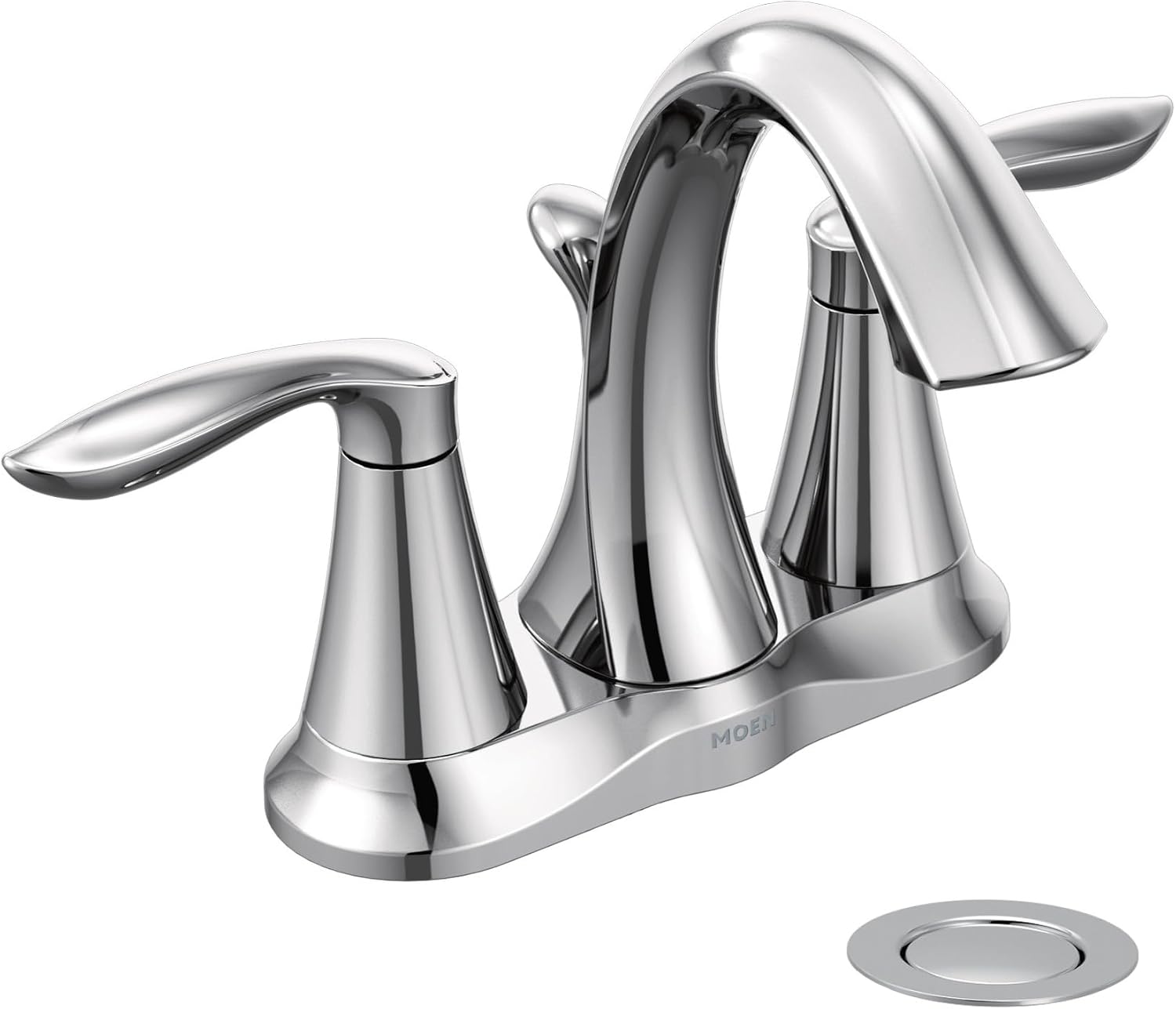
The Moen Eva is a chrome, two-handle centerset faucet made for a three-hole installation. Separate lever handles let you adjust hot and cold water, while the 4-inch spout reach and 6.25-inch spout height help define the space the faucet occupies over the sink. The listed flow rate is 1.2 GPM.
That flow-rate figure is not a promise that the faucet will improve low pressure. If your current faucet is worn, damaged, or partly blocked, replacing it may help address a faucet-specific problem, but the product data does not identify pressure-compensation technology. Check the sink’s hole arrangement and available clearance before choosing it.
Compared with the Ryuwanku, the Eva has a traditional two-handle setup and a specified flow rate, rather than a single handle and waterfall outlet. The listing also states a limited lifetime warranty and ADA compliance. Its chrome finish and centerset design make it a practical option for someone replacing a compatible three-hole faucet.
Pros:
- Two lever handles allow separate hot and cold adjustment.
- Listed 1.2 GPM flow rate and three-hole centerset installation.
- Chrome finish and limited lifetime warranty stated in the product information.
- Includes a drain assembly.
Cons:
- No stated pressure-compensation feature.
- Requires a compatible three-hole sink setup.
Verdict: Choose the Eva for a compatible three-hole vanity and familiar two-handle control, not as a guaranteed solution to low water pressure.
How to Choose a Bathroom Sink Solution for Low Water Pressure
Work Out Whether the Sink or the Water Supply Is the Problem
A sink basin does not create water pressure. If only one faucet has a weak stream, the cause may be at that faucet, such as a blocked aerator or a partly closed shutoff valve. If several taps or fixtures have weak flow, the issue may involve the home’s water supply or plumbing. Check other fixtures before buying a new sink or faucet.
Separate Water Pressure from Flow Rate
Pressure describes the force behind the water, while flow rate describes how much water comes out over time. A faucet’s GPM specification tells you its listed flow rate; it does not establish how well it will work with every home’s water pressure. Look for a clear pressure-compensation claim if that feature matters, and avoid assuming that a higher GPM rating will correct a supply problem.
Check the Aerator Before Replacing the Faucet
If the faucet has a removable aerator, inspect it for debris or mineral buildup and confirm its thread type before choosing a replacement. An aerator can change the shape and feel of the stream. The Niagara Tri-Max is the only item here whose supplied description specifically mentions pressure-compensation technology, but its stated thread size may not match your bathroom faucet.
Match the Faucet to Your Sink’s Holes
Count the holes in your sink or countertop and measure their spacing. The Moen Eva is a three-hole centerset faucet, while the Ryuwanku listing describes a deck plate and one- or three-hole use. The KOHLER Caxton has no faucet holes and needs a wall-mounted or countertop-mounted faucet. Confirm the current installation and product requirements before ordering.
Measure the Basin, Vanity, and Faucet Clearance
For a replacement sink or vanity top, compare the product’s width and depth with your cabinet and counter. Also consider faucet height and reach so the stream lands in a useful part of the basin. The KOHLER Caxton is an undermount basin, while the Design House product includes an integrated sink and vanity top. These are different installation types, not interchangeable parts.
Consider What a Replacement Can—and Cannot—Do
A new faucet may be appropriate if the existing faucet is damaged or has a persistent blockage, but none of the supplied sink products claims to increase household water pressure. If low flow continues after checking the faucet outlet and shutoff valves, consider asking a plumber to inspect the plumbing or supply. That is more useful than replacing a basin that is not causing the problem.
FAQs
Can a new bathroom sink fix low water pressure?
No. A sink basin does not control the pressure supplied to the faucet. Weak flow is more likely related to the faucet, aerator, shutoff valves, or plumbing. Replacing a basin can update the bathroom, but it is not a pressure fix.
Which product here is most relevant to a weak faucet stream?
The Niagara Conservation Tri-Max aerator is the closest match because its description specifies pressure-compensation technology and three selectable flow settings. Check the thread size and faucet compatibility first, and keep in mind that an aerator cannot repair a larger plumbing issue.
Will a higher GPM faucet increase water pressure?
Not necessarily. GPM is a flow-rate measurement, not a guarantee of pressure. A faucet’s performance depends on the water supply and the faucet itself, so a higher listed flow rate should not be treated as a pressure remedy.
How can I tell whether the problem is limited to one faucet?
Compare the flow at other sinks, showers, and nearby fixtures. If only one faucet is affected, inspect its aerator and shutoff valves. If multiple fixtures have weak flow, the cause may be in the plumbing or water supply.
Does the KOHLER Caxton include faucet holes?
No. The Caxton basin has no faucet holes and requires a faucet mounted on the wall or countertop. Plan the faucet location and countertop setup before installation.
What should I check before buying a replacement faucet?
Confirm the number and spacing of sink holes, faucet reach and height, included parts, and whether the faucet fits your plumbing setup. For an aerator, check the thread type and whether the faucet has an exposed or recessed outlet.
Final Recommendation
If your main goal is to improve the stream at a compatible faucet, the Niagara Conservation Tri-Max is the most relevant choice in this group because it specifically describes pressure-compensation technology. Check the thread before buying, and remember that it cannot fix low pressure caused by the plumbing or water supply. For a full bathroom update, choose the KOHLER Caxton or Design House vanity top based on your installation and dimensions, or select the Ryuwanku or Moen faucet based on your preferred style and hole layout. Diagnose the cause of weak flow before replacing the sink itself.