
Pressure-treated wood resists rot and insects, but sun and moisture can still cause fading, graying, and surface wear. The right stain and sealer can help protect a deck while adding color—or preserve a natural look with a clear water-resistant finish. Before applying any product, check its label and make sure the wood is ready for coating; pressure-treated lumber may need time to dry.
Our picks include deck stains made for pressure-treated wood, a clear sealer for damp locations, a convenient spray for smaller projects, and a preservative best suited to end cuts and ground-contact wood. These products serve different jobs, so consider where your wood is installed and whether you want color, water protection, or added preservative treatment.
Table of Contents
Quick Comparison
| Product | Type | Best For | Finish or Color |
|---|---|---|---|
| Wolman Woodlife CopperCoat Green Wood Preservative | Water-based wood preservative | End cuts and ground-contact wood | Transparent green |
| #1 Deck Premium Semi-Transparent Wood Stain | Water-based stain and sealer | Pressure-treated decks and other softwoods | Gray, semi-transparent |
| Ready Seal Exterior Wood Stain & Sealer Turbo Spray | Oil-based stain and sealer spray | Small exterior wood projects | Natural cedar |
| SEAL-ONCE Marine Penetrating Wood Sealer | Water-based penetrating sealer | Docks and other high-moisture areas | Clear |
| SaverSystems #1 Deck Premium Stain and Sealer | Water-based stain and sealer | Decks, fences, and siding | Semi-transparent cedar |
Our Picks: Best Deck Stain Sealer For Pressure Treated Wood reviews
Wolman Woodlife CopperCoat: A Preservative for End Cuts and Ground Contact

CopperCoat is an EPA-registered exterior wood preservative, not a decorative deck stain. It is designed for untreated or pressure-treated wood in above-ground, ground-contact, below-ground, and fresh-water-contact settings. Its listed protective uses include helping guard against termites and other wood-boring insects, rot, and decay.
For a deck project, its clearest role is treating cut ends of pressure-treated lumber. Those exposed areas can be especially important to protect when you cut boards during installation. The transparent green color is a practical drawback if you want a uniform, natural-looking deck surface; this product is not a substitute for a colored stain-and-sealer intended for a walking surface.
It may be a useful addition to a larger deck project, especially where posts or cut lumber contact soil or moisture. Follow the product label for application and use restrictions, and select a separate deck finish if you want color or a coating for the boards you walk on.
Pros:
- Formulated for exterior untreated and pressure-treated wood.
- Suitable for several settings, including ground and fresh-water contact.
- Specifically recommended for pressure-treated wood end cuts.
- Water-based formula with insecticidal and fungicidal protection.
Cons:
- Not a conventional decorative deck stain and sealer.
- Transparent green color may not suit visible deck boards.
Verdict: Choose CopperCoat for exposed ends and wood in contact with soil or moisture, not as your main finish for a stained deck surface.
#1 Deck Premium Gray: A Pressure-Treated Wood Stain and Sealer
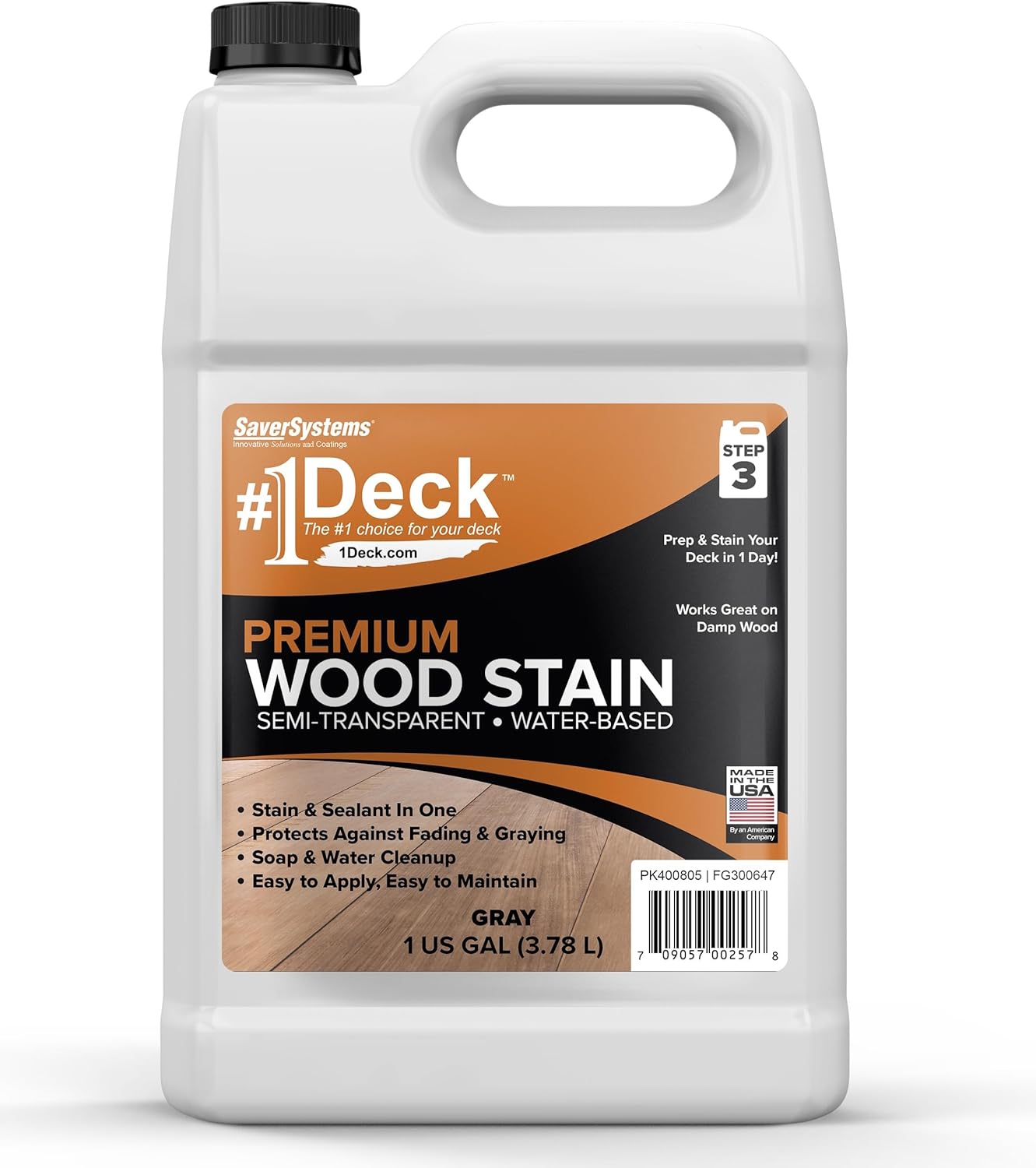
This water-based stain combines color and sealing in one product. It is listed for pressure-treated pine as well as cedar, fir, redwood, and most other softwoods. Its semi-transparent gray finish is intended to add color while letting some wood grain show through, making it a good fit if you want a cooler-toned deck without covering the boards like paint.
The formula is designed to help protect against color fading, graying, and water penetration. It has less than 50 g/L of VOCs and cleans up with soap and water. The product information also says it can be applied when wood is visibly dry, which may reduce the wait after cleaning; still, follow the label’s preparation instructions and confirm your particular lumber is ready to coat.
This is a straightforward option for a homeowner who wants a tinted finish and prefers water-based cleanup. Gray is the listed color for this version, so compare it with the separate color options if you want cedar or another tone. As with any semi-transparent stain, the final appearance can vary with the wood’s condition and existing color.
Pros:
- Specifically listed for pressure-treated pine and other common softwoods.
- Combines stain and sealer in one product.
- Semi-transparent finish lets some grain remain visible.
- Water-based formula with soap-and-water cleanup.
Cons:
- This version is gray, which may not fit every deck’s look.
- Hardwoods may need more frequent maintenance coats, according to the product details.
Verdict: Pick this gray version if you want a water-based, semi-transparent stain and sealer designed for pressure-treated softwood.
Ready Seal Turbo Spray: An Oil-Based Finish for Smaller Projects

Ready Seal’s Turbo Spray is an oil-based exterior stain and sealer in a 24-ounce spray can. It comes in natural cedar and is designed for projects such as fences, railings, gazebos, and wood siding. The product information lists water resistance and UV protection, and describes a wide spray fan for covering up to 50 square feet per can with one coat.
The spray format may make sense for a small area or touch-up where opening a larger container and setting up separate application tools would be inconvenient. The manufacturer says no back-brushing is required and that the finish dries to the touch in about an hour. It also describes maintenance as simple, without sanding or stripping when reapplying over a surface previously treated with Ready Seal.
The trade-off is capacity: a single can is unlikely to be the practical choice for coating a full-size deck. It is also oil-based, so it does not offer the soap-and-water cleanup of the water-based picks. Check that the product and application method suit your exact surface before starting.
Pros:
- Spray format can be convenient for smaller exterior wood projects.
- Provides a natural cedar color with a flat finish.
- Designed to resist water and UV exposure.
- Product information describes no back-brushing and easy reapplication over its own finish.
Cons:
- The 24-ounce can is a limited-size option for a large deck.
- Oil-based formula does not clean up with soap and water.
Verdict: Consider Ready Seal Turbo Spray for a small wood project or touch-up; choose a gallon-size stain for a full deck.
SEAL-ONCE Marine: A Clear Sealer for Docks and High-Moisture Areas

SEAL-ONCE Marine is a clear, water-based penetrating sealer made for wood exposed to heavy moisture. The manufacturer lists docks, piers, pool decks, walkways, and outdoor furniture near lakes, rivers, ponds, or oceans as intended uses. Its formula is described as penetrating below the surface and forming a flexible, breathable barrier around wood fibers.
This is the most specialized choice in the lineup. Its clear finish is aimed at protecting wood while keeping its natural appearance, rather than adding a semi-transparent color like the #1 Deck options. The product is also described as UV-stable and suitable for use over open water. Soap-and-water cleanup and an ultra-low-VOC formula may appeal if you want a water-based option for a damp location.
There are important limits: the product is not intended for hardwoods such as ipe, mahogany, or teak, wood submerged underwater, or wooden boats. If your pressure-treated deck is an ordinary dry-land deck, a deck-specific stain may be a closer match. Check the label to ensure your wood and use are covered.
Pros:
- Designed for wood in high-moisture locations, including docks and pool decks.
- Clear finish preserves a more natural wood appearance.
- Water-based formula with soap-and-water cleanup.
- Product information describes UV stability and suitability near open water.
Cons:
- Not intended for submerged wood, wooden boats, or certain hardwoods.
- Does not add the color of a semi-transparent deck stain.
Verdict: Choose SEAL-ONCE Marine for a clear sealer in a high-moisture setting, provided your wood and project are within its listed uses.
SaverSystems #1 Deck Premium Cedar: A Semi-Transparent Water-Based Favorite
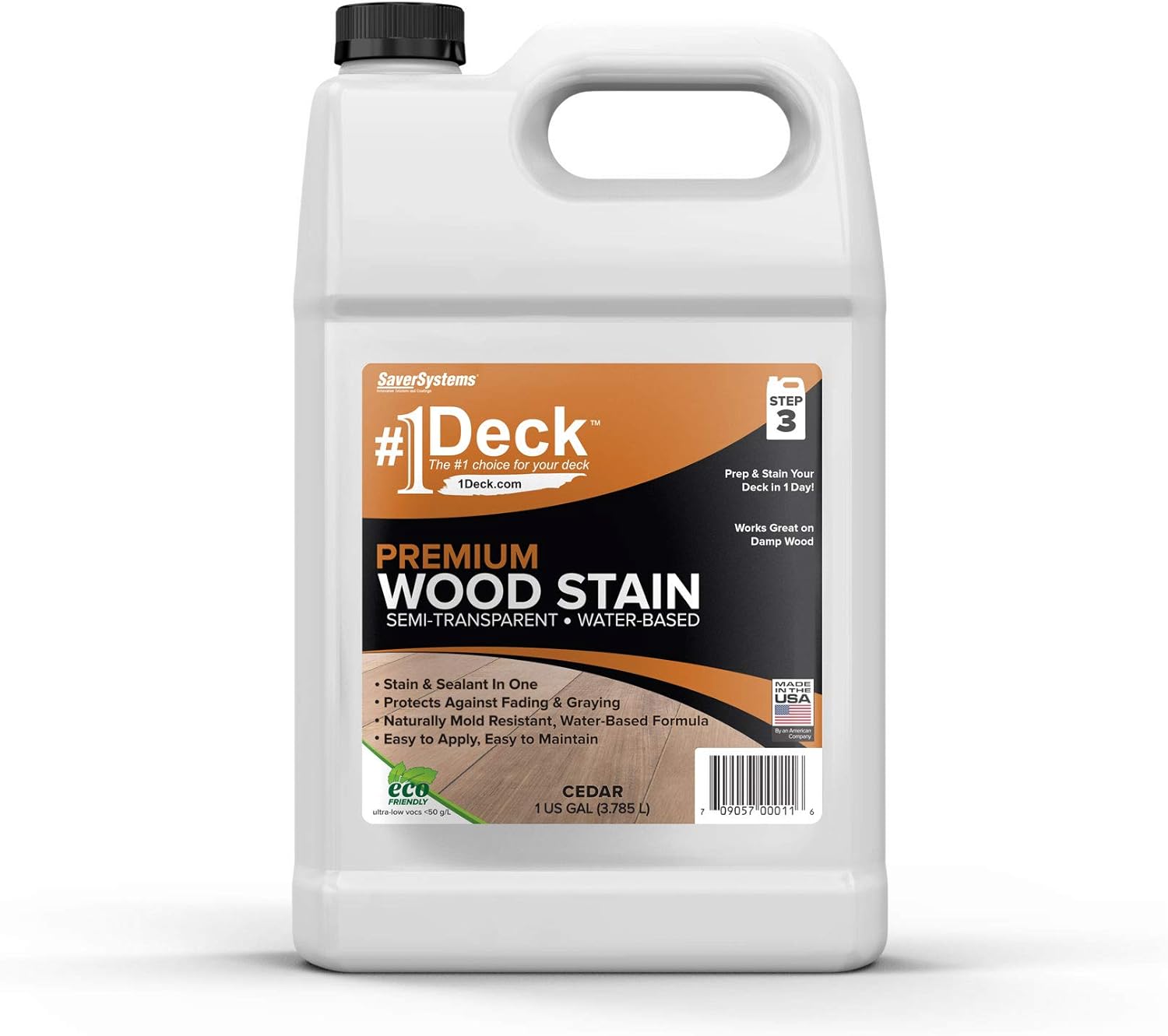
This one-gallon version of #1 Deck Premium is a water-based semi-transparent stain and sealer in cedar. It is made for exterior wood such as decks, fences, and siding. The finish is intended to show the wood grain while adding color, and the formula is designed to help reduce fading and graying from UV exposure while sealing against water penetration.
Its listed colors include cedar, natural, light walnut, gray, and dark walnut, giving you more choice than the gray version above. Product information says it can be applied once wood is visibly dry, which can shorten the wait after cleaning compared with products that require a longer drying period. Follow the label rather than relying on a general timeline, since readiness depends on the wood and conditions.
Practical use reports suggest the stain can apply smoothly and deliver an even, rich color, though the amount needed depends on the surface and how much the wood absorbs. Some users describe applying more than one coat, so plan your quantity and application around the product directions and your lumber’s condition. The listing gives a coverage figure, but rough, weathered, or absorbent wood can change real-world coverage.
Pros:
- Combines stain and sealer for exterior wood.
- Semi-transparent cedar finish allows grain to show through.
- Water-based formula with less than 50 g/L VOC content.
- Product is described as suitable for application to visibly dry wood.
Cons:
- Actual coverage may vary with wood condition and absorption.
- Hardwoods may need more frequent maintenance coats.
Verdict: This is a strong all-around option if you want a cedar-toned, water-based stain and sealer for a pressure-treated softwood deck.
How to Choose a Deck Stain Sealer for Pressure-Treated Wood
Decide whether you need stain, sealer, or preservative
A stain and sealer adds color while helping limit water penetration; a clear sealer focuses on protection without adding much color. A wood preservative such as CopperCoat has a different job, with listed protection against insects, rot, and decay in specific exposure settings. For the deck boards you walk on, choose a product whose label clearly covers that kind of surface. Use a preservative on cut ends or ground-contact pieces only as directed.
Confirm the product matches pressure-treated lumber
Not every exterior wood finish is interchangeable. Check the product label for pressure-treated wood and the wood species involved. The #1 Deck products specifically list pressure-treated pine and common softwoods. For other products, confirm compatibility and follow the manufacturer’s preparation directions before applying them to your deck.
Choose a finish and color you will like
Semi-transparent stain adds color while allowing some grain to remain visible. The gray and cedar #1 Deck options offer different looks, while SEAL-ONCE Marine is clear. Ready Seal Turbo Spray comes in natural cedar. If preserving the wood’s natural look matters most, lean toward a clear product; if you want to change or refresh the deck’s tone, choose a stain color that suits your outdoor space.
Match the formula to the location
Consider how much moisture the wood faces. A standard deck may suit a deck stain and sealer, while a dock or deck near open water may call for a product made for high-moisture exposure. SEAL-ONCE Marine is designed for those settings but has limits, including no use on submerged wood or certain hardwoods. Read the complete label before using any coating near water.
Check wood readiness and surface preparation
Pressure-treated lumber may not be ready for a finish immediately after installation. Follow the product’s directions for drying, cleaning, and preparation. Some #1 Deck product information says application is possible once the wood is visibly dry, but that does not replace the label’s instructions for your conditions. Test a small area if you are unsure about color or absorption.
Plan coverage and application tools
Estimate the area you need to coat and compare it with the product’s stated coverage. Wood condition, texture, and absorption can affect how far a container goes. A spray can such as Ready Seal Turbo Spray is suited to smaller projects, while a gallon container is more practical for broader surfaces. Check whether the product calls for a particular application method and avoid assuming that one coat will always provide the result you want.
Consider cleanup and maintenance
Water-based products in this guide offer soap-and-water cleanup, while Ready Seal Turbo Spray is oil-based. Also consider how the finish will be maintained. Ready Seal describes reapplication over its own previous finish without sanding or stripping, but do not assume that maintenance directions apply across brands or product types. Follow the label for future coats and surface preparation.
Frequently Asked Questions
Can you stain pressure-treated wood?
Yes, if the stain is labeled for pressure-treated wood and the lumber is ready for coating. Check the manufacturer’s directions for drying and preparation. The #1 Deck products in this guide list pressure-treated pine among their suitable woods.
Should I use a stain and sealer or a clear sealer?
Choose a stain and sealer if you want to add color while helping protect the wood from water. Choose a clear sealer if preserving a more natural look is your priority. Make sure the product is intended for your deck’s exposure and surface.
Is CopperCoat a deck stain?
No. CopperCoat is an exterior wood preservative with a transparent green appearance. It is particularly recommended for pressure-treated wood end cuts and is also designed for several ground-contact and moisture-exposed uses. It is not the main decorative finish in this group.
Can SEAL-ONCE Marine be used on any deck?
It is designed for high-moisture uses such as docks and pool decks, but it is not intended for submerged wood, wooden boats, or hardwoods such as ipe, mahogany, and teak. Check the label to confirm your project is suitable.
Which option is best for a large deck?
A gallon-size deck stain and sealer is generally a more practical format for a broad surface than a 24-ounce spray can. The #1 Deck products are intended for decks and come in one-gallon containers. Estimate your coverage needs and follow the product directions.
Can I apply stain when pressure-treated wood is damp?
Follow the specific product label. The #1 Deck product information says the wood can be stained once it is visibly dry, but this does not mean the surface should be wet. Preparation and drying needs can vary with the lumber and conditions.
Final Recommendation
For most pressure-treated softwood decks, SaverSystems #1 Deck Premium in cedar is the most balanced pick here: it combines stain and sealer, offers a semi-transparent finish, and is listed for pressure-treated pine. Choose the gray version if you prefer that color. For high-moisture locations, consider SEAL-ONCE Marine after checking its use restrictions. Keep CopperCoat for preservative needs such as end cuts, and reserve Ready Seal Turbo Spray for smaller projects.