The best color for a front door on a white house depends on how much contrast you want. Black makes a bold, classic statement; gray offers a softer, modern look; and white keeps the entrance subtle. For an exterior door, choose a paint labeled for outdoor use and check that it suits your door’s material. These picks include dedicated door-and-trim paints, a general-purpose exterior option, and one interior-only paint that is not suitable for an exposed exterior door.
| Product | Color and finish | Best for | Exterior use |
|---|---|---|---|
| Rust-Oleum Advanced Dry Door & Trim Paint | Satin White | A low-contrast, coordinated entrance | Listed for interior and exterior use |
| Rust-Oleum Advanced Dry Door & Trim Paint | Satin Black | Bold contrast on a white house | Listed for interior and exterior use |
| Rust-Oleum Advanced Dry Door & Trim Paint | Satin Alpine Gray | A softer, modern neutral | Listed for interior and exterior use |
| EVOLVE Ultimate White Paint & Primer | White, semi-gloss | A bright white finish on a compatible exterior surface | Listed for interior and exterior use |
| EVOLVE Interior Paint & Primer | Coconut Cream, eggshell | Indoor projects, not an exposed exterior door | Interior use only |
Table of Contents
Our Picks: Best Color For Front Door On White House reviews
1. Rust-Oleum Satin White: A Subtle Match for a White Exterior

This satin white acrylic paint is made for doors and trim and is listed for interior and exterior use on metal, wood, and fiberglass. Its ready-to-use formula and satin finish make it a straightforward option if you want your door to coordinate with white siding and trim rather than stand out.
On a white house, a white door can make the entry feel calm and unified, but the result may lack contrast. The shade of your siding, trim, and door can also look different in changing light, so compare a sample on the door before committing if you want a close match. The paint is described as chip- and fade-resistant, and it dries to the touch in about 45 minutes. That is not the same as being fully cured: the product information lists a six-hour full cure time.
Some users report that the paint goes on smoothly and can cover well in a small number of coats. Still, plan for the coverage and coats your surface needs, especially if you are painting over a darker color. This is a dedicated door-and-trim choice, while the EVOLVE white option is a more general paint and primer product.
Pros:
- Designed for doors and trim, with interior and exterior use listed
- Suitable for wood, metal, and fiberglass according to the product details
- Water-based formula with lower odor than traditional oil-based paint
- Satin finish offers a restrained sheen
Cons:
- White may blend into a white exterior instead of creating a focal point
- The supplied information does not give a coverage area per quart
Verdict: Choose this if you want a subtle, coordinated entry and need a paint specifically listed for exterior doors and trim.
2. Rust-Oleum Satin Black: A High-Contrast Classic

Black is a strong color choice for a white house because the contrast naturally draws attention to the entrance. This Rust-Oleum satin black paint is formulated for doors and trim, and its listed uses include both indoor and outdoor projects on metal, wood, and fiberglass.
The satin sheen gives the door some reflection without the more pronounced shine of a gloss finish. The water-based formula is listed as fade-resistant and chip-resistant, and it dries to the touch in about 45 minutes. Its full cure time is listed as six hours, so allow the door time to cure before putting it through heavy use.
Some users describe the paint as easy to apply and appreciate its quick touch-dry time. A dark color can show dust, scratches, and uneven prep more clearly than a mid-tone, though, so clean and prepare the surface carefully. Compared with Alpine Gray, black creates a much sharper visual statement; compared with white, it makes the door a clear focal point.
Pros:
- Creates crisp contrast against white siding
- Made for doors and trim, with exterior use listed
- Water-based formula is described as fade- and chip-resistant
- Satin finish gives a polished look without a high-gloss appearance
Cons:
- Dark paint may make dust and surface flaws more noticeable
- Requires careful prep for an even-looking finish
Verdict: This is the strongest pick if you want a classic, noticeable front door that stands apart from a white exterior.
3. Rust-Oleum Alpine Gray: A Softer Alternative to Black

Alpine Gray gives a white house some contrast without the dramatic effect of black. This satin acrylic paint is designed for doors and trim, with interior and exterior use listed for wood, metal, and fiberglass. It can suit a modern exterior or a home where a softer neutral feels more fitting than a dark accent.
The paint is water-based and described as chip-resistant and fade-resistant. Its listed dry-to-touch time is about one hour, and the full cure time is six hours. Those times are product details, not a guarantee for every condition; follow the can directions and allow for the conditions where you are painting.
Some users report that this line applies smoothly and provides useful coverage, but the supplied product information does not specify a coverage area for this color. Gray can also shift in appearance depending on the light and nearby colors. Test it alongside your siding and trim before painting the whole door. It offers a middle ground between the pronounced contrast of black and the low contrast of white.
Pros:
- Provides contrast while staying softer than black
- Door-and-trim paint with exterior use listed
- Listed for wood, metal, and fiberglass
- Water-based formula with chip- and fade-resistance features
Cons:
- The gray tone may look different in shade and direct light
- Coverage per quart is not specified in the supplied details
Verdict: Pick Alpine Gray if you want a visible but understated accent and prefer a softer look than black.
4. EVOLVE Ultimate White: A Semi-Gloss Paint and Primer Option

EVOLVE Ultimate White is an acrylic latex paint and primer in one, offered in several sheens and listed for interior and exterior projects. The semi-gloss version is described as suitable for doors, trim, cabinets, and other high-touch areas. Its bright white color can work on an exterior door if you want a clean, coordinated appearance rather than a contrasting accent.
The product information lists coverage of 75 to 100 square feet per quart and describes the finish as washable and moisture- and stain-resistant. The brand promotes one-coat coverage, but the result can depend on the existing color and condition of your door. The paint’s general-purpose positioning also makes it less specifically tailored to doors than the Rust-Oleum door-and-trim options.
Compared with the satin Rust-Oleum white, this option has a semi-gloss finish and a paint-and-primer formula. That sheen may be useful if you prefer a more reflective look, but it can also make surface marks easier to notice. Confirm that the label supports your door material and intended exterior conditions before buying.
Pros:
- Paint-and-primer formula is listed for interior and exterior use
- Semi-gloss option is described for doors and trim
- Coverage is listed as 75 to 100 square feet per quart
- Washable finish is described as moisture- and stain-resistant
Cons:
- White provides little contrast on a white house
- One-coat coverage is a product claim, not a guarantee for every door
Verdict: Consider this for a white exterior door if you want semi-gloss and a paint-and-primer product, but check the label for your specific surface.
5. EVOLVE Coconut Cream: An Interior-Only Color for Indoor Projects
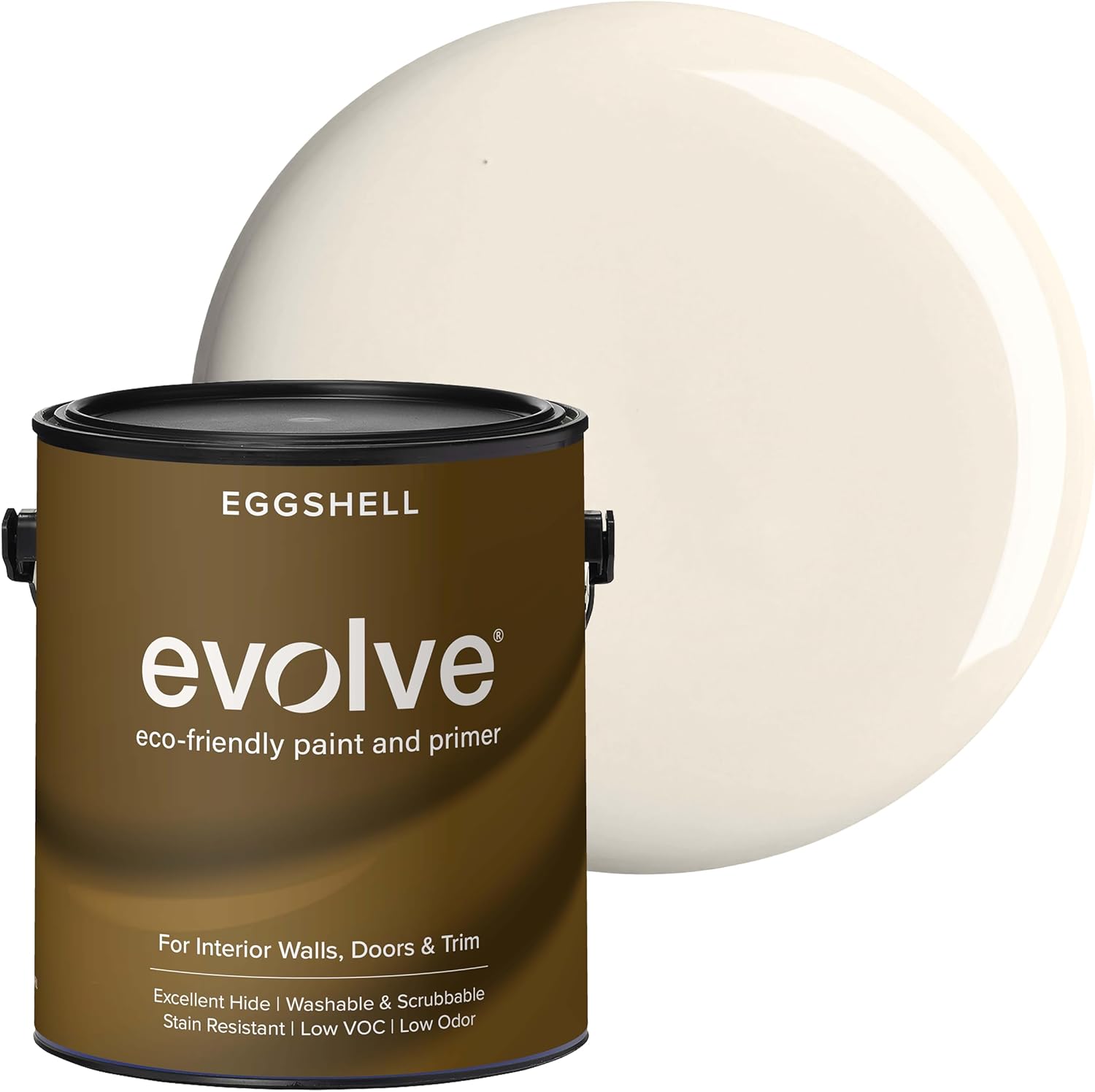
Coconut Cream is a warm off-white paint and primer with an eggshell finish. It may look appealing beside white walls or trim on the inside of an entry, but the supplied product details list it for interior use only. That makes it a poor choice for the outside face of a front door exposed to outdoor conditions.
The product is described as washable, stain- and scrub-resistant, and suitable for moisture-prone interior spaces. Its eggshell finish has a softer sheen than semi-gloss, and the listed coverage is 300 to 400 square feet per gallon. Some users report that it provides good coverage indoors, though the amount of paint needed will vary with the surface and color underneath.
For a white house’s exterior door, choose one of the products specifically listed for outdoor use instead. Coconut Cream is included here as a color option for the interior side of an entry door or another indoor surface, not as an exterior substitute. The Rust-Oleum white, black, and gray paints are more purpose-built for exterior doors.
Pros:
- Warm off-white tone can soften an indoor entry
- Paint-and-primer formula for interior surfaces
- Eggshell finish is less reflective than semi-gloss
- Listed coverage is 300 to 400 square feet per gallon
Cons:
- Interior use only; not the right choice for an exposed exterior door
- Not a dedicated exterior door-and-trim paint
Verdict: Choose Coconut Cream for an indoor door or entry project, but do not use it on the outside of a front door exposed to the weather.
How to Choose Front Door Paint for a White House
Decide how much contrast you want
Black creates the clearest contrast against a white exterior and makes the entrance stand out. Gray gives you a more restrained accent, while white keeps the door close to the color of the house. Think about whether you want the door to be the main focal point or blend into the facade before choosing a shade.
Look at the full exterior palette
Consider your roof, shutters, porch, steps, hardware, and landscaping alongside the siding. A door color often looks more balanced when it connects with another detail on the house. Check paint samples in different light, since a color can appear different in a shaded entry than it does in direct sun.
Match the paint to the door and exposure
Check the paint label for the door’s material and whether the paint is meant for exterior use. The Rust-Oleum door-and-trim paints in this guide list wood, metal, and fiberglass and include indoor and outdoor use. The EVOLVE Coconut Cream paint is listed for interior use only, so it should not be used on an exposed exterior door.
Choose a finish that suits your look and upkeep
Satin offers a modest sheen, while semi-gloss is more reflective. A higher sheen can make a door look brighter, but surface flaws may be more visible. Consider the door’s condition and the appearance you want, and prepare the surface carefully before applying paint.
Plan for preparation, coats, and cure time
Follow the product label for cleaning, surface preparation, application, and recoat instructions. The Rust-Oleum paints are listed as drying to the touch in about 45 minutes to one hour, depending on the color, but their listed full cure time is six hours. Touch-dry does not mean fully cured, so avoid rushing the door back into heavy use.
Estimate the amount you need
Coverage depends on the door’s size, condition, color underneath, and the number of coats required. EVOLVE Ultimate White lists coverage of 75 to 100 square feet per quart, while the Coconut Cream paint lists 300 to 400 square feet per gallon. The supplied details do not state a coverage area for the Rust-Oleum colors, so check the can or product listing before planning your purchase.
Frequently Asked Questions
What is the best front door color for a white house?
Black is a strong choice if you want high contrast and a clear focal point. Alpine Gray offers a softer accent, while white keeps the entrance understated. The best fit depends on your home’s style and the look you prefer.
Does a black door look good on a white house?
Yes. Black and white create a crisp, classic contrast that draws attention to the entry. Keep in mind that a dark finish may make dust and surface flaws more noticeable.
Should I paint my front door white to match the house?
You can, especially if you want a simple, coordinated look. A white door may blend into white siding, so choose it if subtlety matters more to you than contrast.
Is gray a good front door color for a white house?
Gray can add definition without the stronger effect of black. Test the shade near your siding and trim first, since light and surrounding colors can affect how it looks.
Can I use interior paint on the outside of my front door?
Use paint that is labeled for exterior conditions and suitable for your door material. The EVOLVE Coconut Cream paint in this guide is listed for interior use only, so it is not recommended for an exposed exterior door.
How long should I wait before using a freshly painted door?
Follow the directions on the paint can. The Rust-Oleum door paints listed here dry to the touch in about 45 minutes to one hour, depending on the color, and list a six-hour full cure time. Touch-dry paint may still need more time before it can handle regular use.
Final Recommendation
For most white houses, Rust-Oleum Satin Black is the best pick if you want a bold, classic front door that stands out. Choose Rust-Oleum Alpine Gray for a softer accent, or Satin White for a coordinated look with less contrast. Before you buy, confirm that the paint is suitable for your door material and outdoor exposure; the Coconut Cream option is for indoor projects only.