Choosing a hot water heater for a large family means looking beyond the word “tankless.” You need enough capacity for the number of showers, sinks, and appliances your household may use at once. The options below include two 240V electric tankless units, a small under-sink heater, an RV heater, and an electric kettle. Only the first two are plausible candidates for household plumbing, and their stated capacity is limited to about one or two fixtures—not an entire busy home. Check your household’s demand and electrical setup before buying.
Table of Contents
Quick Comparison
| Product | Type and power | Best suited for | Important limitation |
|---|---|---|---|
| VEVOR RV Tankless Water Heater | Fuel-powered RV heater, 42,000 BTU | RV hot water and outdoor use | Not an electric household water heater |
| OVENTE 1.7L Electric Tea Kettle | Countertop kettle, 1,100W | Boiling water for drinks and cooking | Does not supply plumbed hot water |
| 110V 3,000W Under-Sink Tankless Heater | Point-of-use electric heater | A small sink or limited-use outlet | Not suitable for showers or whole-home use |
| Electrolux 14kW WiFi Tankless Water Heater | 240V electric tankless heater, up to 3.4 GPM | One or two fixtures, depending on conditions | May not meet a large family’s peak demand |
| SIVUATEK 14kW Tankless Water Heater | 240V electric tankless heater, up to 3.3 GPM | One or two fixtures, depending on conditions | Requires a 60-amp circuit and may be undersized for a busy home |
Our Picks: Best Electric Hot Water Heaters For Large Families reviews
VEVOR RV Tankless Water Heater: A Choice for RV Families, Not Home Plumbing

This VEVOR unit is designed for RV installation, not as an electric water heater for a family home. It uses fuel for its 42,000-BTU heat output, while its 12-volt electrical connection supports the unit’s operation. That distinction matters if you are shopping specifically for an electric household water heater.
For RV use, the listed features are practical: a smart display and touch controls, segmented combustion for seasonal adjustment, and both an interior outlet and a front outlet for outdoor tasks. The supplied door measures 15 by 15 inches, and the unit has freeze, flame-out, and other protection features. Its listed flow rate is 2.8 liters per minute, so it should be considered in the context of RV use rather than as a high-demand home system.
The main drawback is fit and purpose. It is made for compatible RV openings and connections, and its fuel-powered design does not make it a match for a home seeking an electric heater. It could suit a family that travels in an RV and wants hot water for showers and cleanup, but it is not a solution for several household bathrooms running at once.
Pros:
- 42,000-BTU heating output for RV hot water needs
- Includes a remote controller and LED display
- Interior and exterior water outlets add flexibility
- Includes anti-freeze and other listed safety protections
Cons:
- Fuel-powered, so it is not an electric household water heater
- Designed for RV installation rather than whole-home plumbing
Verdict: Choose the VEVOR for a compatible RV setup, not as the main electric water heater for a large family home.
OVENTE 1.7L Electric Kettle: Handy for Boiling Water, Not Showers

The OVENTE is a countertop kettle for boiling water, not a plumbed water heater. Its 1.7-liter capacity and 1,100-watt element can be useful for tea, instant meals, or other kitchen tasks when several people need hot water at different times. It cannot provide hot water to a sink, shower, or dishwasher.
The kettle has a concealed stainless steel heating element, a removable spout filter, a clear-view window, and a cordless serving design with a 360-degree swivel base. Auto shut-off and boil-dry protection are useful safeguards for a shared kitchen. The product information also lists a two-year limited warranty.
For a large family, this can be a convenient extra appliance, but its capacity means you will need to refill it for repeated use. It does not address the central hot-water demands of a household. Compared with the other products here, it is the simplest option for drinks and light kitchen use, but the least relevant to showers or whole-home hot water.
Pros:
- 1.7-liter capacity for everyday boiling tasks
- Concealed stainless steel heating element
- Auto shut-off and boil-dry protection
- Removable filter and cordless serving base
Cons:
- Does not connect to household plumbing
- Must be refilled between batches and cannot support showers
Verdict: Buy this kettle as a kitchen convenience, not as a hot water heater for a large family.
110V 3,000W Under-Sink Heater: A Compact Option for One Outlet

This compact 110-volt heater is intended for point-of-use installation, such as beneath a sink. Its 3,000-watt rating and LED display provide a small-scale way to heat water near an outlet, which can help in a kitchen, apartment, or other location where a local source of hot water is useful.
The product information says the outlet temperature rise changes with water flow: lower flow allows a higher temperature, while higher flow produces a smaller temperature rise. It also clearly warns that the unit is not suitable for a shower, which typically requires at least 1.8 GPM. Its listed protections include dry-boil protection, leakage protection, and automatic shutoff for overheating or inactivity.
Installation details matter here. The heater must be installed vertically, and the manufacturer’s instructions call for suitable wiring and properly sealed pipe connections. Although the 110-volt design may appear easier to fit than a larger 240-volt system, it is a small point-of-use appliance—not a way to supply multiple bathrooms or a large family’s peak demand.
Pros:
- Compact design for under-sink or other point-of-use placement
- Uses a 110-volt connection
- LED display with Fahrenheit and Celsius settings
- Includes several listed electrical and overheating protections
Cons:
- Manufacturer says it is not suitable for showers
- Limited output makes it unsuitable as a whole-home heater
Verdict: Consider it only for a small sink or similar point-of-use need; it is not a large-family main water heater.
Electrolux 14kW WiFi Tankless Heater: Smart Controls for Limited Fixture Demand

This 14kW Electrolux is a 240-volt electric tankless heater with a compact wall-mounted design. It offers WiFi temperature control through an app and Alexa compatibility, with a stated adjustment range of 80°F to 140°F. The product information lists a maximum flow rate of 3.4 GPM and describes the unit as intended for one or two fixtures.
That stated capacity is the key point for a large household. The maximum flow rate does not guarantee the same output at every incoming water temperature or desired setting; colder supply water and simultaneous use can reduce the hot-water flow available. A single 14kW unit should not be assumed to cover several showers and taps at once. The listed scale inhibitor may also be useful where mineral buildup is a concern, though shoppers should confirm maintenance and installation details with the manufacturer.
Its app and voice controls are convenient extras, but they do not increase heating capacity. The product is a more relevant household option than the kettle, RV heater, or 110-volt under-sink unit, yet its own one-to-two-fixture guidance makes it a cautious choice for large-family use. Have an electrician confirm that your panel and wiring can support the unit before purchase.
Pros:
- 240-volt tankless design with a stated maximum flow rate of 3.4 GPM
- App-based WiFi controls and Alexa compatibility
- Adjustable temperature from 80°F to 140°F
- Compact wall-mounted design and built-in scale inhibitor
Cons:
- Described for one or two fixtures, not several simultaneous showers
- Electrical capacity and installation requirements need professional review
Verdict: This is the most feature-rich option here for limited household hot-water demand, but a large family should confirm its real-world capacity before relying on it as the main heater.
SIVUATEK 14kW Tankless Heater: Straightforward Controls for One or Two Fixtures
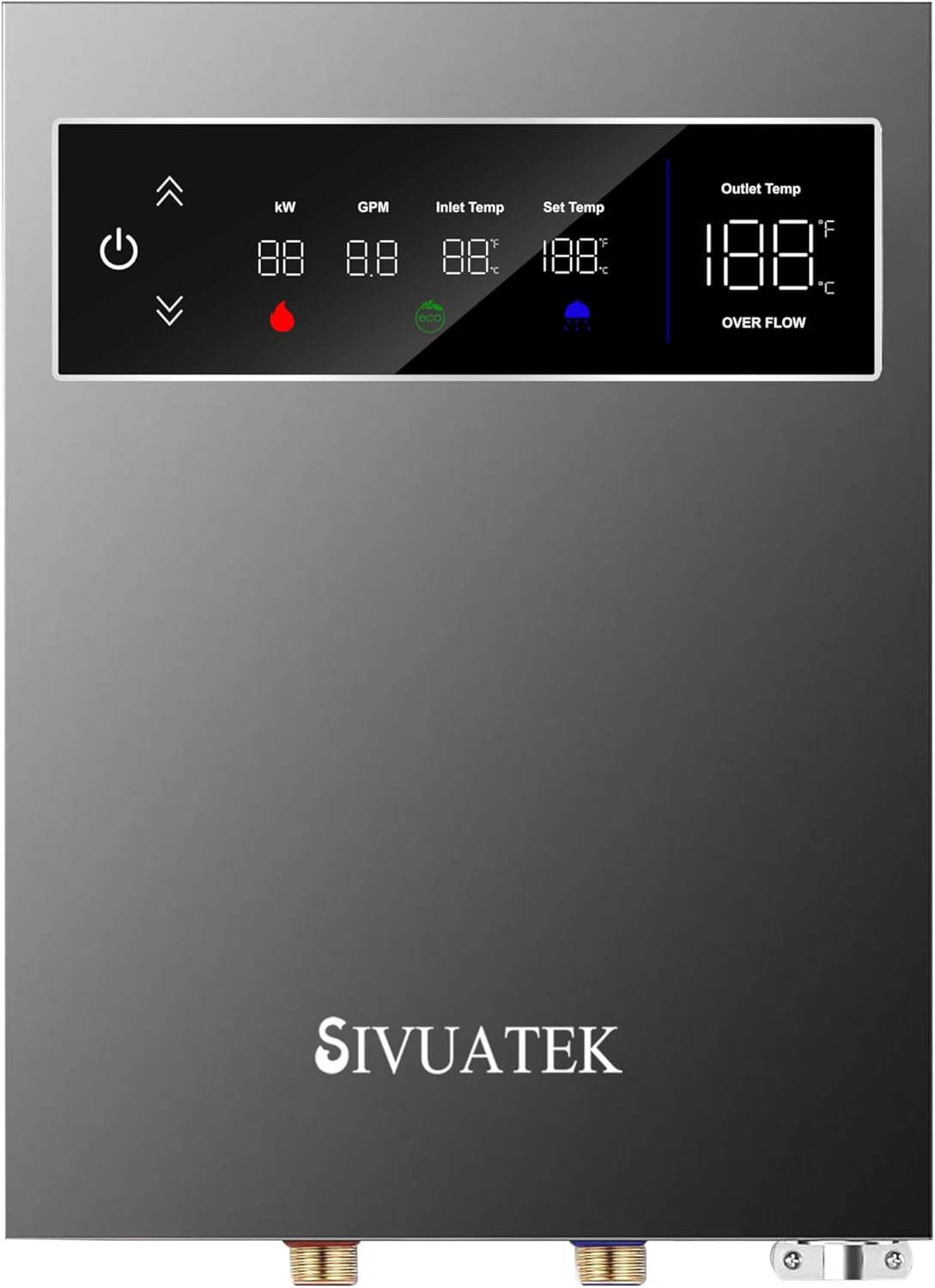
The SIVUATEK is a 14kW, 240-volt electric tankless heater with a listed maximum flow rate of 3.3 GPM. Its LED display shows inlet and outlet temperatures, flow, and power use, while the temperature setting can be adjusted from 86°F to 131°F in one-degree increments. The product description presents it as suitable for one or two simultaneous usage points, such as a sink and bathroom.
Its listed installation requirement is important: the unit calls for one 60-amp circuit breaker. That does not mean every home can support it without changes. Ask a licensed electrician to check the panel, wiring, and local requirements before you order, and do not rely on informal installation directions. The product also lists leakage protection, overheating protection, and automatic shutoff.
Some owners describe quick heating, and one owner account notes improved temperature consistency compared with earlier tankless setups. Those experiences are not a substitute for checking capacity in your home, especially because inlet-water temperature and simultaneous use affect results. Of the two 14kW choices here, this model offers detailed on-unit readings, while the Electrolux adds WiFi and voice controls.
Pros:
- 240-volt, 14kW design with a stated maximum flow rate of 3.3 GPM
- LED display reports temperature, flow, and power information
- Precise temperature adjustments from 86°F to 131°F
- Listed leakage, overheating, and automatic shutoff protections
Cons:
- Requires a 60-amp circuit breaker, so electrical compatibility must be confirmed
- Stated for one or two use points, which may not cover a large family’s peak demand
Verdict: The SIVUATEK is worth considering for a properly wired home with modest hot-water demand, but it is not a clear whole-house answer for a large family.
How to Choose an Electric Water Heater for a Large Family
Estimate How Many Fixtures Run at Once
Think about peak use, not just the number of people in your home. A family may need hot water for a shower, kitchen sink, and dishwasher at the same time. List the fixtures you expect to use together and compare that demand with the heater’s stated flow rate and fixture guidance. The 14kW models listed here are described for one or two fixtures, so they may not be enough for a home with several simultaneous hot-water uses.
Check Flow Rate Along With Incoming Water Temperature
A maximum GPM figure does not tell the whole story. Tankless heaters must raise incoming water to your chosen temperature, and colder incoming water requires more heating. That can reduce the flow of hot water available at a comfortable temperature. Ask the manufacturer or a qualified installer to size the unit for your local water conditions and expected use.
Confirm Electrical Requirements Before Buying
Electric tankless heaters can require substantial electrical capacity. The products in this list include a 110-volt point-of-use unit and 240-volt models; the SIVUATEK listing specifically calls for a 60-amp circuit breaker. Do not assume your existing panel can support a new heater. Have a licensed electrician check the unit’s requirements, your panel, wiring, breaker space, and applicable local codes.
Choose Between a Whole-Home System and Point-of-Use Heating
A point-of-use heater warms water near a single sink or outlet. It can be useful where hot water takes a long time to reach a remote tap, but it does not replace a properly sized whole-home system. A kettle heats water for cooking and drinks, while an RV heater is designed for RV installation. Match the product type to the job before comparing features.
Consider Installation, Water Quality, and Maintenance
Check how the heater must be mounted, what plumbing connections it needs, and whether your home’s water conditions may affect scale buildup. Follow the manufacturer’s installation instructions and use a qualified professional when electrical or plumbing work is required. Claims about reduced maintenance or scale control should not replace checking the actual care requirements for the specific model.
Compare Controls and Safety Features After Sizing
Digital displays, app control, and voice compatibility can make temperature adjustments easier, but they do not add heating capacity. First confirm that a unit can meet your household’s demand. Then compare useful protections, temperature settings, display information, and warranty terms. A well-sized heater with simple controls is a better fit than an undersized model with extra smart features.
Frequently Asked Questions
Can one of these heaters supply hot water for a large family?
The two 240-volt tankless models are described for one or two fixtures, so neither should automatically be treated as a whole-home solution for a large family. The other products are an RV heater, a kettle, and a small under-sink unit. Have a professional size a system around your household’s peak demand.
Which product here is a true electric household water heater?
The Electrolux and SIVUATEK are 240-volt electric tankless heaters intended for household plumbing, with stated capacity limits. The 110-volt model is a small point-of-use heater. The VEVOR is fuel-powered for RV use, and the OVENTE is a countertop kettle.
Is the 110-volt under-sink heater suitable for a shower?
No. Its product information specifically says it is not suitable for a shower and notes that a shower normally needs at least 1.8 GPM. It is intended for limited point-of-use applications.
Will a 14kW tankless heater run multiple showers?
Capacity depends on the unit, incoming water temperature, desired output temperature, and flow at each fixture. The two 14kW models here are described for one or two fixtures, so you should not assume they will serve multiple showers and sinks at once. Ask an installer to calculate the likely output for your home.
Does a tankless water heater need a special electrical circuit?
It may. The requirements differ by model, and the SIVUATEK listing specifies a 60-amp circuit breaker. Check the exact manual and have a licensed electrician confirm your home can support the heater before installation.
Is the VEVOR RV heater electric?
It is fuel-powered for heating water, although it lists a 12-volt electrical supply as part of its operation. It is designed for compatible RV installations and is not an electric household water heater.
What should a large family prioritize when shopping?
Start with peak simultaneous demand, then check the heater’s flow rate at your incoming water temperature and the home’s electrical capacity. If the listed capacity does not cover your needs, compare other properly sized whole-home systems rather than relying on a small point-of-use unit.
Final Recommendation
For a large family, the most important takeaway is that none of these products is clearly specified as a high-capacity whole-home solution. The Electrolux and SIVUATEK are the closest fits for household plumbing, but both are described for only one or two fixtures. Confirm demand and electrical requirements with a qualified installer before choosing either. The OVENTE is useful for boiling water, the small 110-volt unit is for a limited outlet, and the VEVOR is for RV use—not home-wide electric hot water.