
A whole-house generator can keep essential systems running when utility power fails, but the right size depends on your home’s electrical loads, fuel setup, and installation needs. These three standby models offer different approaches: a connected 14kW Generac, a higher-output 22kW Generac, and a dual-fuel 14kW Honeywell. Compare their features, then have a qualified installer help determine what your home actually needs.
Table of Contents
Quick Comparison
| Generator | Output | Standout features | Best fit |
|---|---|---|---|
| Generac 14kW Whole Home Generator | 14kW | Automatic backup, cellular monitoring, cold-start support | Those who want remote monitoring and a mid-range output |
| Generac Guardian 22kW Home Generator | 22kW | 200-amp transfer switch, Wi-Fi monitoring, natural gas or propane | Homes with higher power needs and a compatible fuel supply |
| Honeywell 14kW Home Standby Generator | 14kW | Natural gas or propane, LCD control panel, composite mounting pad | Shoppers who value fuel flexibility and a simpler pad setup |
Our Picks: Best Whole House Generator For Power Outages reviews
Generac 14kW Whole Home Generator: Connected Backup for Everyday Essentials

This Generac is a 14kW home standby generator designed to detect an outage and start providing backup power automatically. Its output may suit a home focused on essentials, but whether it can support your heating or cooling equipment, kitchen appliances, and other loads at the same time depends on your home’s electrical demand.
Built-in cellular connectivity lets you monitor generator status and receive maintenance alerts through the Mobile Link app. The product information says some remote monitoring and control features require a Mobile Link premium subscription, so check the service terms before you count on those features without an added cost.
Oil-level sensors help monitor readiness, and the design includes cold-start support and features intended to reduce the risk of snow or ice intrusion. The generator is also listed as compatible with ecobee by Generac thermostats and Generac PWRcell battery systems. Compared with the 22kW option below, this model offers less output, so careful load planning is especially important.
Pros:
- Automatically detects an outage and supplies backup power.
- Built-in cellular connectivity supports remote monitoring.
- Includes cold-start and oil-level monitoring features.
- Compatible with select Generac home energy products.
Cons:
- At 14kW, it may not cover every appliance or large electrical load at once.
- Some Mobile Link features require a premium subscription.
Verdict: Choose this Generac if remote cellular monitoring matters to you and an installer confirms that 14kW can handle your planned backup loads.
Generac Guardian 22kW: Higher Output with Wi-Fi Monitoring
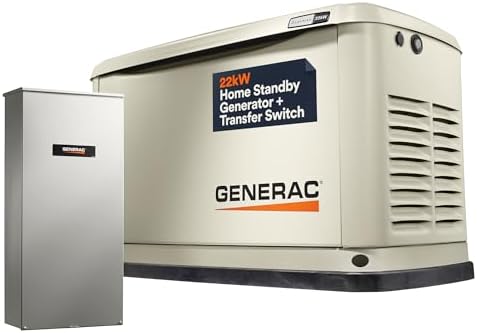
The Guardian 22kW is the highest-output option in this group. It is designed for automatic home backup and runs on natural gas or propane. Its 200-amp NEMA 3R transfer switch is intended for outdoor use, making the included switching equipment a notable part of the package.
Generac’s True Power Technology is specified to deliver 22,000 watts with less than 5% harmonic distortion. Wi-Fi connectivity supports remote status checks and maintenance alerts. The purpose-built G-Force engine is described as designed for generator use, while the outdoor switch has an aluminum enclosure.
The extra output may give an installer more room to plan for multiple household loads than either 14kW model, but it does not automatically guarantee that every appliance can run at once. Your fuel supply, electrical service, and the generator’s installation all matter. Generac recommends installation by a certified and licensed electrician, so this is not a simple plug-in backup solution.
Pros:
- Highest stated output among these three generators.
- Runs on natural gas or propane.
- Includes a 200-amp outdoor transfer switch.
- Wi-Fi monitoring provides status updates and maintenance alerts.
Cons:
- Requires professional installation, which adds planning and labor considerations.
- Its higher output may be more than needed for homes with modest backup loads.
Verdict: Pick the Guardian 22kW if your home has substantial backup needs and a qualified installer confirms that your fuel supply and electrical setup are a good match.
Honeywell 14kW Home Standby Generator: Dual-Fuel Flexibility
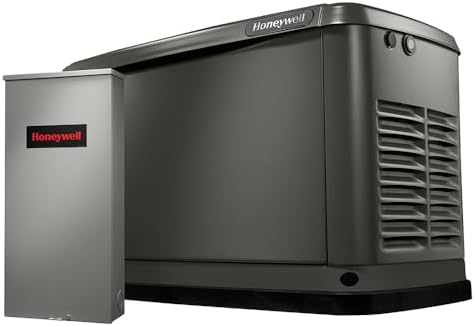
This Honeywell standby generator delivers 14kW of automatic backup power and can run on natural gas or propane. That fuel flexibility may be useful if one option better fits your home’s existing setup or local fuel access. As with any 14kW generator, have an installer check your expected loads before deciding it can cover your whole home.
The generator includes an LCD control panel that displays operating information in multiple languages. Its all-weather aluminum enclosure has enhanced locks, and the package includes a composite mounting pad designed to install directly on soil without a concrete base. Confirm site conditions and local installation requirements with a qualified professional before choosing a location.
Unlike the two Generac options here, the listed Honeywell details do not specify a remote monitoring feature. Its clearest advantages are the two fuel choices and the included pad. If remote status checks are a priority, compare those features carefully against the Generac models.
Pros:
- Operates on natural gas or propane.
- Includes a composite mounting pad designed for soil installation.
- LCD control panel provides operating information in multiple languages.
- All-weather aluminum enclosure with enhanced locks.
Cons:
- Its 14kW output may limit how many large loads can run at once.
- Remote monitoring is not specified in the supplied product details.
Verdict: Consider the Honeywell if you want a 14kW standby generator with natural gas or propane flexibility and an included mounting pad.
How to Choose a Whole House Generator for Power Outages
Estimate Your Backup Power Needs
Start by listing the appliances and systems you want available during an outage. Heating and cooling equipment, refrigerators, well pumps, and other large loads can affect generator sizing. A licensed electrician or generator installer can review your equipment and determine which loads can run together. Do not assume that a model described as “whole home” will power every circuit at once.
Match the Generator to Your Fuel Supply
Fuel availability can shape your choice. The Guardian 22kW and Honeywell 14kW models are listed as operating on natural gas or propane. The supplied details for the Generac 14kW model do not specify its fuel type, so confirm that point with the manufacturer or installer before buying. Ask how your chosen fuel source will be connected and whether it can support the generator’s needs during an extended outage.
Compare Output, Not Just Product Labels
These options range from 14kW to 22kW. More output can offer greater flexibility for running multiple loads, but it should match your actual needs rather than simply being the largest number available. Have an installer consider the electrical loads you want backed up, including equipment that may draw more power when it starts.
Check the Transfer Switch and Electrical Setup
A standby generator needs a transfer switch to connect backup power to your home safely. The 22kW Guardian listing specifies a 200-amp NEMA 3R switch. The 14kW Generac listing mentions a transfer switch, but its supplied description does not provide the same switch details. Confirm exactly what is included, whether it fits your electrical service, and what work the installation requires.
Decide Whether Remote Monitoring Matters
Remote alerts can help you check generator status when you are away. The 14kW Generac includes cellular connectivity, with some Mobile Link features requiring a premium subscription. The Guardian 22kW includes Wi-Fi monitoring. The Honeywell listing describes an LCD control panel but does not specify remote monitoring. Consider your home’s connectivity and any service requirements before choosing based on this feature.
Plan for Placement and Installation
Standby generators are installed outside and need a suitable location, fuel connection, and electrical work. The Honeywell includes a composite pad designed for soil installation, while the Generac 22kW listing specifies an outdoor-rated transfer switch. Ask your installer about site conditions, local rules, clearances, and any permits or other work needed. Installation should be part of your budget and timeline.
Review Maintenance and Ownership Details
Check the manufacturer’s maintenance schedule, warranty terms, and service options before deciding. The Guardian listing specifies a five-year limited warranty for its automatic transfer switch; confirm the complete warranty coverage for the generator and included parts. Features such as maintenance alerts can be helpful, but they do not replace routine servicing.
Frequently Asked Questions
Can a 14kW generator power an entire house?
It depends on your home’s electrical loads and which systems you expect to use at the same time. A 14kW model may support selected household needs, but an installer should calculate your load before you treat it as full-home coverage.
Is a 22kW generator better than a 14kW model?
Not for every home. The 22kW Guardian offers more stated output, which may suit homes with greater backup needs. A 14kW unit may be sufficient if you plan to power a smaller set of essential loads. Have a professional size the system to your home.
Do these generators start automatically during an outage?
The Generac 14kW and Honeywell listings describe automatic backup operation, and the Guardian 22kW is a home standby generator with a transfer switch. Confirm the complete operation and installation requirements for the model you choose with your installer.
Which of these models can use propane?
The supplied product details specify natural gas or propane for the Generac Guardian 22kW and Honeywell 14kW. The supplied description for the Generac 14kW does not state its fuel type, so verify it before purchasing.
Can I install a whole-house standby generator myself?
These products require connections to your home’s electrical system, and the Guardian listing recommends installation by a certified and licensed electrician. Consult a qualified generator installer about the requirements for any model you consider.
Do I need Wi-Fi or cellular service for a standby generator to work?
Remote monitoring is a separate feature from providing backup power. The Generac 14kW lists cellular connectivity, and the Guardian 22kW lists Wi-Fi monitoring. The Generac’s premium Mobile Link features require a subscription. Check the product and service requirements if remote alerts are important to you.
Final Recommendation
The Generac Guardian 22kW is the strongest option in this group for homes that need higher output and can support its natural gas or propane setup. For a lower-output system with remote cellular monitoring, consider the Generac 14kW, keeping its subscription requirement in mind. The Honeywell 14kW stands out for fuel flexibility and its included mounting pad. Before choosing any of them, ask a qualified installer to confirm the generator size, fuel supply, transfer switch, and site requirements for your home.
