
A natural gas whole-house generator can restore power automatically when the grid goes down, but the right choice depends on your home’s electrical load, fuel supply, and transfer-switch setup. The options below range from a 14kW model for essential circuits to larger units designed for broader home coverage. Compare each generator’s natural-gas output—not just its headline wattage—and confirm the equipment and installation plan with a qualified professional.
Table of Contents
Quick Comparison
| Generator | Natural-Gas Output | Notable Features | Best For |
|---|---|---|---|
| Generac 22kW Whole Home Generator | Not specified in the supplied product details | Cellular monitoring, cold-start support, 5-year limited warranty | Shoppers who want remote status updates |
| Champion 22,000-Watt Dual-Fuel Standby Generator | 19,800 watts | Propane or natural gas, 200-amp transfer switch, 10-year limited warranty | Homes needing a documented NG rating and fuel flexibility |
| Honeywell 14kW Home Standby Generator | 14kW listed output; fuel-specific output not stated | Natural gas or propane, LCD controls, composite mounting pad | Essential-load backup and simpler placement |
| Generac Guardian 26kW Home Generator | 26kW listed output; fuel-specific output not stated | Natural gas or propane, 200-amp transfer switch, Wi-Fi monitoring | Homes seeking a larger-capacity package |
Our Picks: Best Natural Gas Whole House Generator reviews
Generac 22kW Whole Home Generator: Remote Monitoring and Cold-Weather Support

This Generac standby generator is designed to detect a power outage and provide automatic backup for a home. Its listed 22kW capacity puts it in the larger home-standby class, though the actual circuits and appliances it can support depend on your home’s load and installation.
A key feature is built-in cellular connectivity. The Mobile Link app can provide status updates and maintenance alerts, and the product description says remote control is available with a premium subscription. Oil-level sensors and improved cold-start performance add practical readiness features, while the sloped roof and rear intake are designed to reduce the risk of snow or ice intrusion.
One important detail needs checking before you choose it: the supplied product information does not identify its fuel options or natural-gas output. Since natural-gas compatibility is central to this purchase, confirm the exact model’s fuel specifications with the seller and installer. The listing also describes a five-year limited warranty and around-the-clock customer support.
Pros:
- Automatic outage detection and backup operation
- Built-in cellular connectivity for remote monitoring
- Cold-start and weather-conscious design features
- Five-year limited warranty listed
Cons:
- Supplied details do not confirm natural-gas compatibility or NG output
- Some app features require a premium subscription
Verdict: Consider this Generac if cellular monitoring and cold-weather features are priorities, but confirm natural-gas specifications before treating it as a fit for your home.
Champion 22,000-Watt Dual-Fuel Generator: Clear Natural-Gas Rating

Champion’s dual-fuel standby generator runs on liquid propane or natural gas. Its output differs by fuel: the listing specifies 22,000 watts on propane and 19,800 watts on natural gas. That distinction matters when you compare it with models that show only a single headline wattage.
The product includes a 200-amp transfer switch and uses Power Line Carrier technology, which Champion says can reduce wiring needs and installation costs. Its fleX technology is intended to help manage high-demand appliances. The listing also describes a low-tone muffler and sound-dampening design, with a stated operating noise level of 67 dBA.
A 24-volt starting system is specified for operation in temperatures down to -22°F, and the aluminum enclosure is designed for weather resistance. The listed 10-year limited warranty and lifetime technical support are notable, but check the warranty terms and installation requirements for your situation. The propane output is higher than the natural-gas output, so size your system around the fuel you plan to use.
Pros:
- Natural-gas output is clearly stated at 19,800 watts
- Can also run on liquid propane
- Includes a 200-amp transfer switch
- Listed 10-year limited warranty and lifetime technical support
Cons:
- Natural-gas output is lower than its propane output
- Large standby systems require professional planning and installation
Verdict: This is a strong option if you want dual-fuel flexibility and a clearly stated natural-gas output, provided its capacity matches your home’s calculated load.
Honeywell 14kW Home Standby Generator: A Smaller Essential-Load Option
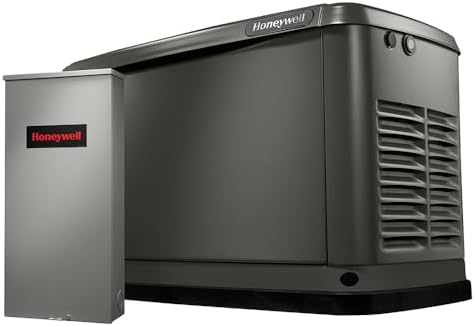
This Honeywell standby generator is rated at 14kW and is designed to provide automatic backup power. It can run on natural gas or propane, giving you a choice based on your home’s fuel setup. The supplied details do not break out separate output ratings for each fuel, so confirm the applicable rating for your installation before deciding which circuits it can support.
The package includes a composite mounting pad that the listing says can be installed directly on soil without a concrete base. That may simplify site preparation, but you should still have a qualified installer check placement, clearances, and local requirements. An LCD control panel provides real-time information in multiple languages, and the all-weather aluminum enclosure has enhanced locks.
At 14kW, this model is a better fit for a planned set of essential circuits than for assuming every appliance in a large home can run at once. It may suit homes with a lower backup-power demand or owners willing to prioritize key loads. The supplied product details do not state a warranty term or include a transfer switch, so verify those items before purchase.
Pros:
- Runs on natural gas or propane
- Composite mounting pad is included
- LCD panel provides operating information
- Weather-resistant aluminum enclosure
Cons:
- Lower listed capacity than the other options here
- Fuel-specific output and warranty details are not provided in the supplied information
Verdict: Choose the Honeywell if 14kW is sufficient for your planned essential loads and you value its included mounting pad; have an installer confirm the fuel-specific rating and package contents.
Generac Guardian 26kW Generator: Larger Capacity with Transfer Switch
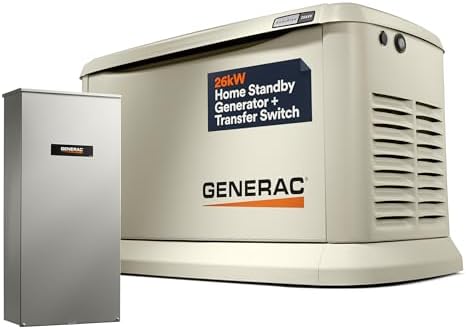
The Generac Guardian is listed as a 26kW home generator that runs on natural gas or propane. The package title includes a 200-amp transfer switch, an important component for connecting standby power to your home’s electrical system. Its larger listed capacity may suit households with greater backup needs, but it does not guarantee that every home load can run at the same time.
Generac’s True Power Technology is described as delivering clean, stable 26,000-watt power with under 5% harmonic distortion. The product also includes Wi-Fi connectivity through Mobile Link for remote performance tracking and maintenance alerts. Its purpose-built G-Force engine is designed for standby use, and the listing describes it as low-maintenance and quieter than some alternatives, without giving a decibel figure.
The generator is backed by a listed five-year limited warranty, and Generac recommends installation by a certified and licensed electrician. Before buying, ask the installer to confirm the natural-gas output for the specific configuration, the transfer switch’s suitability, and whether the gas line can supply the generator while other gas appliances are operating.
Pros:
- Natural gas and propane fuel options are listed
- Includes a 200-amp transfer switch
- Wi-Fi monitoring and maintenance alerts
- Five-year limited warranty listed
Cons:
- Natural-gas output is not separately stated in the supplied details
- Professional installation is recommended
Verdict: This is the most compelling larger-capacity package in the group if you want a listed transfer switch and Wi-Fi monitoring, but verify its natural-gas rating and installation fit first.
How to Choose a Natural Gas Whole-House Generator
Size the Generator to Your Actual Electrical Load
Start with the appliances and systems you want to run during an outage. Heating and cooling equipment, refrigerators, pumps, lighting, and other large loads can all affect the required capacity. A licensed electrician or generator installer can calculate your home’s needs and explain whether you can run everything together or should use load management to prioritize certain circuits.
Compare Natural-Gas Output, Not Just the Headline Rating
A generator’s output can vary depending on its fuel. Champion, for example, lists 22,000 watts on propane and 19,800 watts on natural gas. Other product details here provide a headline rating without a separate natural-gas figure. Ask for the exact output on your chosen fuel and compare that number with your installer’s load calculation.
Check Your Gas Supply and Line Capacity
Natural gas removes the need to store and refill fuel, but the generator still needs an adequate gas supply. Have a qualified professional check the gas line, pressure, and available capacity, including the demands of other gas appliances in your home. Do not assume an existing line is automatically large enough for a standby generator.
Confirm the Transfer Switch and Included Equipment
The transfer switch safely connects the generator to your home’s electrical system and helps prevent generator power from feeding back into utility lines. Some packages list a switch, such as the Champion and Generac Guardian models here, while the supplied Honeywell details do not mention one. Confirm exactly what is included and whether its capacity and configuration suit your electrical panel.
Plan for Installation and Placement
Standby generators need a suitable outdoor location, proper clearances, and connections to fuel and electrical systems. Site preparation differs by model: the Honeywell listing includes a composite mounting pad, while other product descriptions do not specify one. Ask your installer about local code requirements, permits, placement, and any work needed before the unit arrives.
Consider Monitoring, Maintenance, and Warranty Coverage
Remote monitoring can help you check a generator’s status and receive maintenance alerts, but some features may require an app subscription. Compare the warranty terms, technical support, and maintenance requirements rather than focusing only on the initial equipment choice. Keep in mind that warranties may have conditions tied to installation and routine service.
Frequently Asked Questions
Can a natural gas generator power an entire house?
It can power a home’s selected circuits, and a properly sized system may support a broad range of household loads. Whether it can run every appliance at once depends on the generator’s output, your electrical demand, and the transfer-switch and load-management setup.
Is natural-gas output the same as propane output?
Not always. The Champion model in this guide lists different outputs for the two fuels: 22,000 watts on propane and 19,800 watts on natural gas. Check the fuel-specific rating for any generator you are considering.
Does a standby generator start automatically during an outage?
The standby models described here are designed for automatic backup operation. Their transfer-switch setup and installation must be correct for the system to detect an outage and supply power as intended.
Do these generators include a transfer switch?
The Champion and Generac Guardian product information includes a 200-amp transfer switch. The supplied details for the Generac 22kW and Honeywell models do not confirm one, so check the exact package contents before buying.
Will a 14kW generator cover a whole house?
It depends on your home’s load and which circuits you want to run. A 14kW unit may be suitable for selected essential loads, but an installer should calculate your demand before you decide it will cover your whole home.
Can I install a whole-house generator myself?
These systems involve electrical connections, fuel supply, placement, and local code requirements. The Generac Guardian listing recommends a certified and licensed electrician. Use qualified professionals to plan and install the system.
Final Recommendation
For a clearly stated natural-gas output and dual-fuel flexibility, the Champion is the easiest option here to compare against a home load calculation. The Generac Guardian is worth considering if you want a larger listed capacity, a 200-amp transfer switch, and Wi-Fi monitoring. If essential-load backup is enough, the Honeywell’s 14kW rating may be a better match. For every model, confirm natural-gas output, package contents, and installation requirements with a qualified installer before making your decision.
