
Choosing metal roofing trim and flashing starts with matching the material to the job. A roll of aluminum can help direct water around roof edges, valleys, chimneys, windows, or other transitions, but its width and thickness affect how easily you can shape and fasten it. Below, we compare four aluminum flashing rolls and explain what to check before you buy.
Table of Contents
Quick Comparison
| Product | Size | Thickness | Best For |
|---|---|---|---|
| Yaocom White Aluminum Flashing Roll | 12 in. x 50 ft. | 0.0075 in. | White-finished projects needing a long, wide roll |
| Conderyang White Aluminum Flashing Roll | 12 in. x 50 ft. | 0.0075 in. | Similar white flashing with included fasteners |
| Tubtoken Aluminum Roll Flashing | 12 in. x 50 ft. | 0.3 mm (about 0.0118 in.) | Projects where a thicker aluminum roll is preferred |
| Lounsweer Aluminum Flashing Roll | 4 in. x 50 ft. | 0.0078 in. | Narrow trim and smaller flashing applications |
Our Picks: Best Metal Roofing Trim And Flashing reviews
Yaocom White Aluminum Flashing: A Wide Roll with a Finished Look

The Yaocom roll is a 12-inch-wide, 50-foot length of white-painted aluminum flashing. Its listed thickness is 0.0075 inch, making it a thin, formable sheet suited to covering transitions and directing water rather than serving as a structural roofing panel.
The white coating can be useful when you want flashing to blend with light-colored roofing or trim. The product description also says the roll is easy to cut and shape, and the package includes stainless steel screws. That gives DIYers a starting set of fasteners, though you should still confirm that the screw type and length suit your roof assembly.
This is a practical choice for longer runs or wider areas, such as window and door headers, chimney details, or other moisture-prone transitions. Its thin material should be easier to form than a heavier sheet, but it can also be easier to crease or damage during handling. Plan your bends carefully and follow the roofing system’s installation requirements.
Pros:
- Long, 50-foot roll with a useful 12-inch width
- White finish may coordinate with light-colored exterior materials
- Includes stainless steel screws
- Can be cut and shaped for several flashing applications
Cons:
- Thin 0.0075-inch material may not suit jobs needing stiffer flashing
- White finish may not match every roof or trim color
Verdict: Choose the Yaocom roll for broad, light-colored flashing work when you want a long aluminum strip and included screws; choose a thicker option if stiffness is your main concern.
Conderyang White Aluminum Flashing: A Similar Roll with Two Screw Lengths

Conderyang’s roll matches the Yaocom on the main dimensions: 12 inches wide, 50 feet long, and 0.0075 inch thick. It also has a bright white corrosion-resistant coating, so it is aimed at similar projects where a painted aluminum surface is preferred.
The package description lists eight black stainless steel screws in two lengths. That may give you more fastening options than a single screw size, but the included fasteners are not a substitute for checking what your roof material and installation detail call for. The thin sheet should be manageable for cutting and forming, while still requiring care to avoid unwanted bends.
One important buying consideration is that the supplied listing data marks this product as unavailable. Check the listing before building a project plan around it. If it cannot be purchased, the Yaocom roll offers a similar width, length, thickness, and white finish.
Pros:
- 12-inch width and 50-foot length for larger runs
- White-coated aluminum for a finished appearance
- Package description includes screws in two lengths
- Designed for cutting and shaping to fit different details
Cons:
- Listed as unavailable in the supplied product information
- Thin material may be less suitable where a stiffer flashing piece is needed
Verdict: Consider Conderyang if the listing is available and its included fasteners and white finish fit your project; otherwise, compare it with the similar Yaocom roll.
Tubtoken Aluminum Roll Flashing: The Thicker Option in This Group
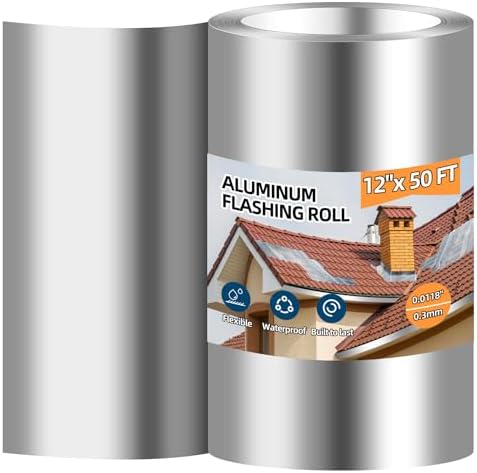
Tubtoken offers a 12-inch-wide, 50-foot aluminum roll with a listed thickness of 0.3 mm, or about 0.0118 inch. That makes it thicker than the 0.0075-inch Yaocom and Conderyang rolls and the 0.0078-inch Lounsweer roll. A thicker sheet may be a better fit when you want more body in the material, though the right choice depends on the bends and fastening method your project requires.
The description highlights rust and corrosion resistance and lists several possible widths and lengths, though the product title here is for a 12-inch by 50-foot roll. It has no stated white coating, so it may be less suited to projects where a bright white finish is important. The listing also makes a long-life claim; treat that as a manufacturer claim, not a guarantee, since service life depends on installation, exposure, and material compatibility.
This roll may suit roof and wall details, as well as certain garden uses, when a wider aluminum strip with more thickness is useful. It is still roll flashing, not a preformed ridge cap, drip edge, or other shaped trim. For those parts, choose a profile made for the specific roof edge or transition.
Pros:
- Thicker listed material than the other rolls in this comparison
- 12-inch width and 50-foot length for larger projects
- Aluminum is described as rust- and corrosion-resistant
- Product line is described as having other widths and lengths
Cons:
- No white finish is specified for this roll
- Thicker sheet may take more effort to form than thinner flashing
Verdict: Tubtoken is the strongest match here if you want a thicker 12-inch aluminum roll and do not need a white-painted surface.
Lounsweer Aluminum Flashing: A Narrow Roll for Smaller Details

The Lounsweer roll is 4 inches wide and 50 feet long, with a listed thickness of 0.0078 inch. Its narrower width makes it a better fit for smaller trim tasks or details where a 12-inch strip would be more material than you need. It is also described for use with roofing, siding, shingles, and some garden projects.
Like the other thin rolls, this aluminum flashing is intended to be cut and shaped for the task. The product description emphasizes resistance to rust and corrosion and notes that the material is designed to handle changes in wind pressure, temperature, and humidity. Those properties do not remove the need for proper laps, fastening, and a water-shedding installation.
The trade-off is straightforward: a 4-inch strip is less versatile for wide transitions than the 12-inch rolls. It may be a handy size for narrow coverage, but measure the required coverage and overlap before ordering. If your detail needs a broader apron or valley piece, a wider roll is likely a more efficient choice.
Pros:
- Narrow 4-inch width works for smaller flashing details
- 50-foot length offers plenty of material for repeated narrow runs
- Aluminum is described as rust- and corrosion-resistant
- Can be used for roofing, siding, and certain garden applications
Cons:
- Too narrow for many broad roof transitions without additional pieces
- Thin material may not provide the stiffness needed for every detail
Verdict: Pick Lounsweer for long, narrow runs or small trim work; for wide roof transitions, a 12-inch roll is the more practical starting point.
How to Choose Metal Roofing Trim and Flashing
Match the Width to the Roof Detail
Measure the surface you need to cover, including the amount needed for overlaps and bends. A 12-inch roll gives you more coverage for broad transitions, while a 4-inch roll is easier to use for narrow details. Do not assume the listed width is all usable coverage; bends and laps reduce the amount that lies flat.
Check Thickness and Formability
Thinner flashing is generally easier to cut and shape, but it may crease more easily and offer less stiffness. Of these options, Tubtoken has the greatest listed thickness at 0.3 mm. The other rolls are listed at roughly 0.0075 to 0.0078 inch. Match the material to the shape you need and the support available, rather than choosing by thickness alone.
Choose a Finish That Fits the Installation
Yaocom and Conderyang specify a white coating, which may suit light-colored roofing or trim. Tubtoken and Lounsweer do not specify a white finish in the supplied product details. Consider both appearance and exposure, and verify that the flashing material and coating are appropriate for the surrounding roofing components.
Confirm Fastener and Material Compatibility
Yaocom lists stainless steel screws, and Conderyang lists black stainless steel screws in two lengths. The other two product descriptions do not list included screws. Check fastener type, length, and placement for your roof assembly. Also confirm that aluminum is suitable next to the other metals and materials in your installation.
Know When You Need Formed Trim Instead
These products are flat rolls, not pre-shaped metal roofing trim. A roll can be useful for custom flashing, but roof edges and transitions may call for a formed piece such as drip edge, ridge trim, or a profile designed for a specific panel system. Follow the roof manufacturer’s instructions and local building requirements, especially around chimneys, valleys, and wall connections.
Plan for Water Flow and Safe Installation
Flashing should direct water over the layers below it, not behind them. Plan overlaps and bends so water sheds away from openings and seams. Cutting and forming metal can leave sharp edges, so use suitable tools and protective gear. If you are unsure about a leak-prone roof detail, consult a qualified roofing professional.
Frequently Asked Questions
Can aluminum roll flashing be used on a metal roof?
It can be used for some metal-roof flashing details, but the right material, finish, fasteners, and installation method depend on the roof system. Check the roofing manufacturer’s guidance and confirm compatibility with adjacent materials.
Which roll is the thickest?
Tubtoken is listed at 0.3 mm, or about 0.0118 inch. The other rolls are listed at about 0.0075 to 0.0078 inch.
Is a 4-inch roll wide enough for roof flashing?
It can work for narrow details, but it may not provide enough coverage for a wide transition or apron. Measure the area and account for bends and overlaps before choosing a width.
Do these products replace drip edge or ridge cap?
No. These are rolls of flat flashing material, not preformed trim profiles. Use purpose-made drip edge, ridge trim, or other formed pieces where the roof system calls for them.
Which option includes screws?
The Yaocom description lists stainless steel screws. The Conderyang description lists eight black stainless steel screws in two lengths. Screws are not listed as included for Tubtoken or Lounsweer.
Does white-coated flashing work with every roof color?
No. A white finish may blend with light-colored materials, but it can stand out against darker roofs or trim. Check the finish against your installation before buying.
How much flashing should I buy?
Measure each run and add material for laps, folds, and any cuts. The needed amount depends on the details and layout, so make a simple measurement plan before selecting a roll length.
Final Recommendation
For most broad DIY flashing jobs in this group, the Yaocom roll offers a useful combination of 12-inch width, 50-foot length, white finish, and included screws. Choose Tubtoken if a thicker aluminum sheet matters more than a white coating, or Lounsweer when you need a long, narrow strip. Conderyang has similar dimensions to Yaocom, but its supplied listing data marks it unavailable, so confirm the listing before relying on it. For complex roof transitions, use the roof system’s specified trim and installation method.
