
Choosing the best roof coating for a mobile home starts with matching the product to your roof material and its condition. A reflective elastomeric coating can help protect a sound roof and reduce heat absorption, but it is not a substitute for repairing damaged panels, fixing leaks, or correcting poor drainage. Our top pick is a coating made specifically for mobile home roofs; the other options offer useful alternatives for different surfaces and project sizes.
Table of Contents
Quick Comparison
| Product | Standout feature | Best fit |
|---|---|---|
| Nationwide Coatings Mobile Home Roof Coating | Ceramic elastomeric formula made for mobile home roofs | Owners seeking a purpose-made coating in a five-gallon pail |
| Rust-Oleum 710 Elastomeric Roof Coating | Reflective coating with a stated 10-year warranty | Suitable roof types listed on the product description |
| AMES Maximum-Stretch Roof Coating | One-gallon pail and highly flexible formula | Smaller maintenance jobs on compatible low-slope roofs |
| Gardner STA-Kool SK-7705 Roof Coating | White acrylic elastomeric coating with a stated seven-year term | Owners looking for a five-gallon reflective coating |
| YOA RV Roof Coating | Flexible white coating listed for RVs and mobile homes | Small projects where the roof material is confirmed compatible |
Our Picks: Best Roof Coating For Mobile Home reviews
1. Nationwide Coatings Mobile Home Roof Coating: Best Purpose-Made Option
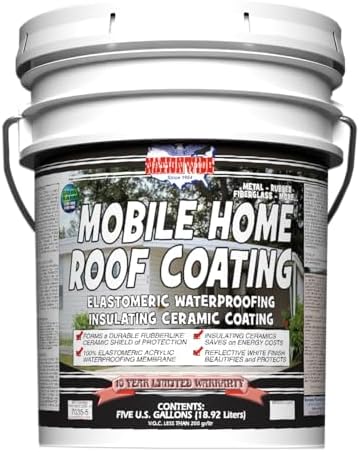
This elastomeric ceramic coating is specifically presented for mobile home roofs, which makes it the most direct match in this group. Its bright white finish is designed to reflect sunlight, and the product description says the ceramic pigments help dissipate absorbed heat. It is water-based, with soap-and-water cleanup.
The coating can be applied by brush, roller, or airless sprayer to a clean, dry, sound roof surface. The supplied instructions call for two coats and give an application range of 100 to 150 square feet per gallon. Treat that as a planning estimate, not a guarantee: roof texture, repairs, and application technique can affect how much you need. The stated application temperature is above 45°F.
The description also lists wind-driven rain and windlift protection, a Class A fire rating per NFPA 101, and a 10-year term. Those are meaningful claims, but check the product label and warranty terms for conditions, preparation requirements, and what is actually covered. This coating is a strong starting point for a mobile home owner who wants a product described for that roof type, though it should not be used to cover active leaks or unsound areas.
Pros:
- Formulated and marketed specifically for mobile home roofs
- Bright white finish with ceramic and reflective features
- Water-based formula cleans up with soap and water
- Can be applied with a brush, roller, or airless sprayer
Cons:
- Requires two coats, which can make a large roof project labor-intensive
- Coverage depends on roof condition and application, so the stated range may not match every project
Verdict: Choose this one first if you want a coating explicitly designed for mobile home roofs and its label confirms compatibility with your roof surface.
2. Rust-Oleum 710 Elastomeric Roof Coating: Reflective Multi-Surface Choice

Rust-Oleum 710 is a white elastomeric coating described for metal, concrete, modified bitumen, built-up, and weathered single-ply roofing systems. The listed cool-roof technology has 80% reflectivity, and the product description states that it forms a waterproof seal within six hours. It also lists a 10-year warranty and resistance to cracking down to -10°F.
That range of named roof types may make this worth considering if your mobile home has one of the listed surfaces. However, “metal roof” or “single-ply roof” can cover different materials and conditions. Confirm that the exact roof and any existing coating are compatible before buying, and follow the product label for application and drying conditions.
The product data supplied for this article marks this item as unavailable, so check the listing before building your project plan around it. Compared with the Nationwide Coatings option, Rust-Oleum offers broader named roof-system coverage but is not described as specifically made for mobile homes.
Pros:
- Lists several roofing systems, including metal
- White finish with stated 80% reflectivity
- Description states a waterproof seal forms within six hours
- Includes a stated 10-year warranty
Cons:
- Supplied product data marks it unavailable; verify listing status
- Roof compatibility still needs to be confirmed for your specific surface
Verdict: Consider Rust-Oleum 710 if your roof matches a listed system and the product is available, but verify compatibility and warranty terms first.
3. AMES Maximum-Stretch Roof Coating: Flexible Choice for Smaller Jobs

AMES Maximum-Stretch is a white acrylic, rubberized elastomeric coating and sealant sold in a one-gallon pail. Its description lists 650% elongation, a property intended to help the coating stretch as the roof moves and resist cracking or peeling. The finish is stated to reflect 88% of light.
The product is described for low-slope roof maintenance and lists metal roofing, tar, rolled roofs, and built-up roofing among compatible uses. It can be applied by brush, roller, or sprayer. For a mobile home, that flexibility and smaller container may be useful for a limited area or maintenance work, but one gallon is unlikely to cover a whole roof without checking the label’s coverage guidance and the roof’s size.
AMES is not presented as a mobile-home-specific product, so surface compatibility matters more than the broad use list. Do not assume that every roof membrane, old coating, or repaired patch will accept it. Compared with the five-gallon options here, it is easier to buy for a smaller task but may be less practical for a full-roof project.
Pros:
- One-gallon size suits limited projects and touch-ups
- Flexible formula is described as having 650% elongation
- White finish has stated 88% light reflectivity
- Can be applied by brush, roller, or sprayer
Cons:
- Not specifically described as a mobile home roof coating
- Small container may require multiple pails for a full roof
Verdict: Pick AMES for a smaller job on a compatible low-slope roof, not as an automatic whole-roof solution.
4. Gardner STA-Kool SK-7705: Traditional Reflective Acrylic Coating

Gardner STA-Kool is a white acrylic elastomeric coating sold in a five-gallon pail. The product description calls the finish 85% reflective and says the flexible acrylic latex coating expands and contracts with roof movement to resist cracking and peeling. It is applied with a roller, with the label directions serving as the guide for preparation and application.
The description identifies it as a seven-year elastomeric roof coating. That stated term is shorter than the listed terms for the Nationwide Coatings and Rust-Oleum products, but warranty periods alone do not tell you which product is right for a particular roof. The roof material, existing coating, surface condition, and application requirements all matter.
STA-Kool may suit a mobile home owner who wants a traditional acrylic coating in a larger pail, provided the label confirms it can be used on the roof material in question. It does not have the same mobile-home-specific positioning as the top pick, and the supplied details do not give a coverage rate, so estimate quantity only after checking the product instructions.
Pros:
- Five-gallon pail can suit larger coating projects
- White finish is described as 85% reflective
- Flexible acrylic formula is designed to handle roof movement
- Roller application is straightforward for many DIY projects
Cons:
- Not specifically described as a mobile home roof product
- Supplied product details do not state a coverage rate
Verdict: STA-Kool is a reasonable option if its label matches your roof material and you want a five-gallon acrylic coating with a reflective finish.
5. YOA RV Roof Coating: Small-Container Option Listed for Mobile Homes

YOA’s white elastomeric coating is marketed for RVs, campers, trailers, and mobile homes. Its description says the flexible layer can help seal small cracks and seams and protect against rain, snow, moisture, and pooling water. The coating can be applied with a roller, brush, or sprayer to a clean, dry surface.
The product description does not name specific roof materials, instead advising buyers to check compatibility before use. That makes it important to confirm the coating is suitable for your exact roof type and any existing finish. The one-gallon size may work for maintenance or a smaller area, but check the label for coverage before calculating how much a full roof will need.
Compared with the AMES one-gallon coating, YOA is more directly listed for mobile homes but gives less detail about reflectivity and material compatibility. It may be convenient for a smaller project, but the available product information does not provide a stated warranty or coverage figure.
Pros:
- Product description includes mobile homes among its intended uses
- Flexible coating is described as helping bridge small cracks and seams
- White finish is intended to reflect sunlight
- Can be applied by roller, brush, or sprayer
Cons:
- Specific compatible roof materials are not listed in the supplied details
- One-gallon size may not be enough for a full roof
Verdict: Consider YOA for a small mobile home roof project only after confirming that your roof material is compatible and that the container covers the area you need.
How to Choose a Roof Coating for a Mobile Home
Start with your roof material
Mobile homes can have different roof surfaces, and a coating that works on one material may not bond well to another. Identify whether your roof is metal, a membrane, a built-up surface, or another type. Then check the product label for that exact surface and for any restrictions involving old coatings, sealants, or repairs. When the material is uncertain, ask the coating manufacturer or a qualified roofing professional before applying anything.
Check the roof’s condition before coating
A coating is meant to protect a suitable surface, not hide serious damage. Look for loose panels, rust, open seams, soft spots, standing water, and active leaks. Repair damaged areas and address drainage problems before coating. The Nationwide Coatings product description, for example, calls for application to a clean, dry, sound roof surface. Follow the preparation steps for the product you choose.
Compare flexibility and reflectivity claims
Elastomeric coatings are designed to stretch and move with a roof, which can help them resist cracking as temperatures change. Reflective white finishes may also reduce the amount of sunlight the roof absorbs. Product claims are not directly interchangeable, so compare only the figures and uses stated for each item, and remember that real results depend on the roof, weather, preparation, and application.
Calculate coverage and number of coats
Measure the roof area and check the label’s coverage rate, required coat count, and any instructions for seams or repairs. Do not estimate from the container size alone. The Nationwide Coatings description specifies two coats and gives a range of 100 to 150 square feet per gallon, while the supplied descriptions for some other products do not state coverage. Allow for a rough or absorbent surface and avoid stretching product too thin.
Review application and weather requirements
Look at the allowed application temperature, drying time, and weather window before starting. A roof must be clean and dry where required, and rain or dew can affect the result. Choose an application method that fits your project—brush, roller, or sprayer—and follow the label rather than assuming all coatings apply the same way. Use appropriate fall protection and avoid working on a wet or unstable roof.
Read the warranty and performance conditions
A stated warranty term does not necessarily cover every roof, installation method, or type of damage. Read the full warranty and product instructions to see what preparation is required and what conditions may limit coverage. Also confirm whether the coating is intended for maintenance, small repairs, or a complete roof recoating project.
Frequently Asked Questions
Can I apply roof coating over an active leak?
Do not rely on a general roof coating to fix an active leak. Find and repair the source first, then use a compatible coating as directed for protection or maintenance. Coating over wet or damaged material can leave the underlying problem unresolved.
Is a white roof coating a good choice for a mobile home?
A reflective white finish may help reduce heat absorption, and several products here describe reflective properties. The right choice still depends on roof compatibility, surface condition, and proper application. Do not assume that any white coating is suitable for every mobile home roof.
How many coats do I need?
Follow the instructions for the specific product. The Nationwide Coatings description calls for two coats, but the requirements for other products may differ. Use the label’s coverage rate and coat instructions to estimate how much material to buy.
Can I use an RV roof coating on a mobile home?
Some RV roof products are also listed for mobile homes, including YOA. However, roof materials vary, so confirm compatibility with your specific surface before applying the product. If the label does not clearly cover your roof type, ask the manufacturer.
Does roof coating replace roof repairs?
No. Coating is not a substitute for replacing loose or damaged panels, repairing structural problems, or fixing leaks. Prepare and repair the roof first, then coat only if the surface is sound and the product is appropriate for it.
Can I apply roof coating myself?
Some products can be applied with common tools such as a roller or brush, but the work still requires careful preparation and safe roof access. Follow the label’s application instructions and use suitable fall protection. If the roof is steep, unstable, or badly damaged, consider hiring a roofing professional.
Conclusion
For most mobile home owners, Nationwide Coatings Mobile Home Roof Coating is the strongest first choice in this group because it is specifically described for mobile home roofs and lists application guidance, reflective features, and a two-coat process. Rust-Oleum 710, AMES Maximum-Stretch, Gardner STA-Kool, and YOA may suit particular roofs or smaller projects, but compatibility should guide the decision more than a product’s broad claims. Confirm your roof material, repair existing problems, and follow the selected coating’s label before starting.
