
Choosing the best roof coating for roll roofing starts with identifying what your roof is made of. Some roll roofing is modified bitumen, while other products use different materials—and a coating that bonds to one type may not suit another. Of the options below, Countryman’s silicone coating is the closest match for modified bitumen, but its product details do not confirm compatibility with every roll-roofing product. Check your roof and coating labels before buying, and use a small test area if compatibility is unclear.
The other picks include an RV roof coating, a peel-and-stick repair membrane, and reinforcement fabrics used with compatible coatings. These can help with specific repair needs, but they are not interchangeable with a coating for roll roofing.
Table of Contents
Quick Comparison
| Product | Type | Best suited for | Key consideration |
|---|---|---|---|
| Countryman 100% Silicone Roof Coating | Liquid silicone coating | Compatible flat roofs, including modified bitumen | Does not confirm compatibility with every kind of roll roofing |
| Liquid Rubber RV Roof Sealant | Liquid elastomeric RV coating | RV roofs made from listed materials | Asphalt roll roofing is not among the listed surfaces |
| Dgavxa Reinforced EPDM Roofing Membrane | Self-adhesive rubber membrane | Targeted waterproofing and patch repairs | A membrane roll, not a liquid roof coating |
| Maasechs Contouring Roof Reinforcement Fabric | Polyester reinforcement fabric | Reinforcing seams, cracks, and roof details with compatible coating | Must be embedded in wet coating; it is not self-adhesive |
| Ames Contouring Roof Fabric | Polyester reinforcement fabric | Strengthening compatible low-slope roof coating systems | Availability may vary; it is reinforcement, not coating |
Our Picks: Best Roof Coating For Roll Roofing reviews
1. Countryman 100% Silicone Roof Coating: Best Match for Modified Bitumen

Countryman’s 100% silicone coating is the most relevant option here for a roll roof made from modified bitumen. Its product details list modified bitumen among the roof types it can bond to without primer in most applications. That is a useful starting point, but it does not mean every roll roofing material or existing roof surface is a match. Confirm the exact roof type and follow the product directions before coating.
The high-solids formula is designed to leave a thicker silicone layer after curing, and the maker describes it as a single-coat product when applied at the recommended coverage rate. Silicone is also described as resistant to ponding water and UV exposure. Those features may suit a compatible low-slope roof, but the listing does not provide a coverage figure here, so calculate your project needs from the current product instructions rather than guessing.
Compared with the other picks, this is the only liquid coating whose listed compatibility specifically includes modified bitumen. The Liquid Rubber product focuses on RV roof materials, while the fabric products need a separate compatible coating. The key limitation is that “modified bitumen” does not automatically cover every roof sold as roll roofing.
Pros:
- Lists modified bitumen among compatible surfaces.
- 100% silicone formula is described as resisting ponding water and UV exposure.
- Designed for a single-coat application at the recommended coverage rate.
- Primer is not required for most listed applications, according to the product details.
Cons:
- Compatibility with every type of roll roofing is not confirmed.
- The supplied product details do not state a coverage rate.
Verdict: Choose Countryman first if your roll roof is confirmed to be modified bitumen and the coating label supports your exact surface; otherwise, verify compatibility before applying it.
2. Liquid Rubber RV Roof Sealant: Best for Compatible RV Roofs

This water-based elastomeric coating is made for camper and trailer roof work. Its listed compatible surfaces include EPDM, TPO, fiberglass, and aluminum. The flexible membrane is intended to help seal out water while moving with the roof, and the white coating is described as solar reflective.
Application is with a brush, roller, or sprayer, within the stated temperature range of 50°F to 90°F. The product calls for one gallon per 50 square feet to reach its recommended final thickness. It also describes a three-step system using cleaner, primer for EPDM and TPO, and the roof coating. Seams, vents, skylights, and other transitions may need separate seam tape or lap sealant as part of a complete system.
This is a better fit for the listed RV roof materials than for a typical asphalt roll roof. Asphalt or modified bitumen is not included in its stated compatibility, so do not assume it will bond correctly to your house roof. Compared with Countryman, it gives a clearer RV-focused application plan and coverage guidance, but it is less directly suited to roll roofing.
Pros:
- Listed for EPDM, TPO, fiberglass, and aluminum RV roofs.
- Flexible, water-based coating with solar-reflective properties.
- Can be applied with a brush, roller, or sprayer.
- States a coverage rate of one gallon per 50 square feet at the recommended thickness.
Cons:
- Does not list asphalt or modified bitumen as compatible surfaces.
- EPDM and TPO applications call for a compatible primer in the described system.
Verdict: Pick this for an RV roof made from one of its listed materials, not as a default coating for asphalt roll roofing.
3. Dgavxa Reinforced EPDM Membrane: Best for a Targeted Patch

This product is a self-adhesive, four-layer EPDM membrane rather than a liquid coating. It combines an EPDM top layer, reinforcing glass fabric, modified butyl adhesive, and a protective film. The stated roll size covers about 104 square feet, and the material can be trimmed with scissors or a utility knife.
A roll membrane can make sense when you need a physical patch or waterproofing layer rather than a coating over the whole roof. The product details describe use on several roof types, including flat roofs and RV roofs, but they do not specifically confirm compatibility with every asphalt roll roofing surface. Adhesion to the existing roof and surrounding materials is the deciding factor, so check the product directions before using it as a patch.
Compared with the liquid coatings in this guide, the membrane provides a thicker, defined repair layer but will not create a continuous painted coating over the roof. It may be useful for a localized repair, while larger areas or an aging roof may call for a roof-specific repair system instead.
Pros:
- Self-adhesive construction does not require separate adhesive according to the listing.
- Reinforced, four-layer design is intended to resist punctures and tears.
- Can be cut to fit a repair area.
- Provides a defined waterproof membrane rather than a thin coating layer.
Cons:
- It is a membrane patch, not a liquid roof coating.
- Compatibility with the exact composition of a roll roof should be confirmed.
Verdict: Consider this for a localized repair when the membrane is confirmed to adhere to your roof; it is not a substitute for a compatible whole-roof coating.
4. Maasechs Contouring Roof Fabric: Best for Reinforcing Seams and Details

Maasechs is a polyester reinforcement fabric designed to be embedded in wet roof coating or a compatible sealer. It is not a coating on its own and is not self-adhesive. The fabric can be cut to fit seams, cracks, corners, flashing, vents, skylights, and other detailed areas that need reinforcement.
The roll measures 40 inches by 81 feet, with stated coverage of about 270 square feet before trimming. Its flexible material is intended to follow curved or angled surfaces, which can help when reinforcing irregular roof details. For roll roofing, the important question is whether the coating used to embed and cover the fabric is approved for that roof material. The fabric alone does not solve a compatibility problem between a coating and the roof.
Compared with the Ames fabric below, Maasechs includes similar dimensions and application guidance, while the supplied details specifically call out seams, cracks, and flashing. It can be a useful companion product when a compatible coating system requires reinforcement, but it is not the right stand-alone purchase if you simply need a roof coating.
Pros:
- Designed for reinforcing seams, cracks, flashing, and other roof details.
- Can be cut to fit a range of repair shapes and sizes.
- Flexible fabric can follow curved, angled, and uneven surfaces.
- Large roll can serve both small patches and broader reinforcement work.
Cons:
- Must be used with a compatible wet coating or sealer.
- It is neither self-adhesive nor a roof coating by itself.
Verdict: Choose this as reinforcement for a compatible roof-coating repair system, not as a stand-alone solution for roll roofing.
5. Ames Contouring Roof Fabric: Best for Reinforcing a Coating System
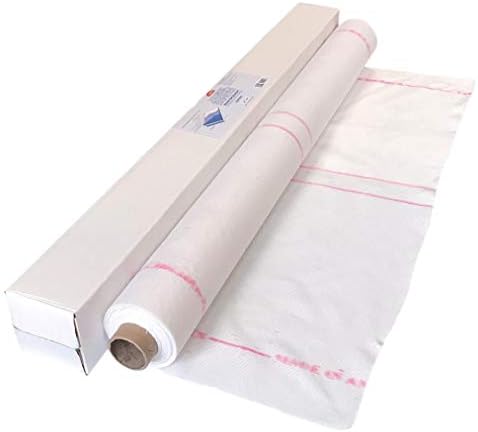
Ames Contouring Roof Fabric is a 100% polyester reinforcement material for use with compatible acrylic or elastomeric roof coatings. It is intended to add strength to areas that may be exposed to movement, punctures, or tearing. The listing describes use over tar, plywood, metal, and concrete, as well as reinforcement for low-slope coating systems.
The fabric can be cut to different widths for a repair or broader application. The product details describe placing it across the roof and allowing it to dry for 24 to 48 hours. That makes it a supporting part of a coating system, not a ready-made waterproof surface. Confirm that your chosen coating and roof material work together before embedding the fabric.
Compared with the Maasechs fabric, Ames also offers broad reinforcement use, including larger areas and low spots. The product details do not state that it is self-adhesive or that it can replace a coating. Availability may vary, so check the listing before planning a project around it.
Pros:
- 100% polyester fabric is designed to reinforce compatible coating systems.
- Can be cut to different widths for specialized repairs.
- Listed for use over tar, plywood, metal, and concrete.
- Can support larger-area reinforcement as well as spot repairs.
Cons:
- Requires a compatible coating or sealant to form part of a roof repair.
- Does not provide waterproofing as a stand-alone product.
Verdict: Consider Ames fabric when your repair plan calls for reinforcement beneath a compatible coating, and confirm both surface compatibility and product availability first.
How to Choose a Roof Coating for Roll Roofing
Identify the roofing material
“Roll roofing” describes a roof covering supplied in rolls, but the material itself can vary. Look at the product paperwork, installation records, or roof label to find out whether yours is modified bitumen, asphalt-based, or another material. If you cannot identify it, ask the roof or coating manufacturer before applying anything. The product name alone is not enough to confirm compatibility.
Check the coating’s stated compatibility
Match the exact roof surface to the coating label. Countryman lists modified bitumen among its compatible surfaces, while Liquid Rubber lists EPDM, TPO, fiberglass, and aluminum. Those claims are not interchangeable. If the label does not name your roof type, contact the manufacturer rather than assuming a coating will bond.
Choose between a coating and a patch
A liquid coating is intended to cover a prepared roof surface, while a self-adhesive membrane is a separate waterproof layer for a defined area. Reinforcement fabric is different again: it is embedded in compatible wet coating to strengthen a repair. Decide whether you need a broad coating, a localized patch, or reinforcement before choosing a product.
Consider water exposure and roof slope
Roof shape and drainage affect which product features matter. Countryman describes its silicone coating as resistant to ponding water, but that does not remove the need to check drainage or confirm suitability for your roof. Look for a product whose instructions match the roof’s slope and expected water exposure.
Plan for surface preparation and application conditions
Follow the selected product’s instructions for cleaning, drying, primer, temperature, and application tools. Liquid Rubber, for example, specifies application between 50°F and 90°F and describes a cleaner-and-primer system for certain RV roof materials. These directions are specific to that product and should not be applied to other coatings by default.
Measure the area and calculate materials
Measure the roof area you plan to treat and compare it with the product’s stated coverage at the required thickness. Liquid Rubber lists one gallon per 50 square feet for its recommended final thickness. Coverage varies by product and application, so use the current label for the coating you select, including any added material needed for seams or repairs.
Pay attention to seams and roof details
Edges, vents, skylights, joints, and cracks may need a compatible seam product or reinforcement fabric. Liquid Rubber describes using lap sealant and seam tape at joints and transitions, while the Maasechs and Ames products are fabrics intended to be embedded in compatible coatings. Follow one coherent system rather than combining materials without checking their compatibility.
Frequently Asked Questions
What is the best coating for roll roofing?
Of these options, Countryman is the closest match when the roof is confirmed to be modified bitumen, since its product details list that material as compatible. It does not confirm compatibility with every kind of roll roofing, so check the roof and coating instructions before applying it.
Can I use an RV roof coating on asphalt roll roofing?
Do not assume so. Liquid Rubber lists EPDM, TPO, fiberglass, and aluminum, but not asphalt or modified bitumen. Use it only if the manufacturer confirms that your exact roof surface is suitable.
Is roof reinforcement fabric the same as roof coating?
No. Reinforcement fabric is embedded in a compatible wet coating or sealer to strengthen a repair. The Ames and Maasechs fabrics are not stand-alone waterproof coatings.
Can a self-adhesive EPDM membrane repair roll roofing?
It may work for a targeted repair only if it adheres to the specific roof surface. The Dgavxa listing describes several roof applications but does not confirm compatibility with every roll roofing material. Check its instructions and test compatibility before relying on it.
Does silicone roof coating work with ponding water?
Countryman describes its 100% silicone coating as resistant to ponding water. That claim applies to the product as directed; it does not mean you should ignore drainage problems or assume the coating suits every roof surface.
Do I need primer before applying a roof coating?
It depends on the coating and roof material. Countryman says primer is not required for most of its listed applications, while Liquid Rubber describes primer as part of its system for EPDM and TPO. Follow the instructions for your exact product and surface.
Final Recommendation
For a roll roof confirmed to be modified bitumen, Countryman 100% Silicone Roof Coating is the strongest match among these picks because its listed compatibility includes modified bitumen and it is designed for flat roofs. Confirm that the product instructions cover your specific roof before applying it. For RV roofs made from EPDM, TPO, fiberglass, or aluminum, Liquid Rubber is the more relevant coating choice. The membrane and fabric options serve different roles: localized patching and reinforcement rather than general roof coating.
