
Pressure-treated wood is built for outdoor use, but rain and sun can still affect its surface over time. The best waterproofing depends on your project: a clear sealer helps keep the wood’s natural look, while a tinted or solid stain adds color as it helps protect against water. Before you apply anything, check that the wood is ready and that the product label allows use on pressure-treated lumber.
Table of Contents
Quick Comparison
| Product | Best For | Finish and Notable Details |
|---|---|---|
| Thompson’s WaterSeal Clear Wood Sealer | Keeping wood’s natural appearance | Clear finish; soap-and-water cleanup |
| Shabebe Garden Box Sealer | Raised beds and garden projects | Water-based formula; listed as suitable for pressure-treated wood |
| Thompson’s WaterSeal Transparent Waterproofing Wood Stain | Adding a transparent cedar tone | Natural Cedar color; fade-resistant finish |
| Thompson’s WaterSeal Solid Color Waterproofing Wood Stain | Adding a strong, opaque color | Sedona Red solid finish; fade-resistant finish |
| Olympic WaterGuard Clear Waterproofing Wood Sealer | Small outdoor sealing projects | Clear, water-based formula; 11-ounce container |
Our Picks: Best Waterproofing For Pressure Treated Wood reviews
1. Thompson’s WaterSeal Clear Wood Sealer: Best for a Natural Look

This clear sealer is a straightforward choice when you want to help protect outdoor wood from water without adding a stain color. It is sold in a one-gallon container and is also described for use on brick, masonry, and concrete, which may be handy if your project includes more than lumber.
The clear finish is intended to dry without adding a colored stain. That makes it a better fit for someone who wants the wood’s appearance to remain the focus than for someone looking to change its color. The listed soap-and-water cleanup is a practical convenience, but you should still follow the package directions for surface preparation, application, and drying.
The supplied product details do not specifically identify pressure-treated wood as an approved surface. Check the label before applying it to treated lumber, and make sure the wood is sufficiently dry for the product. Compared with the tinted Thompson’s options below, this sealer keeps the finish simpler; compared with Shabebe, it is not specifically described as plant-safe.
Pros:
- Clear finish for projects where you want to avoid adding stain color
- Helps prevent water damage
- Soap-and-water cleanup
- Listed for wood as well as masonry surfaces
Cons:
- Product details do not specifically confirm pressure-treated wood compatibility
- Does not add the color provided by a wood stain
Verdict: Choose this clear sealer if preserving a natural-looking finish matters most, but confirm the label permits use on your treated wood before buying.
2. Shabebe Garden Box Sealer: Best for Raised Beds and Planters

Shabebe’s water-based sealer is aimed at garden structures such as raised beds, planter boxes, and wooden enclosures. Its product description specifically lists pressure-treated wood among the materials it can be used on, making it the most directly targeted option in this group for treated lumber near a garden.
The listing describes the formula as plant-safe and free of synthetic solvents, waxes, and strong odors. Those claims may matter for projects near plants or pets, but check the product label and follow its instructions for your particular use. The product is applied to clean, dry wood; the supplied directions call for two coats and state that each coat takes about two hours to dry before the next. Coverage depends on how porous the wood is, so plan accordingly.
This is a focused option rather than a general-purpose colored stain. It is not recommended for laminated or coated wood, and the surface preparation requirements are worth taking seriously: the listing calls for wood below 15% moisture content, clean and free of dust, grease, and old coatings. For a deck or fence where you want a distinct color, one of the Thompson’s stains may be a better match.
Pros:
- Specifically lists pressure-treated wood as suitable
- Designed for raised beds, planters, and other garden wood
- Water-based formula described as plant-safe
- Application and between-coat drying guidance are provided
Cons:
- Not recommended for laminated or coated wood
- Requires clean, dry wood and two coats according to the listing
Verdict: For a raised bed or planter made from pressure-treated lumber, this is the most purpose-matched pick, provided your project fits its surface-preparation and use directions.
3. Thompson’s Transparent Waterproofing Wood Stain: Best for a Cedar-Toned Finish
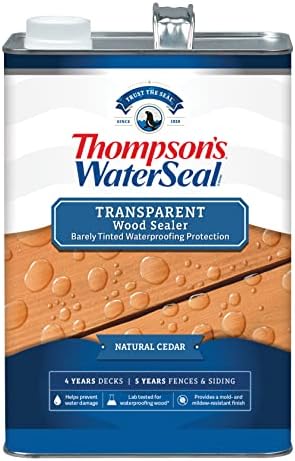
This one-gallon stain and sealer combines water protection with a Natural Cedar color. Its transparent finish adds a noticeable tint while allowing the wood’s texture to show. The listing says it hides the grain, so do not expect the untreated grain pattern to remain fully visible.
The product details describe fade-resistant color and resistance to UV damage. They also state that it can be applied to damp or dry wood, though the surface should still be cleaned thoroughly and the label’s preparation instructions should take priority. The listing says the stain exceeds ASTM D-4446 for waterproofing wood.
This is a useful middle ground between a clear sealer and a solid-color stain: it adds color without fully covering the wood’s texture. The supplied details do not specifically name pressure-treated lumber, so verify compatibility on the container before use. If your goal is to keep the wood as close to its current color as possible, the clear options are a better fit.
Pros:
- Adds a Natural Cedar tone while leaving wood texture visible
- Combines stain color with waterproofing protection
- Described as fade-resistant and resistant to UV damage
- Listing states it exceeds ASTM D-4446 for wood waterproofing
Cons:
- Changes the wood’s color rather than leaving it clear
- Pressure-treated wood compatibility is not specifically stated in the supplied details
Verdict: Pick this stain if you want a warm cedar tint with visible wood texture, and confirm the label approves it for your treated lumber.
4. Thompson’s Solid Color Waterproofing Wood Stain: Best for Bold Color

This one-gallon waterproofing stain is the most color-forward option here. Its Sedona Red finish is described as solid: it hides the wood grain while leaving some wood texture visible. It is designed for outdoor wood projects where a strong, uniform color matters more than showing the natural grain.
The product listing says its advanced polymers provide fade-resistant color and that the coating resists UV damage. It also describes the stain as suitable for damp or dry wood after thorough cleaning. As with any coating, follow the container’s instructions on preparation and application, especially when working with treated lumber.
Compared with the transparent Natural Cedar stain, this product gives a more opaque finish. That can be useful when you want a bolder color, but it is not the right choice if you want to see the grain. The supplied details do not specifically confirm use on pressure-treated wood, so check the label before applying it to a deck, fence, or other treated structure.
Pros:
- Adds a bold Sedona Red color
- Solid finish hides the grain while retaining wood texture
- Described as fade-resistant and resistant to UV damage
- Combines stain color with water protection
Cons:
- Hides the wood grain
- Pressure-treated wood compatibility is not specifically stated in the supplied details
Verdict: Choose this stain if you want a strong, opaque color, not if preserving the natural look of the lumber is your priority.
5. Olympic WaterGuard Clear Sealer: Best for Small Clear-Sealing Jobs

Olympic WaterGuard is a clear, ready-to-use sealer for exterior wood and masonry. The listing says it penetrates the surface to repel moisture and help guard against water damage, cracking, and deterioration. It is intended to leave the surface’s natural look unchanged, making it a clear-finish alternative to the colored Thompson’s stains.
The water-based formula is listed for decks, fences, siding, wood furniture, concrete, brick, stucco, steps, sidewalks, and patios. The product details state that it cleans up with soap and water and dries in 12 to 24 hours. At 11 ounces, the container is smaller than the one-gallon products in this guide, so it is better suited to a limited job than a large deck or fence.
UV protection is also listed, while the description notes that wood can weather naturally if desired. Pressure-treated lumber is not specifically mentioned in the supplied details, so check the package for compatibility and application guidance before using it. For larger projects, consider whether the container size meets your coverage needs.
Pros:
- Clear finish preserves the natural look of the surface
- Water-based formula with soap-and-water cleanup
- Listed for wood and several masonry surfaces
- Product details include UV protection
Cons:
- Small 11-ounce container may not suit a large project
- Pressure-treated wood compatibility is not specifically stated in the supplied details
Verdict: This is a practical clear-sealer option for a small outdoor project, but choose a larger container for extensive coverage and verify treated-wood compatibility first.
How to Choose Waterproofing for Pressure-Treated Wood
Confirm the Product Is Suitable for Treated Lumber
Do not assume that every exterior wood sealer or stain is approved for pressure-treated wood. Check the product label for compatible surfaces and any limits on where it can be used. Of these picks, Shabebe specifically lists pressure-treated wood; the supplied descriptions for the other products do not name it directly.
Make Sure the Wood Is Ready for a Finish
Wood that is too wet may not be ready to accept a sealer or stain. Follow the product’s directions for moisture, cleaning, and drying. Shabebe’s listing, for example, specifies wood with less than 15% moisture content and calls for a clean, dry surface. For other products, use the moisture and preparation instructions on the package rather than guessing.
Choose Clear, Transparent, or Solid Coverage
A clear sealer is the simplest choice if you want to avoid adding stain color. A transparent stain adds a tint while showing the wood’s texture, though it may hide the grain. A solid stain creates a much stronger color and hides the grain. Think about the final appearance you want before choosing a finish.
Match the Formula to the Project Location
For garden beds or planters, look for a product specifically intended for that setting and read its use and safety directions carefully. Shabebe is described for garden projects and as plant-safe. For decks, fences, or outdoor furniture, compare the product’s listed uses and check that the label permits the intended surface and location.
Estimate the Amount You Need
Container size and coverage matter, especially on a large fence or deck. The picks include one-gallon containers, a 32-ounce garden sealer, and an 11-ounce clear sealer. Shabebe’s stated coverage varies with wood porosity, so inspect the product details and plan for the actual surface area and number of coats required.
Plan for Application and Drying Time
Preparation, number of coats, and drying times vary by product. Shabebe’s directions call for two coats with about two hours between coats, while Olympic WaterGuard is listed as drying in 12 to 24 hours. These details are not interchangeable: follow the label for the product you choose, including its weather and recoat instructions.
Frequently Asked Questions
Can I waterproof pressure-treated wood right away?
Check the wood’s condition and the sealer’s label before applying a finish. The product must be suitable for treated lumber, and the wood must meet its preparation and moisture requirements. Do not rely on a fixed wait time unless the product or lumber instructions provide one.
Which pick is specifically listed for pressure-treated wood?
Shabebe Garden Box Sealer specifically lists pressure-treated wood among its suitable materials. The supplied details for the other products do not name treated lumber, so check their labels before use.
Should I use a clear sealer or a stain?
Choose a clear sealer if you want to avoid adding color. Choose a transparent stain for a tinted finish that shows wood texture, or a solid stain if you want a stronger color that hides the grain.
Can I use these products on a raised garden bed?
Shabebe is described for raised beds and planter boxes. For any product used near plants or soil, read the label carefully and follow its directions for the intended location.
How many coats should I apply?
Coat requirements vary. Shabebe’s listing calls for two coats, but you should follow the instructions for whichever product you select rather than applying the same number of coats to every sealer or stain.
Can I apply a sealer when the wood is damp?
Requirements differ by product. The two Thompson’s stain listings say they can be applied to damp or dry wood after the surface is cleaned. Other products have their own preparation requirements, so check the label before application.
Final Recommendation
For raised beds and planters built from pressure-treated lumber, Shabebe Garden Box Sealer is the clearest match because its product details specifically list treated wood and garden structures. For other projects, choose a clear sealer if you want to keep the look simple, or select a Thompson’s stain if you want to add color. In every case, verify label compatibility and prepare the wood as directed before applying the finish.
