
A slide-down garage screen can bring fresh air into your garage while helping keep bugs and other small pests out. The best choice depends on your opening size, how you plan to use the space, and whether you prefer a magnetic center closure or a screen that slides fully to one side. Below, we compare five track-style options, including a privacy-focused screen and models sized for a single-car garage.
Table of Contents
Quick Comparison
| Product | Listed fit | Screen and closure | Standout feature |
|---|---|---|---|
| Fillis Privacy Garage Door Screen | 16 × 7 ft, two-car | PET mesh, magnetic center | Blackout center section for added privacy |
| PICK FOR LIFE Sliding Garage Screen | Size not specified in the supplied details | Screen with weighted bottom; no magnets | Side-to-side opening on an aluminum track |
| Fillis Fiberglass Screen with Track | 16 × 7 ft, two-car | Fiberglass mesh, magnetic center | Sectional track and washable mesh |
| FEGO Sliding Screen | Up to 9 × 7 ft, one-car | Fiberglass mesh, magnetic center | Retractable design with storage belt |
| Beeveer Sliding Garage Screen | Listing has conflicting size details | Fiberglass mesh, magnetic center | Track-mounted design for side-to-side access |
Our Picks: Best Slide Down Garage Screen Door reviews
1. Fillis Privacy Screen for a Two-Car Garage

This Fillis screen is made for a 16-by-7-foot opening and stands out for its combination of privacy and ventilation. A blackout fabric panel runs through the center, while mesh sections at the top and bottom allow light and air to pass through. That layout may suit a garage gym, workshop, or lounge where a fully see-through screen would feel too exposed.
The screen uses PET mesh and a top sliding track. Its center seam has 26 pairs of magnets intended to close behind you, and gravity sticks along the bottom help keep the screen hanging straight. The package details also list a widened hook-and-loop strip and push pins for added reinforcement on wooden frames.
Its main trade-off is the privacy panel: it blocks views through the middle but also reduces the open, see-through feel of an all-mesh screen. The supplied fit is for a two-car opening, so measure your actual frame rather than relying only on the garage door’s nominal size. The stated screen dimensions are 499 by 218 cm.
Pros:
- Blackout center panel adds privacy while top and bottom mesh allow airflow.
- Sliding track opens the screen to one side.
- PET mesh is described as scratch-resistant and suited to everyday wear.
- Magnetic center closure and weighted bottom help keep the opening covered.
Cons:
- The privacy panel limits visibility through the middle of the screen.
- Designed for a specific two-car opening, so careful measuring is important.
Verdict: Choose this Fillis model if privacy matters as much as ventilation and your opening matches its listed two-car size.
2. PICK FOR LIFE Screen with a Nonmagnetic Closure
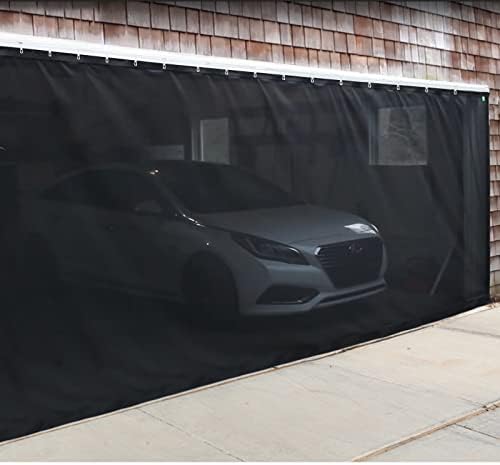
The PICK FOR LIFE screen uses an overhead aluminum track so you can slide the curtain to the side instead of rolling it up. That can be helpful when you want to clear the full opening for a vehicle, tools, or bulky items. Unlike the other magnetic options here, this model has no magnets in the screen.
Instead, its design includes 16 gravity sticks along the bottom sides to help the screen hang down. The product details describe an oxidized aluminum track and use in spaces such as garages, workshops, patios, and home gyms. With no listed opening dimensions in the supplied details, confirm the exact size and included parts with the seller before ordering.
This is the most distinct option for shoppers who do not want a magnetic center seam. However, the lack of magnets means you should not expect the same automatic center closure described for the magnetic models. Its size is also less clear than the other picks, making fit verification especially important.
Pros:
- Slides horizontally on an overhead aluminum track.
- Uses bottom weights rather than a magnetic center closure.
- Designed for ventilation while helping block insects and animals.
- Listed for several spaces beyond garages, including workshops and patios.
Cons:
- The supplied product details do not specify a screen size.
- No magnets are included for an automatic center seam closure.
Verdict: Consider this model if you prefer a nonmagnetic, side-sliding screen, but verify its dimensions and closure behavior before buying.
3. Fillis Fiberglass Screen with a Sectional Track

This Fillis model is a track-mounted fiberglass screen for a listed 16-by-7-foot, two-car opening. The sectional track is designed to make a long rail easier to handle during installation, and the listing describes aluminum alloy connectors that join the sections. Once installed, the screen moves horizontally to make room for vehicle access or carrying large items through the garage.
A magnetic strip runs along the center seam, so the panels are intended to meet again after someone passes through. The mesh is described as detachable and washable, which is a practical feature for a garage screen exposed to dust and everyday use. The listing also calls for a flat, solid door frame, so check your mounting surface before choosing this kit.
Compared with the privacy-focused Fillis screen, this model keeps the opening more transparent and emphasizes airflow rather than blocking views. The sectional rail may be convenient to handle, but the connectors and mounting points still need to be aligned carefully for smooth sliding.
Pros:
- Sectional track is designed for a two-car opening.
- Magnetic center seam is intended to close behind you.
- Detachable fiberglass mesh can be washed.
- Horizontal movement clears the opening without rolling the screen up.
Cons:
- Requires a flat, solid frame for installation.
- Does not include the privacy-blocking center fabric of the other Fillis option.
Verdict: This is a strong fit for a two-car garage if you want an all-mesh screen, a magnetic seam, and a track designed to assemble in sections.
4. FEGO Retractable Screen for a One-Car Garage

FEGO’s screen is sized for a one-car garage opening of up to 9 by 7 feet. Its top-mounted track lets the screen slide from side to side, while a magnetic center seam is intended to close automatically. The listing gives the screen dimensions as 9.3 feet wide by 7.15 feet high, which provides some extra material beyond the stated opening size.
The mesh is fiberglass, described as tear- and scratch-resistant, with airflow and visibility as key benefits. The screen is also detachable and can be folded and held with the included side storage belt when you want it out of the way. Hook-and-loop strips and push pins are listed for installation and added reinforcement.
Its one-car sizing makes it a more direct choice than the two-car models for a narrower opening. Still, measure the frame and confirm the extra width and height will suit your mounting setup. The product details suggest easy installation, but actual setup will depend on having a suitable surface for the track and fastening strips.
Pros:
- Designed for a one-car opening up to 9 by 7 feet.
- Fiberglass mesh pairs airflow with a magnetic center closure.
- Retractable screen can be folded and secured with a storage belt.
- Push pins are included for added reinforcement.
Cons:
- Not sized for a standard 16-foot two-car opening.
- Installation depends on a suitable frame and secure mounting points.
Verdict: Pick the FEGO if you have a one-car garage and want a magnetic, side-sliding screen that can be folded away when not needed.
5. Beeveer Sliding Screen with Magnetic Closure

Beeveer’s screen combines a top-mounted sliding track, fiberglass mesh, and a magnetic center seam. The design is intended to let you move the screen to one side for access, then bring the panels together again to cover the opening. Its mesh is described as scratch- and tear-resistant, with airflow and visibility for everyday garage use.
There is a sizing issue to resolve before ordering. The product title identifies it as a 9-by-7-foot screen for a one-car garage, but the description gives a width of 16.3 feet and says it fits openings up to 16 by 7 feet. Those dimensions point to very different opening sizes. Check the current listing and confirm the included screen dimensions with the seller before buying.
The installation description says to mount the track, slide the pulleys into place, and secure the fixed ends of the mesh. This may appeal to someone who wants a straightforward track setup, but the conflicting size information makes it less certain than the clearly identified one-car and two-car options here.
Pros:
- Fiberglass mesh is designed for airflow and visibility.
- Track-mounted screen slides horizontally for access.
- Magnetic center closure is intended to seal the seam after passage.
- Listed for use in garages, patios, and other openings.
Cons:
- The title and description give conflicting width and garage-size details.
- Confirm the actual opening fit before ordering.
Verdict: The feature set is appealing, but only consider this Beeveer screen after confirming whether the listing is for a one-car or two-car opening.
How to Choose a Slide Down Garage Screen Door
Measure the opening and mounting area
Measure the width and height of the opening where the screen will hang, then check the product’s stated screen dimensions and recommended opening size. Do not assume a screen will fit just because its title includes your garage-door size. Also consider the space above the opening for the track and the surface where you will attach the mounting strips or hardware. If a listing gives conflicting measurements, confirm the exact dimensions before ordering.
Choose the right opening style
A horizontal track lets you slide the screen to one side, which can be useful when you need a clear path for a vehicle or bulky items. A magnetic center seam is designed to close after someone passes through, while a nonmagnetic design relies on the screen’s hanging weight and positioning. Think about how often you will enter and exit through the screen and whether hands-free closure matters to you.
Decide how much privacy you need
Most mesh screens prioritize airflow and visibility. A screen with a fabric privacy panel can block some views into the garage, but it also reduces visibility through that section. If you use the garage as a workshop, gym, or lounge, consider whether privacy is more important than a fully open mesh design.
Compare mesh material and care
The products here use PET or fiberglass mesh. Their listings describe these materials as suited to regular use, but material alone does not guarantee how a screen will hold up in your particular space. Consider exposure to pets, dust, and frequent handling. A detachable, washable screen can be useful when you expect to clean it regularly.
Check the track and included installation parts
Look for clear details about the track, connectors, rollers, fasteners, hook-and-loop strips, and any reinforcement pins. A sectional track may be easier to handle than one long rail, while a solid mounting surface can help support the setup. Read the installation requirements and check your frame before purchasing; some kits call for a flat, solid surface.
Consider wind, pets, and daily use
Bottom weights can help a screen hang down, while magnetic seams can help bring two panels together after someone walks through. Neither feature should be treated as a guarantee that the screen will remain sealed in every condition. If pets will use the doorway or the opening is exposed to wind, compare the closure and reinforcement details closely and be prepared to adjust how the screen is secured.
Frequently Asked Questions
What is a slide-down garage screen door?
It is a mesh or fabric screen that covers a garage opening while allowing air to pass through. In the products featured here, a top track lets the screen slide sideways to open or close, rather than rolling it up.
Can I drive through a garage screen?
The track systems are designed to let you move the screen to one side for vehicle access. Do not drive through the mesh itself. Slide it clear of the opening before moving a vehicle in or out.
Do all of these screens close with magnets?
No. Four products in this guide describe a magnetic center closure. The PICK FOR LIFE screen is listed without magnets and instead uses gravity sticks along the bottom sides.
Will a two-car screen fit a one-car garage?
It may be wider than you need, but do not assume it can be trimmed or adjusted. Check the product’s actual dimensions and installation instructions before choosing a screen that does not match your opening.
Which screen is best if I want more privacy?
The Fillis Privacy Garage Door Screen has a blackout fabric panel through the center, with mesh at the top and bottom. The other options described here use mesh designs that allow more visibility through the screen.
Can these screens keep every insect or animal out?
A screen can help block insects and small animals when it fits well and closes as intended, but the supplied details do not promise a complete seal in every situation. Fit, installation, and the way the screen is used can affect how well it covers the opening.
What should I do if the product listing has conflicting dimensions?
Confirm the screen’s actual width and height, as well as its recommended opening size, before ordering. This is especially important for the Beeveer option, whose supplied title and description list different widths and garage sizes.
Final Recommendation
For most two-car garages, the Fillis Fiberglass Screen with a Sectional Track is the most balanced choice if you want a magnetic center seam and washable mesh. Choose the Fillis Privacy Screen instead if blocking views is a priority. For a one-car opening, the FEGO is the clearest size match. Whichever model you choose, measure the opening and mounting surface carefully before placing your order.
