
Closed-cell spray foam can help seal air leaks while adding insulation, but the right choice depends on the size of your project, the coverage you need, and how comfortable you are handling the application. These five options range from individual cans to larger two-part kits. Compare their stated yield, application format, and safety requirements before choosing; actual coverage can vary with technique and job conditions.
Table of Contents
Quick Comparison
| Product | Format and stated yield | Notable features | Best fit |
|---|---|---|---|
| Kraken Bond Fastcoat Fire Rated Closed-Cell Foam | 12-can kit; listed for 240 sq. ft. | Class-A fire rating; stated R-value of 5.66 per inch | DIY sealing and insulation jobs |
| STANLEY F 990P Supercoat Closed-Cell Foam | Kit listed for up to 240 sq. ft. | Class-A fire rating; stated R-value of 11.32 at 2 inches | Projects needing a broad application |
| Froth-Pak 630 Two-Part Closed-Cell Kit | Up to 630 board feet | Hose-and-gun system; PPE required | Larger air-sealing and insulation jobs |
| Vega Bond V600 Closed-Cell Kit | Up to 600 sq. ft. at 1-inch thickness | Stated R-value of 7 per inch | Wide-area coverage when conditions are controlled |
| Ixirpro 18-Pack Closed-Cell Foam Kit | 18 cans; up to 20 board feet per can stated | Includes a foam gun, cleaner, and protective gear | Small jobs where a multi-can kit is useful |
Our Picks: Best Spray Foam Insulation Closed Cell reviews
1. Kraken Bond Fastcoat: A Fire-Rated Kit for General DIY Sealing

Kraken Bond Fastcoat is a can-based closed-cell polyurethane foam kit intended for insulation and sealing. The product listing describes a 12-can package with coverage of up to 240 square feet. It is positioned for areas such as attics, wall cavities, crawl spaces, corners, and other hard-to-reach spots.
The listing states an R-value of 5.66 per inch and a Class-A fire rating under ASTM E84. It also describes a dual-nozzle setup for vertical and ceiling applications. Those details make it a flexible choice for homeowners tackling more than a few isolated cracks, though the stated coverage should not be treated as a guarantee: surface shape, application thickness, and technique can affect yield.
Temperature preparation matters with this kit. The manufacturer recommends bringing the can to about 68°F, with application listed as effective from 41°F to 86°F. That guidance is useful for planning a job, especially if the cans have been stored in a cold area. As with any spray foam, follow the label and safety instructions, and check local requirements for where foam may be left exposed.
Pros:
- 12-can format for projects beyond a small one-off repair
- Stated R-value of 5.66 per inch
- Class-A fire rating is stated in the product details
- Dual-nozzle system is intended for vertical and ceiling work
Cons:
- Temperature preparation can add time before application
- The listed 240-square-foot yield does not specify a thickness in the product title
Verdict: Choose Kraken Bond if you want a multi-can kit with stated fire-rating and insulation details for a range of DIY sealing tasks.
2. STANLEY F 990P Supercoat: A Kit with Stated Coverage and Fire Rating

STANLEY F 990P Supercoat is a polyurethane closed-cell foam for thermal and sound insulation. Its listing describes coverage of up to 240 square feet and a stated R-value of 11.32 at 2 inches. The foam is also described as suitable for building structures, vehicles, and vessels, so it may appeal to people working across different types of projects.
The product details call out a seamless application intended to reduce gaps and thermal bridges. They also state a Class-A fire rating and compliance with ASTM E84. These claims are useful points to compare, but they do not replace checking the product label, local building rules, or any required protective covering for your specific installation.
The main point to confirm before buying is how the listed coverage relates to your desired thickness and the area you need to insulate. The product title’s coverage and R-value information are not as detailed as some kits’ coverage specifications. For a defined project, check the current package instructions so you can estimate the amount needed without relying on a best-case yield.
Pros:
- Stated coverage of up to 240 square feet
- Stated R-value of 11.32 at 2-inch thickness
- Class-A fire rating is stated in the product information
- Described for use on building and vehicle surfaces
Cons:
- The listing provides limited detail about application equipment
- Confirm the coverage basis and thickness for your project before buying
Verdict: STANLEY is worth considering when its stated 2-inch R-value and fire-rating information match your project, provided you verify the coverage details first.
3. Froth-Pak 630: A Two-Part System for Larger Projects
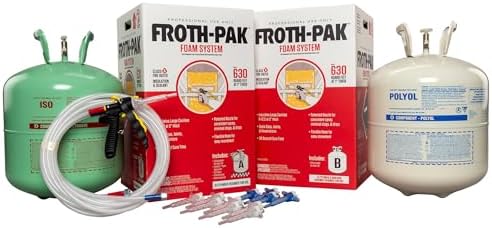
Froth-Pak 630 is a two-part closed-cell polyurethane system supplied with two tanks, a 15-foot hose, a gun dispenser, and spray nozzles. Its stated yield is up to 630 board feet. Board feet measure foam volume, not the same thing as square-foot coverage, so compare that figure with your planned thickness and the package instructions.
The product information gives an R-value of 6.2 at 1 inch and 12.2 at 2 inches. It describes uses around roof and wall junctions, attic and basement penetrations, crawl spaces, and electrical, mechanical, or plumbing gaps. The two-part system and included spray equipment are geared toward a more involved job than a single can, and it may suit someone who has a larger area to seal.
Safety and setup are important considerations here. The listing says personal protective equipment is required and is not included. It also states that the foam cures in about 30 seconds and allows re-entry after one hour with proper ventilation. Follow the supplied instructions and safety requirements closely; this kit is not the best pick if you are looking for a simple, low-preparation spot repair.
Pros:
- Up to 630 board feet of stated yield
- Includes tanks, hose, gun dispenser, and multiple nozzle types
- Stated R-values are provided for 1-inch and 2-inch thicknesses
- Listed for a wide range of building-envelope gaps and penetrations
Cons:
- PPE is required but not included
- Two-part equipment and safety steps may be more than a small repair needs
Verdict: Pick Froth-Pak 630 for a larger, planned sealing job if you can meet its PPE and application requirements.
4. Vega Bond V600: Broad Coverage with a Clear Thickness Reference

Vega Bond V600 is a closed-cell polyurethane kit designed to fill gaps and insulate areas such as rim joists, crawl spaces, roof rafters, and around ducts. Its stated yield is up to 600 square feet at 1-inch thickness, and the listing gives an R-value of 7 per inch. That thickness reference makes its coverage easier to interpret than a yield figure without an application depth.
The foam is described as expanding and hardening into a thermal barrier that helps seal against air and moisture intrusion. It may suit a homeowner covering a wider area, such as exposed foundation sections or roof framing, rather than someone only sealing a few small cracks. Actual coverage can still vary with surface conditions, application technique, and the thickness you use.
This kit calls for careful temperature planning: the product details recommend storing and using it in the 75°F–85°F range for at least 24 hours before application. That narrower preparation window may be inconvenient if you cannot control where the kit is stored. Set aside time to prepare it and follow the label closely before starting.
Pros:
- Up to 600 square feet of stated coverage at 1-inch thickness
- Stated R-value of 7 per inch
- Designed for areas including crawl spaces, roof rafters, and rim joists
- Coverage is tied to a specific thickness in the product details
Cons:
- Requires a long temperature-conditioning period according to the listing
- Actual coverage may differ with application depth and technique
Verdict: Vega Bond V600 is a strong candidate for a broad-area project if you can meet its temperature requirements and want coverage stated at a defined thickness.
5. Ixirpro 18-Pack: A Multi-Can Kit with Tools and Protective Gear

Ixirpro’s kit includes 18 cans of polyurethane foam, a spray gun, gun cleaner, nozzle tips, gloves, safety glasses, and a protective suit. The listing states that each can may cover up to 20 board feet. As with other yield claims, treat that as an estimate: foam thickness, the shape of the gap, and how you spray can affect how far the kit goes.
The instructions call for shaking each can before use and applying from about 25 to 30 centimeters away. The listing says to allow the foam a full day to cure before trimming or shaping it. It also describes the cured foam as firm and trimmable. The included gun and accessories may be useful if you want more control than a basic straw-style nozzle, while the bundled protective items are a practical addition. They do not remove the need to read and follow all product safety instructions.
One important limitation is availability: the supplied product information lists this item as unavailable. If it is still unavailable when you shop, consider another kit rather than planning a project around it. Its listing also does not provide an R-value, so it is harder to compare its thermal performance directly with options that state one.
Pros:
- Includes 18 cans, a spray gun, and gun cleaner
- Includes gloves, safety glasses, and a protective suit
- Provides nozzle options for different application needs
- Application distance and curing guidance are stated
Cons:
- Listed as unavailable in the supplied product information
- No R-value is provided in the product details
Verdict: Consider Ixirpro if it becomes available and you want a multi-can kit with application accessories, but choose another option if you need a stated R-value or dependable availability.
How to Choose Closed-Cell Spray Foam Insulation
Match the kit size to the area and foam thickness
Start by measuring the area you want to insulate, then decide how thick the foam needs to be. Square feet describe surface area, while board feet describe foam volume, so those numbers are not interchangeable. Check the product’s stated yield at its stated thickness and leave room for some variation during application.
Compare the stated R-value carefully
R-value describes resistance to heat flow, and the product details here state values in different ways. Some list a value per inch, while STANLEY gives a figure at 2 inches and Froth-Pak provides values at both 1 inch and 2 inches. Compare values at the same thickness, and follow the product instructions and applicable building requirements for the assembly you are insulating.
Choose the application format you can handle
Can-based kits may be a practical fit for smaller or less complex jobs. A two-part tank system with a hose and gun may suit a larger area, but it involves more equipment and preparation. Consider how much foam you need, whether you are comfortable using the application system, and how much time you can set aside to work safely.
Check temperature and preparation needs
Foam performance and yield can depend on product temperature and application conditions. The kits in this guide have different temperature guidance: for example, Kraken Bond recommends an optimal can temperature near 68°F, while Vega Bond specifies a 75°F–85°F range for at least 24 hours before use. Read the label for the exact product you buy and plan storage and application around those directions.
Plan for protective equipment and ventilation
Read the safety instructions before opening the kit. Froth-Pak’s listing specifically says PPE is required and not included; Ixirpro lists some protective items in its package. Do not assume that included gear is all you need. Follow the manufacturer’s instructions for protective equipment, ventilation, curing, and re-entry.
Check fire and building-code requirements
A stated fire rating is not a substitute for checking how the foam may be used in your location. Building rules can require a protective covering or other measures depending on where foam is installed. Confirm local requirements and the product label before applying foam in walls, attics, or other building areas.
Think about access, cleanup, and curing
Foam can expand into gaps and bond to surfaces, so protect nearby areas and follow the product’s application instructions. Check whether the kit includes a gun, extra nozzles, or cleaner, and note the stated cure time before trimming or allowing re-entry. If the area is difficult to reach or needs a precise finish, consider whether a spray kit is the right tool for the job.
Frequently Asked Questions
What does closed-cell spray foam do?
Closed-cell polyurethane foam expands into gaps and hardens into a dense foam. The products in this guide are described for insulation and air sealing, with some also stating resistance to moisture or water. Follow the specific product instructions and check whether the application suits your surface and location.
Is board-foot coverage the same as square-foot coverage?
No. A board foot measures volume, while a square foot measures surface area. The thickness of the foam affects how much surface area a given volume can cover, so compare yield figures only when their units and thickness assumptions are clear.
Which option is suited to a larger project?
Froth-Pak 630 lists up to 630 board feet, while Vega Bond V600 lists up to 600 square feet at 1-inch thickness. These figures use different units, so they cannot be compared directly without converting them based on application depth. Choose based on your measured area, desired thickness, and comfort with the kit’s application system.
Do these products have the same R-value?
No. The supplied product details list different R-values and thickness references. Kraken Bond states 5.66 per inch, Vega Bond states 7 per inch, and Froth-Pak lists 6.2 at 1 inch and 12.2 at 2 inches. STANLEY states 11.32 at 2 inches, while the Ixirpro details do not list an R-value.
Can I apply spray foam in cold conditions?
It depends on the specific product and its preparation instructions. Kraken Bond lists an application range of 41°F to 86°F and recommends bringing the can to about 68°F. Other products may have different guidance, so check the label and avoid assuming one kit’s temperature range applies to another.
Do I need protective equipment?
Follow the safety directions supplied with the exact product. Froth-Pak’s product information says PPE is required and is not included. Even when a kit lists protective items, check whether they meet the manufacturer’s requirements and follow its ventilation and re-entry instructions.
Should spray foam be left exposed?
Do not assume it can be left exposed in every location. Fire and building rules may require a protective covering or other measures. Check local code requirements and the product label for the area where you plan to apply the foam.
Final Recommendation
For a multi-can DIY option with stated insulation and fire-rating details, Kraken Bond Fastcoat is a balanced place to start. Vega Bond V600 is worth comparing when you want a stated coverage figure tied to a 1-inch thickness, while Froth-Pak 630 is better suited to a larger job if you are prepared to follow its PPE requirements. Before ordering any kit, confirm its yield, temperature limits, safety steps, and local installation requirements for your specific project.
