
The best spray clear coat for wood depends on the surface you’re finishing and the look you want. Water-based sprays are a practical choice when you want a clear finish that won’t add an amber tone, while oil-based polyurethane offers a warmer look. Lacquer can suit projects where quick drying is a priority. The five options below include clear finishes for interior wood and a versatile lacquer marketed for several materials.
| Product | Finish type | Standout feature | Best suited for |
|---|---|---|---|
| Minwax Fast Drying Polyurethane Spray | Oil-based polyurethane | Satin sheen; recoat after 4–6 hours | Interior wood where a warmer finish is welcome |
| Minwax Polycrylic Protective Finish Spray | Water-based protective finish | Crystal-clear finish; recoat after 1 hour | Light woods, painted surfaces, and pastel stains |
| Varathane Water-Based Ultimate Satin Polyurethane Spray | Water-based polyurethane | Crystal-clear finish and water cleanup | Interior wood projects needing a satin sheen |
| Watco Clear Satin Lacquer Finish Spray | Lacquer | Dries in 30 minutes | Furniture, doors, cabinets, and paneling |
| Tetrion Easy Spray Clear Lacquer | Acrylic clear lacquer | Six-pack; listed for multiple surfaces | Projects that involve wood and other materials |
Table of Contents
Our Picks: Best Spray Clear Coat For Wood reviews
Minwax Fast Drying Polyurethane Spray: Oil-Based Protection in Satin
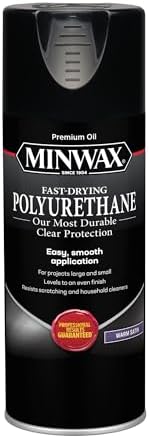
Minwax’s oil-based polyurethane spray is designed to protect interior woodwork, furniture, floors, doors, and cabinets. Its clear satin finish is intended to leave a soft sheen and add warmth to finished or unfinished wood. It’s a useful option when you want a traditional polyurethane look without switching to a water-based coating.
The product information lists a 4–6 hour wait before recoating. That’s an important planning detail: although it is described as fast-drying, it may take longer to recoat than the water-based Minwax option below. For best results, follow the can’s directions for application, drying conditions, and the number of coats needed.
Compared with clear, non-ambering water-based finishes, this is the more fitting pick if you prefer the warmer look associated with an oil-based finish. The trade-off is that it may change the appearance of light-colored wood more than a crystal-clear option. Always test the finish on an inconspicuous spot first.
Pros:
- Oil-based finish for a warm look on wood
- Satin sheen for a subtle, low-gloss appearance
- Designed for a range of interior wood surfaces
- Product information lists recoating after 4–6 hours
Cons:
- Longer listed recoat time than the water-based Minwax spray
- May not be the best fit when you want light wood to stay crystal clear
Verdict: Choose this Minwax spray if you want an oil-based satin finish for an interior wood project and are comfortable allowing more time between coats.
Minwax Polycrylic Spray: A Clear Choice for Light Wood and Paint

This water-based Polycrylic spray is made for interior wood projects, including areas that are hard to reach with a brush. Its crystal-clear finish is listed as non-yellowing and non-ambering, making it a strong match for maple, ash, birch, pastel stains, and painted surfaces where you want the underlying color to remain visible.
The satin sheen gives the surface a subtle finish rather than a high-gloss look. The product information also lists a one-hour recoat time and soap-and-water cleanup. Those features can make it a convenient choice for smaller projects, though you should still follow the label’s instructions and allow the finish to dry as directed.
Against the oil-based Minwax polyurethane, this spray is the more color-conscious option for pale or painted surfaces. Its main limitation is that it is intended for interior projects, so it isn’t the pick in this group for a finish specifically marketed for outdoor use.
Pros:
- Crystal-clear finish listed as non-yellowing and non-ambering
- Suitable for light woods, pastel stains, and painted surfaces
- Product information lists a one-hour recoat time
- Water-based formula allows soap-and-water cleanup
Cons:
- Listed for interior projects rather than outdoor use
- Satin sheen may not suit projects calling for a different sheen
Verdict: Pick this Polycrylic spray when preserving the color of light wood or paint matters more than getting an oil-based look.
Varathane Water-Based Satin Polyurethane: Clear Interior Wood Protection

Varathane’s water-based polyurethane spray is a satin clear coat for interior wood. Its product description highlights a crystal-clear finish that does not yellow, along with protection against scratches and stains. Water cleanup and low odor are also listed, which may be useful when choosing a finish for a home project.
This option shares several practical traits with Minwax Polycrylic: both are water-based sprays with a clear finish and satin sheen. The supplied details for Varathane do not specify a recoat time, so don’t assume it will be ready for another coat as quickly as the one-hour Minwax Polycrylic. Check the can for the appropriate wait time and application steps.
Varathane is a sensible alternative if your priorities are water cleanup, low odor, and a clear satin finish for interior wood. The available product information is less specific about compatible surfaces and timing than some of the other options, so it’s worth checking the label before starting a project with special requirements.
Pros:
- Water-based formula with water cleanup
- Crystal-clear finish described as non-yellowing
- Satin sheen for a restrained finish
- Product description notes low odor and scratch and stain resistance
Cons:
- Recoat timing is not specified in the supplied product details
- Intended for interior wood projects
Verdict: Choose Varathane when you want a water-based satin polyurethane for interior wood and can confirm the application and drying details on the label.
Watco Clear Satin Lacquer: A Fast-Drying Finish for Furniture

Watco’s clear satin lacquer spray is listed for furniture, doors, cabinets, and paneling. It is intended to seal wood with a clear, durable finish, making it a focused option for common interior woodwork rather than a general-purpose coating for many material types.
The standout detail is its stated 30-minute drying time. The product information also says it does not require sanding between coats. Those features may help when you want to move through a finishing project efficiently, but follow the can’s directions for coat timing and any preparation the surface needs.
Unlike the water-based polyurethane options, Watco is a lacquer, so it is a different type of finish. It may suit projects where the listed quick drying and satin look are priorities. The supplied details don’t identify it as a water-based product or specify water cleanup, so don’t choose it on those assumptions.
Pros:
- Listed for furniture, doors, cabinets, and paneling
- Product information states it dries in 30 minutes
- No sanding between coats is listed as required
- Clear satin finish
Cons:
- Does not provide the water-based cleanup details listed for some alternatives
- Product details do not specify compatibility with painted surfaces or outdoor use
Verdict: Watco is a good candidate for furniture and interior woodwork when a lacquer finish and short stated drying time suit your project.
Tetrion Easy Spray Clear Lacquer: A Multi-Surface Six-Pack

Tetrion Easy Spray is an acrylic clear lacquer sold as a six-pack. The product information lists wood, metal, ceramic, and plastic among the compatible surfaces, and describes it for indoor and outdoor projects. That broad scope makes it the most versatile-material choice in this group, but it is less specifically focused on wood protection than the polyurethane sprays.
The listing describes the formula as quick-drying and intended to provide a durable protective coating. It does not specify a sheen, recoat time, or wood-specific application details in the supplied information. Check the can to confirm suitability for your particular wood, underlying finish, and project conditions before applying it.
A pack of six may be practical if you expect to use clear lacquer across multiple projects or materials. If you only need to finish one small wood item, a single-can polyurethane or lacquer option may be a more direct match.
Pros:
- Pack of six cans
- Listed for wood and several other materials
- Product information describes it for indoor and outdoor projects
- Quick-drying formula is listed
Cons:
- Sheen and recoat timing are not specified in the supplied details
- Less wood-specific guidance than the polyurethane options
Verdict: Consider Tetrion if you need several cans of clear lacquer for projects involving different materials; choose a wood-specific finish when wood is your only concern.
How to Choose a Spray Clear Coat for Wood
Match the finish type to the look you want
Oil-based polyurethane, water-based polyurethane, Polycrylic, and lacquer are different finish types, so don’t choose by the word “clear” alone. The Minwax oil-based polyurethane is described as adding warmth, while the water-based Minwax and Varathane products are presented as crystal clear or non-yellowing. If you’re unsure how a finish will look on your wood, test it on a hidden area or a spare piece first.
Consider the wood color and any stain or paint
Light woods, pastel stains, and painted surfaces can make a change in color more noticeable. Minwax Polycrylic specifically lists these surfaces and describes its finish as non-yellowing and non-ambering. For a stained or previously finished surface, check the product label for compatibility and preparation instructions rather than assuming every clear coat works over every coating.
Choose a sheen that fits the project
A satin finish gives a softer sheen than a high-gloss look. Several picks here are satin, which may suit furniture and woodwork when you want a subtle appearance. The Tetrion product details do not specify sheen, so check its packaging if the final level of shine matters to your project.
Plan around drying and recoat times
Drying details differ among these products. The supplied information lists a one-hour recoat time for Minwax Polycrylic, 4–6 hours for Minwax oil-based polyurethane, and 30 minutes to dry for Watco lacquer. Varathane and Tetrion don’t have a specific recoat time listed in the supplied details. Use the can’s directions for the actual wait between coats and before handling the finished item.
Think about cleanup and working conditions
Minwax Polycrylic and Varathane are identified as water-based, and their descriptions note water cleanup. The other product details do not provide the same cleanup information. Aerosol finishes also call for careful handling: read the label, follow its ventilation and safety directions, and protect nearby surfaces from overspray.
Check whether the project is indoors or outdoors
Minwax polyurethane, Minwax Polycrylic, and Varathane are described for interior wood projects. Tetrion is listed for indoor and outdoor projects, while the supplied Watco information focuses on furniture, doors, cabinets, and paneling without specifying outdoor use. For outdoor wood, choose only a finish whose label confirms it is suitable for the conditions your project will face.
Frequently Asked Questions
What is the best spray clear coat for light-colored wood?
Minwax Polycrylic is the clearest match in this group for light wood. Its product information says the finish is crystal clear, non-yellowing, and non-ambering, and names light woods such as maple, ash, and birch.
Does spray polyurethane make wood look yellow?
The effect depends on the product. Minwax’s oil-based polyurethane is described as adding warmth, while the Minwax Polycrylic and Varathane water-based options are described as crystal clear or non-yellowing. Test any clear coat on a hidden area before finishing the full piece.
Which option has the shortest listed drying or recoat time?
Watco lists a 30-minute drying time. Minwax Polycrylic lists a one-hour recoat time, while the oil-based Minwax polyurethane lists 4–6 hours before recoating. These are product-specific details, so follow the label for your conditions and application.
Can I use these sprays on painted wood?
Minwax Polycrylic specifically lists painted surfaces as a suitable use. For the other products, check the can for paint compatibility and any required surface preparation before spraying.
Which clear coat is easiest to clean up?
The supplied product information identifies Minwax Polycrylic and Varathane as water-based and notes water cleanup. The other options do not include the same cleanup details, so consult their labels for handling and cleanup instructions.
Can I use an interior clear coat on outdoor wood?
Don’t assume an interior finish is suitable outdoors. The Minwax polyurethane, Minwax Polycrylic, and Varathane options are described for interior projects. Tetrion is listed for indoor and outdoor projects; check its label for the conditions and surfaces it supports.
Final Recommendation
For most projects where you want a clear satin finish without adding an amber tone, Minwax Polycrylic is the strongest all-around match in this group, especially for light wood, pastel stains, and painted surfaces. Choose Minwax oil-based polyurethane if you prefer a warmer look, Watco if its lacquer finish and stated drying time fit your furniture project, Varathane for a water-based interior satin option, or Tetrion when you need a multi-surface pack. Always confirm compatibility and follow the directions on the can before application.
