
Choosing the best acoustic floor insulation materials starts with identifying the noise you want to reduce. Footsteps and dropped objects create impact noise, while voices and music travel as airborne sound. A floor layer can help, but results depend on the full floor assembly, including the subfloor, underlayment, flooring, and installation. Of these five options, cork is the most directly suited to use as a floor underlayment; the others may help in specific projects but are not all purpose-made floor layers.
Table of Contents
Quick Comparison
| Product | Material and thickness | Best suited for | Key consideration |
|---|---|---|---|
| TroyStudio Soundproof Cork Underlayment Roll | Natural cork, 1/8 inch | Under flooring to soften impact noise | Check flooring compatibility and concrete-subfloor requirements |
| Kaqiluo High Density Acoustic Foam | Rubber-plastic foam, 0.4 inch | Small-scale sound and insulation projects | Not identified as a flooring underlayment |
| Nkiy Quen Felt Insulation Blanket | Felt, 0.2 inch | Flexible, cut-to-size cushioning or insulation tasks | Not a purpose-built floor acoustic system |
| GlikCeil Acoustic Rock Wool Insulation | Rock wool, 2 inches | Floor cavities and broader building insulation projects | Confirm the intended assembly and listing availability |
| TroyStudio Mass Loaded Vinyl Sound Barrier | Mass-loaded vinyl, 1/8 inch | Adding a dense sound barrier to a floor assembly | Only 8 square feet per sheet; seams need careful treatment |
Our Picks: Best Acoustic Floor Insulation Materials reviews
1. TroyStudio Cork Underlayment: The Most Direct Fit for Flooring

This natural cork roll is the clearest match for shoppers looking for an acoustic layer beneath a finished floor. It measures 2.7 by 15 feet, covers 40.5 square feet, and is 1/8 inch thick. Its resilient cellular structure is designed to compress slightly under impact, helping soften the mechanical energy from footsteps, moving chairs, and dropped items.
The thin profile may suit projects where you want a cushioning layer without adding much floor height. The product is described for use under several flooring types, including laminate, engineered wood, tile, vinyl, and stone. Still, check the flooring maker’s underlayment rules before installation. Underlayment that works with one floating floor may not be appropriate beneath another flooring system.
Cork can also provide some thermal insulation and help bridge minor subfloor imperfections, but it is not a cure for an uneven or damaged floor. The listing notes that a vapor barrier is required over concrete; follow the full installation instructions for your subfloor and flooring. The supplied listing data marks this product unavailable, so verify that it can be purchased before building your project plan around it.
Pros:
- Designed specifically as an underlayment beneath finished flooring
- Natural cork construction with a flexible, cuttable roll format
- Suitable for a range of flooring materials, subject to manufacturer approval
- May help reduce impact noise while adding a modest thermal layer
Cons:
- Thin material is not a complete soundproofing solution
- Listing availability should be confirmed, and concrete may require a vapor barrier
Verdict: If you can find it and your flooring system allows cork, this is the most straightforward choice here for reducing everyday impact noise beneath a floor.
2. Kaqiluo High Density Acoustic Foam: A Small-Project Option

This self-adhesive foam is 0.4 inch thick and covers 5.8 square feet. Its dense rubber-plastic construction and waterproof, moisture-resistant design may be useful for targeted insulation or sound-control tasks. The adhesive backing is intended to make installation simple, and the sheet can be cut to shape.
Its main limitation for this roundup is fit: the product description discusses sound insulation and uses such as rooms, vehicles, and studios, but does not identify it as an underlayment designed to sit beneath finished flooring. A foam layer can change how flooring feels and performs, and some flooring systems require specific underlayment properties. Do not install it under a floor unless the flooring and foam manufacturers approve that use.
The listed coverage is also small compared with a typical room, so it is better suited to a limited area or a project where you need a cuttable adhesive material than to covering a whole floor. Its role is different from cork: cork is presented as a flooring underlayment, while this foam is a more general-purpose insulation panel.
Pros:
- Self-adhesive backing can simplify attachment to a suitable surface
- Cuttable sheet format for small or irregular areas
- Waterproof and moisture-resistant properties are stated in the product description
- Dense construction may be useful for targeted sound and insulation projects
Cons:
- Not identified as a finished-floor underlayment
- Limited coverage makes it impractical for many full-room floor projects
Verdict: Consider this foam for a small, compatible insulation task, but choose a flooring-specific underlayment for installation beneath a finished floor.
3. Nkiy Quen Felt Blanket: Flexible Material for Limited Uses
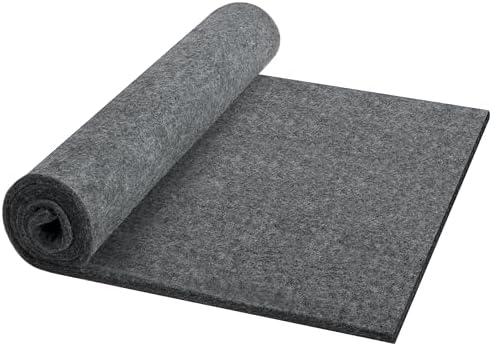
This soft felt blanket measures 8 feet long by 1.3 feet wide and is 0.2 inch thick. It can be cut to size and is described for several general-purpose tasks, including pipe insulation, floor protection, and sound or heat insulation. Its flexibility makes it easy to shape around small areas or use as a protective layer.
However, the product is not described as a tested floor underlayment or as part of a specific acoustic floor assembly. Felt may offer cushioning or help protect a surface, but the product details do not provide sound-transmission figures or flooring compatibility guidance. That makes it a less certain choice for reducing noise between floors than a purpose-made underlayment.
Its narrow width may also mean more seams when covering a broad area. Those seams and the finished-floor requirements matter: a soft layer that shifts, compresses too much, or is incompatible with the flooring could create problems. Treat this as a general-purpose material, not a guaranteed substitute for a flooring system’s specified underlayment.
Pros:
- Soft, flexible material that can be cut to shape
- Described for floor protection as well as other insulation tasks
- Removable and reusable according to the product description
Cons:
- Not presented as a dedicated acoustic floor underlayment
- Narrow roll and lack of floor-performance data make whole-room use less clear
Verdict: This felt blanket may suit protective or small-area projects, but it is not the strongest pick when your main goal is dependable acoustic performance beneath new flooring.
4. GlikCeil Rock Wool: Better for Floor Cavities Than a Thin Underlay

This 2-inch rock wool insulation is a thicker, cavity-style material rather than a thin layer to place directly under finished flooring. The listing describes it for walls, ceilings, and floors, including building cavities and sound-control projects. It is also described as non-combustible and able to help slow heat transfer.
For a floor, its likely role is within a compatible assembly, such as a cavity between framing members, rather than directly beneath laminate or tile. Absorptive insulation in a cavity can help with sound control, but it does not by itself stop vibration traveling through joists or other connected parts of a building. The overall construction and installation details remain important.
The product is described as flexible and cuttable, but you should confirm the intended use, fit, and safety instructions before handling or installing it. The supplied listing data marks it unavailable, so check listing status and product information before planning around it. Compared with cork, it is a better fit for a larger construction or retrofit project than for a simple underlayment layer.
Pros:
- Thicker insulation format suited to compatible floor cavities and building projects
- Designed to absorb mid- to high-frequency sound and reduce echo
- Described as non-combustible and useful for thermal insulation
- Can be cut to size for a project-specific fit
Cons:
- Not a thin, ready-to-place underlayment beneath finished flooring
- Listing availability and the correct floor assembly should be confirmed
Verdict: Choose rock wool when you are insulating a suitable floor cavity or broader building assembly, not when you need a simple layer directly beneath flooring.
5. TroyStudio Mass Loaded Vinyl: A Dense Barrier for an Assembly

This flexible mass-loaded vinyl sheet is 1/8 inch thick, weighs 9 pounds, and covers 8 square feet. Its dense construction is intended to add mass to a sound-control assembly, and the listing states an STC rating of 28 for the product. That figure should not be treated as the performance of a complete floor: sound ratings depend on the full tested construction, and the listing does not provide a floor-system rating.
For flooring work, MLV is best viewed as one possible component of a carefully planned assembly, not a cushioning underlayment on its own. It may be useful when you need a thin barrier layer, but it does not replace resilient isolation or resolve every path for impact noise. The product can be cut, and its backing is described as suitable for adhesive; the listing also recommends sealing joints to avoid gaps.
Coverage is a major practical limit. Eight square feet per sheet means a larger floor could require many sheets, with attention to seams and perimeter details. Compared with cork, MLV is more focused on adding mass to a barrier; cork is the more direct option for softening impact beneath compatible flooring.
Pros:
- Thin, flexible sheet designed to add mass to a sound-control assembly
- Can be cut to fit and installed with adhesive or mechanical fasteners
- Waterproof and flame-retardant properties are stated in the listing
- May help with vibration control as part of a suitable installation
Cons:
- Small coverage area can make a full-floor project seam-intensive
- Its listed STC figure is not a guarantee of floor-system or impact-noise performance
Verdict: Consider this MLV for a designed sound-barrier assembly where added mass is useful, but do not treat it as a stand-alone acoustic floor underlayment.
How to Choose Acoustic Floor Insulation Materials
Identify the Kind of Noise You Need to Reduce
Impact noise comes from physical contact with the floor, such as footsteps, a dropped object, or a chair being moved. Airborne noise includes voices, television, and music. A resilient underlayment such as cork is aimed more directly at impact noise, while dense barriers and cavity insulation may play a role in an assembly designed to limit airborne sound. If you hear both types, one material alone may not address the problem.
Match the Material to the Floor Assembly
Check whether the product is meant to go directly under your finished floor, inside a framed cavity, or on another surface. These materials are not interchangeable. Cork is specifically presented as underlayment; rock wool is a thicker insulation product; foam, felt, and mass-loaded vinyl have different stated uses. Follow the flooring manufacturer’s instructions, since an unapproved layer can affect stability, installation, or warranty coverage.
Check Thickness, Height, and Load
Even a thin layer can change the height of a floor at doorways, transitions, cabinets, and stairs. A thicker or compressible material may also affect how a floating floor feels underfoot. Consider the full build-up—not just the insulation thickness—and confirm the material can support the flooring system without creating unwanted movement.
Plan for the Subfloor and Moisture
A clean, flat, dry subfloor is essential. Underlayment may bridge minor imperfections, but it should not be used to hide major unevenness or damage. Concrete can require moisture protection; the cork listing specifically notes a vapor barrier over concrete. Check the full product instructions and your flooring requirements before covering the subfloor.
Consider Coverage and Seams
Compare the package coverage with your measured floor area and allow for cuts and waste. Small sheets can be workable for a patch or test area but create more seams across a room. With barrier materials such as MLV, gaps and unsealed joints can undermine the intended sound-control assembly, so installation detail matters as much as the material itself.
Look for Performance Data That Matches Your Goal
Sound ratings are meaningful only when you know what was tested and how. A product-level STC statement does not automatically predict the sound performance of your floor, and impact-noise performance depends on the full assembly. Look for data that matches your floor type and noise concern, and ask the manufacturer or a qualified installer if the documentation is unclear.
Balance Ease of Installation With the Scope of the Project
Rolls and cuttable sheets can be easier to fit around a room, while self-adhesive panels may work well for limited areas. A whole-floor retrofit, a framed floor cavity, and a small room treatment are very different jobs. Choose the material based on the installation location and whether you can seal seams, manage transitions, and follow the required safety steps.
Frequently Asked Questions
What is the best material for reducing footsteps through a floor?
A resilient underlayment designed for the flooring system is usually the most direct place to start. Among these options, the cork roll is specifically described as a floor underlayment intended to soften impact noise. Results still depend on the floor assembly and proper installation.
Will acoustic underlayment soundproof a room?
No single underlayment can guarantee a soundproof room. It may reduce some noise, but sound can also travel through framing, walls, ceilings, gaps, and other connected parts of the building. A broader assembly may be needed for substantial noise reduction.
Can I put acoustic foam beneath laminate or vinyl flooring?
Do not assume that general-purpose foam is suitable under a finished floor. Check both the flooring manufacturer’s instructions and the foam product’s approved uses. The Kaqiluo foam is described as a general sound-insulation material, not specifically as a flooring underlayment.
Is rock wool the same as floor underlayment?
No. The GlikCeil product is a 2-inch insulation material described for building applications such as cavities, walls, and ceilings. It may suit a compatible floor cavity, but it is not the same as a thin layer installed directly beneath finished flooring.
Can mass-loaded vinyl reduce impact noise?
Mass-loaded vinyl is primarily described as a dense sound barrier that adds mass to an assembly. It may be useful in a planned floor system, but it is not a substitute for a resilient layer designed to reduce impact vibration. Its listed STC figure does not establish the impact performance of a complete floor.
Do I need a vapor barrier under cork on concrete?
The cork product description says a vapor barrier is required over a concrete subfloor. Follow the complete installation instructions and your flooring manufacturer’s moisture requirements before installing any layers.
Which option is best for a simple flooring project?
The cork roll is the most directly suited to a straightforward underlayment project, provided it is compatible with your flooring and subfloor. Confirm listing availability and installation requirements before ordering. The other options are better treated as specialized materials for small projects or broader sound-control assemblies.
Final Recommendation
For most shoppers seeking an acoustic layer beneath finished flooring, the TroyStudio cork underlayment is the clearest match in this group because it is specifically described for that role and targets impact noise. Confirm its availability, flooring compatibility, and any vapor-barrier needs before buying. If your project involves a floor cavity or a dense sound barrier, rock wool or mass-loaded vinyl may be worth considering as parts of a properly planned assembly—not as direct replacements for a floor-specific underlayment.
