
Choosing the best acid stain for concrete depends on the color you want and the surface you plan to stain. Unlike paint, acid stain reacts with minerals in concrete to create a translucent, variegated finish, so the final color can differ from the label. These five options include dark brown and black shades for indoor and outdoor projects. Test your concrete first, and plan for any sealer recommended by the product maker.
Table of Contents
Quick Comparison
| Product | Color | Notable details | Best fit |
|---|---|---|---|
| Tru Tint by Walttools Concrete Acid Stain | Chocolate brown | Professional-grade formula; can be sprayed, brushed, or sponged | Buyers seeking a rich brown and flexible application methods |
| Concrete Resurrection Professional Acid Stain | Black walnut | Approximately 100–200 sq. ft. per gallon; indoor and outdoor use | Projects that need a dark, variegated finish |
| CC Concrete Coatings Vivid Acid Stain | Ebony | Designed for a mottled, antiqued-marble effect | Concrete surfaces where a dark, dramatic look is the goal |
| Concrete Floor Supply Concrete Acid Stain | Vintage umber | UV-stable formula; system instructions included | Interior or exterior projects calling for a warm brown tone |
| Contractors Choice Concrete Acid Stain | Coffee bean, dark brown to black | Approximately 100–200 sq. ft. per gallon; sample sizes offered | Shoppers who want to test a dark color before committing |
Our Picks: Best Acid Stain For Concrete reviews
1. Tru Tint by Walttools: A Flexible Chocolate-Brown Option

Tru Tint is a professional-grade, chemically reactive stain in a dark chocolate-brown shade. It is designed for concrete floors, walls, countertops, overlays, and microtoppings. The stain reacts with lime in the concrete to create a permanent, naturally varied finish rather than a paint-like film.
You can apply it by spraying, brushing, or sponging, which gives you options for different surfaces and application styles. The maker also notes that colors can be mixed, blended, and layered. The finished effect depends heavily on the concrete itself, so the same stain may look different on two surfaces.
One important consideration is the finish after staining. The product description says the color may not look rich and dark unless the concrete is sealed correctly. A sealer is a separate part of the project, so check that it is compatible with the stain and intended use.
Pros:
- Chocolate-brown color for a warm, dark finish
- Can be applied by spraying, brushing, or sponging
- Suitable for several concrete surfaces, including overlays and microtoppings
- Can be mixed or layered with other Tru Tint acid stains
Cons:
- The supplied product data marks this listing as unavailable; availability may change
- Color and richness depend on the concrete and correct sealing
Verdict: Consider Tru Tint if you want a deep brown and value flexible application options, but confirm the listing is available and plan for a compatible sealer.
2. Concrete Resurrection: Black Walnut with Stated Coverage

This professional-grade acid stain comes in Black Walnut and is intended to create a permanent, semi-transparent finish. Rather than covering the concrete with a paint film, its chemical reaction changes the appearance of the surface and brings out variation in the slab.
The maker estimates that one gallon covers about 100–200 square feet. Actual coverage depends on the concrete’s texture, porosity, and any dilution, so use the range as a planning estimate rather than a guarantee. The stain is described for both indoor and outdoor use, including areas such as patios, garages, basements, and walkways.
Black Walnut is a useful choice if you want a dark brown tone with visible variation instead of an opaque, uniform coating. As with other reactive stains, the concrete affects the final look. Prepare the surface as directed and test a small area before treating the full project.
Pros:
- Black Walnut shade for a dark, translucent appearance
- Listed for indoor and outdoor concrete surfaces
- Stated coverage range helps with initial project planning
- Creates a variegated finish rather than a paint film
Cons:
- Coverage can vary considerably with surface porosity and texture
- The final color depends on the concrete, so the label is not an exact color guarantee
Verdict: Concrete Resurrection is a practical option for a dark, varied finish when you want a stated coverage range and a product described for both indoor and outdoor use.
3. CC Concrete Coatings Vivid: Ebony for a Dramatic Mottled Look

CC Concrete Coatings Vivid Acid Stain is an ebony-colored option designed to give concrete a mottled, antiqued-marble appearance. The product is part of a range with several colors and shades, which may be useful if you are coordinating more than one stained surface or comparing tones before choosing.
The listed details emphasize its decorative effect and ease of maintenance, but do not provide a coverage estimate or specific application instructions. That makes it harder to plan the amount needed from the available information alone. Check the product label and listing details before starting, especially for surface preparation and finishing requirements.
Ebony is the darkest choice in this lineup by name, making it worth considering when you want a bold, dark look. Keep in mind that acid stain remains translucent and reacts with the concrete, so it should not be expected to produce a perfectly even black coating. A test patch is especially helpful when the color is a key part of the design.
Pros:
- Ebony shade for a dark decorative effect
- Designed for a mottled, antiqued-marble appearance
- Part of a range with multiple colors and shades
Cons:
- Available product details do not state a coverage range
- Less application and surface-preparation information is provided in the supplied description
Verdict: Choose Vivid in Ebony if the dark marble-like effect matters most, and confirm coverage and application guidance before buying.
4. Concrete Floor Supply: Vintage Umber for Indoor or Outdoor Use
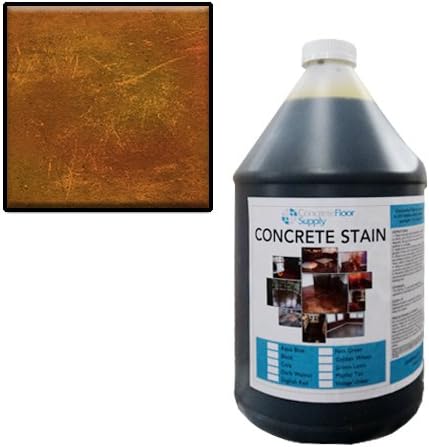
Concrete Floor Supply’s acid stain comes in Vintage Umber, a brown-toned option for projects where you want a natural marbling effect. The product description says the color change comes from a chemical reaction and is permanent, rather than a coating that sits on top of the concrete.
The formula is described as UV stable and suitable for interior or exterior applications. That makes it a candidate for a range of projects, though the product details do not list a coverage estimate. The maker says detailed system instructions are included with each package, which can help you understand how this stain fits into the full project.
Vintage Umber sits between the dark brown and near-black options in this group by its color name, so it may suit buyers who want a warmer, less stark look. Concrete varies from slab to slab, however, and the marbling will reflect the surface rather than create a perfectly consistent color.
Pros:
- Vintage Umber shade for a warm brown appearance
- Described as UV stable for interior and exterior use
- Designed to create a natural marbling effect
- Detailed system instructions are included
Cons:
- No coverage estimate is provided in the supplied description
- Color variation depends on the concrete surface
Verdict: Vintage Umber is a strong option to consider for a warm, marbled finish on an indoor or outdoor project, especially if included system instructions are useful to you.
5. Contractors Choice: Coffee Bean with Sample Sizes Available

Contractors Choice is a professional-grade acid stain in Coffee Bean, described as dark brown to black. It is intended for indoor and outdoor projects, with examples that include patios, walkways, countertops, and driveways. Its translucent, variegated look can change with the age and character of the concrete.
The product description estimates coverage at about 100–200 square feet per gallon, depending on dilution, texture, and porosity. It also notes that 16-ounce sample sizes are offered. Since the color chart is only a general reference, testing a sample on your concrete can help you judge the actual result before buying a gallon.
This is one of the more useful choices for shoppers who want to preview a dark shade first. It is not paint, so do not expect it to hide the surface or deliver the same uniformity as an opaque coating. Follow the product instructions for preparation and application, and plan any needed finishing steps.
Pros:
- Coffee Bean shade ranges from dark brown to black
- Sample sizes are offered for testing the color
- Listed for interior and exterior projects
- Stated coverage range provides a starting point for estimating needs
Cons:
- Actual color can differ from the color chart and depends on the concrete
- Coverage varies with dilution, texture, and porosity
Verdict: Contractors Choice is a sensible pick if you want a dark brown-to-black stain and prefer to test a sample before tackling the full surface.
How to Choose an Acid Stain for Concrete
Start with the Color and Effect You Want
Acid stains are translucent, so they show variation in the concrete instead of hiding it. Choose a shade based on the broad look you want—such as warm umber, chocolate brown, walnut, or ebony—but do not rely on the label alone to predict the finished color. The same product can look different on different slabs.
Test the Actual Concrete
A small test area is one of the best ways to reduce color surprises. Check the stain on the same concrete you plan to finish, since age, texture, porosity, and surface conditions can affect the reaction. For Contractors Choice, the maker specifically notes that the color chart is only a general reference and offers sample sizes.
Check Coverage Against Surface Porosity
Only some of these products provide a coverage estimate. Concrete Resurrection and Contractors Choice each list about 100–200 square feet per gallon, with coverage affected by the surface and application choices. A rough or porous slab may use more stain than a smoother one. Confirm the label’s estimate and allow for your project’s actual conditions.
Match the Product to the Location
Look for a product specifically described for your intended setting. Several options here are listed for indoor and outdoor use, while Tru Tint also names concrete floors, walls, countertops, overlays, and microtoppings. If the surface will get sun or regular wear, review the maker’s guidance for suitability and finishing products.
Plan for Surface Preparation and Safety
Concrete must be suitable and properly prepared for acid stain to react as intended. Follow the product’s instructions for cleaning, preparation, application, and any required neutralizing or cleanup steps. Because acid-based products can be hazardous, use the protective equipment and ventilation guidance on the label, and keep the product away from people, pets, and materials that could be damaged.
Include Sealing in the Project Plan
Staining is not always the last step. Tru Tint’s product description says the surface should be sealed correctly to help achieve a rich, dark appearance and protect it from regular wear. Check each product’s instructions for compatible sealers and the right finishing system for your surface and its use.
Know What Acid Stain Cannot Do
Acid stain is not concrete paint. It reacts with the concrete and creates a translucent, varied appearance rather than an opaque, perfectly even layer. If you need to hide stains, patches, or color differences, an acid stain may not give you the uniform coverage you expect.
Frequently Asked Questions
Does acid stain work like concrete paint?
No. Acid stain reacts with the concrete and creates a translucent, variegated color. It does not form the same kind of opaque surface film as paint, so it will not necessarily hide marks or differences in the slab.
Will the color match the product label exactly?
Not necessarily. The final appearance depends on the concrete’s condition, texture, and porosity. Test the stain on a small area of the actual surface before treating the full project.
Can I use these stains outdoors?
Several products in this guide are described for indoor and outdoor use. Check the specific product instructions to confirm it is suitable for your surface and location, and follow the maker’s recommendations for finishing.
How much area does one gallon cover?
Concrete Resurrection and Contractors Choice list an approximate range of 100–200 square feet per gallon. Actual coverage can vary with the concrete, dilution, texture, and porosity. The other product descriptions do not provide a coverage estimate.
Do I need to seal stained concrete?
Check the product’s system instructions. Tru Tint’s description specifically says correct sealing is important for a rich, dark result and protection from regular wear. Use a sealer compatible with the stain and intended surface.
Can acid stains be mixed or layered?
Tru Tint’s description says its stains can be mixed, blended, and layered. For other products, follow the maker’s instructions rather than assuming they can be combined with another formula.
What should I do before staining a large area?
Read the full product instructions, prepare the concrete as directed, and test a small section first. Use the label’s safety guidance, check the result after the recommended reaction and finishing steps, and confirm you have enough stain for the project.
Final Recommendation
For a dark brown stain with several application options, Tru Tint by Walttools stands out, though the supplied product data marks its listing as unavailable. Concrete Resurrection and Contractors Choice are alternatives with stated coverage ranges; Contractors Choice also offers sample sizes for testing. For a warmer umber shade and included system instructions, consider Concrete Floor Supply. Whichever you choose, test the actual concrete and follow the product’s preparation, safety, and sealing guidance before committing to the full surface.
