
Choosing the best anti-graffiti paint coating depends on the surface you need to protect and how you want to handle cleanup. Some coatings form a sacrificial layer that may need renewal after graffiti removal; others are designed to remain in place through repeated cleanings. The options below cover both approaches, with differences in surface compatibility, application, and stated protection life.
Table of Contents
Quick Comparison
| Product | Coating type | Key details | Best for |
|---|---|---|---|
| World’s Best Graffiti Coating | Sacrificial | Breathable, matte finish; stated life expectancy up to 10 years | Porous surfaces and projects where a natural appearance matters |
| Rainguard Pro VandlGuard | Non-sacrificial | Three coats can provide protection for up to 10 years; 180–300 sq. ft. per gallon | Large exterior surfaces and repeated graffiti removal |
| Rain Guard VandlTop VG-7101 | Sacrificial | Clear, unnoticeable film; suitable for several surface types | Projects where a clear barrier is the priority |
| Nanotech Anti-Graffiti Shield Plus | Non-sacrificial | Up to 500 sq. ft. per gallon on smooth surfaces; one or two coats | Smooth walls, murals, and surfaces needing repeated cleaning |
| Rain Guard VandlGuardten VG-7007 | Non-sacrificial | Designed for repeated graffiti removals; stated 10-year material and laboratory warranty | Long-term protection across varied materials |
Our Picks: Best Anti Graffiti Paint Coating reviews
World’s Best Graffiti Coating: Best for Breathable Protection

This water-based sacrificial coating is made for surfaces such as concrete, brick, stone, and wood. Its matte, invisible finish is intended to preserve the appearance of the treated material, while its breathable formula allows moisture vapor to pass through. That combination makes it a notable option for porous walls and buildings where a glossy or visibly altered finish would be unwelcome.
The product is described as protecting against spray paint, markers, grime, pollution, and salt exposure, with a stated life expectancy of up to 10 years. It can be applied by brush, roller, or sprayer in temperatures from 45°F to 95°F. It is dry to the touch in about four hours, but the product information says to allow about 72 hours for full protection.
Because it is sacrificial, it differs from coatings intended to remain intact through repeated graffiti removal. Check the product directions for the right cleanup and recoating process for your surface. The product data does not provide a coverage rate, so estimate quantity only after checking the label or seller details.
Pros:
- Breathable formula is suited to many porous building materials.
- Matte, invisible finish is designed to preserve the surface’s natural look.
- Can be applied with a brush, roller, or sprayer.
- Stated protection life expectancy is up to 10 years.
Cons:
- As a sacrificial coating, it may require renewal after graffiti cleanup.
- No coverage rate is provided in the supplied product details.
Verdict: Choose this coating if breathable protection and a low-visibility finish matter more to you than having a barrier designed to withstand repeated cleanings without renewal.
Rainguard Pro VandlGuard: Best for Multiple Graffiti Removals

Rainguard Pro VandlGuard is a non-sacrificial coating designed to protect the underlying surface during graffiti removal. The maker says its cross-linked copolymer formula can withstand multiple rounds of removal without requiring reapplication, and that three coats can provide up to 10 years of protection. This approach may suit commercial buildings, transit areas, and murals where repeat tagging is a concern.
The coating is listed for concrete, brick, stucco, stone, wood, cement plaster, metal, and other surfaces. It dries clear and is described as non-yellowing. Stated coverage is 180–300 square feet per gallon, so the actual amount you need will depend on your surface and application. A foam brush or airless sprayer is suggested, and the product can be used on vertical or horizontal exterior surfaces.
Its main trade-off is the initial work: the stated long-term protection depends on applying three coats. Follow the label’s guidance on surface preparation, drying between coats, and graffiti removal. Although the product description makes broad safety claims, use the product according to its label and take any precautions it lists.
Pros:
- Non-sacrificial design is intended to remain through multiple graffiti removals.
- Listed for a wide range of exterior materials.
- Clear, non-yellowing finish is designed to preserve the look of the surface.
- Provides a stated coverage range to help with project planning.
Cons:
- Three coats are specified for protection of up to 10 years.
- Coverage varies considerably by surface and application conditions.
Verdict: Pick VandlGuard if repeated cleanup is likely and you are willing to apply the specified coats for a durable, clear barrier.
Rain Guard VandlTop VG-7101: Best for a Subtle Sacrificial Barrier
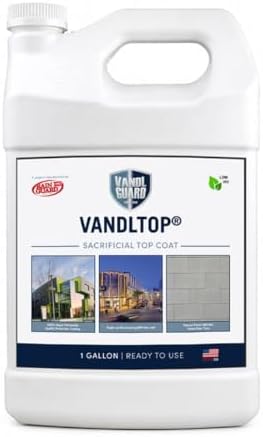
VandlTop VG-7101 is a sacrificial graffiti barrier that forms a clear, unnoticeable film. It is listed for concrete, stucco, EIFS, brick, wood, metal, plastic, and painted surfaces. Its non-yellowing formulation is intended to avoid changing the appearance of the treated material, making it worth considering when a visible coating would detract from the wall or finish.
The product description says unwanted graffiti can be removed with Rain Guard Water Sealers VandlCleaner Super cleaner. Since this is a sacrificial barrier, confirm the instructions for cleanup and recoating before starting your project. The supplied information does not state a protection lifespan or coverage rate, so those details are important to verify if you are comparing it with products that list a multi-year duration or per-gallon coverage.
Compared with the non-sacrificial options in this guide, VG-7101 may be a better fit when you want an unobtrusive layer and are comfortable following a sacrificial coating’s maintenance routine. The listing also mentions a one-year satisfaction promise; that is not the same as a stated one-year protection life.
Pros:
- Clear film is intended to leave surface appearance unchanged.
- Listed for many materials, including painted surfaces and plastic.
- Non-yellowing technology is specified.
- The product description identifies a cleaner for graffiti removal.
Cons:
- No coverage rate or protection lifespan is provided in the supplied details.
- A sacrificial coating may need attention after graffiti removal.
Verdict: Choose VandlTop if you want a low-visibility sacrificial barrier and can confirm the application and maintenance details for your specific surface.
Nanotech Anti-Graffiti Shield Plus: Best for Smooth Surfaces and Murals

Anti-Graffiti Shield Plus is a ready-to-use, water-based, non-sacrificial coating. It is designed for indoor and outdoor use on surfaces such as concrete, brick, stone, painted walls, and street murals. The maker says its clear coating will not yellow or peel from sun exposure, though it may enhance the color of stone. Test a small, inconspicuous area first if a change in appearance would be a concern.
The product information says smooth surfaces can cover up to 500 square feet per gallon. One coat is usually described as sufficient, while two coats are suggested for more complete coverage; wait at least six hours between coats. Graffiti removal is described as a process involving warm water, soap, and a wet rag or soft-bristle brush. For larger areas, the directions mention a low-pressure washer, with biodegradable graffiti remover as another option for paint that has remained on the surface.
The supplied product data lists this item as unavailable, so you may not be able to purchase it at the time you check. If it becomes available, its high stated coverage on smooth surfaces may make it appealing for murals or painted walls. That coverage figure is specifically for smooth surfaces, not a promise for rough masonry.
Pros:
- Non-sacrificial coating is designed to handle repeated graffiti attacks.
- Ready to use with no mixing required.
- High stated coverage on smooth surfaces.
- Describes a cleanup method using warm water, soap, and a soft cloth or brush.
Cons:
- The supplied product information lists it as unavailable.
- Coverage may be lower on rough or textured surfaces than on smooth ones.
Verdict: This is a strong match on paper for smooth walls and murals, but check availability and test the finish before choosing it for a color-sensitive surface.
Rain Guard VandlGuardten VG-7007: Best for a Stated Ten-Year Warranty

VandlGuardten VG-7007 is described as a coating that can withstand repeated graffiti removal for 10 years. It is listed for concrete, stucco, EIFS, brick, wood, metal, plastic, and painted surfaces. The product information also says it is designed not to change surface appearance or yellow over time, which may matter on walls where maintaining the original look is important.
The listing includes a 10-year material and laboratory warranty. A warranty is useful context, but it is not a guarantee that every installation or surface will perform the same way; review the current warranty terms and application instructions before buying. The supplied details do not specify coverage, coat count, or a particular removal method, so you will need to check those points for your project.
Compared with VandlGuard Pro, VG-7007 provides less detail about coverage and application, but it makes a clear claim about repeat removals and a stated warranty. It may suit buyers who are comparing coatings for a range of materials and want to investigate the warranty terms before deciding.
Pros:
- Designed for repeated graffiti removals over a stated 10-year period.
- Listed for a broad range of common building materials.
- Described as not altering appearance or yellowing over time.
- Includes a stated 10-year material and laboratory warranty.
Cons:
- Supplied details do not state coverage or the required number of coats.
- Application and graffiti-removal instructions should be checked before purchase.
Verdict: Consider VandlGuardten if long-term repeat-removal protection is your priority, but confirm the coverage, application requirements, and warranty terms first.
How to Choose an Anti-Graffiti Coating
Decide Between Sacrificial and Non-Sacrificial Protection
A sacrificial coating is intended to act as a protective layer that may be removed during graffiti cleanup, so you may need to renew it afterward. A non-sacrificial coating is designed to stay in place through multiple cleaning cycles. If the wall is tagged often, a non-sacrificial option may reduce the need to reapply after every cleanup. For lower-risk locations or projects where a simple, subtle barrier is the priority, a sacrificial formula may be suitable. Always confirm the coating’s specific cleanup process.
Match the Coating to the Surface
Check whether the product is listed for your exact material, such as brick, stone, concrete, painted masonry, metal, or wood. A coating that works on a smooth painted wall may not cover rough block in the same way. Porous surfaces also have different needs from sealed or non-porous ones. If you are protecting a historic building, a mural, or a surface where appearance is critical, test a small hidden area first and follow the manufacturer’s surface-preparation directions.
Consider Appearance and Breathability
Some coatings are described as clear or invisible, while others may enhance the color of stone. A matte finish can be less noticeable than a glossy one, but the result depends on the surface and how the coating is applied. Breathability can also matter on porous masonry. Compare the product’s finish and vapor-permeability claims with the needs of your wall, and do not assume that every clear coating will look identical once dry.
Compare Coverage, Coats, and Curing Time
Coverage estimates can help you plan how much product to buy, but they may vary by surface texture and application method. For example, a product may state coverage for smooth surfaces that does not apply to rough concrete or brick. Check the required number of coats, time between coats, and time before the coating reaches full protection. Dry-to-touch time is not always the same as full cure time.
Review Application and Cleanup Instructions
Check whether the coating is applied by brush, roller, foam brush, or sprayer, and make sure you have the right tools for your project. Read the label for temperature limits and preparation steps. Before choosing a product, also find out how graffiti should be removed and whether the protective layer must be renewed afterward. The correct cleaner and method can vary by coating.
Look Closely at Protection Claims and Warranty Terms
Terms such as “up to 10 years” describe a stated maximum, not a guaranteed result for every surface and setting. The number of coats, weather exposure, surface preparation, and maintenance can affect performance. A warranty may also have conditions, so review its actual terms rather than relying on the headline claim alone. When product details leave out coverage or application steps, ask the seller or manufacturer before buying.
Frequently Asked Questions
What is the difference between sacrificial and non-sacrificial anti-graffiti coating?
A sacrificial coating is designed to be removed or affected as graffiti is cleaned, so it may need to be reapplied afterward. A non-sacrificial coating is designed to stay on the surface through repeated graffiti removals. Check each product’s directions, since cleanup methods differ.
Can anti-graffiti coating be used on brick and concrete?
Several products in this guide list brick and concrete as suitable surfaces. However, surface texture and porosity can affect coverage and the final appearance. Confirm that the product is intended for your specific surface and test a small area before applying it broadly.
Will a clear coating change how my wall looks?
Clear or invisible coatings are designed to limit visible changes, but results can vary. Some products may enhance the color of stone, and different surface textures can make a coating more noticeable. A small test patch is a sensible step when appearance matters.
How long does anti-graffiti coating last?
Protection claims vary by product. Some options in this guide state protection or life expectancy of up to 10 years, while other product details do not provide a lifespan. Actual performance can depend on application, exposure, and maintenance, so treat “up to” claims as a stated maximum rather than a promise.
How do you remove graffiti from a coated surface?
Use the method specified by the coating maker. Some products describe warm water and soap, while another specifies a named cleaner. The right method depends on the coating and the type of graffiti. Avoid assuming that one cleaner or pressure-washing setting is safe for every treated surface.
Do I need to apply more than one coat?
It depends on the product. One option says three coats can provide protection for up to 10 years, while another says one coat is usually enough on smooth surfaces and two can help ensure complete coverage. Follow the product label for coat count and drying times.
Final Recommendation
For a breathable coating with a low-visibility matte finish, World’s Best Graffiti Coating is the most balanced choice in this group, especially for porous building materials. If you expect frequent tagging and want a barrier designed for multiple cleanings, compare Rainguard Pro VandlGuard and VandlGuardten, paying close attention to coat requirements, coverage, and warranty terms. For any coating, confirm surface compatibility and test a small area before treating the entire wall.
