
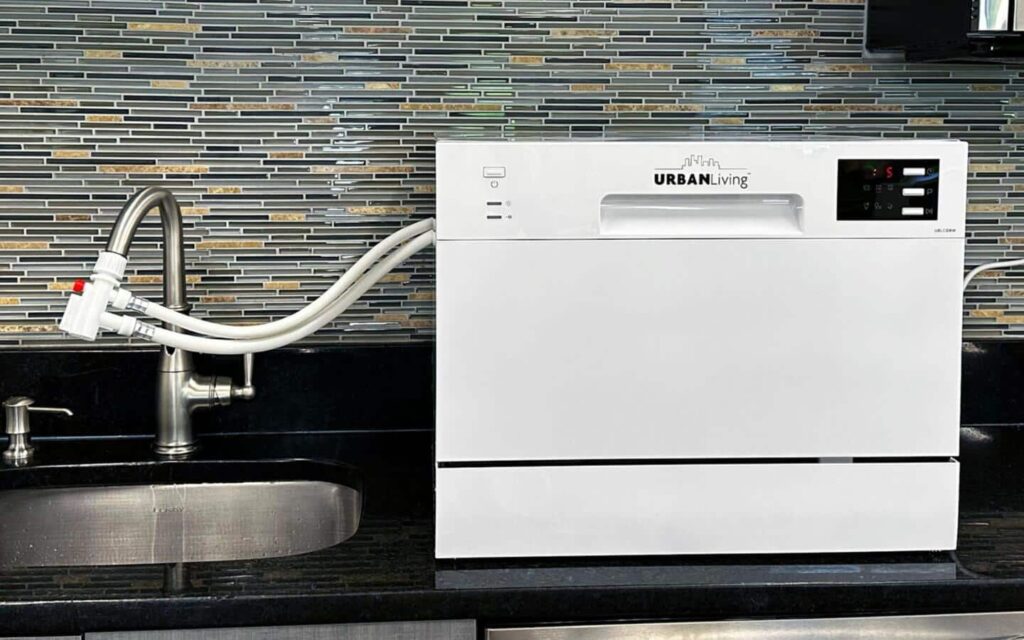
A countertop dishwasher tap adapter connects your portable machine’s intake and drain lines straight to a standard sink spout in about five minutes. Choosing the countertop dishwasher tap adapter your ultimate guide to convenient dishwashing helps you skip permanent plumbing work and run daily wash cycles safely. This guide covers thread measurements, quick-connect collar operation, water pressure limits, and leak fixes that a two-line answer cannot.
Table of Contents
How your countertop dishwasher adapter functions

A tap adapter replaces your sink’s regular aerator screw-piece with a dedicated metal fitting. It lets a portable dishwasher click onto your spout with a spring-loaded collar, commonly called a quick-connect. Renters use this hardware because it installs without cutting pipes or drilling kitchen counters.
The mechanism relies on dual-path flow: clean water feeds into the dishwasher under tap pressure, while wastewater drains through an outer channel straight into the sink basin. A common myth suggests these adapters damage domestic faucets. They don’t hurt standard metal spouts, though thin plastic designer necks can bend under the heavy pull of filled hoses.
This setup isn’t for homes with pull-out spray wands or square designer spouts, since those lack standard round aerator threads.
The basic method
- Unscrew your current sink aerator by turning it counter-clockwise by hand, or wrap a rag around it and use pliers if it’s stuck.
- Clean the spout threads using a cloth to wipe away built-up lime and old sediment.
- Check the threads: if your spout has female threads inside the tip, screw the thick male adapter directly into the faucet by hand; if your spout has male threads on the outside, remove the adapter’s top brass spacer to expose its female threads.
- Insert one thick rubber washer inside the adapter to stop leaks, then tighten the fitting firmly using your fingers.
- Pull down the outer ring of the dishwasher quick-connect hose assembly, push it up onto the tap adapter, and release the ring until it clicks.
- Open your hot water valve completely so the appliance fills with proper wash water.
- Plug the power cord into a grounded outlet and run your wash cycle.
The single judgement call that separates a good result from a bad one is avoiding over-tightening. Cranking brass threads with a steel wrench strips the soft metal instantly, costing you a complete faucet replacement. Hand-tight plus a quarter-turn with a towel grip gives a leak-free seal without crushing the rubber washer. If your sink plumbing has corroded pipes under the basin that twist when you work, stop immediately and hire a licensed plumber to avoid a flood.
Key numbers and settings at a glance
Match your tap fitting and water settings to your home’s setup before you start the wash cycle.
| Situation | What to use | How long | What to watch for |
|---|---|---|---|
| Standard 55/64″-27 female spout | Male adapter with thin washer | 2 minutes to install | Thread alignment before tightening |
| Standard 15/16″-27 male spout | Female adapter with thick washer | 2 minutes to install | Washer sitting flat inside collar |
What separates good results from bad ones
Preparation and hose alignment
Success starts with testing your faucet spout for physical strength before running water. Good setups keep the twin-hose assembly straight with no kinks, letting water move freely. Line up the quick-connect collar squarely with the adapter base. If it tilts, the internal ball bearings won’t seat, which blows the hose off the tap during peak pressure.
Managing pressure and temperature
Always purge your tap before snapping the hose on. Running hot water for 30 seconds clears standing cold water from the wall pipes, which cuts heating time inside the appliance. After the wash cycle finishes, don’t yank the quick-connect off immediately. The line holds pressurized water. Press the red pressure-relief button on the side of the coupler over the sink to dump trapped water safely. Skipping this step sprays dirty drain water across your counter.
Common problems and quick fixes

Small leaks and connection slips usually come down to washer alignment or pressure build-up.
| What you notice | What it usually means | What to do first |
|---|---|---|
| Water sprays from top of adapter | Rubber washer is missing or crushed | Turn tap off and reseat rubber ring |
| Quick-connect collar won’t click | Internal ball bearings are stuck | Press the relief valve and push up |
| Faucet spout drips when machine drains | Drain line has back-pressure | Straighten any coils in the sink hose |
| Water leaks from aerator seam | Adapter threads are cross-threaded | Unscrew fully and restart by hand |
Plumbing standards and water limits
Kitchen faucet spouts follow clear sizing standards set by the American Society of Mechanical Engineers. Standard residential taps use standard 55/64″-27 threads for internal mounts or 15/16″-27 for external collars. Most countertop machines need water pressure between 20 and 120 pounds per square inch to open their internal inlet valves.
Your local municipality or water authority sets domestic supply rules to protect public drinking systems. The EPA WaterSense program sets kitchen faucet efficiency standards, meaning modern aerators restrict tap flow, but dishwasher fill lines bypass these aerator screens to draw full system pressure. If you need to tap into the main under-sink plumbing line permanently, local plumbing codes require a licensed professional and a certified backflow preventer.
Caring for your tap adapter
Hard water minerals collect quickly inside small brass fittings. Unscrew the adapter regularly to rinse the internal screen under clear running water. If you notice white crust along the brass edges, soak the part in standard white distilled vinegar for twenty minutes, then brush it clean with a soft toothbrush. Check the black rubber washer whenever you notice it; if the rubber feels stiff or shows cracks, swap it for a fresh one. Storing the quick-connect hose dry prevents mold from growing inside the drainage line between uses.
When to use a different approach
A countertop tap adapter is the wrong choice if your kitchen has a pull-out spray head. These flexible hose spouts don’t have rigid metal threads to hold the weight of a water-filled line, and snapping an adapter on them breaks their internal plastic joints. In that case, plumb a dedicated splitter valve directly to the cold or hot shutoff valve under the sink.
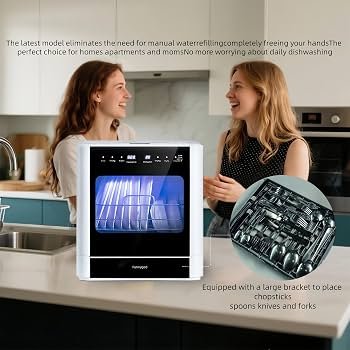
You should also avoid this method if you need your sink free while the dishwasher runs. The adapter locks your main tap for up to two hours per cycle. Choose a countertop model with a built-in water tank instead, which lets you pour water manually into the top without touching your faucet.
Frequently asked questions
Can you leave the adapter on the faucet permanently?
Yes. You can leave the metal adapter screwed onto the faucet spout all the time. Most commercial adapters include built-in aerator screens, so your sink maintains a normal, splash-free water stream for everyday handwashing when the dishwasher hose is detached.
Why is water leaking from my tap adapter?
A worn-out rubber washer or loose thread causes almost every tap leak. Check that the rubber gasket sits flat inside the adapter collar. If the washer looks flat or torn, install a fresh washer and tighten the connection firmly by hand.
Is it safe to run hot water through the adapter?
Yes. Countertop dishwashers need hot water to clean dishes properly and dissolve detergent tabs. Standard brass adapters handle typical domestic water heater temperatures up to 140 degrees Fahrenheit without warping, melting, or degrading the internal metal threads.
What happens if my faucet has no threads?
You can’t safely attach a standard quick-connect adapter. Smooth, unthreaded spouts require a clamp-on rubber adapter, but these often slip off under machine water pressure. Installing a standard threaded aerator spout or using an under-sink hookup is much safer.
How long does a dishwasher tap adapter last?
Lifespan varies based on material quality, water chemistry, and frequency of use. The rubber internal O-rings wear out first and should be replaced if you notice leaks or visible degradation.
Final Thoughts
Once you’ve secured your connection, you’ll find that cleaning up after meals is finally effortless. Take a moment to check your sink’s aerator size before you head to the hardware store, as it’s the best way to ensure you don’t have any frustrating surprises during your first installation attempt.






