Choosing a 60-gallon air compressor for an auto shop means balancing airflow, pressure, electrical needs, and the tools you plan to run. The three stationary compressors below are the closest matches for shop use; the other two picks are a hose reel and a compact compressor, included as useful accessories or alternatives rather than 60-gallon replacements.
Table of Contents
Quick Comparison
| Product | Type | Key Specs | Best For |
|---|---|---|---|
| Ingersoll Rand SS3L3 60-Gallon Compressor | Single-stage, vertical | 3 HP; 11.3 CFM at 90 PSI; 135 PSI max | Frequent shop use and steady airflow |
| MutsMover 60-Gallon 5-HP Compressor | Two-stage, vertical | 5 HP; 16 CFM; 145 PSI max | Shoppers seeking higher listed airflow |
| Campbell Hausfeld 60-Gallon Two-Stage Compressor | Two-stage, vertical | 3.7 running HP; 7.6 SCFM at 90 PSI; 175 PSI max | Higher maximum pressure and varied shop tasks |
| VEVOR Retractable Air Hose Reel | Hose reel accessory | 50-ft hose; 300 PSI working pressure | Keeping an existing shop air line organized |
| ECOMAX 6-Gallon Pancake Compressor | Portable compressor | 1.5 HP; 150 PSI max; 120V | Portable inflation and lighter-duty jobs |
Our Picks: Best 60 Gallon Air Compressors For Auto Shops reviews
Ingersoll Rand SS3L3: A Strong Fit for Regular Shop Air Demand
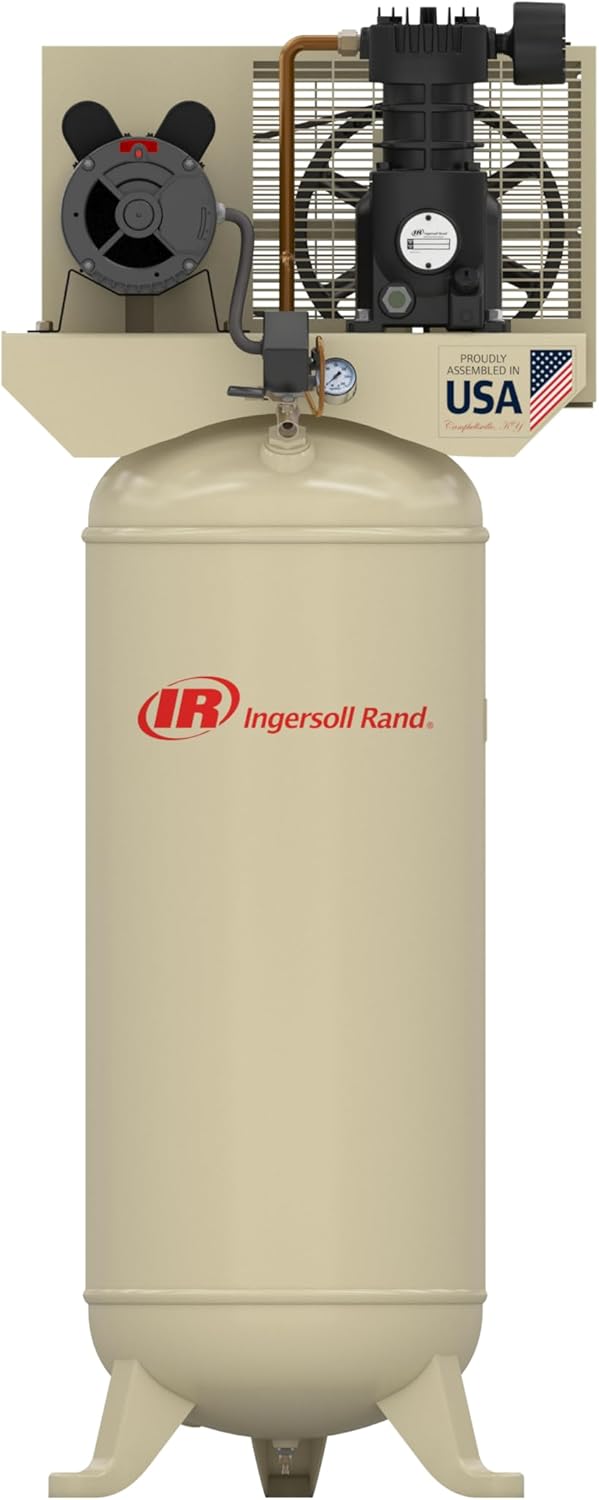
The SS3L3 is a stationary, single-stage compressor with a 60-gallon vertical tank and a 3-HP motor. Its listed output is 11.3 CFM at 90 PSI, with a maximum pressure of 135 PSI. Ingersoll Rand also specifies 100% continuous duty, which makes this model worth considering when your shop needs sustained air rather than occasional bursts.
The cast-iron pump is designed for long service life, and the compressor includes an oil sight gauge, an easy-fill oil port, and an automatic start/stop pressure switch. It arrives assembled and pre-wired, according to the supplied product details. The listed electrical requirement is 230 volts, so plan for a suitable supply and professional installation if needed.
Compared with the Campbell Hausfeld, the Ingersoll Rand lists more airflow at 90 PSI, while the Campbell Hausfeld offers a higher maximum pressure. The MutsMover lists still more airflow, but its product information has conflicting power-source details. The SS3L3’s listed airflow and continuous-duty rating make it the clearest fit here for repeated air-tool use, though you should compare its output with the specific tools in your shop.
Pros:
- Lists 11.3 CFM at 90 PSI and 100% continuous duty
- Cast-iron pump and 60-gallon vertical receiver
- Automatic start/stop control and accessible oil-checking features
- Uses synthetic lubricant with a stated 2,000-hour service interval between changes
Cons:
- Requires a 230-volt electrical supply
- Its 135-PSI maximum is lower than the Campbell Hausfeld’s listed maximum
Verdict: Choose the Ingersoll Rand if your shop wants a 60-gallon compressor with clearly stated continuous-duty capability and useful airflow at 90 PSI.
MutsMover 60-Gallon Two-Stage Compressor: High Listed Airflow

This vertical 60-gallon model is listed with a two-stage pump, 5 HP, 16 CFM, and a maximum pressure of 145 PSI. Those airflow and pressure figures look attractive for an auto shop that uses several kinds of pneumatic tools, including impact wrenches, sanders, and spray equipment. The tank’s upright shape is also intended to save floor space compared with a horizontal setup.
There is an important specification issue to resolve before buying: the product title describes an electric compressor, but the supplied specifications identify its power source as gas powered. The listing does not provide a voltage, noise level, warranty, or a clear airflow pressure point for its 16-CFM figure. Confirm the exact power source and installation requirements with the seller before treating this as a match for an indoor shop.
On paper, it has the highest listed airflow among the three 60-gallon compressor options here. That makes it potentially appealing for higher air demand, but the conflicting electrical information is a meaningful drawback. The Ingersoll Rand and Campbell Hausfeld provide clearer electrical details for buyers planning a stationary, powered shop installation.
Pros:
- Lists 16 CFM and 145 PSI maximum pressure
- Two-stage pump and 60-gallon vertical tank
- Vertical configuration is intended to reduce floor-space use
- Product details list compatibility with common shop air tools
Cons:
- Power-source details conflict between the title and specifications
- Voltage, warranty, and the pressure point for its CFM figure are not provided in the supplied information
Verdict: Consider this model only after confirming its power source and full operating specifications; its listed airflow is promising, but the listing inconsistency needs to be cleared up first.
Campbell Hausfeld XC602100: Higher Pressure for a Range of Shop Tasks

The Campbell Hausfeld XC602100 combines a 60-gallon vertical ASME tank with an oil-lubricated, two-stage cast-iron pump. It is listed at 3.7 running HP and delivers 7.6 SCFM at 90 PSI, with 6.9 SCFM at 175 PSI. Its 175-PSI maximum is the highest among the three 60-gallon compressor choices in this comparison.
The 230-volt motor calls for a suitable 230/240-volt supply. Its upright tank has a listed 23-by-23-inch footprint, a useful detail if you need to conserve floor space. The product information also gives a three-year limited warranty and states a pump-life design target based on a bearing rating; those are manufacturer specifications, not a guarantee of service life in every shop.
Its airflow at 90 PSI is lower than the figures listed for the Ingersoll Rand and MutsMover, so don’t assume that the higher maximum pressure means it will run every air tool better. Check each tool’s required CFM and pressure. This model may suit a shop that values its two-stage design and higher pressure, but a shop running air-hungry tools for long stretches may want to compare airflow closely.
Pros:
- Two-stage, oil-lubricated cast-iron pump
- 175-PSI maximum pressure
- 60-gallon vertical ASME tank with a compact listed footprint
- 230-volt motor and three-year limited warranty are specified
Cons:
- Listed output is 7.6 SCFM at 90 PSI, lower than the other two 60-gallon options
- Requires a dedicated 230/240-volt supply
Verdict: Pick the Campbell Hausfeld if its 7.6-SCFM output meets your tools’ needs and you value a two-stage pump with a 175-PSI maximum.
VEVOR Retractable Hose Reel: A Shop Accessory, Not a Compressor

This VEVOR product is a retractable air hose reel, not a 60-gallon compressor. It includes a 50-foot, 3/8-inch hybrid hose with a stated 300-PSI working pressure, plus a swivel mounting bracket. The hose is described as flexible in a range of weather conditions, and the reel lets you pull out the length you need and retract it when the job is done.
For an auto shop that already has a compressor, a wall- or ceiling-mounted reel can help keep the hose off the floor and make it easier to reach work areas. The product information says the reel can mount to a ceiling, wall, or floor and includes expansion bolts. You may still need separate fittings to connect it to your compressor and tools, so check the connection sizes before installation.
Some users report that the retracting mechanism locks at different hose lengths and rewinds with a light tug. Installation may take more effort when positioning the reel, and the supplied mounting hardware may not suit every mounting surface. Treat it as a way to organize shop air delivery, not as a substitute for a compressor.
Pros:
- 50-foot hybrid hose with a stated 300-PSI working pressure
- Retractable reel helps manage hose storage
- Swivel bracket supports several mounting positions
- Designed for shop, garage, and workshop use
Cons:
- It is a hose reel, not a 60-gallon air compressor
- Separate connection fittings may be needed
Verdict: Choose the VEVOR reel as an organization accessory for an existing compressor if its hose length and fittings match your setup.
ECOMAX 6-Gallon Pancake Compressor: Portable, but Not a 60-Gallon Shop Unit

The ECOMAX is a small, portable oil-free compressor with a 6-gallon tank, a 1.5-HP motor, and a 150-PSI maximum. It runs on 120 volts and weighs about 34 pounds according to the supplied product details. The package includes a 25-foot hose and several inflation and air-line accessories.
Its size and carry handle make it a more practical option for moving between jobs or handling tire inflation and lighter-duty tasks than a stationary 60-gallon unit. The product information also lists use with spray guns and automotive repair, but this compact tank should not be treated as a like-for-like replacement for a larger shop compressor. Match its output to the duty cycle and air demand of your tools.
Unlike the three stationary models above, the ECOMAX is oil-free and portable, which may appeal if low-maintenance operation and easy storage matter more than extended air supply. Its smaller tank is the key limitation for a busy shop that relies on continuous pneumatic tool use.
Pros:
- Portable design with a carry handle
- Oil-free pump and 120-volt power
- 150-PSI maximum pressure
- Includes a 25-foot hose and accessory kit
Cons:
- Six-gallon capacity is far below a 60-gallon shop compressor
- Not the best match for sustained use of high-demand air tools
Verdict: Consider the ECOMAX for portable inflation and lighter jobs, but choose a stationary 60-gallon model for a shop’s main air supply.
How to Choose a 60-Gallon Air Compressor for an Auto Shop
Match airflow to your tools
Compare the compressor’s airflow rating with the air demand of the tools you expect to use. Check the tool manufacturer’s required CFM and PSI, and pay attention to the pressure at which the compressor’s CFM is stated. For example, the Ingersoll Rand lists 11.3 CFM at 90 PSI, while the Campbell Hausfeld lists 7.6 SCFM at 90 PSI. A higher maximum PSI alone does not tell you how well a compressor will keep up with a tool.
Think about how long tools will run
A compressor’s tank stores air, but the pump must replenish that supply during use. If your shop runs tools for long stretches, look for clear information about airflow and duty cycle. The Ingersoll Rand specifically lists 100% continuous duty. For other models, compare the stated output with your expected workload rather than assuming a 60-gallon tank guarantees uninterrupted tool use.
Choose the right pump design
The products here include both single-stage and two-stage designs. The Ingersoll Rand is single-stage, while the Campbell Hausfeld and MutsMover are listed as two-stage. Consider the pressure and output you need, and review the manufacturer’s specifications for the exact model. A two-stage label does not replace checking CFM at your required working pressure.
Check electrical and installation requirements
The Ingersoll Rand and Campbell Hausfeld are listed as 230-volt compressors; the Campbell Hausfeld calls for a dedicated 230/240-volt supply. Confirm the electrical circuit, wiring, placement, and installation needs before ordering. The MutsMover listing has conflicting information about whether it is electric or gas powered, so verify its actual configuration before making a purchase.
Plan for footprint and shop layout
A 60-gallon vertical tank can use less floor space than a horizontal layout, but you still need a stable location with room for access and service. Check the compressor’s listed dimensions and weight, and plan how air lines will reach your work areas. A retractable hose reel can help organize an existing air system, but it does not add compressor capacity.
Consider pump maintenance and warranty details
Oil-lubricated compressors need regular oil checks and changes according to the manufacturer’s instructions. The Ingersoll Rand lists synthetic lubricant and a stated service interval, while the Campbell Hausfeld is described as oil-lubricated and includes a three-year limited warranty. Confirm what maintenance is required and what the warranty covers before you buy.
Frequently Asked Questions
Is a 60-gallon compressor enough for an auto shop?
It can be suitable for many shop tasks, but tank size alone does not determine whether a compressor can keep up. Compare the compressor’s airflow at your working pressure with the requirements of the tools you plan to run, especially if they will operate for long periods.
Which compressor in this comparison lists the most airflow?
The MutsMover lists 16 CFM, the highest figure among the three 60-gallon compressors here. However, its product information conflicts on whether it is gas powered or electric, and it does not state the pressure point for that airflow figure. Confirm those details before buying.
Does a higher PSI rating mean a compressor is better?
Not by itself. Maximum PSI describes the highest listed pressure, while CFM indicates the volume of air available at a stated pressure. Check both numbers against your tools’ requirements.
Do these stationary compressors need special electrical service?
The Ingersoll Rand is listed at 230 volts, and the Campbell Hausfeld requires a dedicated 230/240-volt supply. Check the exact product requirements and have the planned installation assessed before purchase. The MutsMover’s power-source information should be verified because its title and specifications do not agree.
Is the VEVOR hose reel a compressor?
No. It is a retractable hose reel with a 50-foot hose, intended to connect to a separate air compressor. It can help manage a shop hose but does not generate compressed air.
Can the ECOMAX 6-gallon compressor replace a 60-gallon model?
It is not a direct replacement for a stationary 60-gallon shop compressor. Its smaller tank and portable design make it better suited to inflation and lighter-duty tasks than sustained, high-demand shop use.
Final Recommendation
For an auto shop that needs a stationary 60-gallon compressor, the Ingersoll Rand SS3L3 is the clearest all-around choice in this group because its listing specifies airflow at 90 PSI and 100% continuous duty. The Campbell Hausfeld is worth considering if its airflow meets your tools’ needs and you want a higher listed maximum pressure. The MutsMover’s airflow figure is attractive, but confirm its power source and full specifications first. Treat the VEVOR reel as an accessory and the ECOMAX as a portable, smaller-capacity option—not as substitutes for a 60-gallon shop compressor.