
A basement dehumidifier with a drain hose can keep moisture under control without making you empty a tank again and again. The right choice depends on how damp and large your space is, how you plan to route the water, and whether you need extra features such as a washable filter or adjustable humidity settings. Below, we compare five options, from high-capacity models for large basements to a smaller unit for more modest spaces.
Table of Contents
Quick Comparison
| Product | Advertised coverage | Moisture removal | Drainage | Standout feature |
|---|---|---|---|---|
| Yaufey 80-Pint Dehumidifier | Up to 5,500 sq. ft. | Up to 80 pints per day at 95°F and 90% RH | Included 3.28-ft hose; 1.06-gallon tank | ENERGY STAR certified; four modes |
| KNKA 80-Pint Dehumidifier | Up to 5,500 sq. ft. | Up to 80 pints per day in humid conditions | Included 6.56-ft hose; 1.45-gallon tank | ENERGY STAR certified; 40–45 dB claimed operation |
| AEOCKY 80-Pint Dehumidifier | Up to 5,500 sq. ft. | Up to 80 pints per day in humid conditions | Drain-hose details should be confirmed on the listing | Listing states ENERGY STAR Most Efficient designation |
| Tehanld 50-Pint Dehumidifier | Up to 5,000 sq. ft. | 50 pints per day, as listed | Included 60-inch hose; 1.6-gallon tank | Frost sensor; listed operation down to 42°F |
| KNKA 34-Pint Dehumidifier | Up to 2,500 sq. ft. | Up to 34 pints per day at 95°F and 90% RH | Included 3.28-ft hose; 0.79-gallon tank | Claimed 37 dB operation; three modes |
Coverage and moisture-removal figures come from product descriptions and may be based on specific temperature and humidity conditions. Check each product listing for the current specifications and setup details.
Our Picks: Best Basement Dehumidifier With Drain Hose reviews
Yaufey 80-Pint: A Flexible Pick for Large Basements
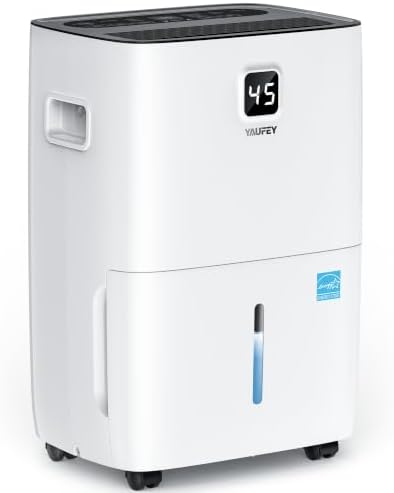
The Yaufey is a large-space compressor dehumidifier rated to cover up to 5,500 square feet. Its stated maximum removal rate is 80 pints per day at 95°F and 90% relative humidity. That figure describes demanding, humid conditions, so actual moisture removal can vary with the temperature and dampness in your basement.
For day-to-day use, you can choose the 1.06-gallon tank or connect the included 3.28-foot hose for gravity drainage. The product description also says a standard garden hose can be used for a longer drainage setup, but that hose is not included. Before buying, check that you have a suitable drain and enough hose length for the route you need.
Four operating modes, three fan speeds, and an adjustable 30%–80% humidity range give you more control than a basic on/off unit. The listing also specifies an LED touch panel, a 24-hour timer, auto restart, and ENERGY STAR certification. These features make it a versatile option for a large basement where you want to set a target humidity and leave the unit running.
The main practical drawback is the relatively small tank compared with the unit’s stated moisture-removal capacity. Continuous drainage is the better fit if the basement is very damp or you want to avoid frequent emptying. The included hose is also short, so a farther-away drain may call for a different hose setup.
Pros:
- Rated for spaces up to 5,500 square feet
- Includes a hose for continuous gravity drainage
- Offers four modes, three fan speeds, and adjustable humidity settings
- ENERGY STAR certified, according to the product description
Cons:
- The 1.06-gallon tank may need frequent emptying if you do not use the hose
- The included hose is only 3.28 feet long
Verdict: Choose the Yaufey if you want a feature-rich, ENERGY STAR-certified option for a large basement and can connect it to a nearby drain.
KNKA 80-Pint: A Longer Included Hose for Large Spaces

This KNKA model is another high-capacity choice, with coverage listed at up to 5,500 square feet. Its description gives two removal figures: up to 80 pints per day in very humid conditions and 56 pints per day at 86°F and 80% relative humidity. The second figure offers a useful reminder that performance depends on the conditions in your basement.
Its included 6.56-foot drain hose is longer than the hoses supplied with several other picks here. That can make placement easier if your drain is not right beside the unit, though you will still need a gravity-friendly route. The built-in tank holds 1.45 gallons and has a full alert and automatic shutoff. An optional external tank is sold separately; it is not included with the standard setup described here.
The KNKA has three modes, a washable filter, casters, and a humidity display. Its listing claims a 40–45 dB operating range and says the display and indicator lights can be turned off. ENERGY STAR certification is also specified. Those details may appeal if the basement connects to a living area, although the sound level and perceived noise can depend on the room and operating conditions.
Compared with the Yaufey, this model has a longer included hose and a larger built-in tank, but it offers three listed modes rather than four. Its hose is still not especially long for a drain across a large room, so measure your route before relying on the included one.
Pros:
- Up to 5,500-square-foot coverage and strong stated moisture-removal capacity
- Included 6.56-foot hose is longer than the hoses supplied with several alternatives
- Washable filter, casters, and real-time humidity display
- ENERGY STAR certified, according to the product description
Cons:
- Optional external tank costs extra and is not part of the standard setup
- The included hose may not reach a distant drain
Verdict: This KNKA is a good fit for a large, damp basement if you value its longer included hose and can use gravity drainage.
AEOCKY 80-Pint: An Efficiency-Focused Large-Room Option
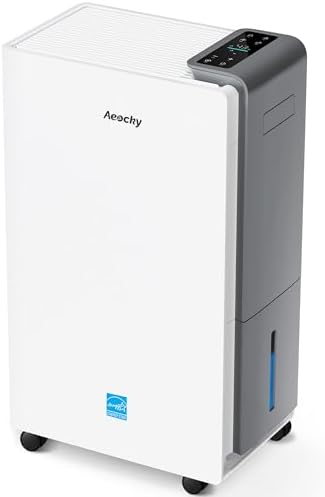
The AEOCKY is listed for spaces up to 5,500 square feet, with a maximum removal rate of 80 pints per day at 95°F and 95% relative humidity. The description also gives a 56-pint figure at 86°F and 80% relative humidity, which is a more moderate set of conditions. As with any dehumidifier, use those figures as context rather than a promise of the same output in every basement.
Its product description emphasizes compressor and heat-exchange components, including copper tubing, and positions the unit as an ENERGY STAR Most Efficient option. Those claims make it worth considering if energy efficiency is high on your list. However, manufacturer efficiency claims do not guarantee a specific reduction in your utility bill; results depend on usage, room conditions, and electricity costs.
The product title indicates a drain-hose setup, but the supplied description does not provide the hose length, tank capacity, or full drainage instructions. That missing information matters for a basement purchase: verify what is included and whether the connection suits your planned drain before ordering. In comparison, the Yaufey and both KNKA models list more specific hose and tank details.
Pros:
- Listed for large spaces up to 5,500 square feet
- Provides removal figures for both very humid and more moderate conditions
- Product description emphasizes energy efficiency and compressor components
- Listing states an ENERGY STAR Most Efficient designation
Cons:
- Hose length and tank capacity are not stated in the supplied product details
- Confirm the exact drainage setup before buying
Verdict: Consider the AEOCKY if efficiency is a priority, but first confirm the included hose and drainage details on the product listing.
Tehanld 50-Pint: A Mid-Capacity Model with Cold-Weather Features

The Tehanld is rated at 50 pints and advertised for spaces up to 5,000 square feet. That coverage figure is broad, but its listed pint capacity is lower than the 80-pint models above. It may suit a moderately damp basement better than a very wet space that needs maximum moisture removal.
For drainage, you can use the 1.6-gallon tank or connect the included 60-inch hose for continuous drainage. The tank has an automatic shutoff and a full indicator, which helps prevent it from overflowing if you choose not to use the hose. The unit also has two fan speeds, adjustable humidity from 30% to 80%, a 24-hour timer, and a washable filter.
A frost sensor and claimed operation down to 42°F stand out for a cooler basement. That does not mean it will perform identically at every low temperature, so check the manual for operating limits and care instructions. The listing does not state ENERGY STAR certification, unlike the first three options.
Its 60-inch hose is shorter than the KNKA 80-pint model’s included hose, but the Tehanld offers a larger tank than the Yaufey and smaller KNKA. Consider the balance that works for your space: tank capacity helps when draining manually, while a suitable hose setup is more useful for hands-free operation.
Pros:
- Includes a 60-inch continuous-drain hose and a 1.6-gallon tank
- Frost sensor and listed operation down to 42°F
- Adjustable humidity, two fan speeds, and a washable filter
- Tank has an automatic shutoff and full indicator
Cons:
- Listed 50-pint capacity is below the 80-pint options
- Does not list ENERGY STAR certification in the supplied description
Verdict: Choose the Tehanld if you want a mid-capacity model with a larger tank and cold-weather features, rather than the highest stated moisture-removal rate.
KNKA 34-Pint: A Compact Choice for Smaller Basements

This smaller KNKA model is listed for spaces up to 2,500 square feet and removes up to 34 pints per day at 95°F and 90% relative humidity. It is the most modestly sized option in this comparison, making it a more sensible starting point for a smaller basement or a space with less moisture to manage than a large, consistently damp area.
It offers three modes: Auto, Dry, and a setting mode with an adjustable 30%–80% humidity range. The included 3.28-foot hose supports continuous drainage, while the 0.79-gallon tank has an automatic shutoff and full-tank alert. An optional external tank is sold separately, so factor in that extra purchase if you want more capacity without a different drainage setup.
The listing claims operation at 37 dB and says sleep mode reduces sound and turns off the lights. It also has casters, a washable filter, a timer, a child lock, and an automatic humidity control. These features make it more flexible for a basement that doubles as an office or living space, though the stated coverage and capacity are below those of the larger picks.
Like other gravity-drain models, it needs a drain that sits lower than the outlet and a hose route without an uphill section. The included hose is short, so check placement before you decide it will reach your drain.
Pros:
- Smaller capacity suits modest spaces better than the 80-pint models
- Includes a drain hose and automatic tank shutoff
- Three modes, adjustable humidity, and a washable filter
- Listing claims quiet operation and includes a sleep mode
Cons:
- Not the best match for a very large or heavily damp basement
- Short included hose and small tank may limit convenience without a nearby drain
Verdict: Pick this KNKA for a smaller basement where a 34-pint capacity is likely enough and quiet-use features matter.
How to Choose a Basement Dehumidifier with a Drain Hose
Match the capacity to the room and moisture level
Start with the basement’s approximate size and how damp it gets. A large space with persistent dampness may call for an 80-pint model, while a smaller or less humid basement may not need that much capacity. Advertised coverage and pint ratings are not guarantees for every home. Temperature, humidity, room layout, and how often doors or windows are open can all affect performance.
Check the conditions behind the pint rating
A maximum pint-per-day number is tied to specific test conditions. For example, some listings give a maximum rate in hot, very humid air and a lower rate under more moderate conditions. Compare figures measured at similar temperatures and humidity levels when possible. If a product lists only its maximum, do not assume it will remove that much water every day in a cooler basement.
Make sure gravity drainage will work
A drain hose usually relies on gravity, so the outlet needs to be above the drain and the hose must slope downward without being pinched or routed uphill. Measure the distance from where you plan to place the unit to the drain. Compare that measurement with the included hose length, and confirm whether the manufacturer allows a longer hose or a garden-hose connection. A nearby floor drain or suitable sink can make continuous drainage much simpler.
Consider tank size if you may not use the hose
A water tank is useful when a floor drain is unavailable, but a smaller tank will need more frequent emptying in a damp room. Look for an automatic shutoff and a full-tank indicator to help prevent overflow. If you want fewer interruptions, prioritize a working hose setup or check whether the manufacturer offers a compatible external tank. Do not assume an optional accessory is included.
Think about basement temperature
Basements can be cooler than the rest of the home, and low temperatures may affect dehumidifier operation. Check the stated operating range and look for features such as a frost sensor if your basement gets cold. A feature listing does not replace the operating instructions, so read the manual for limits and guidance on use in chilly conditions.
Compare humidity controls and everyday features
An adjustable humidity target can help you set a level that suits your space instead of running the unit at full power all the time. Useful convenience features may include automatic humidity control, a timer, auto restart after a power interruption, a washable filter, caster wheels, or a display that can be dimmed. Focus on the features you will use; extra modes are less important if you mainly want steady humidity control and continuous drainage.
Check noise, placement, and maintenance needs
If the basement is used as a bedroom, office, or family space, consider the manufacturer’s noise claims and whether the lights can be turned off. A dehumidifier needs room for airflow, so follow the placement guidance in its manual rather than pushing it into a tight corner. Plan to clean the filter as directed, and check the tank or hose connection periodically for buildup or leaks.
Frequently Asked Questions
Is a drain hose better than using the water tank?
A drain hose can reduce the need to empty the tank, especially when the unit runs often in a damp basement. It works only when you have a suitable drain and can route the hose according to the manufacturer’s instructions. The tank is useful when continuous drainage is not practical, but it will need to be emptied when full.
Can I use a dehumidifier drain hose without a floor drain?
Some models allow a hose to drain into a suitable sink or another approved outlet, but the hose generally needs a downward path for gravity drainage. Check the product manual before choosing a destination. Do not route water where it could damage flooring, walls, or belongings.
How large a dehumidifier does my basement need?
Use the room size and how damp it gets as your starting point. A large, very damp basement may benefit from one of the 80-pint models in this comparison, while a smaller or less humid space may be suited to the 34-pint KNKA. Because product coverage figures depend on conditions, consider them alongside the removal rate and your actual basement environment.
How often will I need to empty the tank?
It depends on how much moisture the unit removes and the tank’s capacity. A damp basement can fill a small tank quickly, particularly when the machine runs for long periods. Using the hose for continuous drainage can avoid routine emptying when the setup is installed correctly.
Does ENERGY STAR certification mean a dehumidifier will cost less to run?
ENERGY STAR certification indicates that a product meets the program’s efficiency criteria, but it does not guarantee a specific bill reduction. Actual electricity use depends on the model, settings, operating time, basement conditions, and your utility rate. Compare the current product details and use the unit only as needed for your space.
Will a basement dehumidifier work in cold weather?
Cold conditions can affect operation, and the allowed temperature range varies by model. One product in this roundup lists a frost sensor and operation down to 42°F, but that specification should not be applied to the other models. Check the manual for the unit you choose and follow its operating limits.
Final Recommendation
For a large basement where continuous drainage and flexible controls matter, the Yaufey 80-pint model is the most balanced pick in this comparison: it includes a drain hose, offers several operating modes, and lists ENERGY STAR certification. If a longer included hose is more important, consider the 80-pint KNKA. For a smaller space, the 34-pint KNKA is a more appropriately scaled option. Before choosing any model, measure the route to your drain and confirm that the hose and gravity setup will work in your basement.
