
Choosing the best basement wall sealer paint starts with figuring out what your walls need: a moisture-resistant coating for prepared masonry, a finish for a small refresh, or a product rated for stronger water pressure. These coatings are intended for masonry surfaces, but they are not a fix for active leaks or a substitute for repairing cracks and addressing the source of water. Below, we compare five options by their stated features, application notes, and practical limitations.
| Product | Best suited for | Notable details | Availability in supplied data |
|---|---|---|---|
| KILZ Basement and Masonry Waterproofing Paint | Prepared concrete and masonry walls | States resistance to up to 12 PSI; interior and exterior use | Available |
| YKF Masonry Pro Foundation & Basement Waterproofing Sealer | Basement walls and other vertical masonry | States resistance to up to 15 PSI; about 100 sq. ft. per gallon | Available |
| LANCO Dry-Coat Waterproofing Paint, 5 Gal | Larger wall projects, if available | White coating; supplied description has few application details | Unavailable in supplied data |
| Zinsser WaterTite Mold & Mildew Waterproofing Paint | Walls where mold- and mildew-resistant film is a priority | States resistance to water pressure and lists two product guarantees | Unavailable in supplied data |
| LANCO Dry-Coat Waterproofing Paint, 1 Gal | Smaller interior masonry projects | Water-based latex coating with a smooth white finish | Available |
Table of Contents
Our Picks: Best Basement Wall Sealer Paint reviews
1. KILZ Basement and Masonry Waterproofing Paint — A Versatile Choice for Prepared Walls

KILZ is a white waterproofing coating for concrete and masonry, including brick, cinder block, stucco, and retaining walls. Its interior and exterior use makes it a flexible option if your project includes more than one type of masonry surface. The product description says its coating blocks up to 12 PSI of water pressure when used as directed.
Preparation matters here, especially on below-grade walls. The manufacturer says to fill holes and cracks with hydraulic cement before painting, and the product is not intended for floors or walls with active water leaks. That makes it a more suitable choice for a prepared wall with seepage concerns than for covering an unresolved leak.
The low-odor formula is described as drying to the touch in one hour, with recoat time of four hours and a full cure in seven to 14 days. Keep that cure time in mind before washing the surface or putting the room back into regular use. Compared with the YKF option, KILZ has a lower stated pressure-resistance figure, but it offers clear recoat and cure guidance and a broad list of suitable surfaces.
Pros:
- Suitable for interior and exterior masonry surfaces
- States resistance to up to 12 PSI of water pressure
- Includes specific touch-dry, recoat, and cure times
- Low-odor formula, according to the product description
Cons:
- Not for active leaks, floors, or unprepared cracks and holes
- Full cure can take up to 14 days
Verdict: Choose KILZ if you want a versatile coating for properly prepared basement or masonry walls and can follow its repair and curing instructions.
2. YKF Masonry Pro Sealer — A Higher Stated Pressure Rating

YKF Masonry Pro is a smooth white coating intended for basement and foundation walls, crawl spaces, and retaining walls. Its product description states that it resists hydrostatic pressure up to 15 PSI when applied as directed to properly prepared masonry. That stated rating is higher than the KILZ product’s listed 12 PSI, though a rating alone does not guarantee a suitable result on a wall with an active leak or poor preparation.
The water-based polyurethane formula is described as bonding to dry or slightly damp concrete and masonry. The listing recommends removing oil, dust, loose paint, dirt, and debris first, then repairing active leaks, cracks, and holes before coating. It calls for a thick, even application with a brush or nap roller and says a second coat may be needed for full coverage.
The stated coverage is about 100 square feet per gallon, with actual coverage depending on wall texture, porosity, and application thickness. That estimate can help with planning, but rough or porous block may use more coating. YKF may suit a homeowner who wants a stated pressure rating and a product aimed at vertical masonry; KILZ provides more detailed drying and cure times in its supplied description.
Pros:
- States resistance to hydrostatic pressure up to 15 PSI
- Intended for basement walls, foundations, crawl spaces, and retaining walls
- Lists approximate coverage of 100 square feet per gallon
- Can be applied with a brush or nap roller
Cons:
- Requires careful cleaning and repair before application
- Coverage can vary with surface texture and coating thickness
Verdict: YKF is worth considering for prepared vertical masonry when its stated 15 PSI resistance and per-gallon coverage fit your project.
3. LANCO Dry-Coat 5-Gallon Paint — A Large-Container Option with Limited Details

This five-gallon LANCO Dry-Coat product is presented as a white, smooth waterproofing paint for basement, concrete, and foundation walls. A larger container may be convenient when you have a broad area to coat, but the supplied product description gives very little information beyond the general product type and a brief promotional statement.
That lack of detail makes it difficult to compare this option on practical points such as pressure resistance, coverage, surface preparation, drying time, and application method. Those details matter for basement work, where the condition of the masonry and the source of moisture can affect the outcome. Check the product listing and label for complete instructions before deciding whether it fits your wall and project size.
The supplied data also lists this item as unavailable. If it becomes available, compare the complete instructions and coverage information with the one-gallon LANCO option and other products here before choosing. The five-gallon size is not automatically the better value if your project only needs a small amount or the listing does not provide enough technical information for your use.
Pros:
- Five-gallon container may suit a larger project
- Listed for basement, concrete, and foundation walls
- White, smooth finish according to the product title
Cons:
- Supplied description does not provide key application or performance details
- Listed as unavailable in the supplied data
Verdict: Consider this LANCO container only if it is available and the full listing confirms the coverage, preparation, and performance details your project requires.
4. Zinsser WaterTite — A Mold- and Mildew-Resistant Film Option
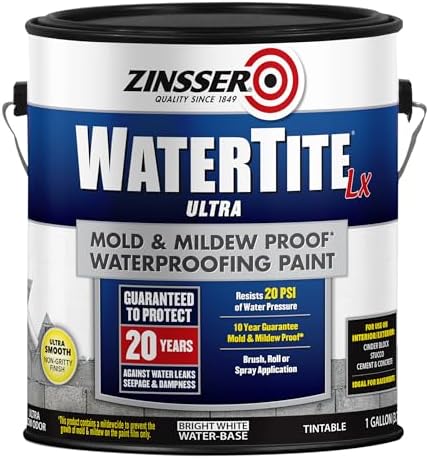
Zinsser WaterTite is described as a latex-based white waterproofing paint for basement wall protection. The supplied product information says it resists up to 20 pounds of water pressure, but it does not identify that figure as PSI. Do not compare that number directly with the PSI ratings listed for KILZ and YKF.
The listing describes a smooth, bright white, non-gritty finish that can be applied to dry walls with a brush or roller. It also states that the film is mold- and mildew-resistant and lists a 15-year waterproof guarantee and a 10-year mold- and mildew-proof paint-film guarantee. Read the product listing and guarantee terms to confirm what conditions and preparation steps apply.
One practical limitation is availability: the supplied data lists this product as unavailable. It also specifies application to dry walls, so it may not be the right choice if your masonry is damp during the coating process. Compared with KILZ and YKF, the product information emphasizes mold- and mildew-resistant film and guarantees, while the other two listings give specific PSI ratings and more preparation or coverage details.
Pros:
- Described as a smooth, bright white, non-gritty finish
- Can be applied with a brush or roller to dry walls
- Listing states mold- and mildew-resistant paint film
- Lists waterproof and mold- and mildew-related guarantees
Cons:
- Listed as unavailable in the supplied data
- Pressure-resistance figure is not stated in PSI
Verdict: WaterTite may suit shoppers focused on a smooth finish and mold- and mildew-resistant film, but confirm availability and read the guarantee terms before relying on its claims.
5. LANCO Dry-Coat 1-Gallon Paint — A Smaller-Project Interior Coating

This one-gallon LANCO Dry-Coat is described as an interior coating for basements, concrete walls, and foundation surfaces. Its water-based hydrophobic latex formula is intended to penetrate and waterproof a range of surfaces, and the product description says it leaves a smooth, uniform white finish. It is also described as suitable for some interior ceiling applications.
The smaller container may make sense for a limited wall area or a maintenance project where a larger pail would be unnecessary. Still, the supplied details do not give a pressure-resistance rating, estimated coverage, drying time, or a clear list of preparation steps. Check the full product instructions before buying, especially if your wall has moisture issues beyond minor dampness.
Compared with the five-gallon LANCO product, this listing offers a more detailed description of its formula and intended interior uses, while the larger product has a more limited description. Compared with KILZ and YKF, however, this LANCO listing does not provide a stated pressure rating. That makes it harder to assess for a basement wall where water pressure is a key concern.
Pros:
- One-gallon size suits smaller projects
- Described for interior basement, concrete, and foundation walls
- Creates a smooth white finish, according to the product description
- Listing also mentions some interior ceiling applications
Cons:
- No pressure-resistance rating or coverage estimate is supplied
- Preparation and drying instructions are not included in the supplied details
Verdict: Choose the one-gallon LANCO option for a smaller interior refresh only after confirming its full instructions and suitability for your wall’s moisture conditions.
How to Choose Basement Wall Sealer Paint
Start by finding the source of moisture
A wall coating can help protect properly prepared masonry, but it should not be treated as a fix for an active leak. Look for water entering through cracks, joints, plumbing, or other points, and address the cause before painting. If water is coming through the wall or the foundation has a larger problem, consider getting qualified help rather than relying on paint alone.
Match the product to the wall surface
Check that the coating is intended for your surface, such as concrete, cinder block, brick, or other masonry. Some products are described for interior and exterior use, while others are presented mainly for basement or interior walls. Also note whether the coating is limited to walls; KILZ, for example, is not intended for floors.
Read pressure-resistance claims carefully
Some listings state a water-pressure rating, which can help you compare products when the figures use the same unit and test basis. KILZ lists up to 12 PSI and YKF lists up to 15 PSI. Zinsser’s supplied description gives a pressure figure in pounds without identifying PSI, so it should not be compared directly with those ratings. A rating does not mean a product will stop every leak or work on an unprepared surface.
Plan for surface preparation
Remove dirt, dust, oil, loose coating, and debris as directed by the product manufacturer. Repair cracks, holes, and active leaks before applying paint. KILZ specifically calls for hydraulic cement in holes and cracks on below-grade applications, while YKF calls for cleaning the surface and repairing leaks, cracks, and holes. Follow the instructions on the product you select rather than assuming all coatings use the same preparation method.
Estimate how much coating you need
Coverage depends on the wall’s porosity, texture, and the thickness of the application. YKF lists approximate coverage of 100 square feet per gallon, but says actual coverage can vary. The supplied details for the LANCO products do not include coverage estimates, so consult the listing or label before planning how many containers to buy. Rough block may require more product than a smoother surface.
Consider application and drying time
Check whether the product can be applied with a brush, roller, or both, and whether the wall must be dry. KILZ lists one hour to touch, four hours before recoating, and a full cure of seven to 14 days. YKF says to allow at least two hours before handling and notes that a second coat may be needed. These timelines are product-specific, so use the label instructions for your chosen coating.
Choose the container size and finish for your project
A one-gallon container may be more practical for a small area, while a five-gallon pail may be useful for a larger job if the product is available and its coverage suits your needs. White finishes can brighten a basement wall, but a smooth finish may not hide substantial damage. Repair the masonry first, and compare the product’s complete specifications before choosing based on container size or appearance alone.
FAQs
Can basement wall sealer paint stop an active leak?
No coating in this comparison is described as a substitute for repairing an active leak. The KILZ and YKF product information specifically says to address leaks, cracks, or holes before application. Find and repair the source of water before painting.
Can I apply waterproofing paint to damp basement walls?
It depends on the product. YKF is described as bonding to dry or slightly damp masonry, while Zinsser’s supplied information says to apply it to dry walls. Check the label for the product you choose and follow its surface-moisture instructions.
Do I need to fill cracks before painting?
Yes, prepare and repair the wall first. KILZ calls for hydraulic cement to fill holes and cracks for below-grade applications. YKF also instructs users to repair cracks, holes, and active leaks before coating.
Which product has the highest stated pressure rating?
Among the supplied listings with a clear PSI figure, YKF states resistance up to 15 PSI, while KILZ states up to 12 PSI. Zinsser lists a pressure figure in pounds but does not specify PSI in the supplied description, so it is not directly comparable.
How many coats of basement wall sealer paint should I apply?
The right number depends on the product and the wall. YKF says a second coat may be needed for full coverage, while the supplied KILZ details give a recoat time but do not specify a universal number of coats. Follow the label for application thickness and recoat instructions.
Is basement wall sealer paint suitable for floors?
Not always. KILZ is specifically listed as unsuitable for floors. Check the intended surfaces on any coating you are considering; a wall product should not be assumed safe or suitable for a floor.
Which option is the most straightforward to compare?
KILZ and YKF provide the clearest supplied application details, including stated pressure resistance. KILZ also lists touch-dry, recoat, and cure times, while YKF gives an approximate coverage figure. The best fit depends on your wall, the product’s current instructions, and whether you have repaired the source of moisture.
Conclusion
For a versatile coating with clear recoat and cure guidance, KILZ is a practical starting point for properly prepared masonry. YKF is another strong option to compare if its stated 15 PSI resistance and approximate coverage fit your project. The LANCO products may suit smaller or larger coating jobs, but their supplied details leave important questions about coverage and performance, and the five-gallon option is listed as unavailable. Zinsser emphasizes mold- and mildew-resistant film and listed guarantees, but it is also marked unavailable in the supplied data. Before choosing any product, repair leaks and cracks, confirm the current listing and label instructions, and make sure the coating matches your wall and moisture conditions.
