
A bathroom threshold between tile and wood needs to cover the seam without creating a sharp edge or an awkward step. The right transition depends on the gap, any height difference, the strip’s width, and how well its adhesive suits your floor surfaces. The options below are flexible, peel-and-stick PVC strips; they can simplify installation, but they are not a substitute for proper waterproofing or a suitable transition for a large height change.
| Product | Best for | Key details |
|---|---|---|
| Heonay Self-Adhesive Vinyl Transition Strip | General floor transitions | Flexible PVC with double adhesive tape; size not specified |
| MYFAMIREA 1.97-Inch Transition Strip | Narrow height differences | Fits thresholds listed at 1/5 to 2/5 inch high |
| Danlaila 2-Inch x 10-Foot Transition Strip | Long seams and floor gaps | Beige flexible PVC; 2 inches wide and 10 feet long |
| Greymond 4-Foot Transition Strip | Short doorways and slim transitions | Listed as 4 feet long and 1.57 inches wide; other widths are described |
| wisleousda 3-Inch x 5-Foot Transition Strip | Wide gaps or seams | Flexible PVC; 3 inches wide and 5 feet long |
Table of Contents
Our Picks: Best Bathroom Threshold Tile To Wood reviews
1. Heonay Self-Adhesive Vinyl Transition Strip for General Use

The Heonay strip is a flexible PVC threshold cover with double self-adhesive tape. It is designed to join surfaces such as tile and hardwood, making it a possible option for a bathroom doorway where the floors meet at a similar height.
Installation is a peel-and-stick process: clean and dry the floor, cut the strip to length, remove the backing, and press it in place. The maker advises reverse-rolling the strip first if it arrives curled. That extra step may help it lie flatter, but a flat, clean surface is still important for adhesion.
The product information does not provide the strip’s width, length, or supported height range. Measure your doorway and compare the actual listing details before buying. As with any adhesive transition in a bathroom, keep the area dry during installation and do not rely on the strip to seal a wet shower edge or prevent water from reaching the subfloor.
Pros:
- Flexible PVC is intended for everyday wear and scratch resistance.
- Double adhesive tape is designed for a stronger bond.
- Can be cut to fit the doorway.
- Tool-free installation on a clean, dry floor.
Cons:
- Published dimensions and a supported height range are not provided in the supplied product details.
- Not intended for uneven surfaces.
Verdict: Consider Heonay for a straightforward, nearly level tile-to-wood seam if its listed dimensions match your doorway; choose a specified-width option if you need more sizing certainty.
2. MYFAMIREA 1.97-Inch Strip for Small Height Differences

This PVC transition strip is listed at 1.97 inches wide and is intended for thresholds about 1/5 to 2/5 inch high. That makes it one of the more clearly specified choices here if the tile sits slightly above or below the wood and the size of the difference falls within that range.
The strip has a gentle slope, acrylic adhesive backing, and a surface described as water- and moisture-resistant. The maker recommends warming the adhesive with a hairdryer, pressing the strip firmly, and placing a weight on it for about an hour. Those directions are especially worth following if you want the adhesive to make even contact across both flooring edges.
Check the height carefully before ordering: the stated range is not a promise that the strip will bridge every uneven floor. Its adhesive is meant for a clean, dry surface, and a peel-and-stick cover should not be treated as a waterproof seal. The product description also notes that color can look different under different lighting.
Pros:
- Specified 1.97-inch width and supported threshold-height range.
- Gentle slope is designed to reduce a sharp edge at the transition.
- Adhesive installation does not require drilling into the floor.
- Surface is described as moisture-resistant and easy to clean.
Cons:
- Best suited to the stated height range, not larger or irregular steps.
- Adhesion depends on careful surface preparation and firm contact.
Verdict: Pick MYFAMIREA when your measured height difference fits its stated range and you want a defined width; look elsewhere for a flush seam or a larger change in floor height.
3. Danlaila 2-Inch x 10-Foot Strip for Longer Seams

Danlaila’s flexible PVC strip measures 2 inches wide and 10 feet long, offering more coverage than the shorter doorway options. It is described as a beige floor-gap cover for transitions between surfaces such as tile, wood, laminate, vinyl, and carpet.
The long roll can be useful if you have more than one doorway to cover or want to cut a longer piece to fit a broad opening. Its waterproof surface is described as easy to wipe clean, but that does not make it a waterproofing system for a bathroom. Keep the adhesive area dry when installing, and do not use the strip to bridge a large height change: the product details do not specify a supported height range.
Beige may blend more naturally with some floors than a dark or metallic-looking threshold, but it will not match every tile or wood tone. Check the color and the required width against your flooring before choosing it.
Pros:
- 10-foot length can cover longer seams or be cut for several sections.
- 2-inch width covers a relatively broad gap.
- Flexible PVC is described as wear-resistant and waterproof on the surface.
- Beige color may suit light or neutral floors.
Cons:
- No supported height-difference range is specified.
- The beige finish may stand out against darker flooring.
Verdict: Danlaila is a practical choice for a long, mostly level seam when you want extra length and a beige finish, but it is not the most precise option for a raised threshold.
4. Greymond 4-Foot Strip for a Short, Slim Transition

Greymond’s listing describes a 4-foot-long strip that is 1.57 inches wide, with a slim 0.12-inch height. It is made from high-density PVC and is intended to cover transitions and gaps between flooring materials. The low profile may suit a doorway where you want a less prominent edge, provided the floor-height difference is also small.
The strip is peel-and-stick and can be cut with scissors. The maker recommends cleaning the floor with alcohol and warming the strip with a hairdryer to help it conform to a curved surface. The description mentions other width options, but also gives conflicting color information: the title identifies grey wood while the details mention a matte black finish. Confirm the selected color and size in the listing before ordering.
Although the product description mentions bathroom use and shower edges, a self-adhesive PVC cover should not be relied on to stop water from entering a floor assembly. For a bathroom doorway exposed to regular splashes, check that the adhesive is suitable for both surfaces and keep the underlying transition properly protected.
Pros:
- Short 4-foot length may suit a single doorway.
- Low stated height creates a slim profile.
- Can be trimmed to length with scissors.
- Water-resistant PVC is intended for use in rooms such as bathrooms and kitchens.
Cons:
- Color information in the description is inconsistent.
- Its slim profile may not cover a wide gap or significant height change.
Verdict: Greymond is worth considering for a short, low-profile seam, but verify the color variant and make sure its narrow dimensions fit your opening.
5. wisleousda 3-Inch x 5-Foot Strip for Wider Gaps
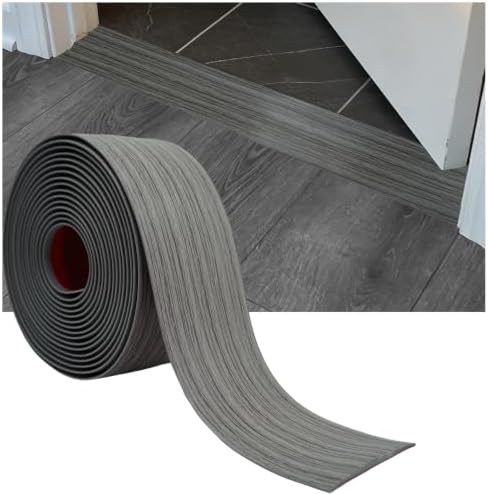
This flexible PVC threshold cover measures 3 inches wide and 5 feet long, making it the widest option in this group. It is designed to cover floor gaps and transitions between materials such as tile, wood, carpet, and laminate. The product details list a maximum thickness of 3.5 mm, so it is better understood as a wide cover for a modest transition rather than a ramp for a substantial step.
The strip has peel-and-stick backing and can be cut to length. The product information says it can adhere to smooth surfaces including wood and tile, which may fit a bathroom tile-to-wood doorway if both sides are clean, dry, and flat. The grey wood-grain finish is intended to blend with common decor, and other finishes are listed as available.
A 3-inch strip can conceal a broader seam, but it will also cover more of the surrounding flooring than a narrower option. Measure the gap and consider where the strip will sit so it does not overlap an area that needs to remain clear or interfere with a door.
Pros:
- 3-inch width covers a wider floor gap than the other listed options.
- 5-foot length can be cut to fit a doorway.
- Flexible PVC is described as suitable for smooth tile and wood surfaces.
- Grey wood-grain finish offers a decorative alternative to plain PVC.
Cons:
- Its wide profile may look oversized on a narrow seam.
- Maximum thickness is listed as 3.5 mm, so it is not intended for a large height difference.
Verdict: Choose wisleousda when your main need is to cover a wider, nearly level gap and you have room for a 3-inch strip; for a narrower doorway seam, a slimmer option may look more discreet.
How to Choose a Bathroom Threshold for Tile to Wood
Measure the height difference first
Use a straightedge and measure how far the tile sits above or below the wood. A flat seam and a raised edge need different solutions. Some strips list a supported height range or maximum thickness; compare that figure with your measurement. If the change is larger, uneven, or likely to create a trip hazard, a thin adhesive cover may not be suitable.
Match the width to the gap
Measure the gap between the flooring edges and check how much of each surface the strip will cover. A wider strip can conceal a broader seam, but it may look bulky in a narrow doorway or overlap too much of the floor. Also measure the doorway length so you can buy enough material without relying on a short cutoff.
Check the surface and adhesive requirements
Peel-and-stick strips need clean, dry surfaces for proper contact. Dust, residue, moisture, uneven tile edges, or a textured wood finish can make it harder for adhesive to bond. Follow the product’s preparation instructions, and avoid installing over a damp floor. If the flooring surface is not smooth or the strip cannot sit flat, consider a different transition method.
Think about bathroom moisture
Water-resistant PVC may be easier to wipe clean, but that does not mean the strip creates a waterproof floor joint. Keep water from pooling around the threshold, and do not use a peel-and-stick transition as the only protection at a shower entrance or other regularly wet area. The floor assembly and any required waterproofing need to be handled separately.
Choose a finish that works with both floors
A threshold is visible, so color and pattern matter. Neutral beige, grey wood grain, or a darker finish may work with different tile and wood tones, but product descriptions can vary by finish or size option. Check the selected variant and compare it with your actual floors before ordering.
Consider how the strip will be installed and maintained
Most options here are cut-to-length, peel-and-stick products. Plan a dry, clean installation area and press the strip down firmly. If the instructions recommend warming the adhesive or placing weight on the strip, follow those steps. A low-profile strip can be easier to cross, while a wider one may cover more of the seam but needs more space.
Frequently Asked Questions
Can I use a peel-and-stick transition strip between bathroom tile and wood?
It may work when the floor edges are smooth, clean, dry, and close to level, and when the product’s dimensions match the gap. It should not be treated as waterproofing or used to bridge a large height change.
What if the tile is higher than the wood?
Measure the difference and compare it with the strip’s stated height range or maximum thickness. If the step is outside those limits or the transition remains uneven, choose a transition designed for that height change instead of forcing a thin strip to fit.
Are these strips waterproof?
The listed products are made from PVC, and some descriptions call the surface waterproof or water-resistant. That describes the strip’s surface, not a sealed floor joint. Water can still get underneath an adhesive edge, so do not depend on a strip alone to protect the subfloor.
How do I prepare the floor before installation?
Clean the area and let it dry fully before applying the adhesive. Follow the product directions for any extra steps, such as warming the backing or pressing it firmly into place. Avoid applying the strip over dust, residue, or damp flooring.
Can I cut a transition strip to fit my doorway?
The product details say these strips can be cut to length, though the recommended cutting method may vary. Measure carefully before cutting, and check whether the width and roll length are enough for the whole opening.
Which option is best for a wider gap?
The 3-inch-wide wisleousda strip is the widest option listed here, while the Danlaila strip is 2 inches wide and longer. Choose based on the actual gap, the available floor space, and the height difference—not width alone.
Final Recommendation
For a clearly measured, small height difference, the MYFAMIREA strip is the most specific option because its width and supported threshold range are stated. For a longer, mostly level seam, consider Danlaila; for a wider gap, the 3-inch wisleousda strip offers more coverage. Whichever you choose, confirm the dimensions and finish, prepare both floor surfaces carefully, and do not rely on an adhesive threshold to waterproof a bathroom joint.
