
Small basement windows can be tricky to cover: they may be narrow, shallow, set in concrete, or too close to a window well for a standard shade. The right choice depends on whether you want adjustable light, more privacy, insulation, or a quick no-drill fix. These four options include temporary pleated shades, cordless mini blinds, a cellular shade, and a short blackout valance—with important differences in fit and function.
| Product | Type | Best for | Key consideration |
|---|---|---|---|
| Neugodo 6-Pack Temporary Pleated Shades | Adhesive pleated shade | Temporary coverage and cut-to-fit windows | Each shade starts at 36 by 60 inches and must be trimmed if needed |
| ACHIM Cordless Morningstar Mini Blind | Vinyl mini blind | Adjustable light and everyday privacy | Check the actual width and mounting space before ordering |
| LazBlinds No-Drill Cellular Shade | Cordless cellular shade | Light filtering and added insulation | Inside mount only; requires at least 1.2 inches of frame depth |
| KOUFALL 18-Inch Blackout Valance | Short blackout curtain valance | Covering the upper part of a small window | It is a fixed valance, not an adjustable blind |
Table of Contents
Our Picks: Best Blinds For Small Basement Windows reviews
Neugodo Temporary Pleated Shades: Best for Flexible, No-Drill Coverage

Neugodo’s six-pack of pleated shades is designed for quick coverage without drilling. Each shade measures 36 by 60 inches and can be cut to fit a smaller window. An adhesive strip attaches it to the frame, while the included clips and Velcro pads help secure the shade and its edges.
This setup can be useful in a rental, during a renovation, or when you want to cover an unusually shaped basement window without committing to permanent hardware. The pleated fabric is a simpler, less structured option than a cellular shade or a set of slatted blinds. It can be removed, though you should follow the product’s instructions and prepare the mounting surface as directed.
The listing describes light-filtering and blackout options, but the exact light control depends on the version you select. Confirm the chosen option before ordering, especially if you need strong privacy or a dark room. Because the shades arrive wider and longer than many small basement windows, measure carefully and trim slowly; cutting cannot be undone.
Pros:
- No-drill adhesive installation
- Can be cut to a smaller width or shaped for a nonstandard window
- Six shades in a pack can cover multiple windows
- Clips and Velcro pads are included to help secure the shade
Cons:
- Requires trimming for most small windows
- Light control varies by the option selected
Verdict: Choose the Neugodo shades if you need removable, customizable coverage and do not mind trimming them to fit.
ACHIM Morningstar Mini Blind: Best for Adjustable Light and Privacy

This 28-by-64-inch ACHIM blind has lightweight vinyl slats and a cordless lift. Raise or lower it using the bottom rail, then use the tilt wand to adjust how much light passes through. That makes it more flexible than a fixed curtain or a temporary shade when you want to change the room’s brightness throughout the day.
The blind includes mounting hardware and is designed for inside, outside, or ceiling installation. Its cordless design avoids dangling lift cords, which can be a practical consideration in homes with children or pets. The product description also says the vinyl is made to resist warping, fading, and sagging.
Pay close attention to the size details: the listed blind is 28 inches wide, while the actual blind is about half an inch narrower. The product description also gives a fit range around the stated width, so compare those measurements with your window and the type of mount you plan to use. Its 64-inch drop is longer than many basement windows need, but the blind can be raised to expose more of the window.
Pros:
- Cordless lift with an adjustable tilt wand
- Slats let you control light and privacy
- Includes mounting hardware and instructions
- Can be mounted inside, outside, or at the ceiling
Cons:
- Measure the actual width carefully before ordering
- The 64-inch length may be more than a small basement window needs
Verdict: Pick the ACHIM blind if you want a conventional, adjustable mini blind and its width works with your window.
LazBlinds Cellular Shade: Best for No-Drill Insulation
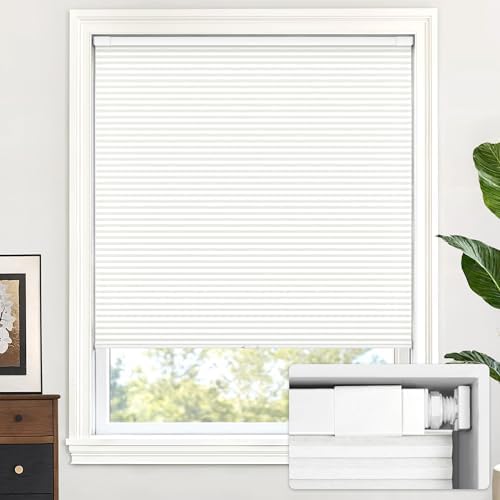
LazBlinds pairs a cordless, light-filtering fabric shade with a cellular structure intended to help insulate the window. The honeycomb-style cells are designed to help keep outside heat or cold from affecting the room, and the product description also says the shade can reduce outside noise. These features may be useful in a basement where a window feels drafty or the room is less comfortable near the glass.
The no-drill system uses an adjustable spring rod for an inside mount. The shade is listed as 32 inches wide by 36 inches high, but its actual width is about 31.6 inches. It is intended for windows between roughly 31⅝ and 32⅗ inches wide, and the frame needs at least 1.2 inches of depth. Check the fit range and frame depth before buying; this is not an option for every narrow or shallow basement window.
The fabric filters light rather than providing full blackout coverage, so it is better suited to soft daylight and privacy than complete darkness. Its cordless pull-down and push-up operation offers simple height adjustment. Compared with the ACHIM blind, it has a softer fabric look and added cellular insulation, but it does not provide slats that tilt to direct light.
Pros:
- No-drill installation for a compatible inside-mount window
- Cordless design with adjustable height
- Cellular construction is designed to provide insulation
- Light-filtering fabric offers privacy while allowing soft light
Cons:
- Requires at least 1.2 inches of window-frame depth
- Light filtering is not the same as blackout coverage
Verdict: Choose the LazBlinds shade if your frame meets the fit requirements and you want cordless light filtering with cellular insulation.
KOUFALL Blackout Valance: Best for Short Windows and Upper-Window Coverage

Despite the product title’s use of “mini blinds,” the supplied product details describe a blackout fabric valance, not a slatted or adjustable blind. It measures 52 inches wide by 18 inches long and is designed to cover the upper part of a window. The double header has a 3-inch section for sliding onto a rod, along with a smaller ruffled top section.
This could suit a short basement window where you want to block some incoming light without covering the entire opening. It may also work as a decorative top layer over another window covering. However, a single valance will not offer the same full-window coverage or adjustable privacy as the other products in this guide. Check the 52-inch width against your window and curtain rod.
The fabric is described as blackout, but how much light enters the room will also depend on the fit and the uncovered portion of the window. The valance can be machine washed on a gentle cycle in a mesh bag, with care instructions that call for non-chlorine bleach if needed and low tumble drying.
Pros:
- Short 18-inch length suits upper-window coverage
- Blackout fabric is intended to reduce incoming sunlight
- Rod pocket makes it easy to slide onto a curtain rod
- Machine-washable according to the care instructions
Cons:
- It is a valance, not a full blind or adjustable shade
- The 52-inch width may not fit every small basement window
Verdict: Consider the KOUFALL valance for a short window or as a top layer, but choose another pick if you need full-window coverage.
How to Choose Blinds for Small Basement Windows
Measure the Window and Mounting Area
Measure the width at the top, middle, and bottom of the window, then use the smallest measurement when checking inside-mount fit. Measure the height as well as the depth of the frame. Product sizes can refer to the listed shade size rather than the exact finished width, so read the fit details carefully. If you plan an outside mount, check how much space is available around the frame and whether nearby walls or window-well features could get in the way.
Decide How Much Light and Privacy You Need
Mini blinds let you tilt slats to change the light and privacy. Light-filtering cellular shades soften incoming light, while a blackout option or fabric valance may block more of it. A valance only covers part of the window, so it should not be treated as a replacement for a full shade when you need privacy across the whole opening. Check the specific version of a product if the listing offers different light-control options.
Choose a Mounting Style That Works in Your Basement
Drilling into a window frame may not be practical in a rental or on a difficult surface. Adhesive temporary shades and no-drill cellular shades offer alternatives, but each has its own fit limits. The LazBlinds shade, for example, is inside-mount only and needs a minimum frame depth. A standard blind may offer more mounting choices, but it requires space and hardware installation.
Think About Cord Safety and Ease of Use
Cordless shades avoid exposed lift cords and can be simple to raise or lower. A tilt wand on a mini blind adds a separate way to control the slats. If you choose a temporary pleated shade, consider whether its clip-and-adhesive setup will be convenient for how often you want to adjust or remove it.
Match the Material to the Room
Vinyl slats provide adjustable light control, while fabric pleats and cellular shades create a softer look. Cellular construction is designed to add insulation, which may be helpful near a cold window. For temporary coverage or an irregular shape, a shade that can be trimmed may offer more flexibility. Consider how the material will fit the room and how much maintenance you want to handle.
Check Whether You Need a Full Covering
Before ordering, decide whether you want to cover the whole window or only the upper portion. A full shade or blind can provide more complete privacy. A short valance can reduce light at the top or add a finishing layer, but it leaves much of the window uncovered unless paired with another treatment.
Frequently Asked Questions
What type of blind works well for a small basement window?
It depends on your priorities. A cordless mini blind gives you adjustable slats, a cellular shade adds a light-filtering fabric layer with insulation-focused construction, and a temporary pleated shade can be cut to fit. Measure your window first, since each product has specific size and mounting limits.
Can I install blinds on a basement window without drilling?
Yes. The Neugodo shades use an adhesive strip, and the LazBlinds cellular shade uses a no-drill spring-rod system for compatible inside-mount windows. Check the frame requirements and product instructions before choosing either option.
Are the LazBlinds cellular shades blackout?
The supplied product description calls them light filtering. They are intended to provide privacy while allowing soft light into the room, so do not choose them if you need confirmed blackout coverage.
Is the KOUFALL product a blind?
The provided details describe a fabric valance measuring 52 inches wide by 18 inches long. It is not an adjustable slatted blind or a full-window shade.
How much space does the LazBlinds shade need?
The product description requires at least 1.2 inches of window-frame depth for inside mounting. It also lists a fit range of roughly 31⅝ to 32⅗ inches in width, so check both measurements before ordering.
Can temporary pleated shades be cut to fit?
Yes. The Neugodo shades are described as cut-to-size and can be shaped for different windows. Measure first and trim carefully, because cut material cannot be restored if you remove too much.
Which option is best for blocking light?
The Neugodo product listing describes blackout options, but the light control depends on the version selected. The KOUFALL valance is described as blackout fabric, though it covers only the upper part of a window. Confirm the selected product details and consider how much of the window will remain exposed.
Final Recommendation
For most small basement windows, start with the Neugodo temporary shades if you need a cut-to-fit, no-drill solution, or the ACHIM mini blind if you want adjustable slats and a more traditional blind. The LazBlinds cellular shade is a strong option when insulation and a cordless inside mount matter, provided your frame meets its depth and width requirements. Choose the KOUFALL valance only when partial upper-window coverage is what you need.
