
Choosing the best blue paint for an office depends on what you plan to paint. The options below include craft acrylics and paints for doors, trim, and other hard surfaces—not standard wall paint. For a full office wall, look for an interior wall paint labeled for that surface; for small projects, furniture, trim, or artwork, these blue options may be a better fit.
Table of Contents
Quick Comparison
| Product | Best for | Finish | Key detail |
|---|---|---|---|
| Liquitex BASICS Phthalocyanine Blue Acrylic Paint | Mixing colors and art projects | Satin | Thick, creamy acrylic paint |
| Apple Barrel Bright Blue Matte Acrylic Paint | Crafts and small decor projects | Matte | Works on several craft surfaces |
| Rust-Oleum Stops Rust Satin Nantucket Navy Door & Trim Paint | Doors and trim | Satin | Made for metal, wood, and fiberglass |
| Rust-Oleum Painter’s Touch Gloss Navy Blue | Small indoor or outdoor surfaces | Gloss | For a range of listed project surfaces |
| Artecho Pearl Blue Acrylic Paint | Decorative art and crafts | Semi-gloss | Pearl effect with a glossy finish |
Our Picks: Best Blue Paint For Office reviews
Liquitex BASICS Phthalocyanine Blue: Best for Color Mixing

Liquitex BASICS is a tube of acrylic paint aimed at artists and people learning to work with color. Its Phthalocyanine Blue shade can be used as-is or mixed with other acrylic colors to create different tones for office artwork, canvas pieces, or small decorative projects.
The paint has a thick, creamy consistency and a satin finish. It can retain peaks and brush strokes, which is useful when you want visible texture. The formula is intermixable with Liquitex Professional Acrylic Paint colors and mediums, so it offers room to expand a color palette over time.
This is an art paint, not a room paint. It is a practical choice for a canvas or other suitable project surface, but the 4-ounce tube is not intended for painting an office wall. Its concentrated blue may also need mixing if you want a softer or less vivid look.
Pros:
- Thick consistency can preserve brush marks and texture
- Satin finish adds a gentle sheen
- Mixes with Liquitex Professional Acrylic colors and mediums
- Conforms to ASTM D4236 and is described as safe for educational use
Cons:
- Small tube is better suited to artwork than large surfaces
- Not specified as interior wall paint
Verdict: Choose Liquitex BASICS if your office-blue project is a painting or other small art piece and you want a versatile blue for mixing.
Apple Barrel Bright Blue: Best for Budget-Friendly Craft Projects

Apple Barrel Bright Blue is a water-based acrylic craft paint in an 8-ounce bottle. Its bright color and matte finish suit small office projects such as painted signs, desk accessories, or decorative items made from compatible craft materials.
The listed surfaces include wood, paper, canvas, Styrofoam, and paper mache. The paint is designed for basecoating and stenciling, and cleanup is described as easy with soap and water while the paint is wet. That makes it a straightforward option for casual DIY work, though you should check surface preparation and suitability before starting.
Its matte, bright-blue look is less subdued than a navy or muted blue, so it may work best as an accent rather than a large visual feature. It is also craft paint, not a labeled office wall coating.
Pros:
- 8-ounce size is useful for multiple craft projects
- Matte finish works well for stenciling and basecoating
- Listed for use on several common craft surfaces
- Can be cleaned up with soap and water while wet
Cons:
- Bright blue may be too vivid for a quiet office palette
- Not specified for painting interior walls
Verdict: Pick Apple Barrel for small, colorful office crafts on compatible surfaces, not for repainting the room.
Rust-Oleum Satin Nantucket Navy: Best for Doors and Trim

This pre-mixed Rust-Oleum paint is designed for doors and trim, with a satin Nantucket Navy color. Its stated compatible materials are interior or exterior metal, wood, and fiberglass, making it a more relevant pick than the craft paints for giving an office door or suitable trim a blue update.
The water-based formula is described as lower odor and fade resistant. It is also listed as touch-dry in 45 minutes and has a chip-resistant coating. Those details may suit a project where you want a durable-looking finish on an appropriate door or trim surface, but they do not make it a general-purpose wall paint.
The navy shade is more restrained than the brighter craft options, which can make it easier to use as an accent in a work space. Check the surface and the product label before use, especially if your trim material is not one of those listed.
Pros:
- Designed specifically for doors and trim
- Listed for metal, wood, and fiberglass
- Satin navy finish offers a more muted look than bright blue
- Water-based formula is described as lower odor and chip resistant
Cons:
- Not presented as paint for full office walls
- Color and use are more specialized than general craft acrylics
Verdict: Choose this paint when your office project is a compatible door or trim surface and you want a satin navy finish.
Rust-Oleum Painter’s Touch Gloss Navy: Best for Multi-Surface Projects

Rust-Oleum Painter’s Touch is a water-based acrylic paint for a range of indoor and outdoor project surfaces. The listed materials include wood, metal, plaster, masonry, and unglazed ceramic. Its gloss navy finish can suit an office accessory or other compatible surface when you want a deeper blue with noticeable shine.
The product details state coverage of up to 120 square feet and a touch-dry time of 30 minutes. Surface preparation matters: the instructions call for sanding with 180- or 200-grit sandpaper, washing with a degreaser, and letting the surface dry before painting. Follow the product label for the specific project and surface.
Compared with the satin door-and-trim paint, this option has a glossier finish and a broader list of project materials. A gloss finish can make surface texture more noticeable, so it may be less forgiving on imperfect surfaces. The supplied details do not identify it as standard wall paint.
Pros:
- Listed for several indoor and outdoor surfaces
- Water-based acrylic formula is described as low odor and chip resistant
- Gloss navy finish creates a shiny look
- Product details provide surface-preparation instructions
Cons:
- Gloss may highlight surface flaws more than a flatter finish
- Not specifically described as interior wall paint
Verdict: Consider Painter’s Touch for a compatible office project surface when you prefer a glossy navy finish and can follow the preparation steps.
Artecho Pearl Blue: Best for Shimmery Office Art
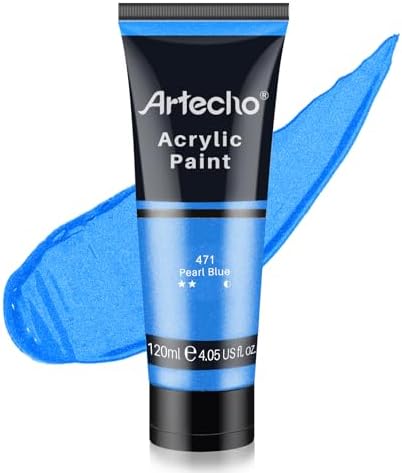
Artecho Pearl Blue is a tube of acrylic craft paint with a semi-glossy finish. The product description highlights a pearl effect, creamy consistency, and high pigment content. That combination makes it suited to decorative artwork or accents where a little sheen is part of the design.
Its listed surfaces include canvas, paper, wood, ceramic, fabric, cardboard, and MDF. The paint is described as fast drying and mixable with other colors. It conforms to ASTM D-4236 and is described as acid-free and non-toxic for adults. As with other acrylics here, it is not listed as a wall coating.
The pearl look gives this paint a different role from the flat bright blue or satin navy choices. It can bring shine to smaller objects, but may not suit an office that calls for a simple, low-sheen color. The 120 ml tube is also better suited to craft-scale work than broad coverage.
Pros:
- Pearl blue color adds a decorative sheen
- Listed for a wide range of craft surfaces
- Creamy consistency and mixable color offer creative flexibility
- Fast-drying formula is described as suitable for several art techniques
Cons:
- Pearl finish may be too shiny for a restrained office look
- Tube size is not intended for painting large areas
Verdict: Choose Artecho Pearl Blue for decorative office art or small accents when you want a shimmery finish rather than a conventional painted surface.
How to Choose Blue Paint for an Office Project
Match the paint to the surface
Start by identifying what you want to paint: a wall, door, trim, furniture piece, or artwork. The products in this guide are craft acrylics or paints for doors, trim, and listed project surfaces. If you are painting a full office wall, choose a product specifically labeled for interior walls and your wall material. Do not assume that a paint suitable for canvas, wood, or trim is suitable for a whole room.
Pick a blue that fits the job
Bright blue can bring energy to a small decorative item, while navy can create a deeper, more subdued accent on a suitable door or trim surface. Pearl blue adds shine and works best when you want a decorative effect. If you are unsure how a color will look in your office, test it on a small, appropriate area or sample surface before committing to a larger project.
Consider the finish
Finish changes how a blue looks and how much light it reflects. Matte has little sheen, satin has a soft glow, and gloss is more reflective. A pearl or semi-gloss acrylic has a decorative shine. Think about the surface and the look you want, and remember that a glossier finish can make surface texture more noticeable.
Check coverage and container size
A small tube or bottle of acrylic paint is suited to art and craft work, not broad wall coverage. A product’s stated coverage, where provided, can help you estimate whether it fits your project. For larger jobs, compare the required amount with the product’s intended use and label instructions rather than relying on a small craft-paint container.
Plan surface preparation and cleanup
Different surfaces may need different preparation. Painter’s Touch, for example, lists sanding and cleaning steps before application. Follow the directions on the specific product, allow the surface to dry as instructed, and check cleanup guidance. Apple Barrel’s description specifies soap-and-water cleanup while the paint is wet; do not assume every paint has the same cleanup process.
Check the product label before use
Confirm that the intended surface and setting are covered by the product instructions. Also check any safety and ventilation guidance on the label. For office furniture, doors, or trim, verify that the material is included in the product’s listed uses before buying.
Frequently Asked Questions
Which blue paint in this guide is best for office walls?
None of these options is identified as standard interior wall paint. For a full wall, choose a paint labeled for interior walls and suitable for your wall surface. The products here are better matched to art, crafts, doors, trim, or other specified project surfaces.
Which option is best for painting an office door?
Rust-Oleum Stops Rust Satin Nantucket Navy Door & Trim Paint is specifically described for doors and trim. Its listed compatible materials are metal, wood, and fiberglass, so check that your door material is included before use.
Can I use the acrylic paints on office decor?
Liquitex BASICS, Apple Barrel, and Artecho are acrylic paints described for art or craft uses. Their listed surfaces vary, so check the product details and label to confirm that your item’s material is suitable.
What is the difference between the two Rust-Oleum options?
The Stops Rust option is a satin door-and-trim paint listed for metal, wood, and fiberglass. Painter’s Touch is a gloss navy paint listed for several surfaces, including wood, metal, plaster, masonry, and unglazed ceramic. Choose based on the surface and finish you need.
Which paint has the least sheen?
Apple Barrel is described as matte. The other finishes include satin, gloss, and semi-glossy or pearl effects, which have more visible sheen.
Can craft acrylic paint be used for a large office project?
These acrylics are sold in small tubes or bottles and are described for art and craft uses. They are better suited to smaller projects than broad wall coverage. For large surfaces, choose a product labeled for that specific job.
Final Recommendation
For a compatible office door or trim project, Rust-Oleum Stops Rust Satin Nantucket Navy is the most directly targeted option in this group. For office artwork, Liquitex BASICS offers a useful mixing-friendly blue, while Artecho Pearl Blue suits projects that call for extra sheen. If your goal is to repaint the office walls, look for a dedicated interior wall paint instead of using one of these craft or specialty surface products.
