
Brad nailers are useful for attaching trim, molding, and other small wood pieces with slim fasteners that leave less visible holes than larger nails. The right choice depends on your compressor setup, the nail lengths your project needs, and how often you expect to reload. These five 18-gauge pneumatic options cover different ranges and features, from a long-capacity magazine to a compact tool for lighter trim jobs.
Table of Contents
Quick Comparison: Best Brad Nailers For Trim Work
| Brad Nailer | Nail Range | Power | Standout Features |
|---|---|---|---|
| meite 18-Gauge Brad Nailer | 5/8–2 in. | Pneumatic; 70–100 PSI | 100-nail magazine, adjustable depth, safety lock |
| meite F32 Brad Nailer | 3/8–1 1/4 in. | Pneumatic | Aluminum body and soft grip |
| Freeman PBR50Q Brad Nailer | 3/8–2 in. | Pneumatic | Quick jam release, depth adjustment, no-mar tip |
| Arrow PT18G Brad Nailer | Arrow 18-gauge brads | Pneumatic; recommended 60–100 PSI | Oil-free operation and low-nail window |
| KIMSING F50A Brad Nailer | 3/8–2 in. | Pneumatic | Split muzzle and adjustable air deflector |
All five are pneumatic tools and require an air compressor. Confirm the listing and nail compatibility before buying, especially if you need a specific fastener size.
Our Picks: Best Brad Nailers For Trim Work reviews
1. meite 18-Gauge Brad Nailer: Best for a Long Nail Range

This meite pneumatic nailer accepts 18-gauge brads from 5/8 to 2 inches, giving it a broader listed range than the compact meite F32. That span can suit jobs that move between shorter trim pieces and thicker assemblies, as long as you choose a nail length appropriate for the materials.
The tool uses a 1/4-inch NPT air inlet and is specified for 70–100 PSI, so check that your compressor and hose setup can supply the required air. Its 100-nail magazine reduces reload interruptions, while the visual window helps you keep track of the remaining fasteners. A tool-free depth adjustment lets you tune nail penetration, and the safety switch lock is intended to help prevent accidental firing.
A quick-release nose provides access for clearing jams without tools, and the adjustable exhaust can direct escaping air away from you. Those practical details make this a feature-rich option for frequent trim or general woodworking tasks. Its main limitation is that it still needs an air compressor, and its stated operating-pressure range should be matched to your setup.
Pros:
- Accepts 18-gauge brads from 5/8 to 2 inches
- 100-nail magazine with a visual nail-level window
- Tool-free depth adjustment and quick-release nose
- Safety lock and adjustable exhaust
Cons:
- Requires an air compressor and a compatible 1/4-inch NPT connection
- Its specified 70–100 PSI range may not suit every compressor setup
Verdict: Choose this meite if you want a wide nail-length range and a larger magazine for varied trim work.
2. meite F32 Brad Nailer: A Lightweight Pick for Smaller Trim

The meite F32 is an 18-gauge pneumatic brad nailer for trim, molding, and other finishing tasks. It accepts brads from 3/8 to 1 1/4 inches, a shorter maximum length than the other meite model in this roundup. That makes it a more focused option for smaller trim pieces and projects that do not call for longer brads.
Its aluminum body is described as lightweight, and the soft grip is designed to make the tool more comfortable to hold and control. Those traits can be useful when you are positioning the nailer repeatedly along a molding run or working on detailed repairs. The product information also lists uses such as upholstery, screen repair, cable fixing, and craft work.
The simpler feature set may appeal if you want a basic pneumatic tool rather than a model with a large magazine or several jam-clearing and safety features. The key trade-off is its 1 1/4-inch maximum nail length, which limits its flexibility for thicker material. As with the other pneumatic options here, you will need a compatible compressor.
Pros:
- Lightweight aluminum body
- Soft grip for handling and control
- Accepts 18-gauge brads from 3/8 to 1 1/4 inches
- Suitable for trim, molding, and small repair projects
Cons:
- Shorter maximum nail length than several alternatives
- Requires an air compressor
Verdict: The F32 is a sensible fit for lighter trim and craft work if its shorter nail range matches your materials.
3. Freeman PBR50Q Brad Nailer: A Versatile Option for Finish Work
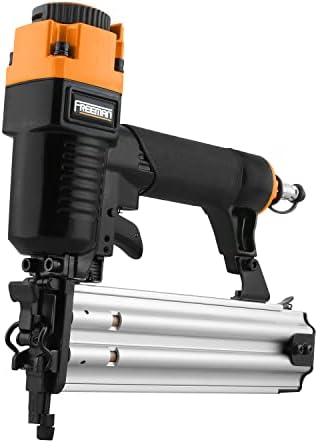
The Freeman PBR50Q is a pneumatic 18-gauge nailer designed for finish work such as decorative trim, cabinetry, window casing, furniture trim, and picture frames. It accepts glue-collated brads from 3/8 to 2 inches, giving it a broad range for different sizes of finishing work.
Its tool-free depth adjustment uses a hand-operated wheel, so you can adjust how far nails drive for different materials. The quick jam release opens access to the nose area, and a reload indicator helps you see when fasteners are running low. A no-mar safety tip is designed to help protect the work surface, while the adjustable exhaust directs air away from your face.
The product description also lists a hardened steel drive blade and an anodized aluminum magazine and cylinder. This combination of features makes the PBR50Q a strong match for someone who wants a dedicated finish-work tool with several on-tool adjustments. The trade-off is that the feature set may be more than you need for occasional small repairs. The supplied listing information indicates availability may be limited, so confirm the listing before planning a purchase.
Pros:
- Accepts brads from 3/8 to 2 inches
- Tool-free depth adjustment and quick jam release
- No-mar tip and reload indicator
- Adjustable exhaust and comfort grip
Cons:
- Requires an air compressor
- Supplied listing information indicates availability may be limited
Verdict: Consider the Freeman if you want a broad nail range and practical controls for varied finish work, provided it is available to you.
4. Arrow PT18G Brad Nailer: Oil-Free and Straightforward

The Arrow PT18G is an 18-gauge pneumatic brad nailer intended for light trim and interior molding work. Its product information highlights oil-free operation, which removes the need to add oil for tool maintenance. It is listed for use with Arrow brad nails, though the supplied description does not specify a nail-length range.
A side-load magazine makes loading accessible from the side, and a low-nail indicator window shows when the magazine is nearing empty. The tool-free jam release provides a way to remove a jammed nail, while the exhaust cover lets you direct airflow. Its contact safety feature requires contact with the nailing surface before firing.
Arrow recommends operating it between 60 and 100 PSI and states that it works with most air compressors up to 120 PSI. Because the listed fastener information does not give exact nail lengths, check the tool’s instructions and confirm compatibility before buying brads for a specific trim job. The supplied listing information indicates availability may be limited, so check the listing before choosing this model.
Pros:
- Oil-free operation
- Tool-free jam release and low-nail window
- Recommended operating pressure is stated as 60–100 PSI
- Contact safety feature and adjustable exhaust direction
Cons:
- The supplied description does not specify a nail-length range
- Supplied listing information indicates availability may be limited
Verdict: The Arrow is worth considering for lighter trim if you value oil-free maintenance and can confirm that its compatible brads suit your project.
5. KIMSING F50A Brad Nailer: Broad Nail Compatibility and Easy Jam Access

The KIMSING F50A is a pneumatic 18-gauge brad nailer that accepts fasteners from 3/8 to 2 inches. Its listed applications include molding, trim, picture framing, door and window installation, furniture building, and other finish work. That nail range gives it flexibility for both shorter trim nails and longer brads when the material calls for them.
The split muzzle is designed to make jammed nails easier to remove. The slide-open magazine supports loading, while the 360-degree adjustable air deflector lets you redirect exhaust. A contact-firing muzzle is included as a safety feature. The product description explicitly notes that the air compressor is not included, so account for that if you are starting without pneumatic equipment.
The F50A’s listed features are practical, but the supplied description does not state an operating-pressure range or magazine capacity. Check those details in the product instructions if they matter for your setup or work pace. The supplied listing information indicates availability may be limited, so confirm the listing before buying.
Pros:
- Accepts 18-gauge brads from 3/8 to 2 inches
- Split muzzle is designed for easy jam removal
- Slide-open magazine and adjustable air deflector
- Contact-firing muzzle safety feature
Cons:
- Air compressor is required and not included
- Supplied description does not state magazine capacity or operating pressure
- Supplied listing information indicates availability may be limited
Verdict: Pick the F50A if you need a wide brad-length range and its listed features fit your compressor setup and trim projects.
How to Choose a Brad Nailer for Trim Work
Match the Nail Length to Your Materials
Start with the thickness of the trim and the material behind it. A nail that is too short may not hold securely, while an unnecessarily long brad can pass through the workpiece. Compare your project needs with the tool’s stated range: the meite F32 covers 3/8 to 1 1/4 inches, while the other models with stated ranges extend to 2 inches. The Arrow description does not give a length range, so verify compatibility before selecting fasteners.
Check the Gauge and Fastener Type
All five options are described as 18-gauge brad nailers, but their listed fastener details are not identical. The Freeman specifies glue-collated brads, and the Arrow is described as working with Arrow brad nails. Check the tool’s instructions and the fastener packaging to confirm that the nails match the nailer and the work you plan to do.
Plan for an Air Compressor
These are pneumatic nailers, so they need a compressor, an air hose, and compatible fittings. The meite model with a 100-nail magazine specifies a 1/4-inch NPT inlet and a working range of 70–100 PSI. Arrow recommends 60–100 PSI for its PT18G. For models without a stated pressure range in the supplied description, check the tool documentation before connecting them to your compressor.
Consider How Often You Will Reload
Magazine capacity can matter when you are working along a long run of molding or completing several trim pieces. The first meite model lists a 100-nail capacity and a window for checking nail levels. The Freeman and Arrow also have indicators for monitoring remaining fasteners, while the other descriptions do not provide a capacity figure. If the number of nails per load is important to you, verify it before purchase.
Look for Depth and Jam Adjustments
Depth adjustment helps you set how far a nail sits in the workpiece, which can be useful when changing materials or working near a finished surface. The first meite model and Freeman both list tool-free depth adjustment. Jam-clearing access also varies: the first meite has a quick-release nose, the Freeman lists a quick jam release, and the KIMSING uses a split muzzle. These features can make interruptions easier to manage, but follow the tool’s instructions when clearing a jam.
Weigh Maintenance and Handling Features
Body design and maintenance details can affect how a tool fits your routine. The F32 is described as having an aluminum body and soft grip, while the Arrow is specified as oil-free. The Freeman lists a comfort grip and an adjustable exhaust, and the first meite also has an exhaust cover that can be directed away from you. Choose features that address your priorities, and use appropriate eye and hearing protection with pneumatic tools.
Frequently Asked Questions
Do pneumatic brad nailers need an air compressor?
Yes. Each nailer in this roundup is pneumatic and requires a compatible air compressor. The compressor is not included with the KIMSING F50A.
What size brads are used for trim work?
All five products are 18-gauge brad nailers, but the compatible nail lengths vary. Choose a length that suits the trim thickness and the material behind it, and confirm compatibility with the specific tool.
Which nailer in this list accepts the longest brads?
The meite model ranked first, the Freeman PBR50Q, and the KIMSING F50A each list brad lengths up to 2 inches. The meite F32 lists a maximum of 1 1/4 inches.
Does a brad nailer need depth adjustment?
Depth adjustment is useful when you want to control how far the nail sits in different materials. The first meite model and the Freeman PBR50Q specifically list tool-free depth adjustment.
Is an oil-free brad nailer easier to maintain?
The Arrow PT18G is described as not requiring oil for maintenance. Follow the manufacturer’s instructions for any other upkeep, since care needs can differ between models.
Can a brad nailer be used for jobs beyond trim?
Yes, depending on the tool and fastener. The listed uses across these models include molding, cabinetry, picture framing, furniture assembly, upholstery, repairs, and craft projects. Always make sure the nailer and brad length are suitable for the material and task.
Which brad nailer is the best fit for most trim projects?
The first meite model is a strong all-around choice on paper because it combines a 5/8-to-2-inch nail range with a 100-nail magazine, depth adjustment, and a quick-release nose. If your projects use shorter brads, the lighter meite F32 may be a better match.
Final Recommendation
For a versatile pneumatic option, the meite 18-gauge brad nailer ranked first offers a broad stated nail range, a 100-nail magazine, and useful adjustments for trim work. Choose the meite F32 for lighter jobs where its shorter nail range is enough, or consider the Freeman if you want a no-mar tip and several finish-work controls. Before ordering, confirm that the product listing is available, the brads match your project, and your compressor can meet the tool’s requirements.
