
A code keypad door lock lets you enter without carrying or handing out a key, but the right choice depends on your door, preferred handle style, and need for guest codes or automatic locking. These five options range from a Grade 2 Schlage keypad lever to feature-rich locks with passage or vacation modes. Compare their access methods, installation needs, and trade-offs before choosing one for your home.
Table of Contents
Quick Comparison
| Product | Lock style | Standout features | Best suited for |
|---|---|---|---|
| Schlage Electronic Keypad Lock with Plymouth Lever | Keypad lever | Grade 2/AAA rating, auto-lock, illuminated keypad | Those prioritizing a familiar lock brand and a lever design |
| Amazon Basics Electronic Keypad Deadbolt | Keypad deadbolt | Six user codes, one-time codes, keyed entry | Homes needing a straightforward deadbolt replacement |
| NICE DIGI Keypad Door Lock with Handle | Keypad handle set | Up to 20 codes, passage mode, no app or Wi-Fi | Households or rentals that need flexible code sharing |
| Veise KS04 Keypad Door Lock | Keypad handle set | Up to 21 codes, away mode, silent mode | Those seeking extra access controls, if available |
| Veise KS01B Keypad Lock with Two Lever Handles | Keypad handle set | 20 permanent codes, one-time passwords, vacation mode | Busy households that want a matching handle set |
Our Picks: Best Code Keypad Door Lock reviews
Schlage Electronic Keypad Lock: A Grade 2 Lever Option
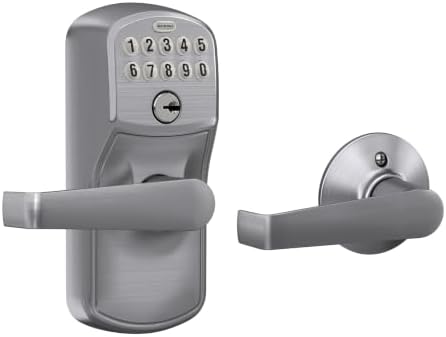
This Schlage is a keypad lever lock, rather than a deadbolt. It combines code entry with a handle you turn to open the door, making it a useful option when you want to replace an existing knob or lever without adding a separate keypad deadbolt.
The lock has a Grade 2/AAA rating and metal construction. Its auto-lock feature re-locks the door five seconds after a code is entered, and the silicone-coated keypad numbers illuminate when pressed. It runs on an included 9V battery, has a low-battery indicator, and is described as offering up to two years of battery life with typical use.
Installation is designed for a screwdriver and does not require hardwiring. One practical limitation is that its five-second re-lock timing is shorter than the adjustable timers on several other picks. It also has a different setup and security role from a standalone deadbolt, so check what your door currently uses before ordering.
Pros:
- Grade 2/AAA rating and metal construction
- Illuminated keypad for low-light entry
- Auto-lock helps secure the door after code entry
- Designed to replace an existing lever or knob with basic tools
Cons:
- Auto-lock timing is fixed at five seconds
- It is a lever lock, not a keypad deadbolt
Verdict: Choose the Schlage if you want a keypad lever with a Grade 2/AAA rating and do not need adjustable auto-lock timing.
Amazon Basics Keypad Deadbolt: Simple Codes and Key Backup

This electronic deadbolt offers keypad entry while keeping a traditional key option on the outside and a thumb turn on the inside. You can set up six user codes and temporary single-use guest codes, which can help separate household access from a one-time visit.
The auto-lock timer can be set from 10 to 99 seconds. The lock is made from nickel with a satin finish, and the included package lists a latch, strike, screws, and keys. It is specified for standard door preparations and door thicknesses from 1⅜ to 1¾ inches.
Compared with the handle-set picks, this model focuses on the deadbolt and does not replace the door’s lever or knob. Confirm that your door’s existing holes and hardware match the listed compatibility before buying. Its six-code limit is also more modest than the options that support 20 or more codes.
Pros:
- Supports six user codes and temporary single-use codes
- Adjustable auto-lock timer from 10 to 99 seconds
- Offers keypad, key, and interior thumb-turn operation
- Includes installation hardware and keys
Cons:
- Does not include a replacement handle set
- Supports fewer user codes than several alternatives
Verdict: This is a practical choice if you want a keypad deadbolt with key backup and your door fits its stated measurements.
NICE DIGI Keypad Handle: Flexible Codes Without an App

The NICE DIGI is a keypad lock with a handle, built for code-based entry without an app, Wi-Fi, or Bluetooth connection. It supports up to 20 personalized codes, each four to eight digits long, along with temporary one-time codes and two backup keys.
Its auto-lock delay can be set from five to 99 seconds, or you can use passage mode to keep the door unlocked when people are coming and going. The backlit keypad is intended to help with nighttime entry. The handle is reversible for left- or right-handed doors, and the product information describes it as fitting most standard US and Canadian wooden doors.
The body is aluminum alloy with an IP54 weather-resistance rating. It uses four AA batteries, which are not included, and the stated battery life is eight to 12 months. That is a shorter stated interval than the Schlage’s typical-use estimate, so consider how often you want to replace batteries. Its broad door-fit claim is still worth checking against your own door before installation.
Pros:
- Supports up to 20 personalized codes and temporary codes
- No app, Wi-Fi, or Bluetooth setup required
- Includes passage mode and adjustable auto-lock timing
- Reversible handle and two backup keys
Cons:
- Four AA batteries are not included
- Stated battery life is eight to 12 months
Verdict: Consider the NICE DIGI if you need a handle set with many codes and simple local operation, and are comfortable checking fit and replacing batteries regularly.
Veise KS04: Extra Access Modes and an Away Setting

The Veise KS04 is a keypad handle set with several access options: up to 21 user codes, one-time codes, an interior thumb turn, and two backup keys. Its auto-lock timer is adjustable from 10 to 99 seconds, and you can also lock it from outside by holding a key for two seconds.
Its additional modes may suit households with changing access needs. Passage mode disables auto-lock, while away mode disables user codes except for the master code. The lock also has a backlit keypad, silent mode, and an alarm that is described as triggering after 10 incorrect entries. The zinc alloy body is rated ANSI Grade 3 and has an IP55 rating.
The product information specifies four AA alkaline batteries, not included, and a stated battery life of 365 days. It is designed for doors 1⅜ to 2 inches thick with a 2⅛-inch bore hole. One important caveat: the supplied listing data indicates that this model is unavailable. Availability can change, so check its current listing before planning a purchase.
Pros:
- Supports up to 21 user codes and unlimited one-time codes
- Includes passage mode, away mode, and silent mode
- ANSI Grade 3 rating and IP55 weather resistance
- Adjustable auto-lock timer and backup keys
Cons:
- Four AA batteries are not included
- Supplied listing data indicates it is unavailable
Verdict: The KS04 has a broad set of access controls, but it is a sensible option only if you can confirm it is available and your door matches its fit requirements.
Veise KS01B: A Two-Handle Set for Frequent Code Sharing

The Veise KS01B pairs a keypad lock with two ergonomic lever handles in an oil-rubbed bronze finish. It offers a master code, 20 permanent user codes, one-time passwords, and two backup keys. This capacity can be useful when a household has several regular users or needs to give temporary access to guests.
The lock supports an auto-lock delay from 10 to 99 seconds, plus one-touch locking by holding any key for two seconds. Other features include a backlit keypad, a dummy-password option to help obscure your real code, and a lockout after 10 failed attempts. Vacation mode disables codes other than the master code, while passage mode keeps the door unlocked.
The product information lists an ANSI Grade 3 rating, IP54 water and dust resistance, and testing for more than 200,000 cycles. It also notes a broad operating temperature range and recommends keeping liquids away from the keyhole and lock interior. The supplied details do not state a specific battery-life estimate, so plan to follow the low-battery alert rather than relying on a stated replacement schedule.
Pros:
- Includes two matching lever handles and supports 20 permanent codes
- Offers one-time passwords, vacation mode, and passage mode
- Has anti-peeping code entry and a failed-entry lockout
- ANSI Grade 3 rating and IP54 resistance
Cons:
- No specific battery-life estimate is provided in the supplied details
- Its larger feature set may be more than needed for a simple keypad deadbolt
Verdict: Choose the KS01B if you want a matching handle set and expect to manage codes for a busy household, guests, or other regular visitors.
How to Choose a Code Keypad Door Lock
Pick a deadbolt or a handle set
A keypad deadbolt replaces or adds a deadbolt but leaves your existing handle in place. A keypad lever or handle set includes the mechanism you use to open the door, so it may replace a knob or lever instead. Check which part of your door you want to upgrade and whether you need both a keypad lock and a separate deadbolt.
Check door thickness and hole measurements
Compatibility matters more than a broad claim that a lock fits standard doors. Measure your door thickness and check the existing bore hole and backset against the product’s installation details. For example, the Amazon Basics deadbolt lists a door thickness range of 1⅜ to 1¾ inches, while the Veise KS04 specifies 1⅜ to 2 inches and a 2⅛-inch bore hole.
Decide how many codes you need
Count the people who need regular access and consider whether you want separate codes for guests or service visits. A lock with one-time codes can reduce the need to share a permanent household code. If you only need a few user codes, a simpler model may be enough; larger households may value a higher code limit.
Choose the right auto-lock behavior
Automatic locking can help if you often forget to secure the door, but the delay should fit how you use the entrance. A short delay may be convenient when you want the door secured quickly; a longer adjustable delay can give you more time to carry items inside. Passage mode is useful when you want the door to stay unlocked during periods of frequent entry.
Consider keys and other backup access
Some keypad locks include physical keys, while others may rely on another backup method. Think about what you would do if the batteries run low or the keypad is not usable. Check whether the lock has a low-battery alert, how it is powered, and whether batteries are included.
Match the lock’s weather rating to its location
For an exposed entrance, look for the stated weather-resistance rating and follow the maker’s care instructions. An IP rating describes resistance to dust or water under specified conditions, but it does not mean a lock should be submerged or left unmaintained. A covered porch and a door exposed to heavy weather may call for different levels of protection.
Look for the features you will actually use
Backlit keypads can help with nighttime entry, while silent mode may matter if people are sleeping nearby. Vacation or away modes can limit code access when you are gone, and an entry alarm or lockout may help discourage repeated guessing. Prioritize the functions that fit your routine rather than choosing a lock based on a long feature list alone.
Frequently Asked Questions
Is a keypad lever lock the same as a keypad deadbolt?
No. A keypad lever lock combines code entry with a lever handle. A keypad deadbolt controls the deadbolt and generally leaves your existing knob or lever in place. Check the product type so you know which hardware it replaces.
Do keypad door locks need Wi-Fi?
Not all of them. The NICE DIGI in this guide is described as working without an app, Wi-Fi, or Bluetooth. The other supplied product details also focus on keypad operation and do not list connected features.
Can I give a guest a temporary code?
Several picks support temporary or one-time access codes. The Amazon Basics model supports temporary single-use guest codes, while NICE DIGI and the Veise models list one-time codes or passwords. Check the instructions for how to create and remove codes.
What happens when the batteries get low?
Battery features differ by model. The Schlage includes a low-battery indicator, and NICE DIGI and both Veise products also list low-battery alerts. Check the product instructions for the proper battery type and replacement steps, and do not wait until the lock stops working to respond to an alert.
Are keypad locks difficult to install?
Several models are described as DIY installations using a screwdriver, but the work still depends on your door and existing holes. Read the fit requirements first, then follow the included instructions. If the door preparation does not match, installation may require more work than a basic replacement.
Which lock is best for a household with many users?
The NICE DIGI supports up to 20 personalized codes, the Veise KS01B supports 20 permanent user codes, and the Veise KS04 supports up to 21 user codes. Choose based on the code features you need, the lock style, door fit, and product availability.
Final Recommendation
For a keypad lever with a Grade 2/AAA rating and an illuminated keypad, the Schlage is the most straightforward fit among these picks. If you want a deadbolt with traditional key backup and temporary guest codes, consider the Amazon Basics model after checking your door measurements. For more code capacity and flexible access modes, NICE DIGI and Veise offer broader feature sets; confirm fit, battery needs, and availability before choosing.
