
A glass corner shower enclosure can make a small bathroom feel more open while keeping water contained, but the right choice depends on your finished wall measurements, entry clearance, and preferred door style. The options below range from compact neo-angle pivot doors to sliding enclosures with wider openings. Compare their dimensions and features before you choose; even a small mismatch can complicate installation.
Table of Contents
Quick Comparison
| Product | Size | Door style | Glass and standout feature |
|---|---|---|---|
| SHOLVEMIAR Neo-Angle Pivot Enclosure | 36 × 36 × 72 in. | Reversible pivot | 6 mm tempered glass; magnetic seal |
| SHOLVEMIAR Double-Sliding Enclosure | 36 × 36 × 72 in. | Double sliding | 1/4-inch SGCC tempered glass; detachable panels |
| VEVOR Framed Sliding Enclosure | 35 × 35 × 72 in. | Diagonal sliding | Tempered glass; 18.9-inch walk-in opening |
| ComfyStyle Frameless Sliding Enclosure | 44–48 in. W × 34 in. D × 72 in. H | Sliding, reversible | 8 mm SGCC-certified glass; adjustable width |
| ComfyStyle 38-Inch Neo-Angle Door | 38 × 38 × 72 in. | Reversible pivot | 1/4-inch SGCC-certified glass; 23-inch opening |
Our Picks: Best Corner Shower Enclosures Glass reviews
1. SHOLVEMIAR Neo-Angle Pivot Enclosure: A Compact Swing-Door Pick

This framed neo-angle enclosure measures 36 inches on each side and stands 72 inches tall. Its pivot door opens inward or outward depending on installation, and the reversible design lets you choose a left- or right-hand opening. That flexibility can help when a vanity, toilet, or bathroom door limits your layout options.
The enclosure uses 1/4-inch, 6 mm tempered glass and a magnetic gasket intended to pull the door closed and help limit leaks. The listing also specifies a bonded protective film on the glass. Its frame, pivot hinge, and handle are described as 304 stainless steel, a material choice suited to a humid bathroom. Wall brackets allow a total of 20 mm of adjustment to help compensate for uneven walls.
A pivot door can feel more direct to enter than a sliding design, but it needs clear space to swing. Measure the door’s path as well as the shower footprint. The 36-inch footprint is compact, yet the available interior room will still depend on the shower base and finished wall layout.
Pros:
- Reversible pivot door offers flexible opening direction.
- Magnetic gasket is designed to help keep the door sealed shut.
- 20 mm of wall-side adjustment can help with minor wall variation.
- Protective film is specified alongside the tempered glass.
Cons:
- The swinging door needs clear floor space outside the enclosure.
- At 36 inches square, it may feel tight for people who want a roomier shower.
Verdict: Choose this model if you want a compact, reversible neo-angle enclosure and have enough clearance for a pivot door to swing.
2. SHOLVEMIAR Double-Sliding Enclosure: Sliding Panels for Tight Bathrooms

This 36-by-36-inch enclosure has a diagonal double-sliding entry and a 72-inch height. Since the panels slide rather than swing outward, it can work well in a bathroom where a hinged door would bump into nearby fixtures or block a walkway. The listing describes the diagonal entry as providing a wider opening, though it does not give an opening-width measurement.
The doors use 1/4-inch SGCC-certified tempered glass with a black frame. A multi-part sealing system, including a magnetic corner seal, is intended to reduce water escaping through the door area. The glass panels are described as removable without tools, which may make it easier to clean areas around the track and panel edges.
Its sliding design trades swing clearance for a track and overlapping panels. That means you should check that the enclosure fits your finished walls and that the panel arrangement provides enough access for your household. The listing mentions up to 20 mm of width adjustment on each side, but confirm the installation range and instructions before ordering.
Pros:
- Sliding doors do not need outward swing space.
- SGCC-certified 1/4-inch tempered glass is specified.
- Removable panels can make thorough cleaning easier.
- Black framing creates a defined, modern look.
Cons:
- The track and overlapping panels require regular cleaning.
- The listing does not provide a specific walk-in opening width.
Verdict: This is a practical option for a compact bathroom where you prefer sliding access and want panels that can be removed for cleaning.
3. VEVOR Framed Sliding Enclosure: A Smaller 35-Inch Footprint

The VEVOR enclosure measures 35 inches wide by 35 inches deep and 72 inches high, making it slightly smaller than the two 36-inch options above. Its diagonal sliding door is designed to save space, and the stated walk-in opening is 18.9 inches. That opening measurement is especially useful to compare against your access needs before buying.
The product description specifies tempered glass, a framed construction, and a reinforced aluminum track. Bearing pulleys are intended to help the door slide smoothly, while magnetic seals and waterproof edge strips are designed to keep water inside the shower. The wall profile allows vertical adjustment to help with slightly uneven walls.
The smaller footprint may suit a bathroom with limited corner space, but it also means less room inside than a larger enclosure may offer. The 18.9-inch entry is narrower than the stated opening on some other options, so consider who will use the shower and whether the access width is comfortable. Measure the finished wall spacing before ordering.
Pros:
- 35-inch footprint can fit a tighter corner than a 36-inch model.
- Sliding door avoids the clearance needed for a swinging panel.
- Stated 18.9-inch walk-in opening helps with fit planning.
- Adjustable wall profile is designed to accommodate slight wall variation.
Cons:
- The 18.9-inch entry may feel narrow for some users.
- The smaller footprint may limit interior space.
Verdict: Consider this enclosure when every inch matters, but make sure its narrower stated opening works for everyone who will use it.
4. ComfyStyle Frameless Sliding Enclosure: A Wider, Heavier-Glass Design
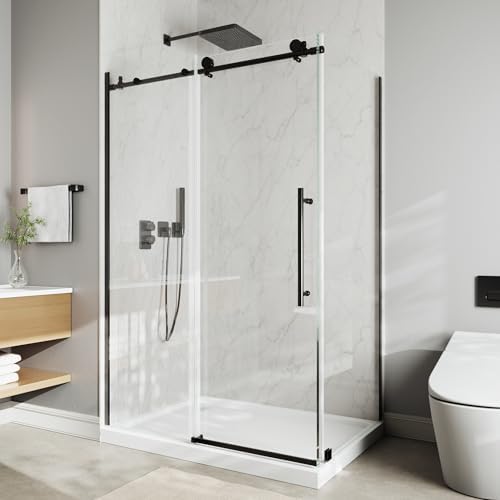
This ComfyStyle model is sized for a wider opening than the compact square enclosures: 44 to 48 inches wide, 34 inches deep, and 72 inches high. It combines a sliding door with a fixed side panel and is described as frameless, with a solid top rail for support. The matte black hardware gives it a strong visual outline without a full frame around the glass.
The listing specifies 5/16-inch (8 mm) SGCC-certified tempered glass, thicker than the 1/4-inch glass listed for several of the other options. Its walk-in opening adjusts from 16 3/8 to 20 3/8 inches. The width can be adjusted by up to 4 inches through top-rail trimming, and the door can be installed to open from either side. A PVC water barrier strip is included to help seal the door.
This is not a direct fit for a 36-inch square shower: it requires a much wider opening, and the shower base is not included. The sliding design saves swing space, but the stated opening range is worth checking closely if easy entry is a priority. It also calls for careful measuring and installation, particularly because the top rail may be trimmed to fit.
Pros:
- 8 mm SGCC-certified tempered glass is thicker than the glass specified for the other picks.
- Adjustable width accommodates openings from 44 to 48 inches.
- Reversible installation and sliding access offer layout flexibility.
- Frameless glass design keeps the enclosure visually open.
Cons:
- Requires a much wider opening than a typical 36-inch corner enclosure.
- Shower base is not included, and the opening width is adjustable but limited.
Verdict: Choose this model for a wider corner layout if you want thicker specified glass and a frameless look, not for a compact 36-inch footprint.
5. ComfyStyle 38-Inch Neo-Angle Door: A Roomier Pivot Option

This neo-angle enclosure measures 38 inches wide by 38 inches deep and 72 inches high. Its listed 23-inch walk-in opening is wider than the VEVOR model’s stated entry, and the reversible design allows left- or right-hand opening. The door can rotate through a 180-degree range, which may help you choose an opening direction that suits the bathroom layout.
The door uses 1/4-inch SGCC-certified clear tempered glass with brushed nickel hardware. Its glass is described as having an easy-clean coating, and the frames on the left and right sides are adjustable. The listing describes the framework as aluminum and the pivots as stainless steel, so check the current product details for the specific hardware finish and materials.
Compared with the 36-inch pivot option, this enclosure needs a little more corner space but offers a larger stated opening. Like any pivot door, it needs room to swing, and the 38-inch dimensions must match your finished shower area. The supplied product data marks this listing as unavailable, so confirm availability before planning around it.
Pros:
- 38-inch footprint offers more space than a 36-inch square option.
- 23-inch stated walk-in opening supports easier access.
- Reversible installation allows either opening direction.
- Brushed nickel finish can suit bathrooms with matching fixtures.
Cons:
- Pivot door needs clear swing space.
- The listing is marked unavailable in the supplied product information.
Verdict: This could suit a larger corner shower where a wider entry matters, but check current availability and confirm the footprint before making plans.
How to Choose a Glass Corner Shower Enclosure
Measure the Finished Shower Area
Measure from the finished wall surfaces, not from bare studs or unfinished tile. Check both sides of the corner and the height where the enclosure will sit. Compare those measurements with the product’s stated width, depth, and height, and verify the manufacturer’s fitting range. A stated adjustment range can help with small variations, but it is not a substitute for choosing the correct size.
Choose a Door Style That Fits Your Bathroom
A pivot door offers a direct entry, but it needs room to swing without hitting a toilet, vanity, or bathroom door. Sliding doors conserve floor clearance, which can be helpful in cramped bathrooms. Their panels and tracks overlap, however, and the clear opening may be narrower than the enclosure’s overall width. Check the stated walk-in opening rather than assuming all sliding models provide the same access.
Match the Enclosure to the Shower Base
Confirm that the enclosure is intended to fit your shower base or tiled shower footprint. Check where the walls, curb, and door opening meet, and make sure the glass panels and seals will align with those surfaces. Do not assume the base is included; the ComfyStyle frameless listing specifically says it is not.
Compare Glass Thickness and Certification
These products specify tempered glass in different thicknesses, including 6 mm, 1/4 inch, and 8 mm. One listing identifies its glass as SGCC-certified, while another describes it as ANSI-certified. Compare the exact glass details on the current product page and installation documents. Glass thickness is one factor in a door’s construction, but it does not replace correct installation and careful handling.
Consider Framing, Hardware, and Finish
Framed designs provide a defined border and can help create a more traditional look. Frameless or minimally framed designs keep more glass visible for a lighter appearance, while still relying on structural rails or hardware. Consider whether black, brushed nickel, or another finish fits your bathroom, and check the listed materials for parts exposed to moisture.
Look Closely at Seals and Cleaning Access
Magnetic gaskets, edge strips, and water barriers are intended to help keep water inside the enclosure, but proper alignment is also important. Sliding tracks and panel overlaps can collect soap residue, so consider how easily you can reach them. One of the sliding options specifically describes removable panels, which may help with cleaning access.
Plan for Installation and Wall Variations
Some models include wall adjustment to help compensate for minor unevenness, but each product has its own limits. Read the installation instructions before purchase and confirm whether the top rail, wall profiles, or panels need trimming. If your walls are uneven or you are unsure about anchoring glass hardware, consider hiring an experienced installer.
Frequently Asked Questions
What size corner shower enclosure should I buy?
Choose an enclosure that matches your finished shower opening and base. Measure both wall dimensions and the available height after tile is complete, then check the model’s adjustment range. A 35-inch, 36-inch, or 38-inch enclosure is not interchangeable without confirming the exact fit.
Are sliding or pivot shower doors better for a small bathroom?
Sliding doors usually need less open floor space because they do not swing out. Pivot doors can provide straightforward access, but they need a clear path to open. The better choice depends on nearby fixtures and the entry width you need.
What does neo-angle mean?
A neo-angle enclosure is designed for a corner and typically has a diagonal front entry rather than a flat front across the full width. This shape can suit a corner installation, but you still need to check the enclosure’s footprint and door-opening dimensions.
Does tempered glass make a shower door unbreakable?
No. Tempered glass is made for safety use, but it can still break if damaged or installed incorrectly. Handle glass panels carefully during installation and follow the product instructions. Some listings also specify a protective film or certification, so check the details for the model you choose.
How do I help prevent leaks around a glass shower enclosure?
Use the supplied seals and install them as directed, with the enclosure properly aligned to the finished walls and curb. Magnetic door seals and water barriers can help contain spray, but no seal can compensate for poor fit or installation. Check the door’s closing position and the seal condition as part of routine upkeep.
Is the shower base included with these enclosures?
Not all product descriptions specify whether a base is included. The ComfyStyle frameless model explicitly states that its shower base is not included. Check the current listing and included-parts information for any other enclosure before buying.
Which enclosure is best if I have very limited floor space?
A sliding model may be the most practical when there is little room for a door to swing. The VEVOR option has the smallest listed footprint here at 35 inches square, while the 36-inch SHOLVEMIAR model also uses sliding doors. Compare the stated entry width and interior space before deciding.
Final Recommendation
For a compact bathroom where a swinging door will not fit, the SHOLVEMIAR double-sliding enclosure offers a space-saving entry and removable panels for cleaning access. If you prefer a pivot door, the 36-inch SHOLVEMIAR model adds reversible installation and wall-side adjustment. For a wider shower opening and thicker specified glass, consider the ComfyStyle frameless enclosure, provided its 44-to-48-inch width fits your layout. Measure the finished space, confirm the door opening, and review installation requirements before ordering any model.
