
Grease, cooking film, fingerprints, and smoke residue can make painted walls look tired, but a strong cleaner can also dull or damage some finishes. The best degreaser for your walls depends on the mess, the paint’s condition, and whether you’re cleaning for everyday upkeep or preparing to repaint. These five options include a smoke-damage cleaner, concentrated TSP-based formulas, and a bulk prepaint cleaner. Before using any of them on a visible area, check the label and test a small, hidden spot.
Table of Contents
Quick Comparison
| Product | Best suited for | Format | Key consideration |
|---|---|---|---|
| Unsmoke Wall Wash with Biosolv | Smoke residue and multipurpose cleaning | 1-gallon cleaner | Made with smoke-damaged spaces in mind |
| Coolinario Trisodium Phosphate TSP Cleaner | Heavy-duty cleaning and paint preparation | 1-gallon, 5.5-pound package | Mix with water and rinse thoroughly |
| xixisusu Strength TSP-Based Cleaner | Pre-paint cleaning and tough buildup | Water-mixed cleaner | Choose a suitable dilution for the job |
| Great Lakes Laboratories Extra Muscle Prepaint Cleaner | Large surface-preparation projects | 5-gallon pail | Bulk size; listing indicates unavailable |
| B-BRITE Heavy Duty TSP Cleaner | Wall cleaning before painting | Concentrated powder | Requires mixing and protective gear is recommended |
Our Picks: Best Degreaser For Painted Walls reviews
1. Unsmoke Wall Wash with Biosolv: Best for Smoke Residue

Unsmoke Wall Wash with Biosolv is a multipurpose cleaner designed for residential and commercial spaces affected by smoke. The listing also describes it as a paint-preparation cleaner and a product for removing sticky residue and soot from walls. Its one-gallon size makes it worth considering for more than a quick spot clean.
This is the most specialized option in the group. It may suit you if smoke film is the main problem or if you want one cleaner for several restoration and cleaning tasks. For ordinary kitchen grease on intact paint, it may be more product than you need. The supplied description does not give a dilution ratio, so follow the product label rather than guessing how much to use.
As with any cleaner on painted walls, try it first in a hidden area. Smoke residue and wall finishes can vary, and a small test helps you check for changes in color or sheen before treating a larger surface.
Pros:
- Designed for cleaning smoke-damaged spaces
- Described as a multipurpose surface cleaner
- Can be considered for sticky residue and soot on walls
- May also suit surface cleaning before painting
Cons:
- The listing does not provide a dilution ratio in the supplied details
- Its smoke-restoration focus may be unnecessary for routine wall cleaning
Verdict: Choose Unsmoke Wall Wash if smoke residue is your main concern and you want a cleaner aimed at restoration work.
2. Coolinario TSP Cleaner: Best for Heavy-Duty Prepaint Cleaning

Coolinario’s TSP cleaner is presented as a heavy-duty option for grease, dirt, and stains on walls, floors, and other surfaces. The listing highlights cleaning before painting or refinishing and says the product dissolves in water, allowing you to adjust the strength for the task. It also calls for thorough rinsing after use.
That flexibility can be useful when you are cleaning a large area or tackling grime that a mild wall cleaner may not handle. The trade-off is that mixing and rinsing add work. On painted walls, start with the weakest solution allowed by the label and test it somewhere inconspicuous. A strong cleaner may not be the right choice for delicate, worn, or unsealed surfaces.
Compared with Unsmoke, Coolinario is less specifically focused on smoke damage and more oriented toward general heavy-duty cleaning and surface preparation. It may suit a repainting project, but for light everyday marks, a gentler cleaner is often a more cautious starting point.
Pros:
- Designed to break down grease, dirt, and stains
- Can be mixed with water for different cleaning needs
- Listed for prepaint and refinishing preparation
- Suitable for more than walls, according to the product description
Cons:
- Requires mixing and thorough rinsing
- Heavy-duty use calls for extra care on existing paint
Verdict: Coolinario is a practical candidate for tough grime or prepaint cleaning if you are comfortable mixing the solution and rinsing the wall well.
3. xixisusu TSP-Based Cleaner: Best for Flexible Strength

This xixisusu cleaner is described as a TSP-based formula for grease, dirt, and stains on walls, floors, and other surfaces. Its product details emphasize pre-paint cleaning, and the cleaner is mixed with water to create a solution for the job. For tougher residue, the listing says a more concentrated solution can be used, followed by a thorough rinse.
The ability to change the dilution may help when one project includes both lighter soil and stubborn buildup. Still, more concentrated is not automatically better for painted walls. Follow the label, begin gently, and avoid scrubbing hard enough to mark the finish. If you are only wiping away fingerprints or light kitchen film, this heavy-duty approach may be more involved than necessary.
Its stated uses are similar to Coolinario’s, so the details on the label, package size, and intended application should guide your choice between them. The supplied information does not establish a difference in cleaning performance between the two.
Pros:
- Formulated for heavy-duty cleaning and degreasing
- Can be mixed with water for different levels of cleaning
- Listed for pre-paint surface preparation
- Designed for use on several surface types
Cons:
- Needs careful dilution and a thorough rinse
- May be too strong or labor-intensive for light wall marks
Verdict: Consider xixisusu if you need a mix-to-strength cleaner for a demanding cleaning or painting-preparation job.
4. Great Lakes Laboratories Extra Muscle: Best for Large Prep Projects
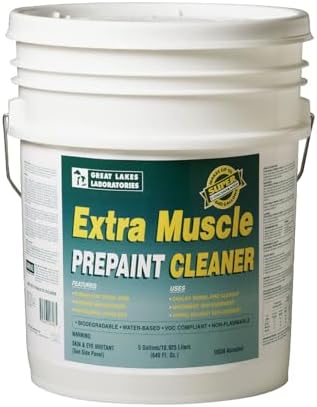
Great Lakes Laboratories Extra Muscle is a concentrated prepaint cleaner supplied in a five-gallon pail. The product description says it is intended to remove grease, oil, wax, dirt, smoke film, and other surface contaminants before painting. It is also described for interior and exterior use on surfaces such as walls, ceilings, woodwork, trim, and siding.
The bulk size and water dilution make this option more suited to a large project, professional use, or repeated surface preparation than to cleaning one small patch. The listed residue-free finish is a useful goal for paint prep, since leftover film can interfere with a new coating. You should still follow the directions and test the cleaner on existing paint before using it across a whole room.
The supplied listing indicates that this product is unavailable. If you are considering it, check the listing before planning a project around it. For a smaller job, the other cleaners in this guide may be easier to handle.
Pros:
- Large-format pail suited to extensive cleaning jobs
- Concentrated formula can be diluted for different tasks
- Described for interior and exterior surface preparation
- Designed to clean without leaving a film, according to the listing
Cons:
- Five gallons may be excessive for a small home project
- The supplied listing indicates it is unavailable
Verdict: This is worth considering for a large surface-preparation job if it becomes available, but its bulk size makes it a poor fit for occasional spot cleaning.
5. B-BRITE Heavy Duty TSP Cleaner: Best Powder for Prepping Walls

B-BRITE is a concentrated TSP cleaner in powder form. Its listing describes it as a cleaner for walls and ceilings before painting, as well as for grease and dirt on other surfaces. Because it is a powder, you will need to prepare a solution before cleaning; use the label directions for the amount of product and water.
This format may suit you if you want a concentrated product for a repainting project and do not mind mixing it. The product description recommends protective gear, so take that advice seriously and read the safety instructions before handling it. Rinse the wall as directed, and test a hidden area first if you are cleaning paint you plan to keep.
Compared with the liquid or bulk options, B-BRITE is a straightforward choice when you specifically want a powdered TSP cleaner. The supplied listing indicates it is unavailable, however, so it may not be an immediate option for your project.
Pros:
- Concentrated powder for mixing into a cleaning solution
- Designed for wall and ceiling preparation before painting
- Listed for stubborn grease and dirt on several surfaces
- Useful for shoppers who prefer a TSP powder format
Cons:
- Requires mixing and careful handling
- The supplied listing indicates it is unavailable
Verdict: B-BRITE may suit a prepainting job if you prefer a concentrated powder and can find it available, but it is not the easiest choice for quick everyday cleaning.
How to Choose a Degreaser for Painted Walls
Match the cleaner to the mess
Light fingerprints and a thin layer of kitchen grime may not call for a heavy-duty degreaser. Smoke film, sticky residue, or oily buildup may need a more specialized or concentrated cleaner. Start with the least aggressive option that suits the problem, then step up only if needed. For smoke-related residue, Unsmoke is the most specifically targeted option in this group.
Think about whether you are keeping or repainting the wall
Cleaning a wall you plan to keep calls for extra care because the paint finish is part of the surface you are protecting. A product intended for prepaint preparation may be stronger than you need for routine cleaning. If you are repainting, a cleaner designed to remove surface contaminants can help prepare the wall, but you still need to follow its directions and rinse if instructed.
Check the paint finish and condition
Painted walls do not all respond the same way to moisture, scrubbing, or strong cleaners. A worn, flat, or damaged finish may be more sensitive than a sound, washable surface. Test the solution in a hidden spot and let it dry so you can check for changes in color or sheen before continuing.
Review dilution and rinsing instructions
Several products in this guide are mixed with water, and the right dilution depends on the product directions and cleaning task. Do not assume that a stronger mix will work better on painted walls. Use the specified amount, avoid leaving cleaner on the surface longer than directed, and rinse thoroughly when the label calls for it.
Choose a size and format you can manage
A one-gallon cleaner may be more practical for a home project than a five-gallon pail. Powder and concentrated formulas can suit larger jobs, but they require careful measuring and mixing. Consider how much surface you need to clean, how often you will use the product, and whether you have suitable space to store it.
Use a gentle cleaning method
Apply cleaner with a soft sponge or cloth rather than an abrasive pad, and work in a small area at a time. Avoid soaking the wall or scrubbing aggressively, especially around seams, corners, and damaged paint. Follow the product label for protective gear and ventilation, and never mix cleaning products unless the label specifically says it is safe.
Frequently Asked Questions
What is the best degreaser for painted walls?
It depends on the mess and whether you are keeping the paint or preparing to repaint. Unsmoke Wall Wash is the most specifically aimed at smoke residue, while the TSP-based options are positioned for heavy-duty cleaning and paint preparation. Always check the label and test a hidden spot first.
Can I use TSP cleaner on painted walls?
Some TSP cleaners are listed for walls, but follow the product’s directions closely. Test a small, hidden area before using it across the wall, and rinse as directed. If the paint is worn or delicate, consider whether a less aggressive cleaner is a safer starting point.
Should I rinse a degreaser off painted walls?
Follow the directions for the specific product. The Coolinario and xixisusu descriptions call for thorough rinsing, and B-BRITE is a concentrated cleaner that should be used according to its label. Do not leave residue on the wall if the instructions say to rinse.
How do I test a cleaner before using it on a wall?
Apply the cleaner as directed to a small, inconspicuous area. Use a soft cloth, then rinse or wipe the spot as the label instructs. Let it dry and check for a change in color, sheen, or paint condition before cleaning a larger area.
Is a heavy-duty cleaner always better for kitchen grease?
No. A strong formula may be unnecessary for light grease and can require more careful handling. Start with a mild approach that is suitable for the paint, and move to a stronger product only if the buildup remains and the label allows that use.
Can I use these cleaners before painting?
Several products in this guide are described for prepaint cleaning or surface preparation. Use the product directions to clean and rinse the wall as needed, then allow the surface to dry before applying paint. Follow the paint and cleaner instructions for any additional preparation.
Final Recommendation
For smoke residue and restoration-style cleaning, Unsmoke Wall Wash with Biosolv is the most targeted choice in this group. For stubborn grime or prepaint work, Coolinario and xixisusu offer mix-to-strength TSP-based options, while the Great Lakes Laboratories and B-BRITE products are geared toward larger or more specific preparation jobs. Whichever cleaner you choose, protect the finish by following the label, using a gentle method, and testing a hidden area first.
